Understanding sizes Worksheets for Ages 5-6
4 filtered results
-
From - To
Discover our engaging "Understanding Sizes Worksheets" designed specifically for children aged 5-6. These interactive resources help young learners differentiate between various sizes, fostering their critical thinking and observational skills. With vibrant illustrations and hands-on activities, children will enjoy comparing and identifying small, medium, and large objects. As they complete each worksheet, they'll enhance their vocabulary related to sizes while gaining a deeper understanding of measurement concepts. Perfect for classroom use or at-home learning, these worksheets ensure a fun and educational experience for every child. Help your little ones master size recognition in a playful and supportive environment!
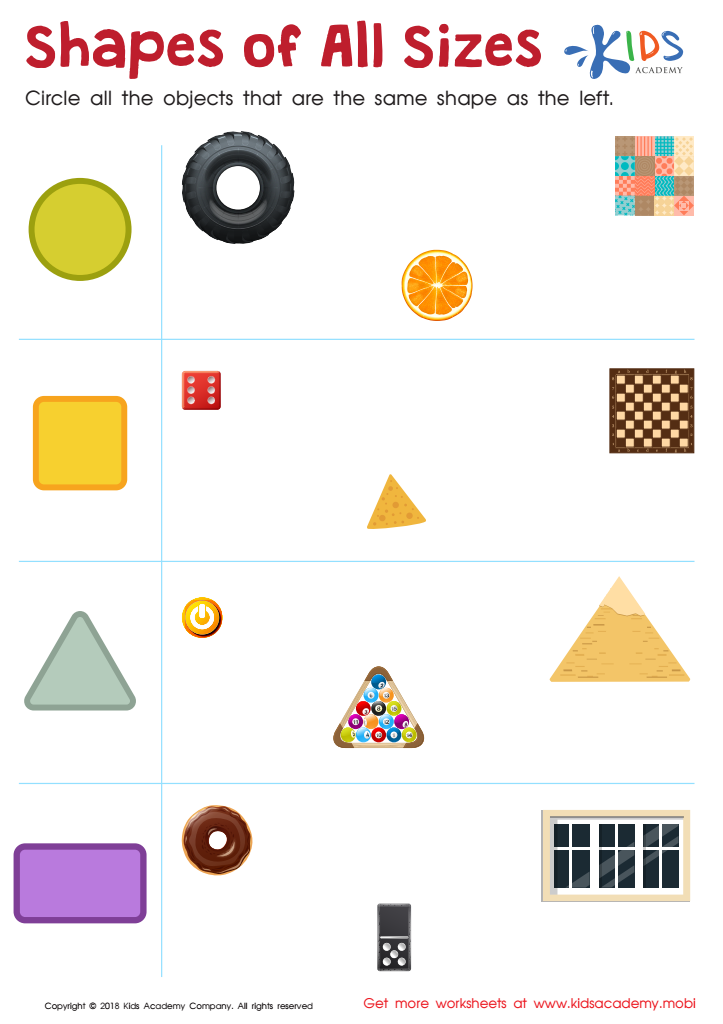
Shapes of All Sizes Worksheet
 Assign to My Students
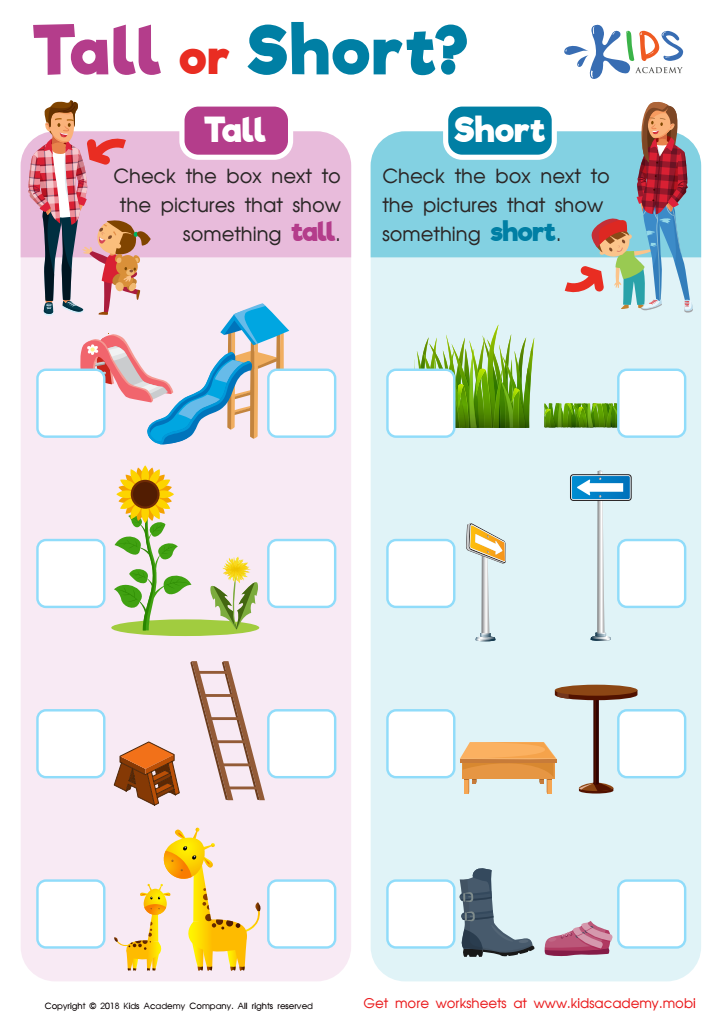
Tall or Short? Worksheet
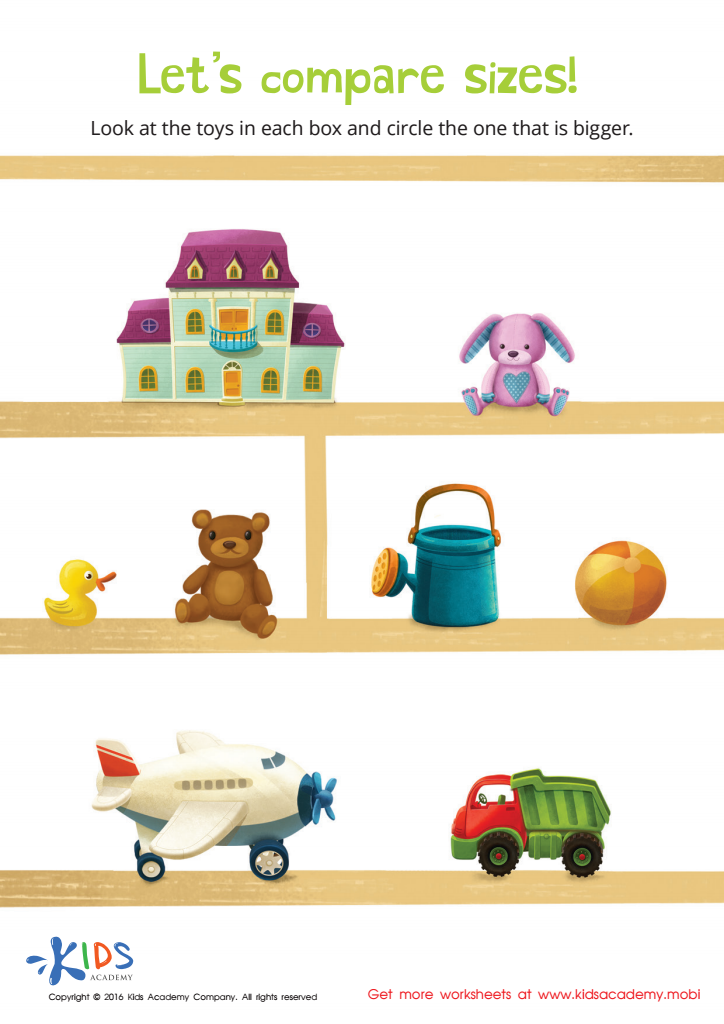
Classifying by Size Sorting Worksheet
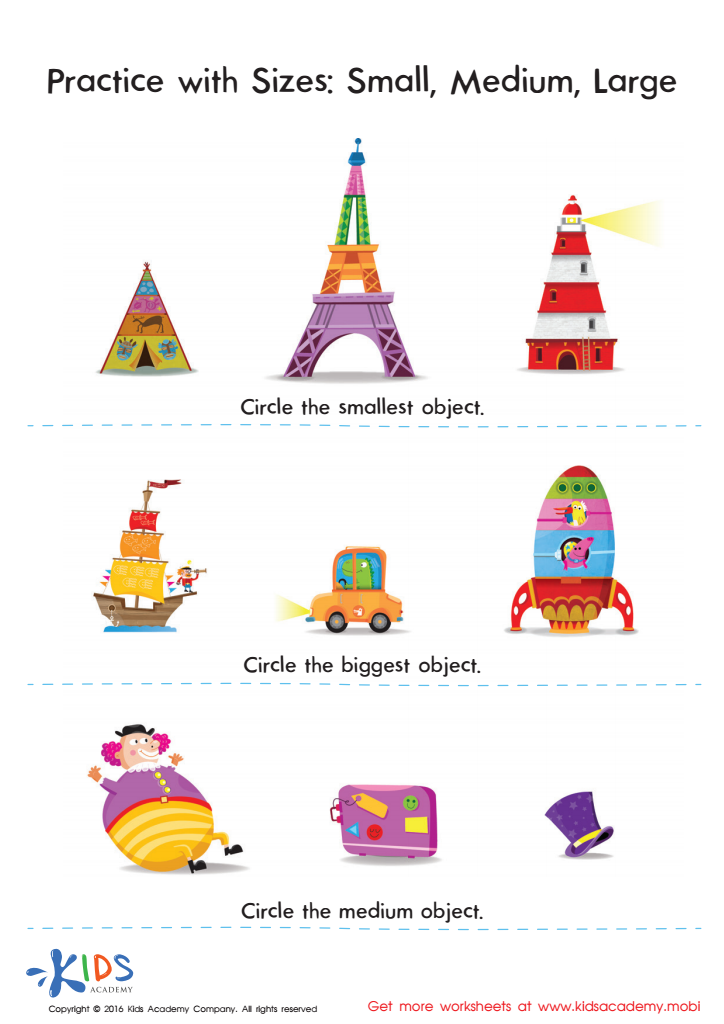




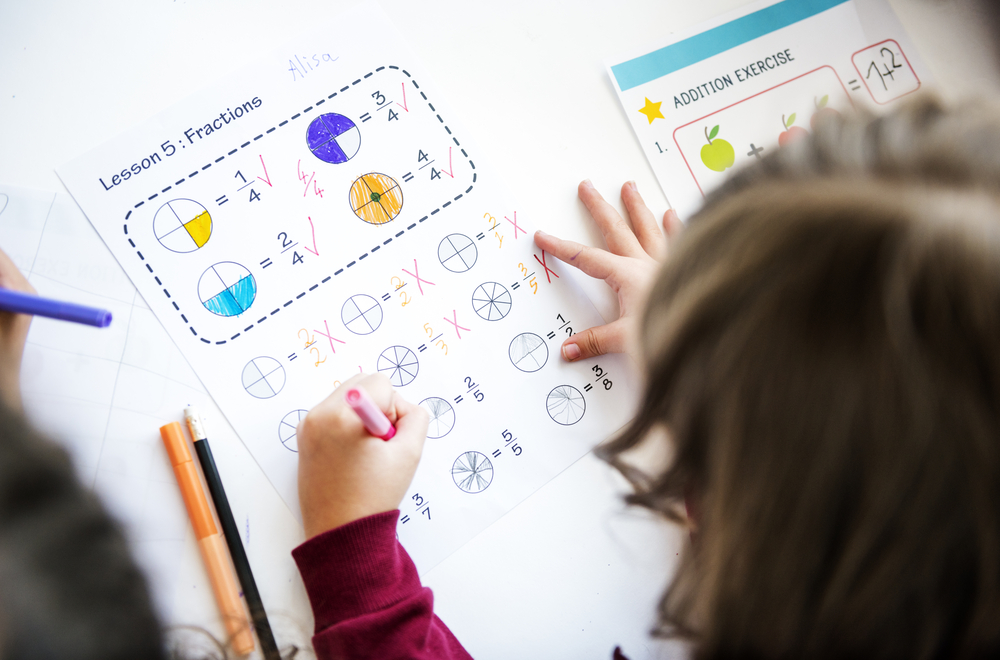



Understanding sizes is a crucial developmental milestone for children ages 5-6, and both parents and teachers should prioritize this learning aspect. At this age, children are starting to explore the world and make sense of their surroundings. Learning about sizes—big, small, tall, short, wide, and narrow—helps them understand their environment and communicate observations effectively.
This knowledge lays the foundation for essential skills in mathematics, as children begin to compare and classify objects. Comprehending sizes also nurtures critical thinking, problem-solving abilities, and spatial awareness. For instance, children learn to arrange items by size or select appropriate materials for tasks, which fosters independence and confidence.
Moreover, understanding sizes aids in real-world applications, such as recognizing sizes in books, clothing, and food portions, enhancing their decision-making capabilities. Parents and teachers can facilitate this learning through engaging activities, such as sorting games, building blocks, and measuring objects, which promote active participation.
Ultimately, focusing on size comprehension equips children with the skills they need for more complex concepts in later grades, supporting their overall cognitive development and future academic success. Encouraging curiosity and exploration during this stage can foster a lifelong love of learning.








