Verb identification Worksheets for Ages 5-6
3 filtered results
-
From - To
Discover our specially designed Verb Identification Worksheets for ages 5-6 at Kids Academy! These engaging resources help young learners understand verbs' vital role in sentences. Our worksheets offer a variety of activities that make identifying and using verbs fun and interactive. As your child completes each task, they'll develop essential language skills, fostering a strong grammatical foundation. Perfect for both classroom and at-home practice, these vibrant worksheets make learning enjoyable and effective. Empower your child's reading and writing by accessing our versatile verb identification sheets today, and watch their confidence and proficiency soar!
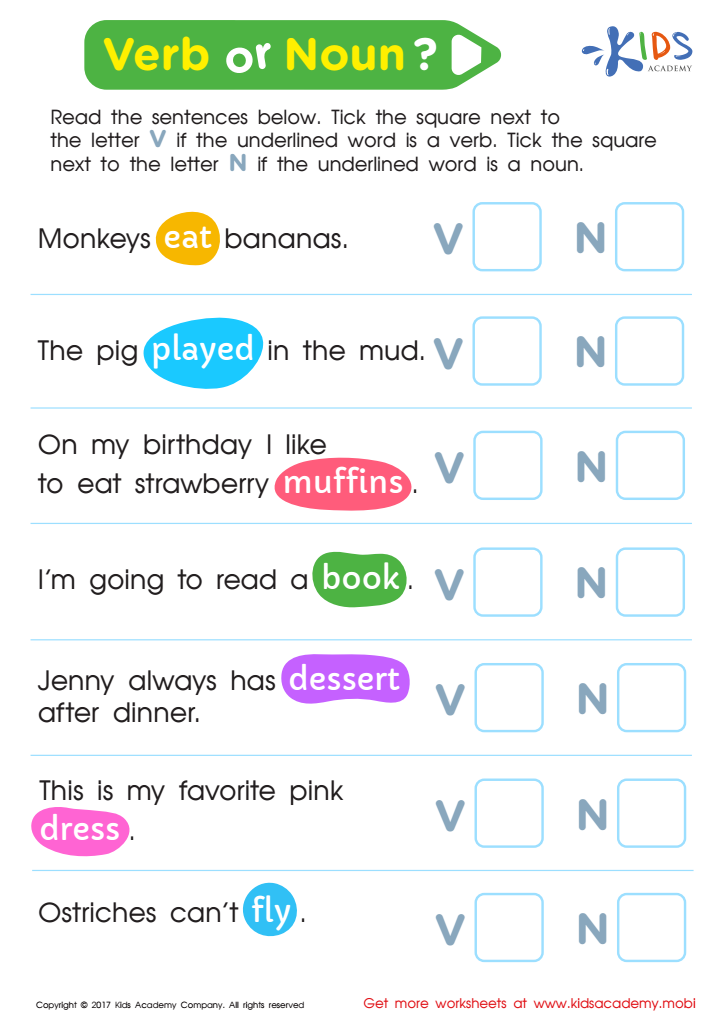
Verb or Noun Worksheet
 Assign to My Students
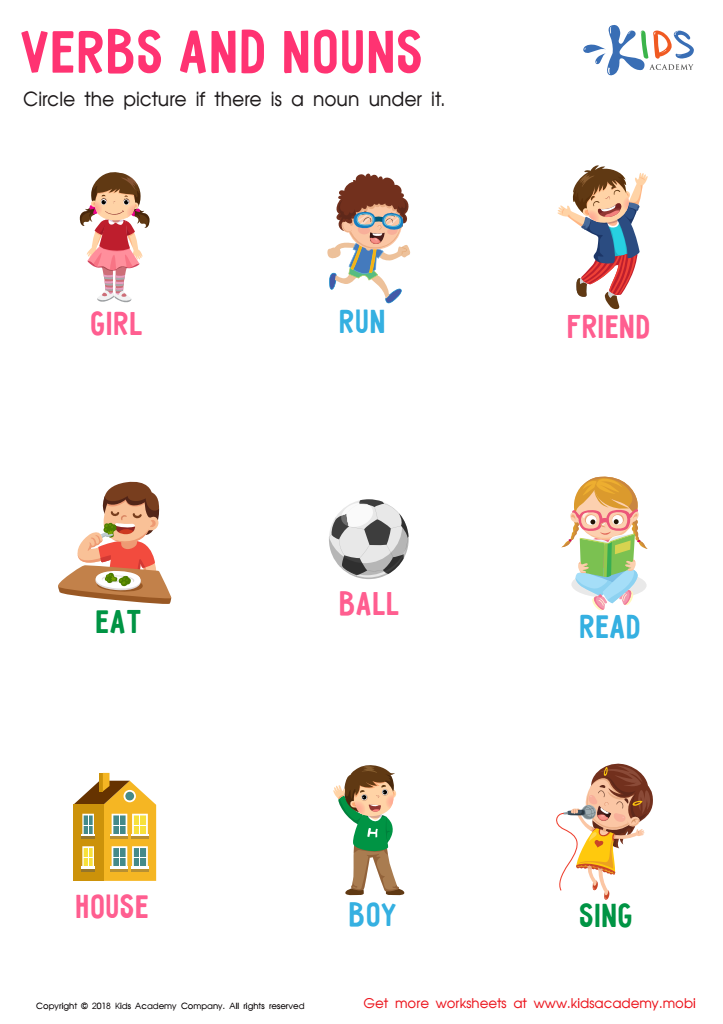
Verbs and Nouns Worksheet
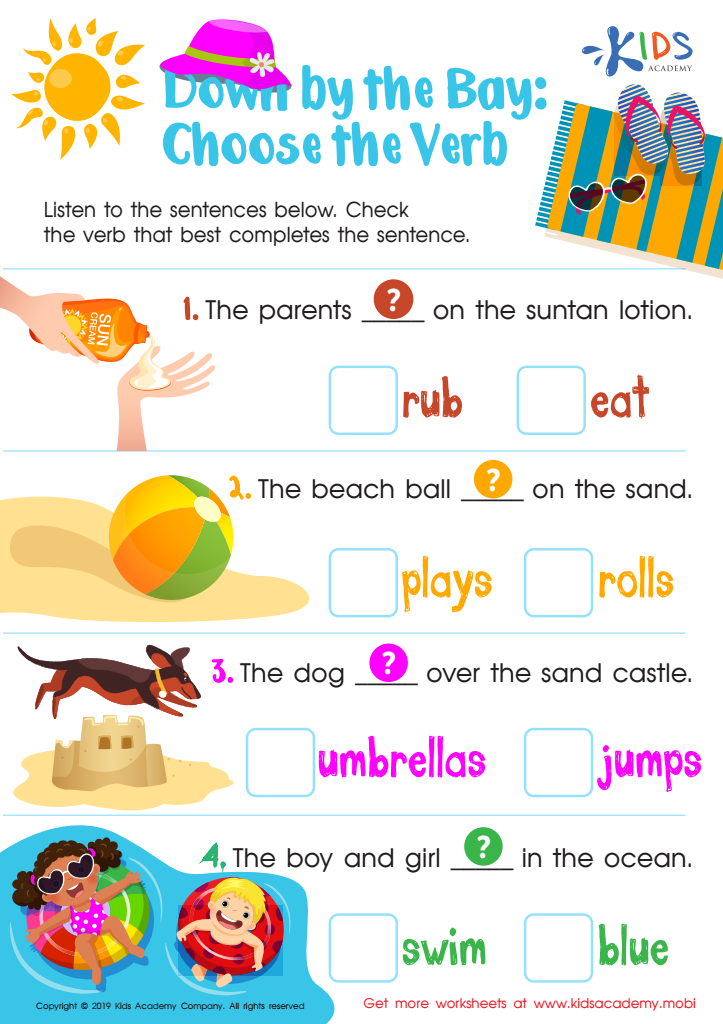
Down by the Bay: Choose the Verb Worksheet







Verb identification is a fundamental skill that supports early language development in children, making it essential for parents and teachers to emphasize for ages 5-6. Verbs form the backbone of sentences, providing action and meaning. When children grasp what verbs are and how to identify them, they become better equipped to understand and construct coherent sentences, fostering stronger communication skills.
At ages 5-6, children's brains are particularly receptive to learning language structures. By consistently integrating lessons on verbs, parents and teachers can help bridge developmental milestones in both oral and written language. Knowing verbs helps kids comprehend stories better, allowing them to follow narratives and describe events or actions more accurately.
Furthermore, early verb identification can enrich a child's vocabulary. As they learn to enumerate actions, their communication becomes more detailed and inventive, laying the groundwork for more advanced literacy skills in the future. This skill enhances their ability to follow instructions, collaborate with peers, and actively participate in classroom activities—all vital for academic success.
Ultimately, equipping young children with the ability to identify verbs empowers them with a building block that supports all other areas of language learning, boosts confidence, and fosters a lifelong love of reading and storytelling.








