Visual learning stimulation Worksheets for Ages 5-6
3 filtered results
-
From - To
Discover our engaging Visual Learning Stimulation Worksheets designed specifically for children aged 5-6. These interactive resources aim to enhance visual processing skills through captivating activities that spark creativity and excitement in young learners. Our worksheets are perfect for reinforcing essential skills such as pattern recognition, shape identification, and color differentiation while providing hours of fun. Each worksheet is crafted to be age-appropriate, ensuring they are both educational and enjoyable. Empower your child’s learning journey at home or in the classroom with our vibrant and stimulating exercises that pave the way for academic success and confidence in visual learning!
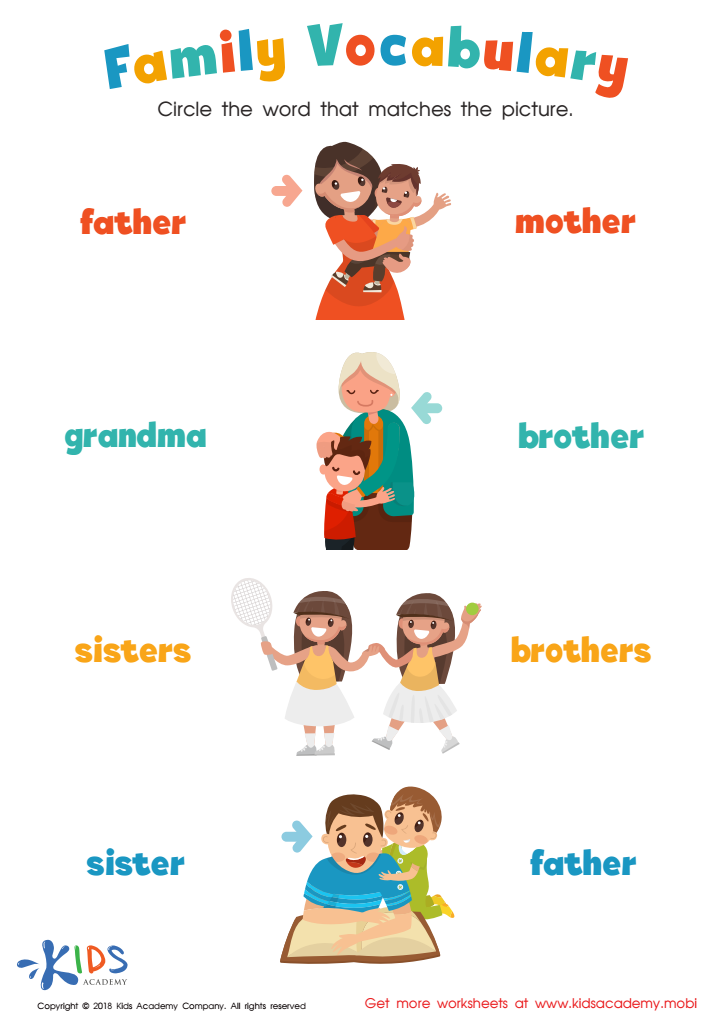
Family Vocabulary Worksheet
 Assign to My Students







Visual learning stimulation is crucial for children aged 5-6 as it directly impacts their cognitive development and enhances their foundational skills in literacy and numeracy. At this age, children are in a pivotal stage of cognitive growth where they begin to make sense of the world around them. Engaging visual stimuli, such as pictures, charts, and interactive displays, make learning more tangible and relatable, aiding retention and comprehension.
Moreover, young learners are naturally drawn to colors, shapes, and patterns, which helps to capture their interest and attention. Using visual aids can facilitate better understanding of complex concepts, making abstract ideas more concrete. For example, visuals in storytelling can ignite imagination and promote vocabulary development, while graphic organizers can help structure their thoughts in math or science.
Additionally, integrating visual learning supports different learning styles. Visual learners, in particular, thrive in environments that utilize imagery to convey information. When parents or teachers prioritize visual learning stimulation, they empower children to engage more deeply with the content, foster creativity, and build critical thinking skills. In short, embracing visual aids ensures a richer, more effective learning experience, setting the foundation for lifelong learning success.








