Basic geometry knowledge 2D Shapes Worksheets for Ages 5-6
3 filtered results
-
From - To
Explore our engaging "Basic Geometry Knowledge: 2D Shapes Worksheets for Ages 5-6." Designed to help young learners grasp fundamental geometric concepts, these worksheets offer colorful illustrations and interactive activities for essential shape recognition. Children will enjoy identifying, tracing, and sorting shapes like circles, squares, and triangles, while developing critical thinking skills through fun exercises. Ideal for home or classroom use, these resources promote creativity and boost confidence in math. Our worksheets align with early education standards, ensuring a solid foundation in geometry. Make learning enjoyable and interactive with our comprehensive collection designed specifically for preschool and kindergarten aged children!
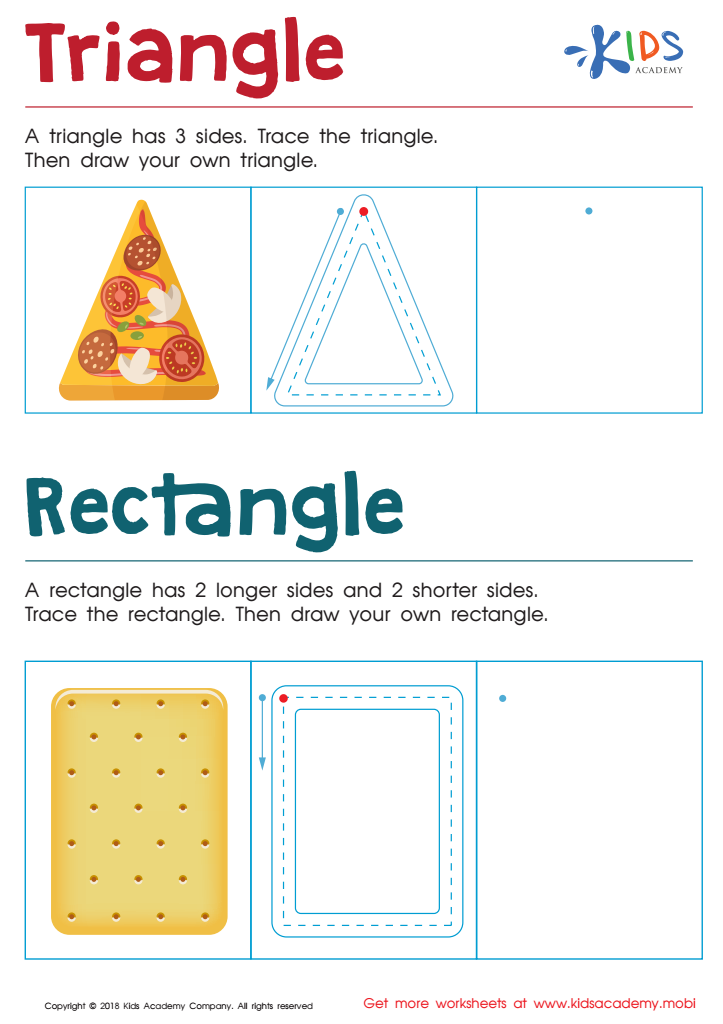
Triangle Rectangle Worksheet
 Assign to My Students


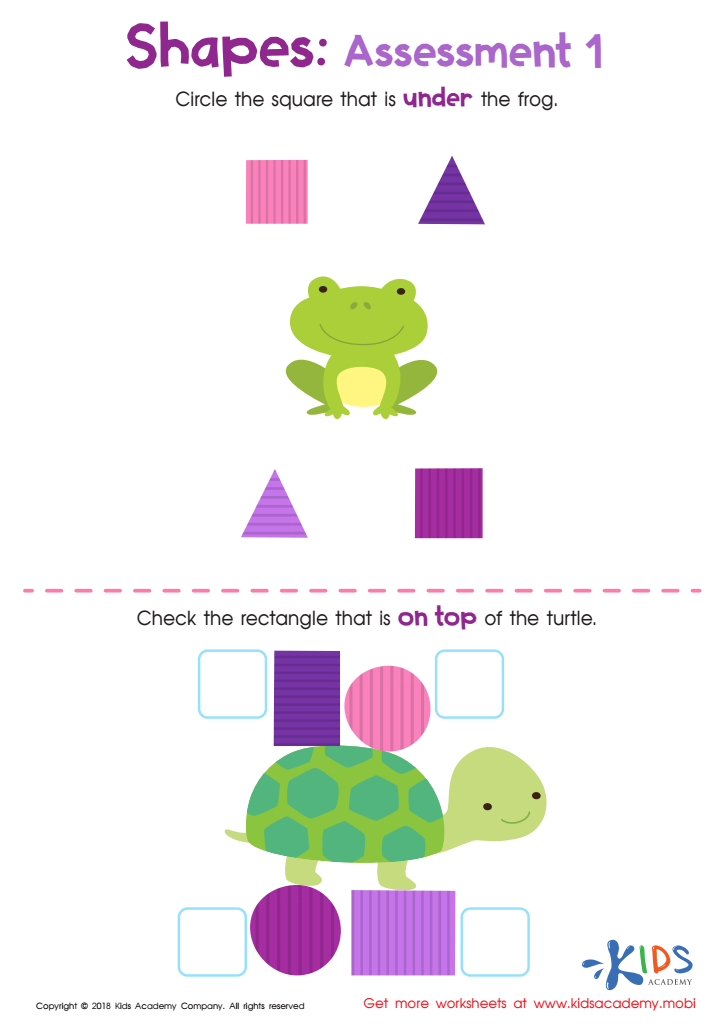
Geometry – Assessment 1 Worksheet
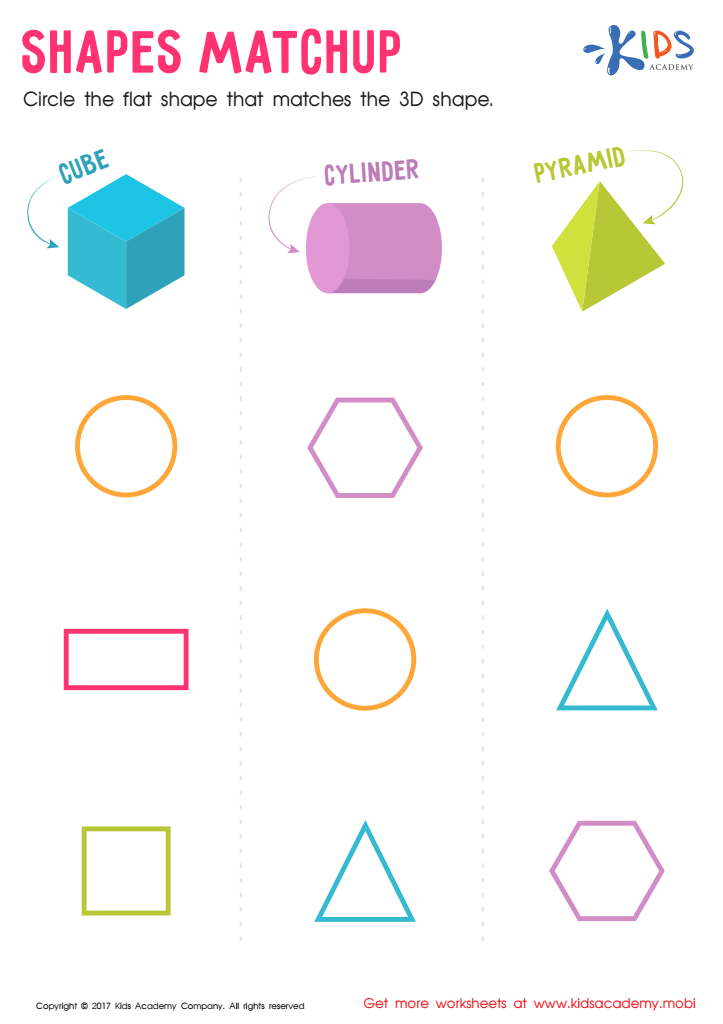
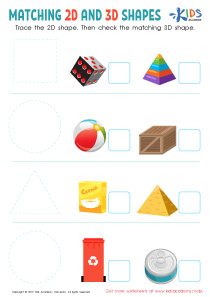
Shapes Matchup Worksheet








Basic geometry knowledge, particularly understanding 2D shapes, is crucial for early childhood development. For children ages 5-6, learning about shapes such as squares, triangles, circles, and rectangles lays a foundational understanding of spatial awareness, which is essential for future math skills.
When parents and teachers prioritize geometric knowledge, they help children recognize and categorize the world around them. Identifying shapes in everyday items enhances observational skills and critical thinking. It also fosters language development, as children learn to describe shapes’ properties—like sides and angles—leading to richer vocabulary and communication skills.
Furthermore, engaging with 2D shapes promotes creativity. Activities like drawing, crafting, or even playing shape-based games encourage children to express their creativity while solidifying their understanding of geometric concepts. These activities also enhance motor skills through hands-on learning, contributing to overall cognitive development.
Finally, early geometry lays the groundwork for more complex math problems in later years. By focusing on 2D shapes, parents and teachers create a positive and engaging learning environment where foundational math skills are solidified, ultimately supporting children's academic growth and confidence in their abilities.