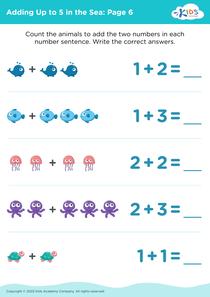
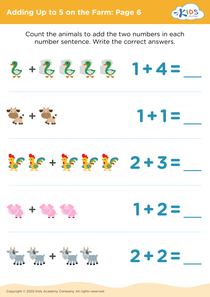
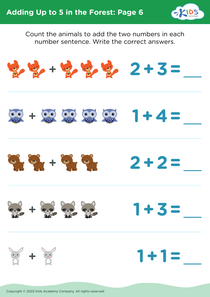
Basic addition practice Adding at the Zoo Worksheets for Ages 5-6
3 filtered results
-
From - To
Discover the fun of learning with our "Basic Addition Practice: Adding at the Zoo" worksheets, designed specifically for ages 5-6! This engaging activity brings math to life with adorable zoo animals. Children will enhance their basic addition skills by solving beginner-friendly math problems featuring their favorite animal friends. These printable worksheets offer a fantastic blend of education and enjoyment, making math practice a delightful experience for young learners. Perfect for school or home use, our zoo-themed worksheets help build a strong foundation in math while sparking curiosity and excitement in little explorers. Start the adventure today!
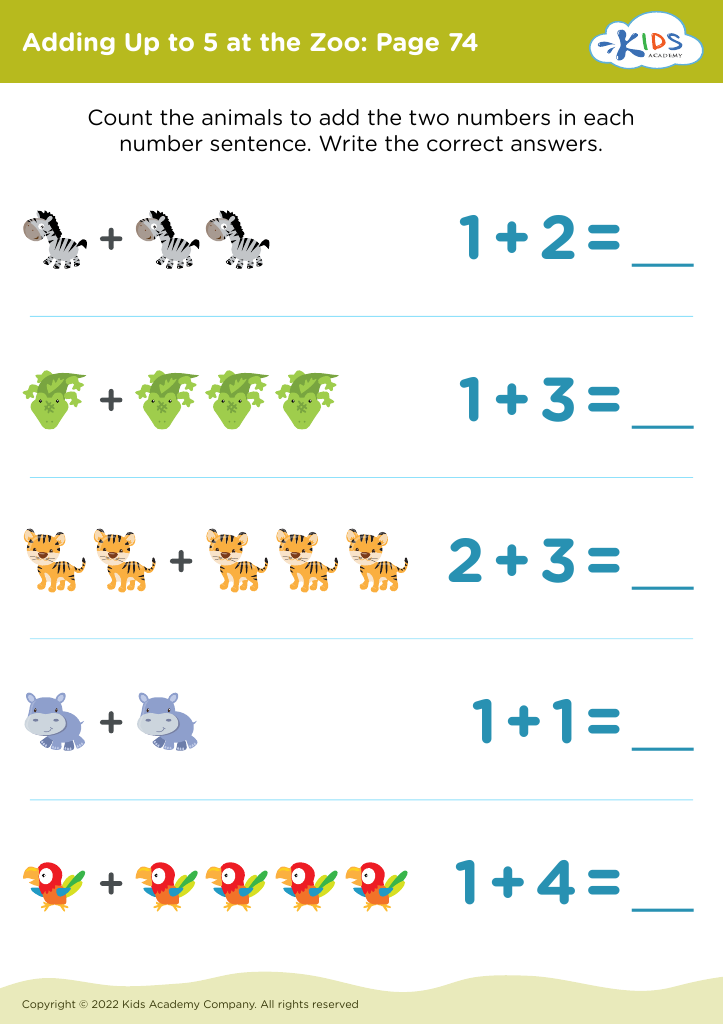
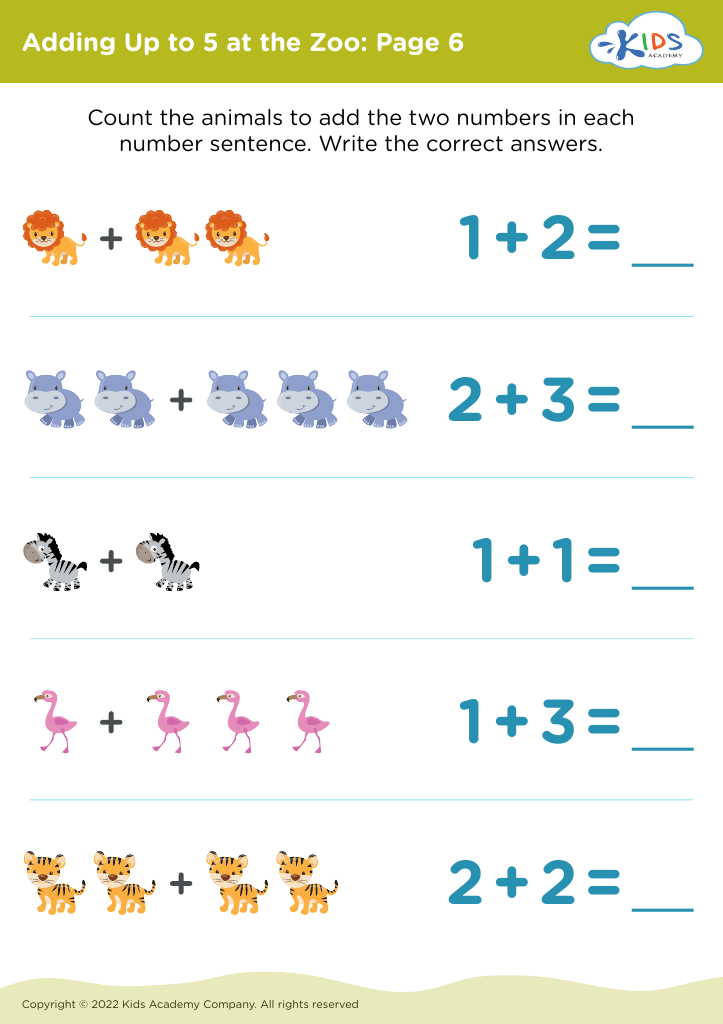
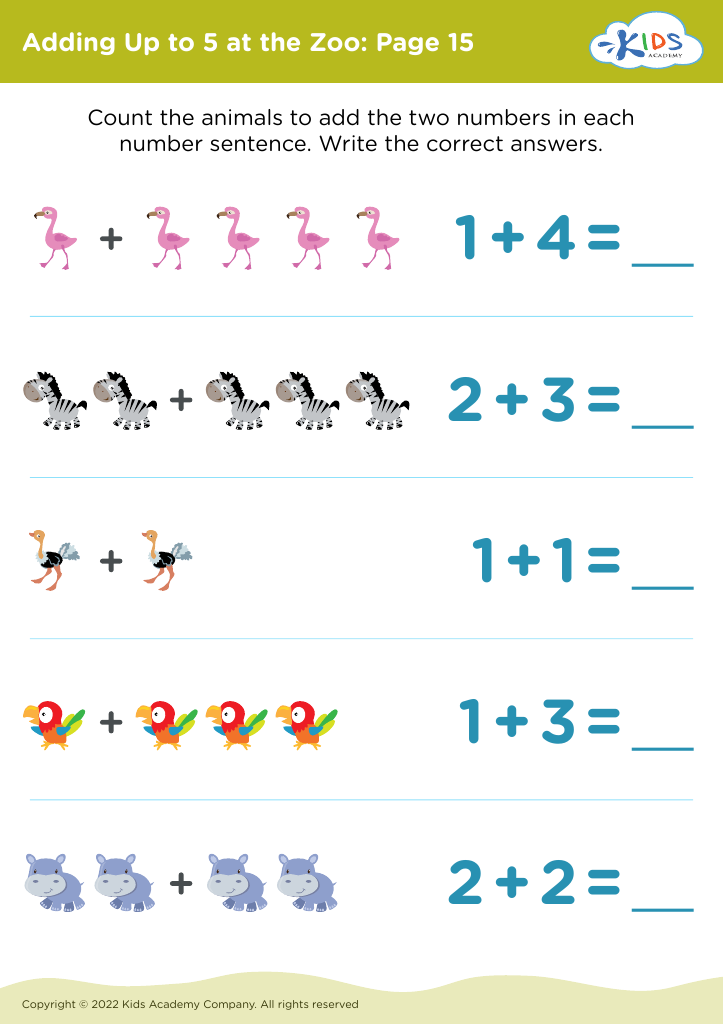



Basic addition practice is crucial for young children, and activities like "Adding at the Zoo" can make learning fun and engaging for ages 5-6. At this formative stage, children are developing foundational math skills that are essential for future academic success. Early exposure to addition helps to build their numerical understanding, enabling them to grasp more complex mathematical concepts later on. By integrating addition practice with a zoo theme, children are more likely to stay interested and motivated, as it combines learning with an imaginative play experience.
Additionally, this type of practice fosters problem-solving abilities and critical thinking. When children organize animal groups or count zoo items, they're not just learning numbers, but also cultivating their logical reasoning skills.
For parents and teachers, using themed exercises like "Adding at the Zoo" supports differentiated learning by accommodating various learning styles. Some children are visual learners who benefit from colorful images, while others might be kinesthetic learners thriving on interactive activities. This multifaceted approach ensures that all children, regardless of their preferred learning style, have a positive and impactful introduction to mathematics.
Ultimately, consistent and enjoyable early math practice sets a strong foundation, boosts confidence, and fosters a lifelong love for learning, making it a critical element in a child's educational journey.