Counting practice Adding at the Zoo Worksheets for Ages 5-6 - Page 2
41 filtered results
-
From - To
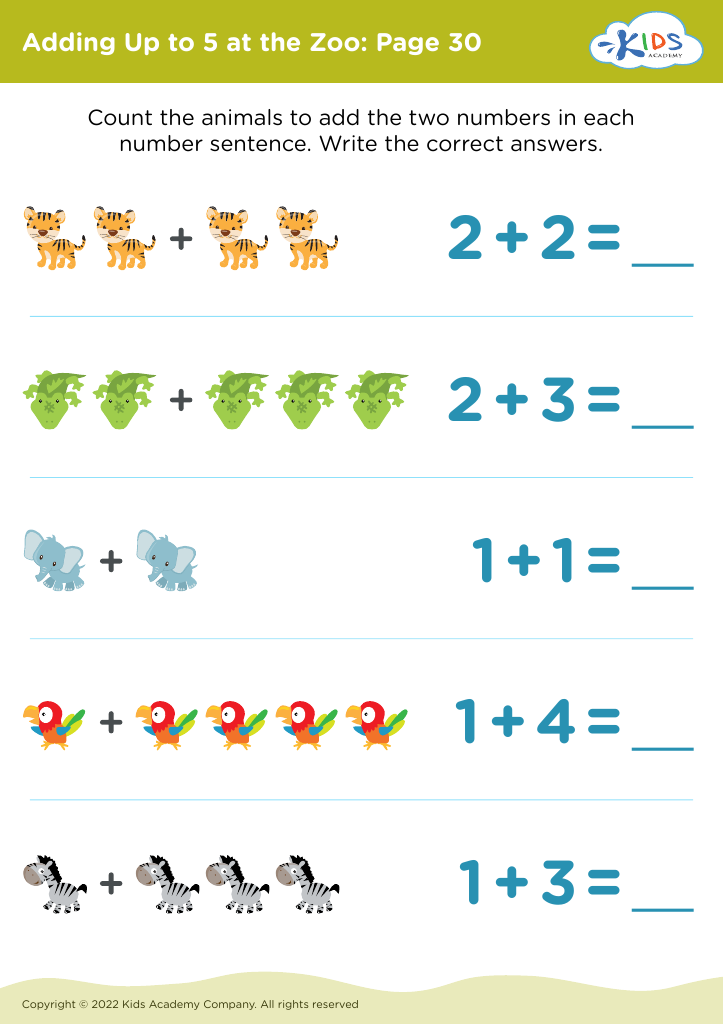
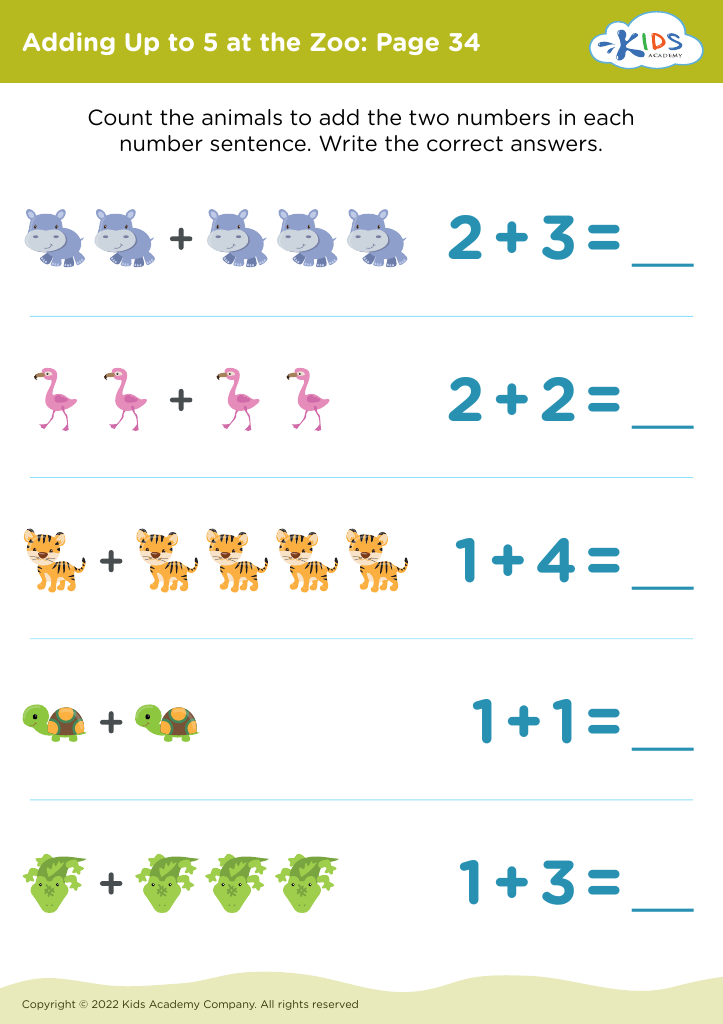
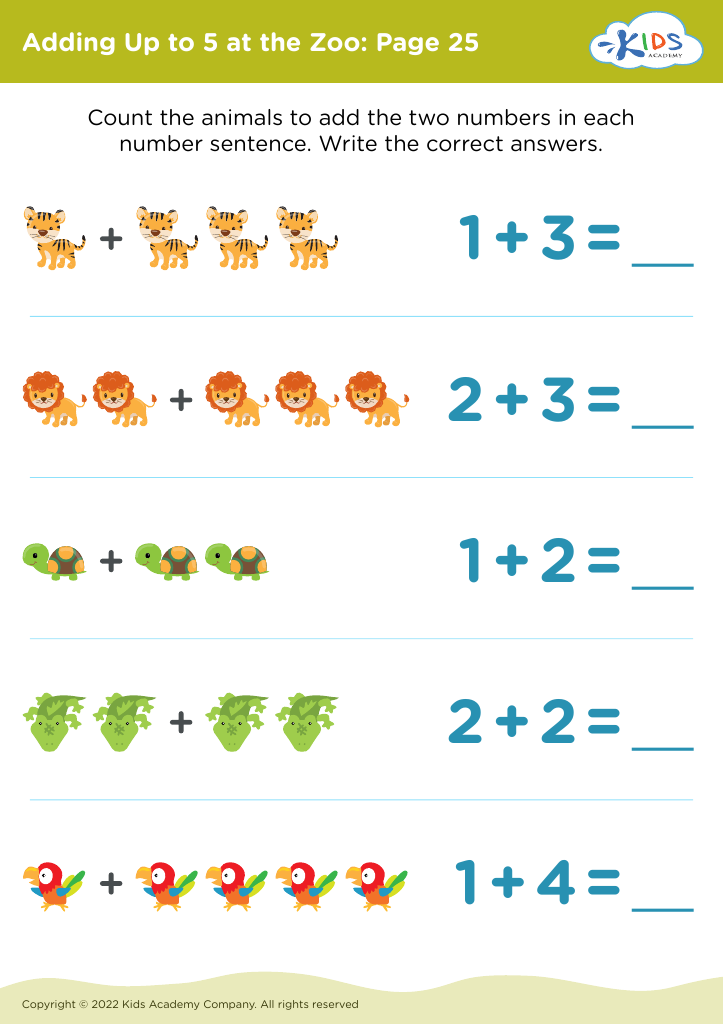
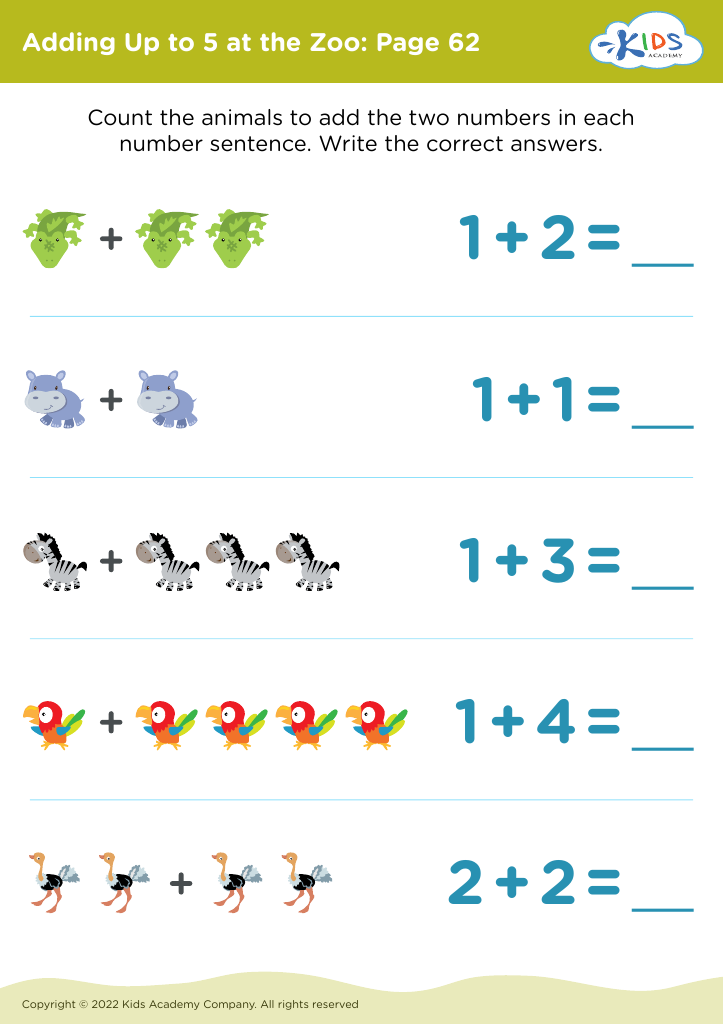
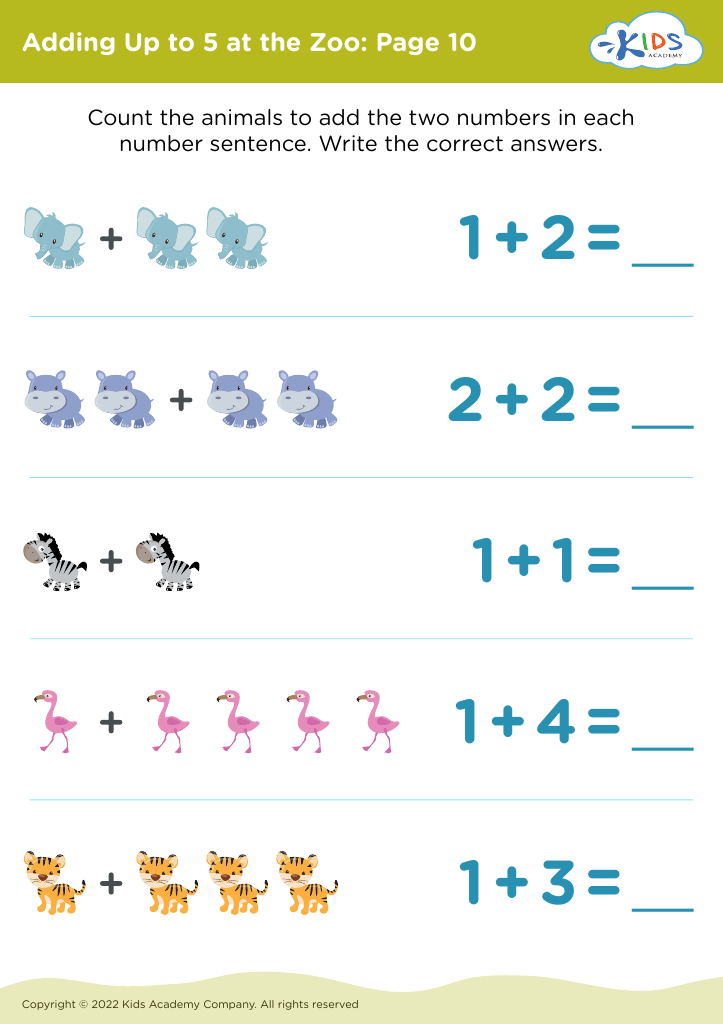
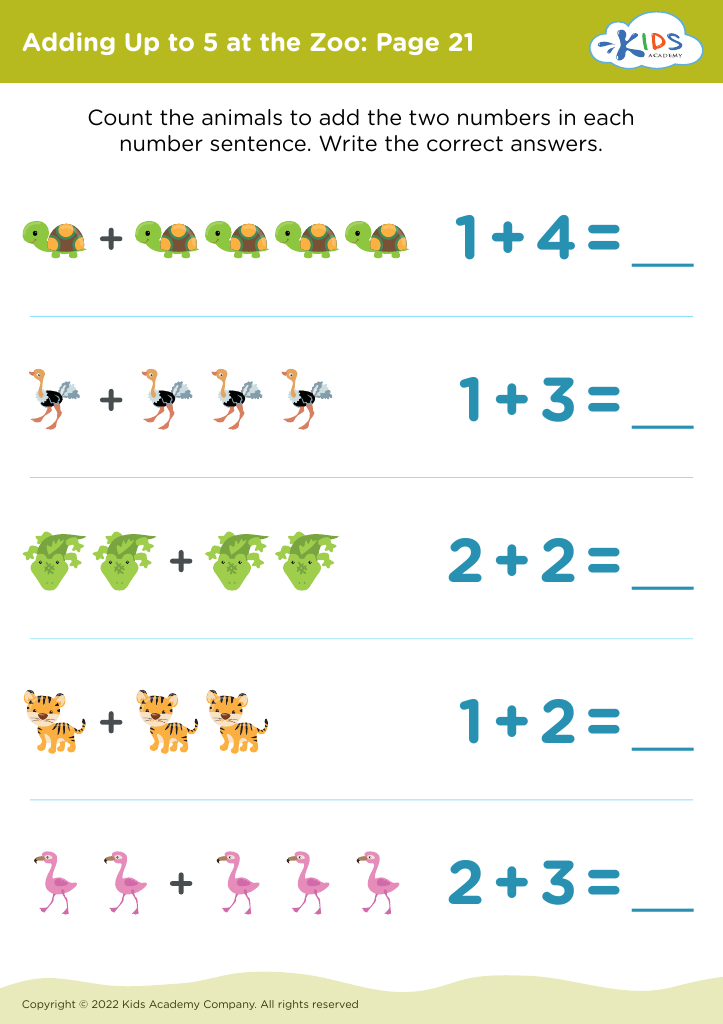
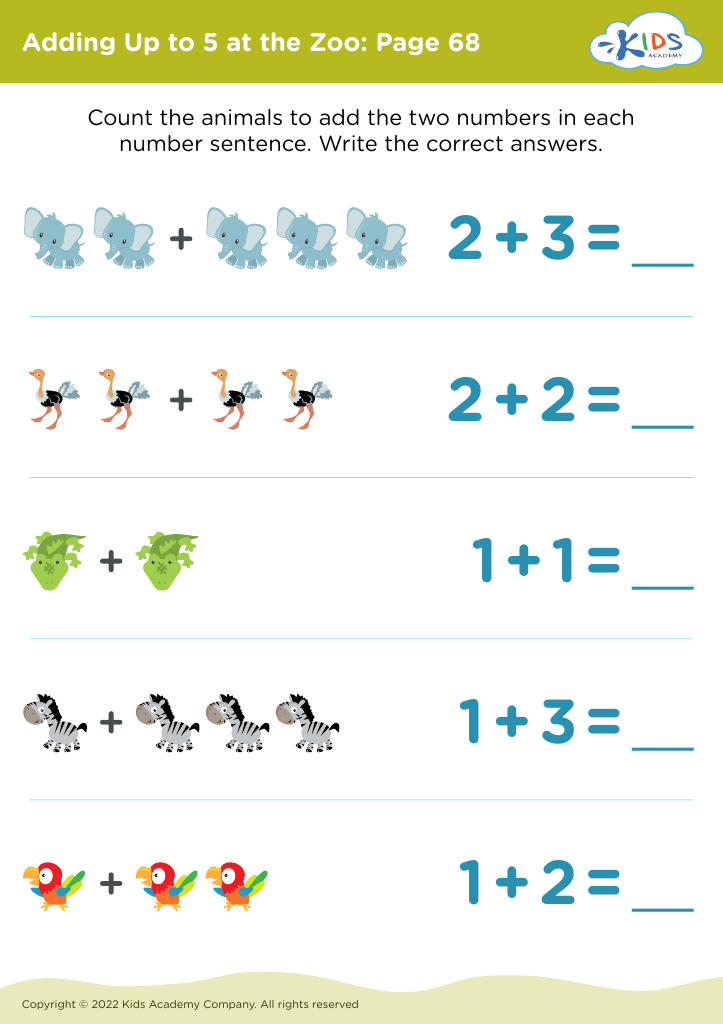
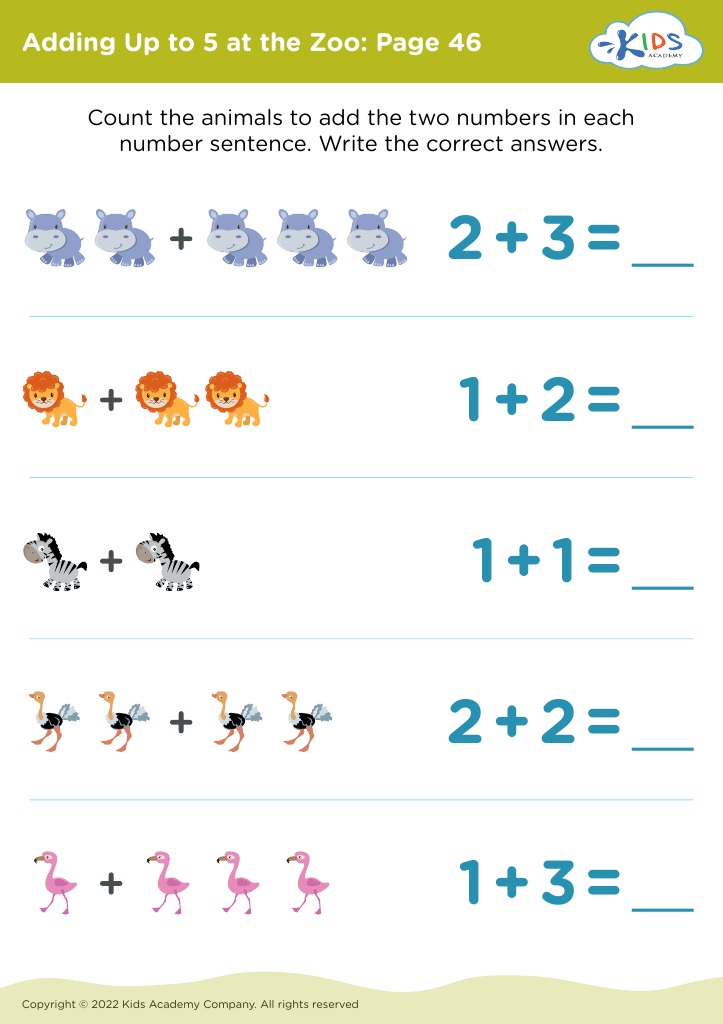
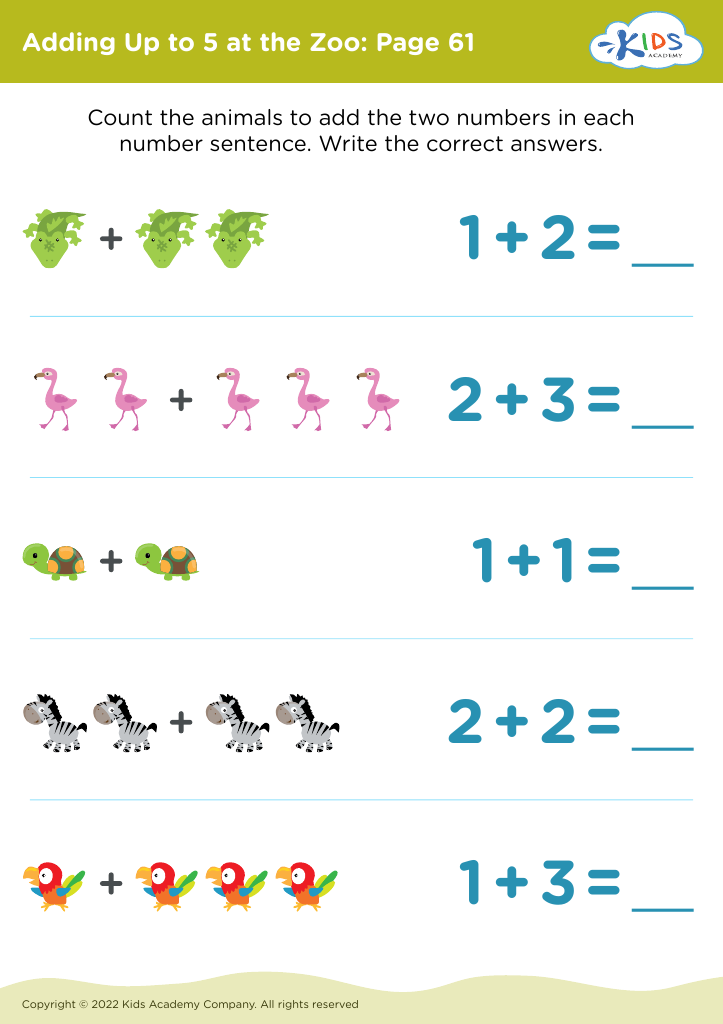
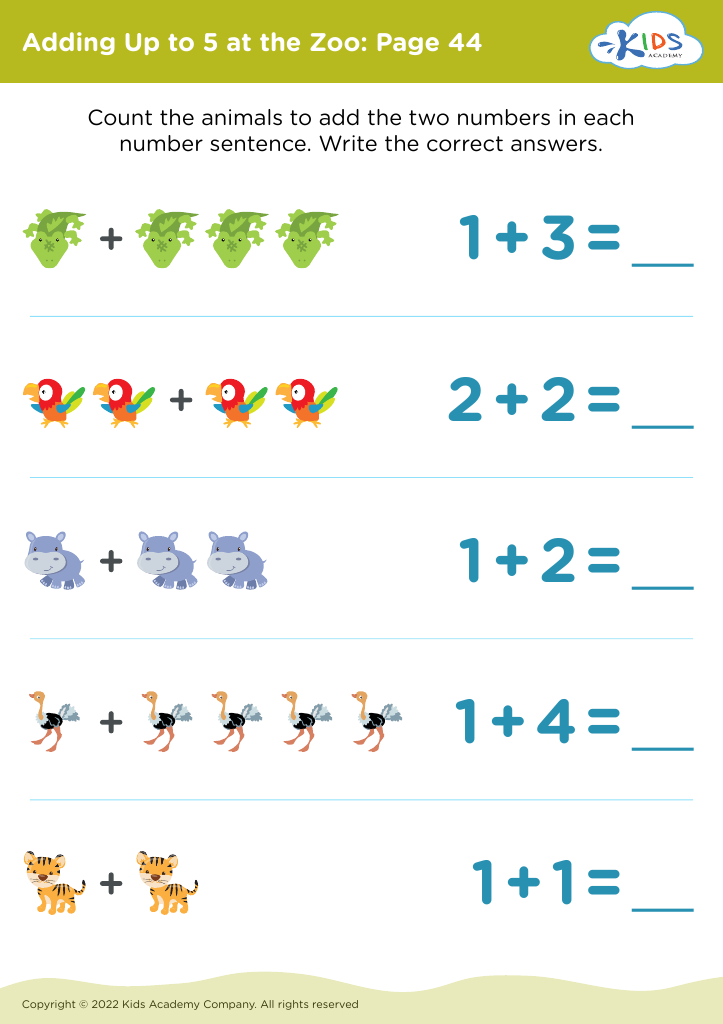
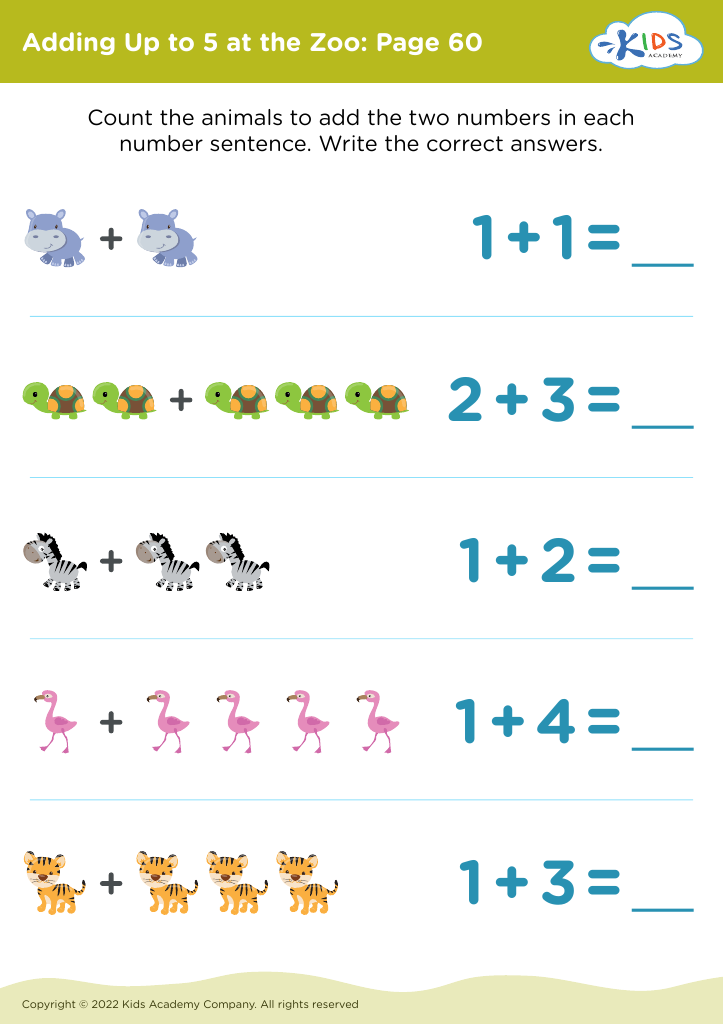
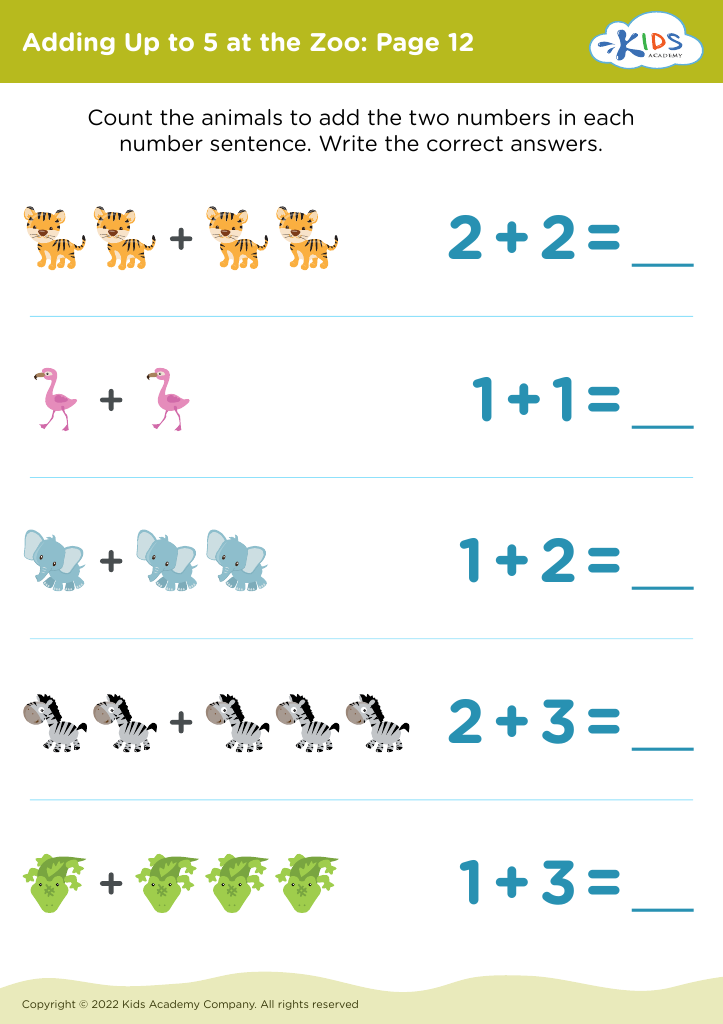
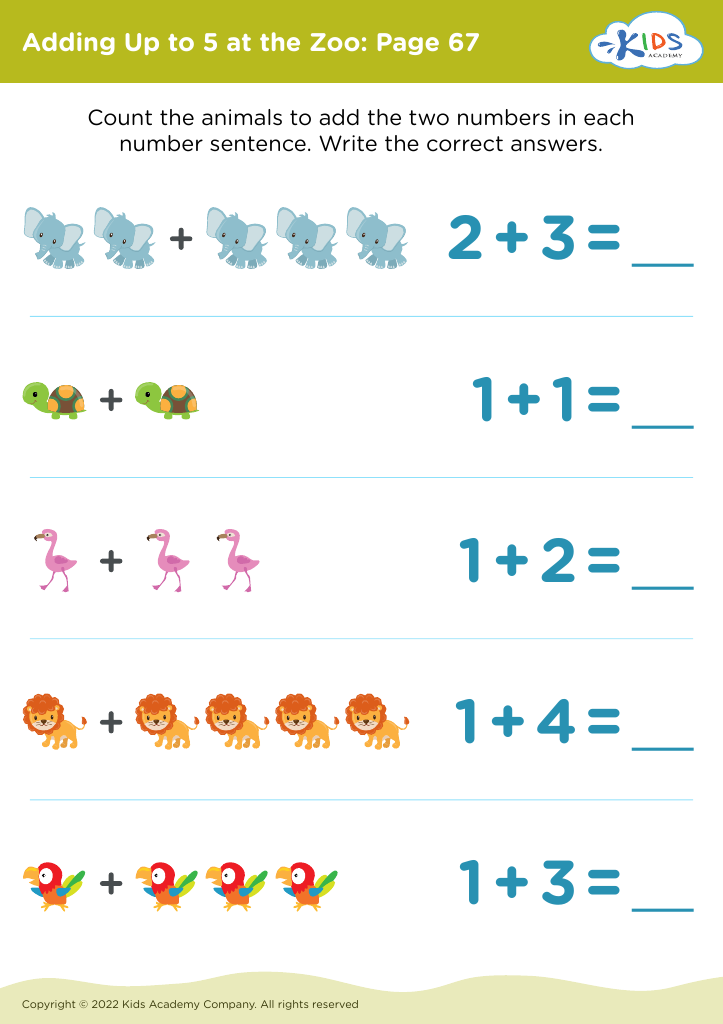
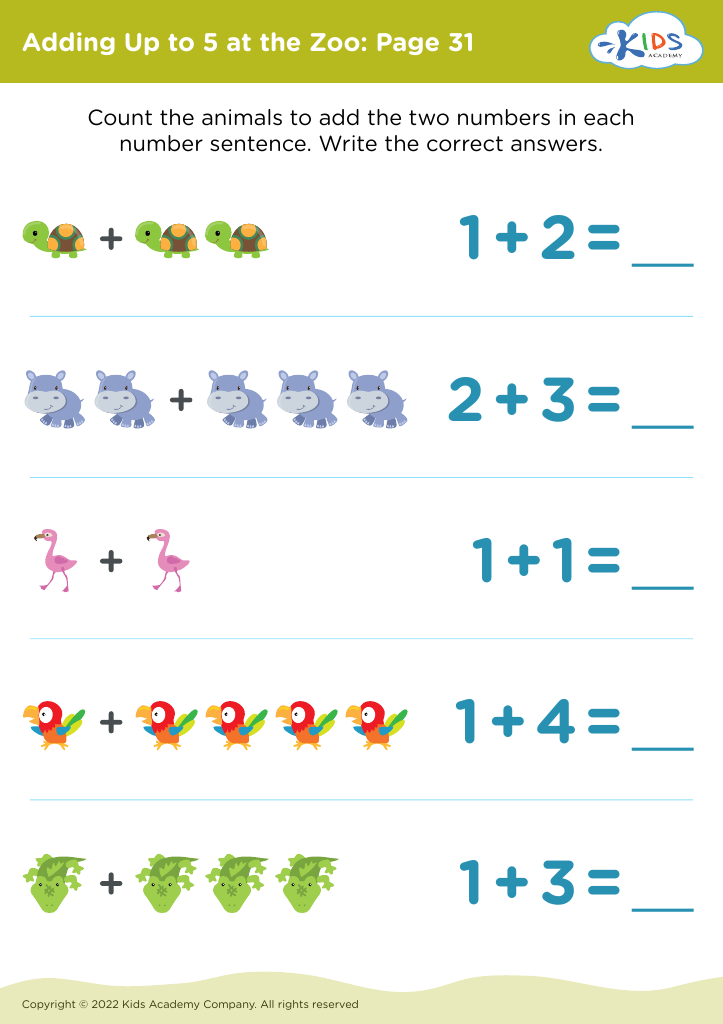
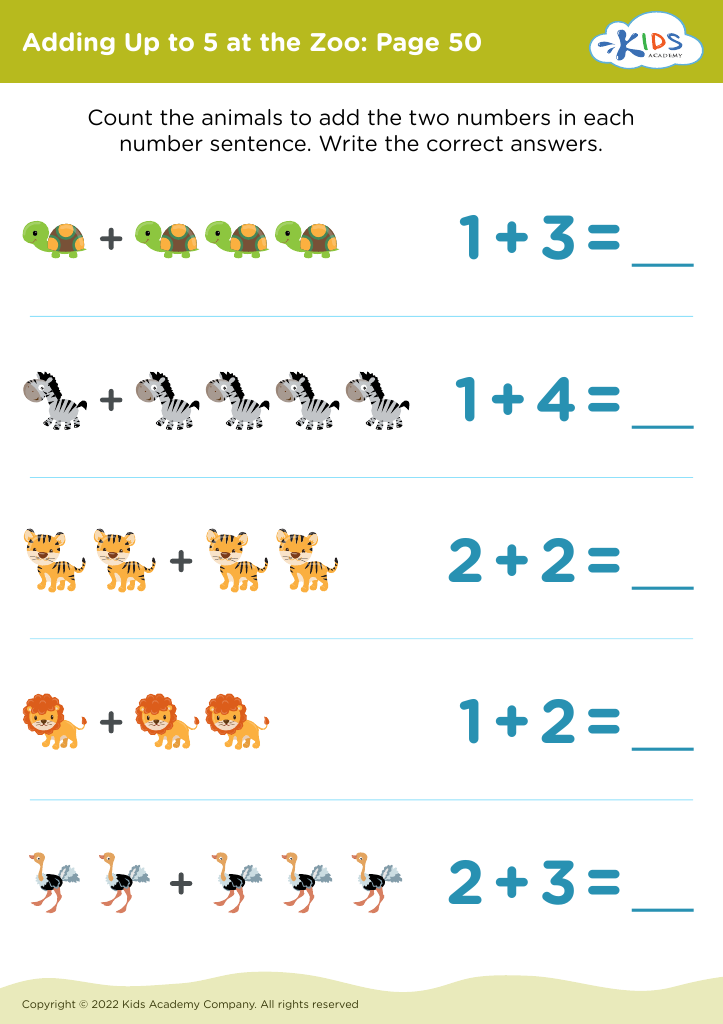
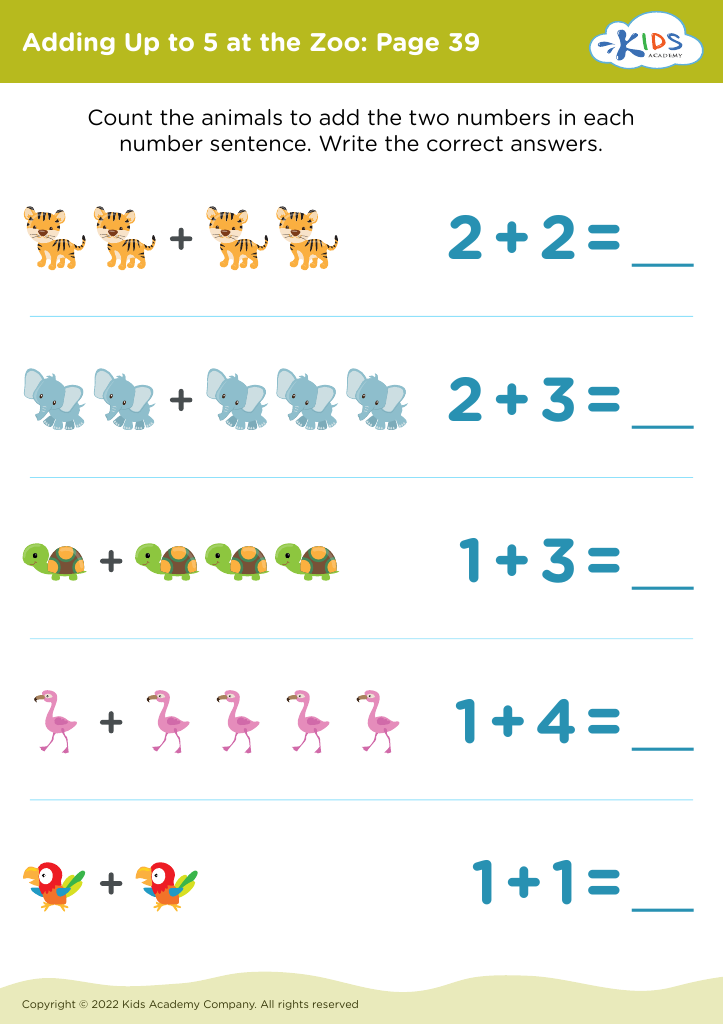
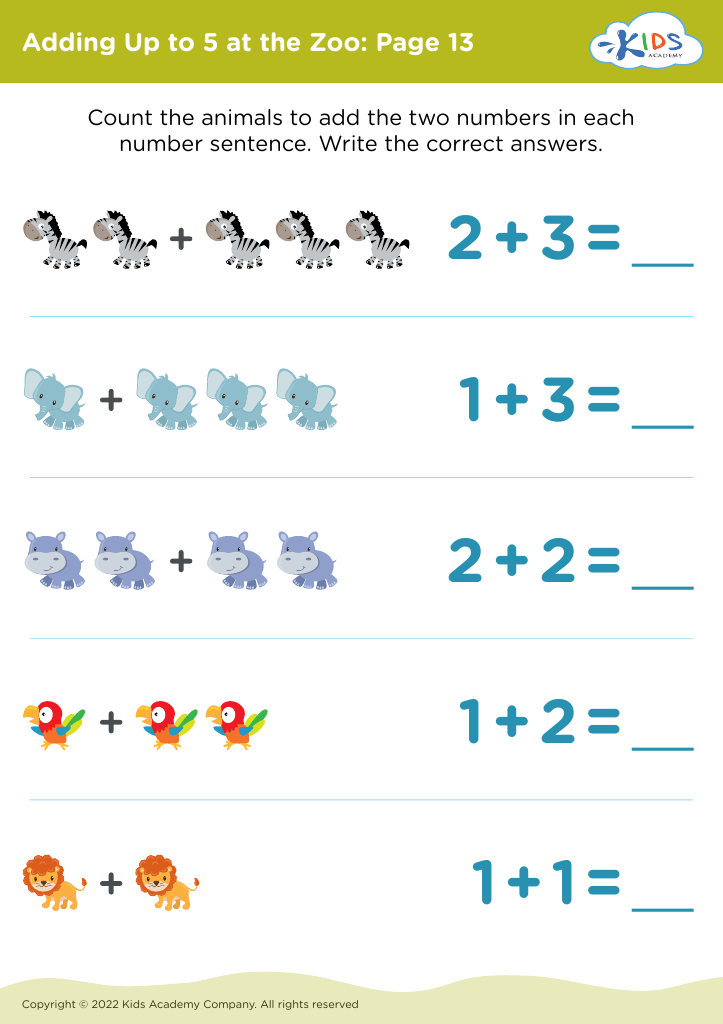



Counting practice at an early age lays the foundational blocks for numerical literacy, critical thinking, and problem-solving skills. Engaging children aged 5-6 at the zoo for counting practice presents a unique, immersive learning opportunity. Zoos are vibrant, dynamic environments bursting with varied stimuli, making learning more engaging and memorable for young minds.
Firstly, counting the number of animals, types of species, or even the number of zoo sections broadens not only math skills but also observational skills. It transforms abstract numbers into tangible, visible, and interactive concepts, making corresponding number words more influential.
Counting activities at the zoo are embedded with endless opportunities for real-life learning. For instance, asking a child to count the number of monkeys or birds emphasizes practical application, a stark contrast to digital and paper-based practice sheets. This transition from theoretical to situated learning enhances comprehension and retention.
Moreover, involving parents or teachers in this engaging learning method underscores the delight of cooperative learning while nurturing a supportive and encouraging educational environment. The comforting presence of familiar adults allows children to ask questions freely.
In conclusion, incorporating counting practice at the zoo into the learning journey fosters numerical literacy, structured problem-solving, and observational skills beneath an umbrella of fun, engagement, and family bonding.