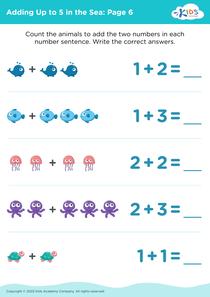
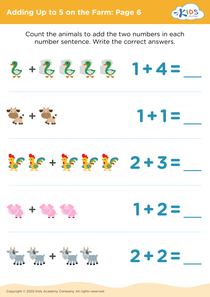
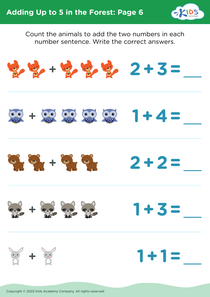
Hand-eye Coordination Adding at the Zoo Worksheets for Ages 5-6
3 filtered results
-
From - To
Explore our engaging "Hand-eye Coordination Adding at the Zoo Worksheets" designed for children ages 5-6! These fun-filled worksheets not only teach basic addition skills but also enhance hand-eye coordination through interactive activities featuring adorable zoo animals. Each worksheet encourages young learners to connect math concepts with real-world relevance, fostering an enjoyable learning experience. By engaging with colorful illustrations and playful scenarios, children will develop their counting and math abilities while honing fine motor skills. Perfect for classroom use or at-home learning, these worksheets provide an effective way to make math fun and memorable. Visit us today to start your math adventure at the zoo!
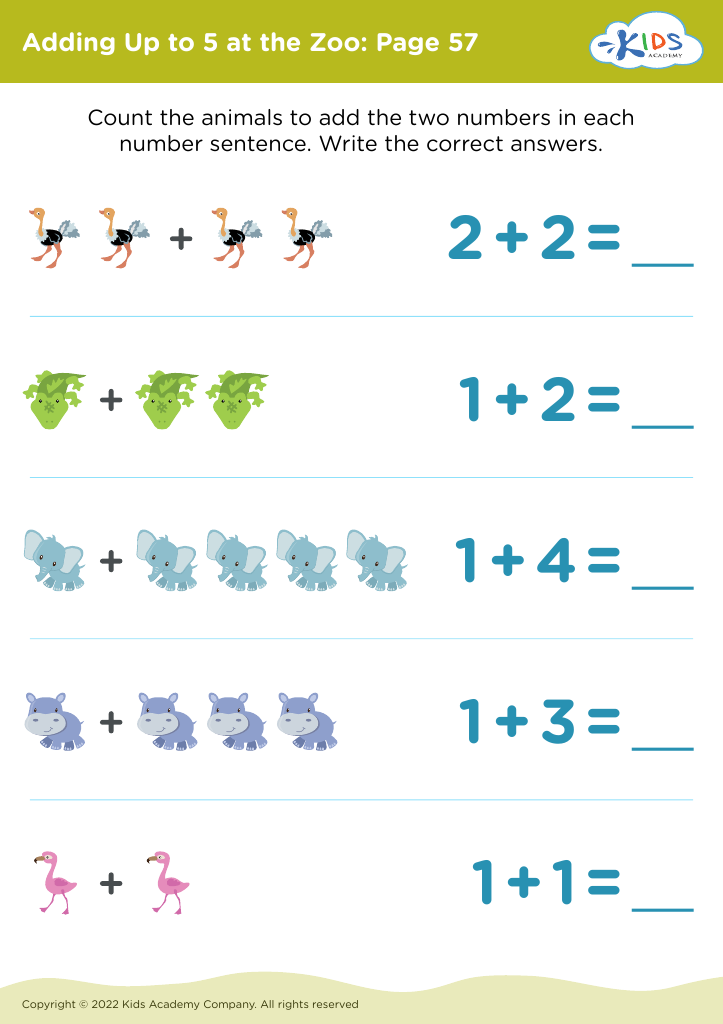
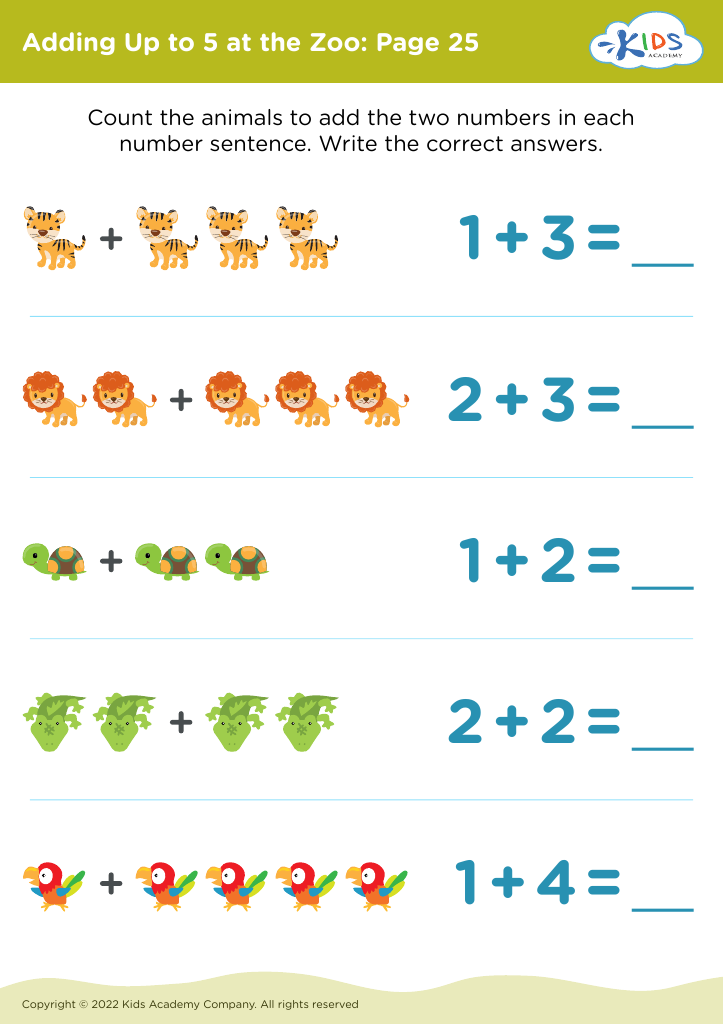
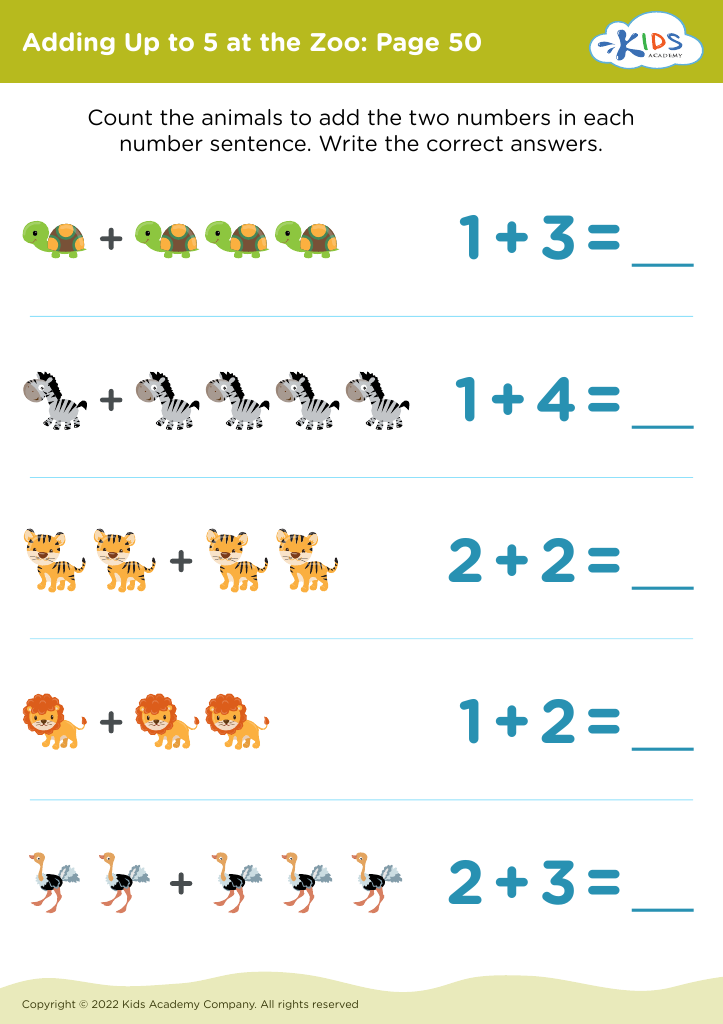



Hand-eye coordination is a crucial skill that significantly impacts a child's overall development, especially for children ages 5-6. Engaging in activities like "Hand-eye Coordination Adding at the Zoo" not only makes learning fun but also fosters physical and cognitive growth. This playful approach integrates mathematics and physical activity, helping children learn to count while improving their coordination.
For parents and teachers, caring about this development means promoting a well-rounded education. Improved hand-eye coordination aids fine motor skills, enhancing a child's ability to write, draw, and perform daily tasks such as buttoning shirts or using utensils. Additionally, the zoo theme engages children's imaginations and curiosity about animals, making learning more relatable.
Furthermore, activities that develop these skills in a dynamic setting can enhance social interactions with peers, as children often engage in cooperative play while mastering tasks. This collaboration builds confidence and encourages teamwork, essential attributes in future academic and social endeavors.
By focusing on programs like "Hand-eye Coordination Adding at the Zoo," parents and teachers can ensure children are prepared not only academically but also socially and physically, laying the groundwork for a lifetime of learning and success. Recognizing the importance of such activities invites both cognitive and physical development crucial for young learners.