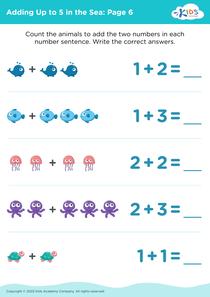
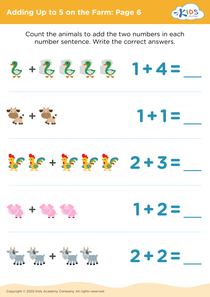
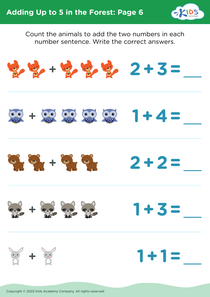
Problem-Solving Skills Adding at the Zoo Worksheets for Ages 5-6
4 filtered results
-
From - To
Welcome to our "Problem-Solving Skills Adding at the Zoo Worksheets" designed specifically for children aged 5-6! These engaging worksheets combine the joy of animals and the excitement of the zoo with essential math skills. Each activity encourages young learners to enhance their problem-solving abilities while practicing addition through fun, zoo-themed scenarios. Kids will encounter lively animal characters and fascinating situations that spark their creativity and critical thinking. Perfect for home or classroom use, our worksheets support early math education by making learning enjoyable. Help your child develop confidence in their math skills with these captivating, interactive challenges today!
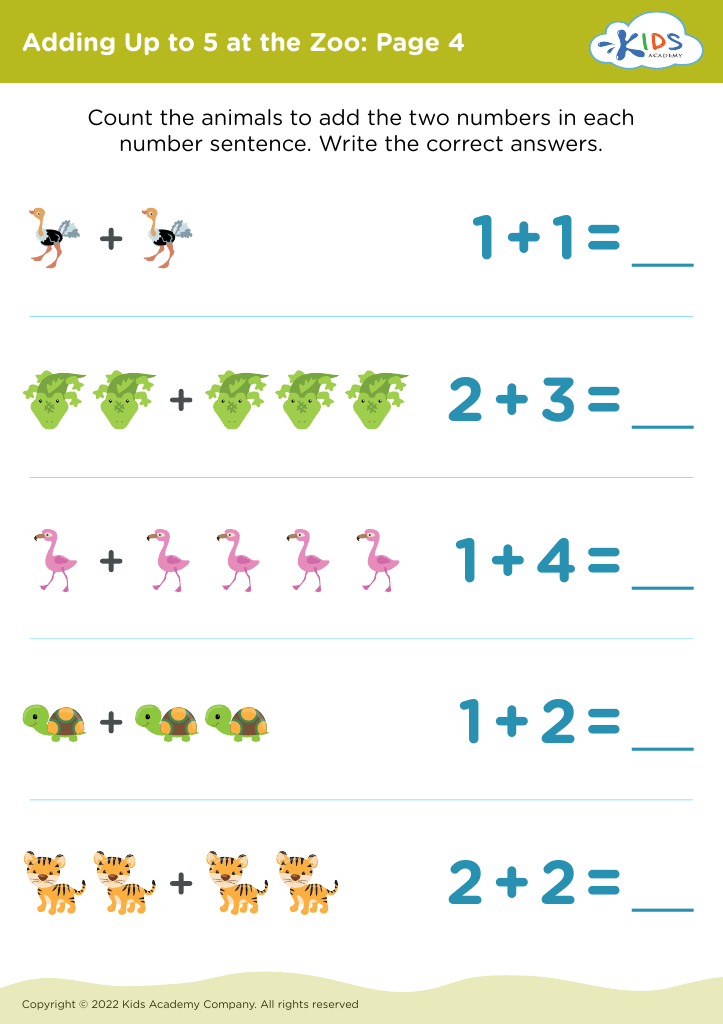
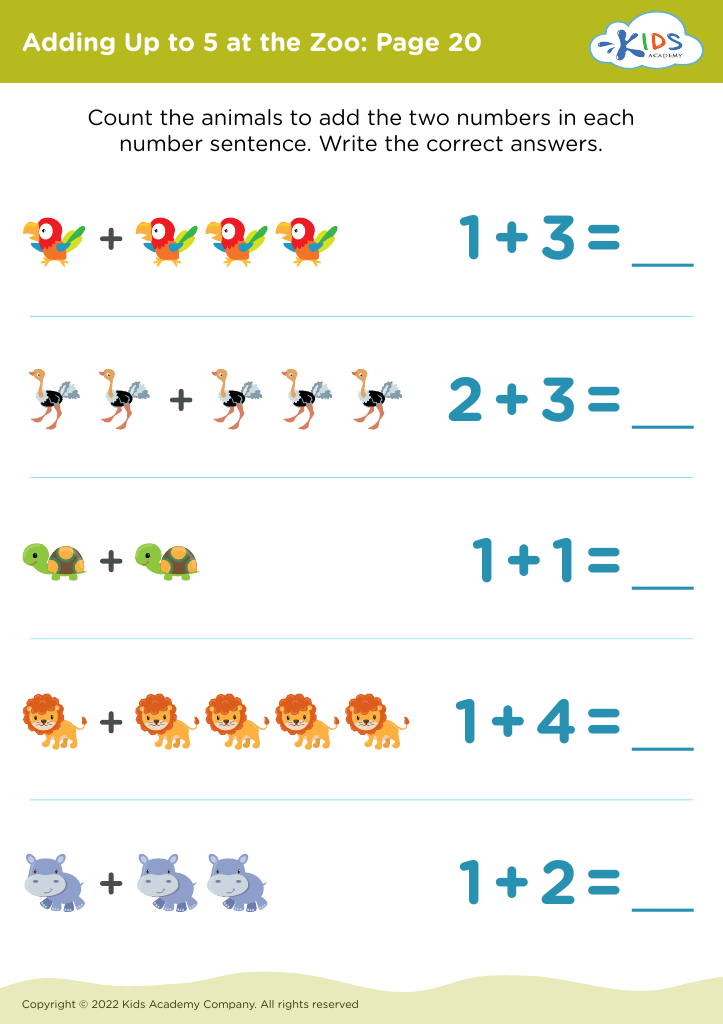
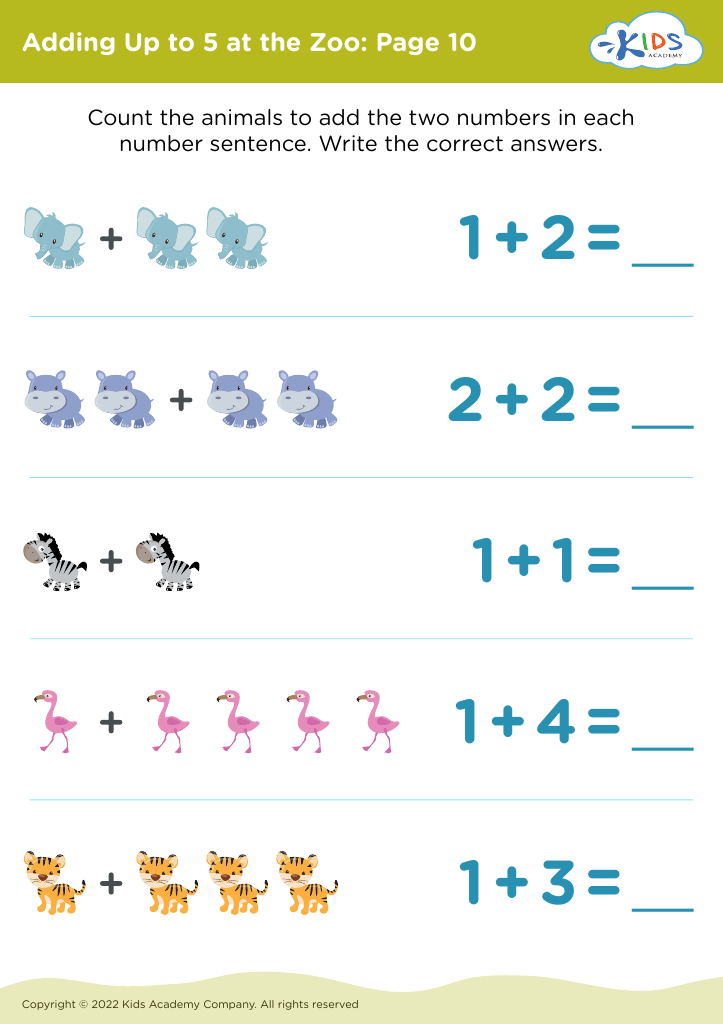
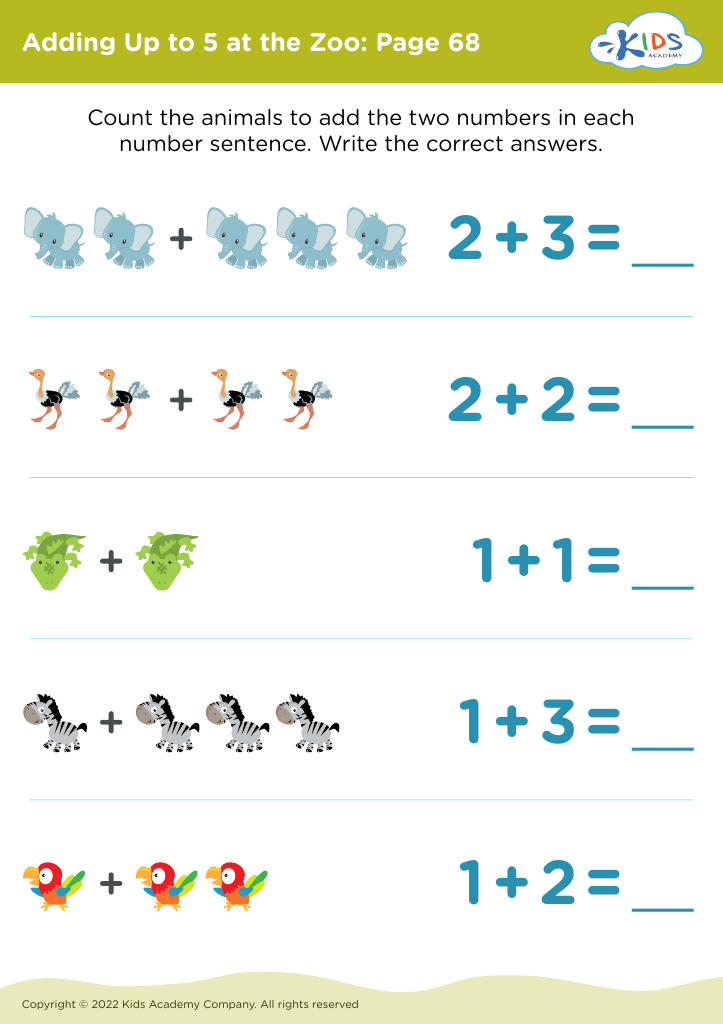



Problem-solving skills are essential for young children, particularly in a setting like "Problem-Solving Skills Adding at the Zoo." For kids aged 5-6, engaging in activities that enhance these skills fosters critical thinking and cognitive development. At this age, children's brains are like sponges, eagerly absorbing new concepts. Learning to solve problems through fun experiences, such as adding animals at the zoo, introduces them to mathematical concepts and nurtures their curiosity about the world.
Parents and teachers should care about these skills because problem-solving lays the foundation for future academic success and life skills. By using relatable contexts, like a zoo visit, children develop a positive attitude towards math and logic. Additionally, these activities help improve their ability to analyze situations, adapt to challenges, and make decisions, which are crucial skills beyond the classroom.
Moreover, fostering collaboration during problem-solving tasks promotes social skills and teamwork. Engaging parents in these learning experiences strengthens family bonds, enhances communication, and reinforces education at home. Ultimately, investing time in developing problem-solving skills through engaging themes enriches children's educational journey and prepares them for challenges they will face later in life. It's a win-win for both their academic and personal growth!