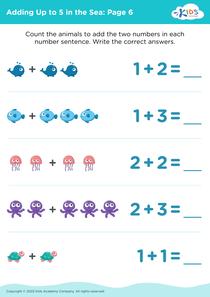
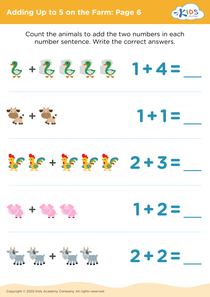
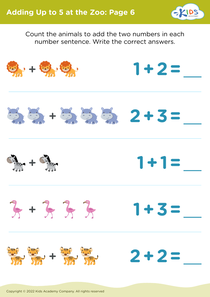
Counting proficiency Adding in the Forest Worksheets for Ages 5-6
3 filtered results
-
From - To
Enhance your child's counting proficiency with our "Adding in the Forest Worksheets" designed for ages 5-6. These engaging, printable activities blend fun forest themes with essential math skills, making learning enjoyable. Children will practice addition by counting playful forest animals, developing both their numerical understanding and cognitive skills. Each worksheet is tailored to foster enthusiasm for math, promoting hands-on learning through vibrant illustrations and interactive scenarios. Perfect for home or classroom use, these worksheets ensure your child builds a solid foundation in counting and adds a dash of adventure to their educational experience. Watch your little learner thrive as they explore the wonders of addition!
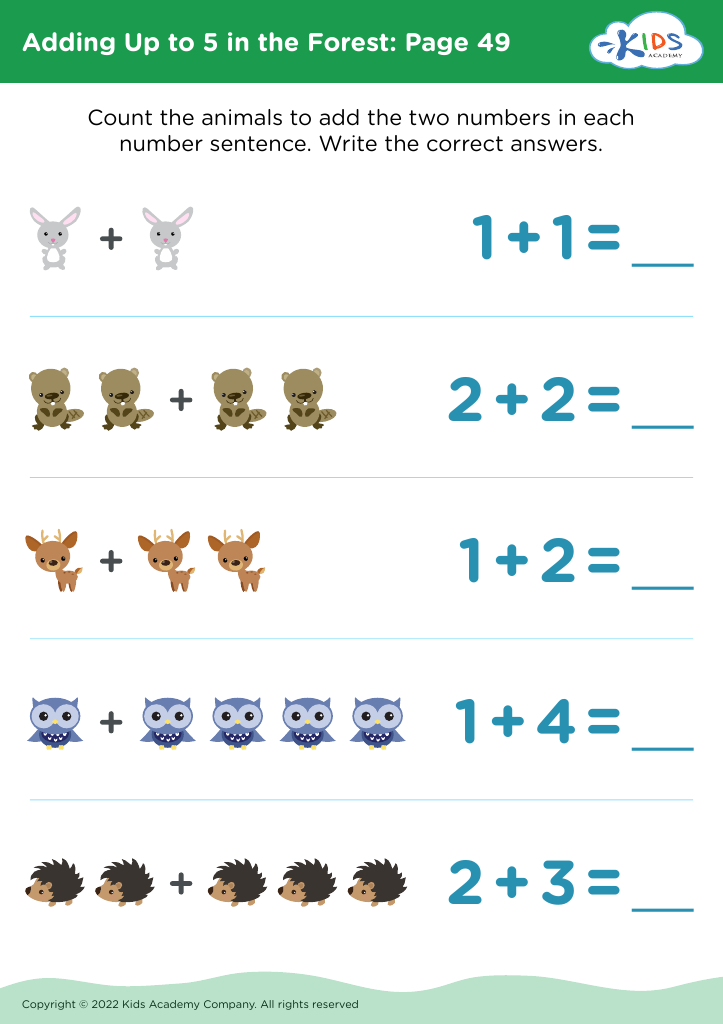
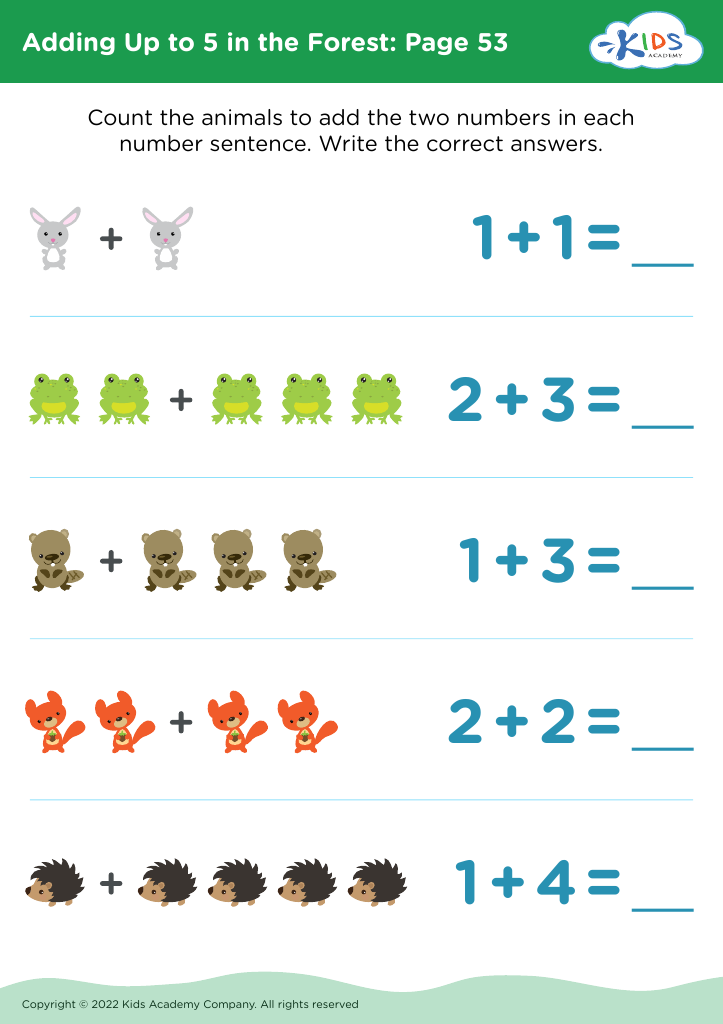
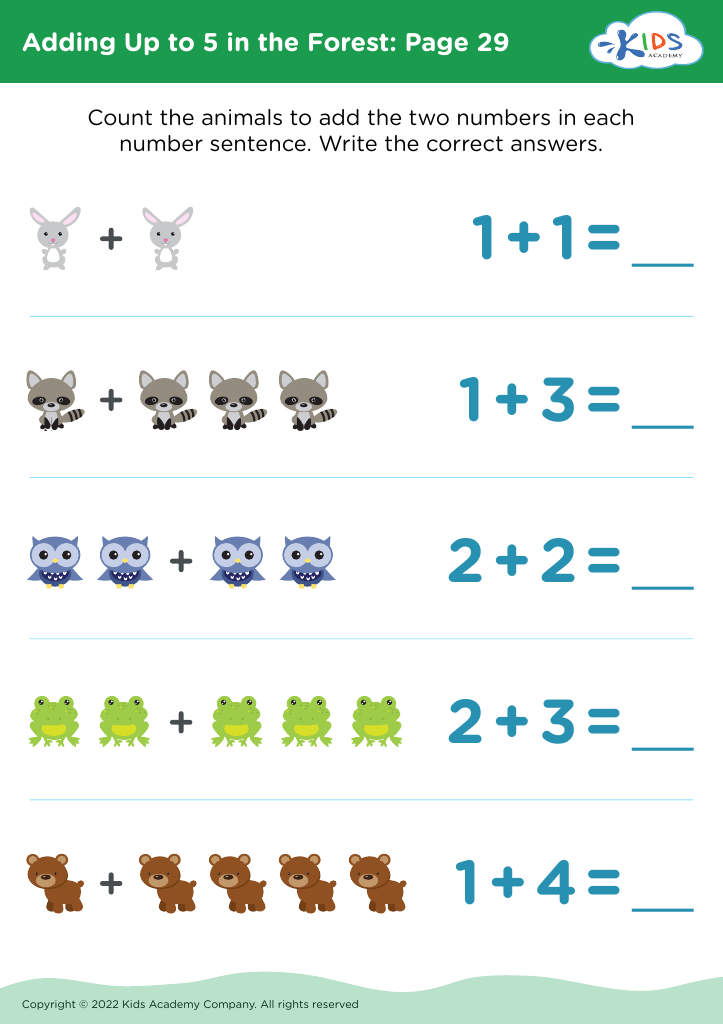



Counting proficiency is a vital foundational skill for children aged 5-6, especially when engaging in interactive and hands-on learning experiences like "Adding in the Forest." This type of resource not only teaches basic arithmetic but also fosters a connection with nature, making learning more engaging and relatable. By ensuring children develop counting skills early on, parents and teachers help establish confidence in mathematics, laying the groundwork for future academic success.
Counting proficiency enhances critical thinking and problem-solving abilities, enabling children to approach math concepts with curiosity and resilience. Engaging children in counting activities, such as identifying numbers of leaves, stones, or animals during outdoor play, allows them to practice in context, reinforcing their learning. Moreover, these playful interactions promote social skills, as children collaborate and communicate with peers.
Additionally, being proficient in counting supports the understanding of more complex math operations as they progress in their education. Understanding numbers will not only help them academically but also foster essential life skills in areas such as budgeting, measurement, and spatial awareness. Thus, parents and teachers must prioritize counting proficiency, ensuring a well-rounded, meaningful, and enjoyable learning experience for young learners in natural environments.