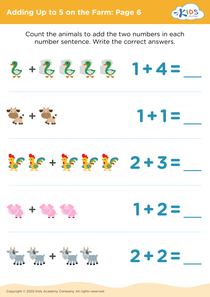
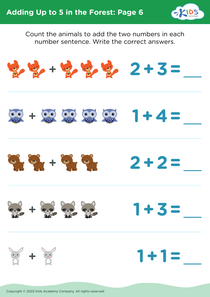
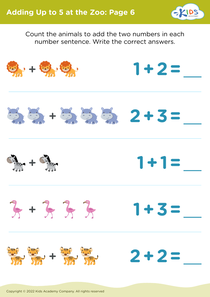
Basic Math Skills Adding in the Sea Worksheets for Ages 5-6
4 filtered results
-
From - To
Dive into learning with our "Basic Math Skills: Adding in the Sea" worksheets, designed for ages 5-6! These fun and engaging printables make addition practice enjoyable, featuring colorful sea life to captivate young learners. Perfect for kindergarteners and first graders, each worksheet encourages counting and adding through captivating underwater themes. Parents and teachers will appreciate how easily kids grasp basic math concepts while having fun. Boost your child's confidence and foundational math skills with activities tailored to their developmental needs. Start your child's exciting math journey today with "Adding in the Sea" worksheets!
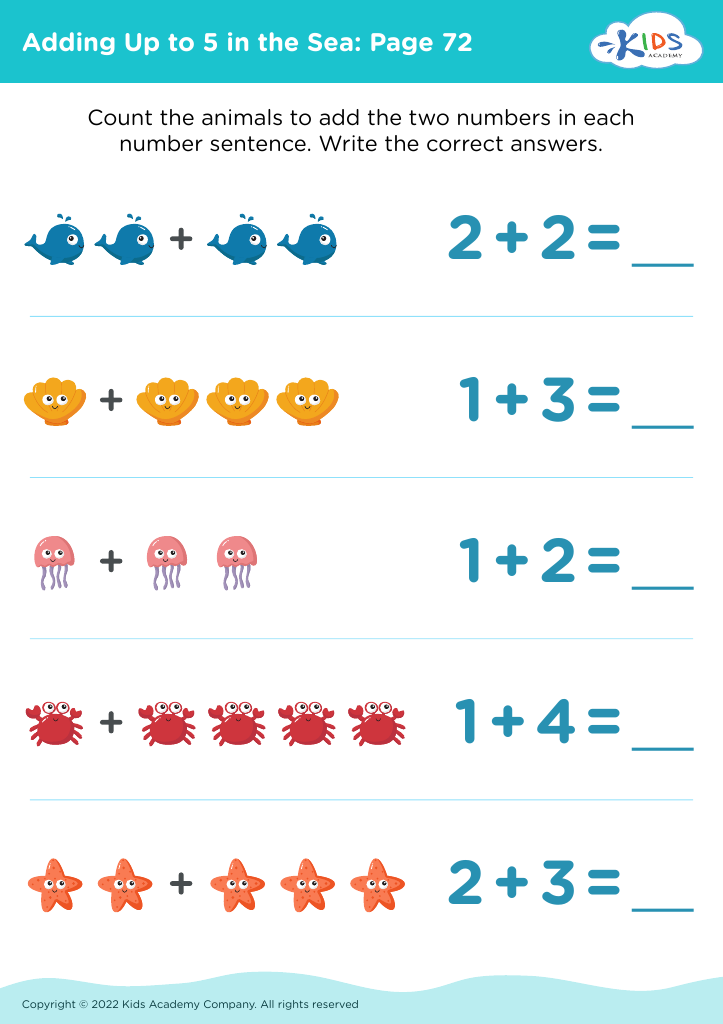
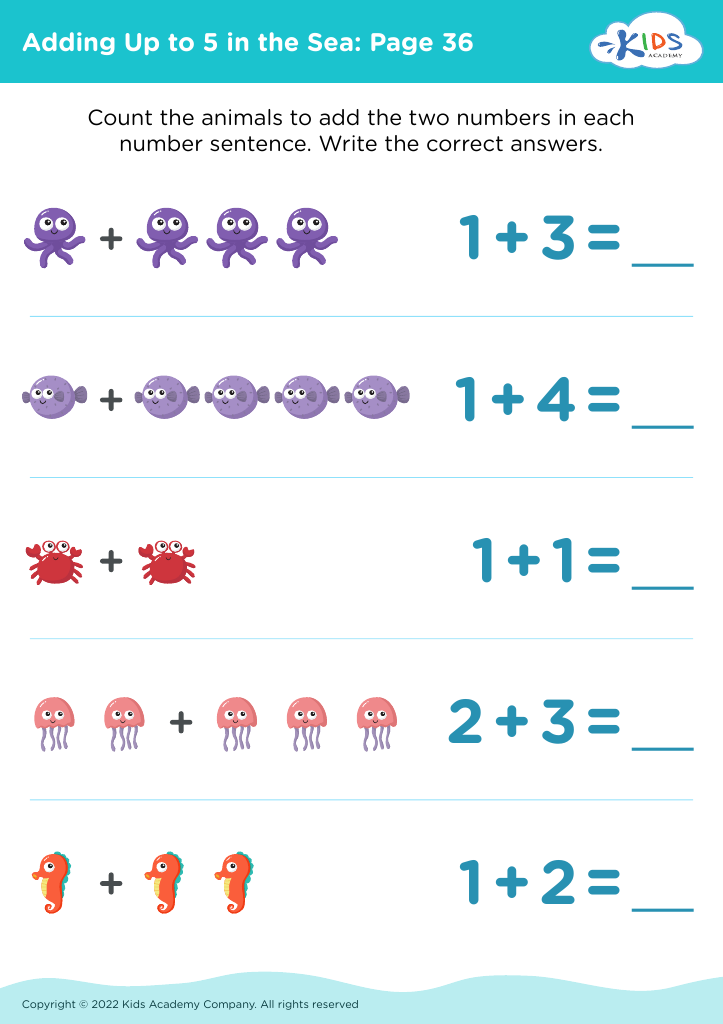
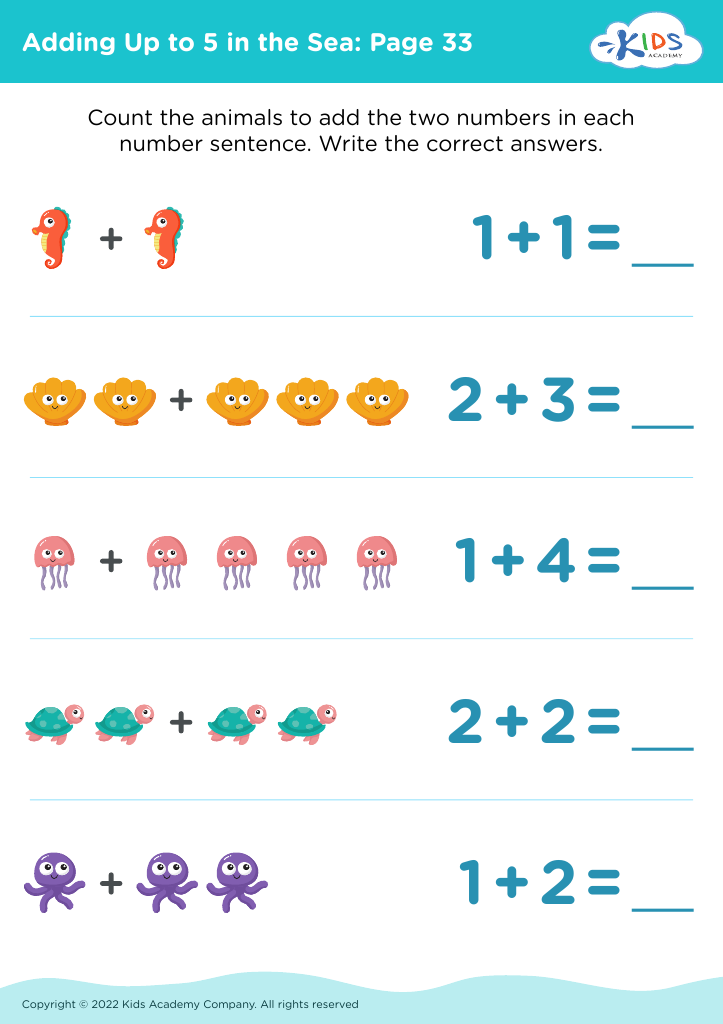
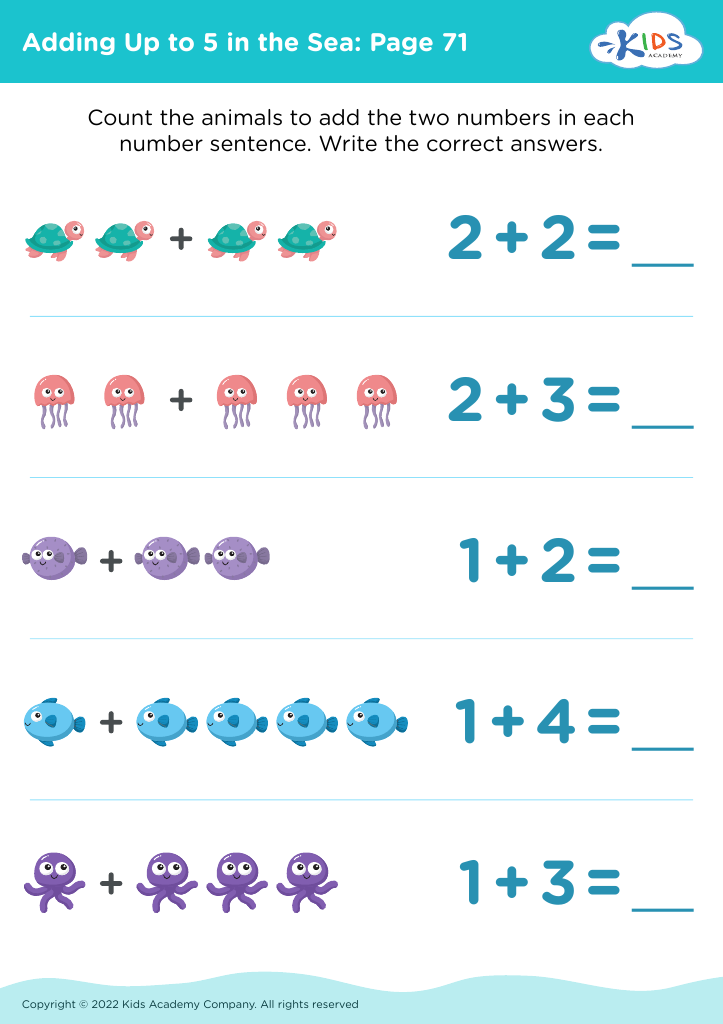



Basic Math Skills Adding in the Sea for ages 5-6 holds significant value and merits the attention of both parents and teachers. This essential learning phase lays the foundation for a child's future academic success. Here's why it's important:
Firstly, early mathematical exposure facilitates cognitive development. Engaging children with basic addition helps in enhancing their problem-solving abilities, logical thinking, and number sense, all of which are essential skills required in daily life and future learning contexts.
The 'Adding in the Sea' theme specifically incorporates an engaging, sea creature-based environment, making learning both fun and memorable. Such thematic learning aspects are instrumental in maintaining the child’s interest, adding elements of play, and considerably reducing anxiety around mathematical concepts.
Moreover, early proficiency in addition fosters self-confidence. As children master basic math skills, the sense of achievement can boost their self-esteem, encourage a positive attitude towards learning, and lay a strong groundwork for more complex mathematical concepts introduced later in life.
Lastly, integrating math routines in playful scenarios also reinforces teamwork and cooperative learning when done in group settings. Collaborative games involving addition prompt social interaction, communication, and interpersonal skills development.
In conclusion, 'Basic Math Skills Adding in the Sea' is a vital, engaging, and effective approach that aids in a child's holistic development, instilling both foundational mathematics and essential life skills in a joyful and enriching manner.