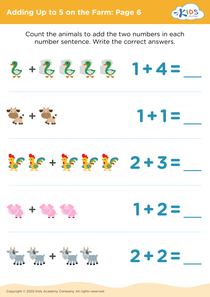
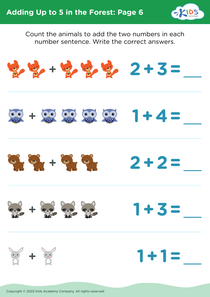
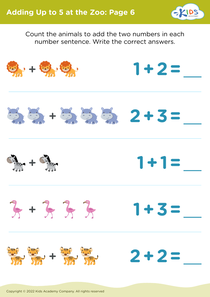
Fine motor skills (writing numbers) Adding in the Sea Worksheets for Ages 5-6
4 filtered results
-
From - To
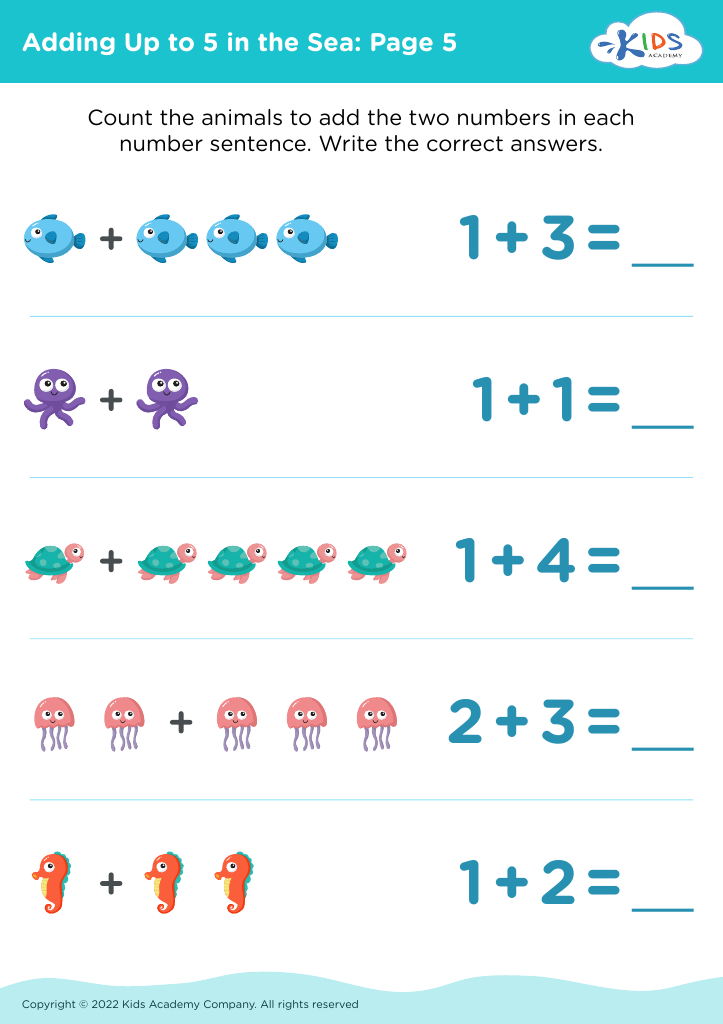
Enhance your child's fine motor skills with our engaging "Adding in the Sea" worksheets, designed for ages 5-6! These interactive activities help young learners develop essential writing skills by practicing numeral formation while exploring a fun underwater theme. Each worksheet encourages proper pencil grip and control, making number writing both enjoyable and educational. Through visually appealing sea-themed illustrations, children will strengthen their coordination and gain confidence in writing numbers. Ideal for preschool and early grade classrooms, these worksheets lay a strong foundation for future math success while keeping kids entertained. Dive into learning with our "Adding in the Sea" fine motor skill activities!
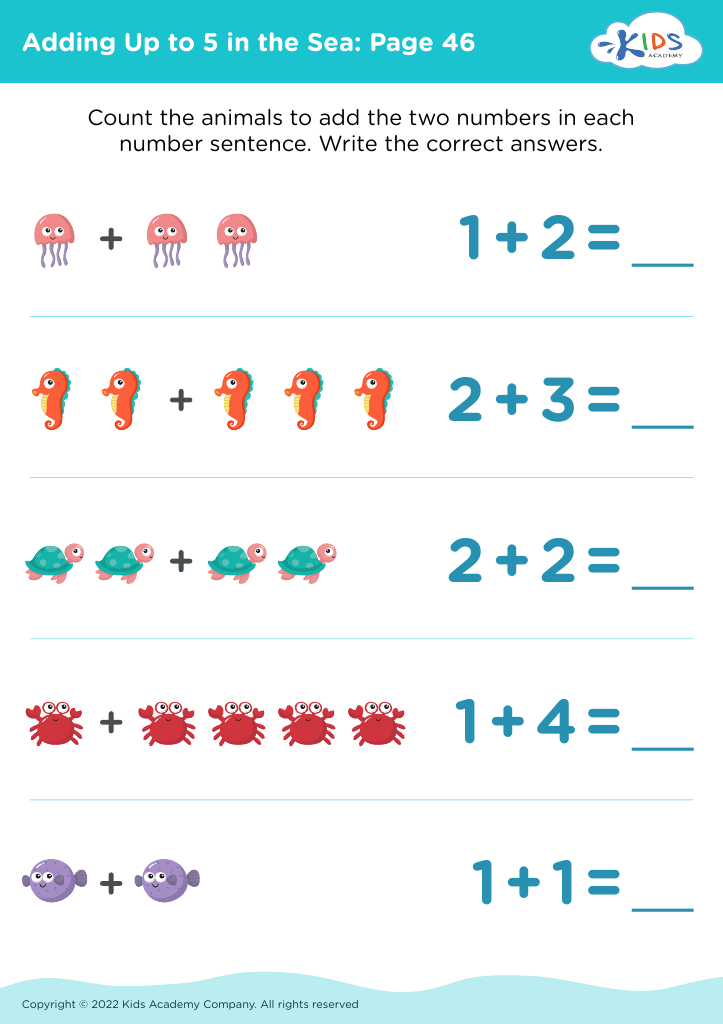
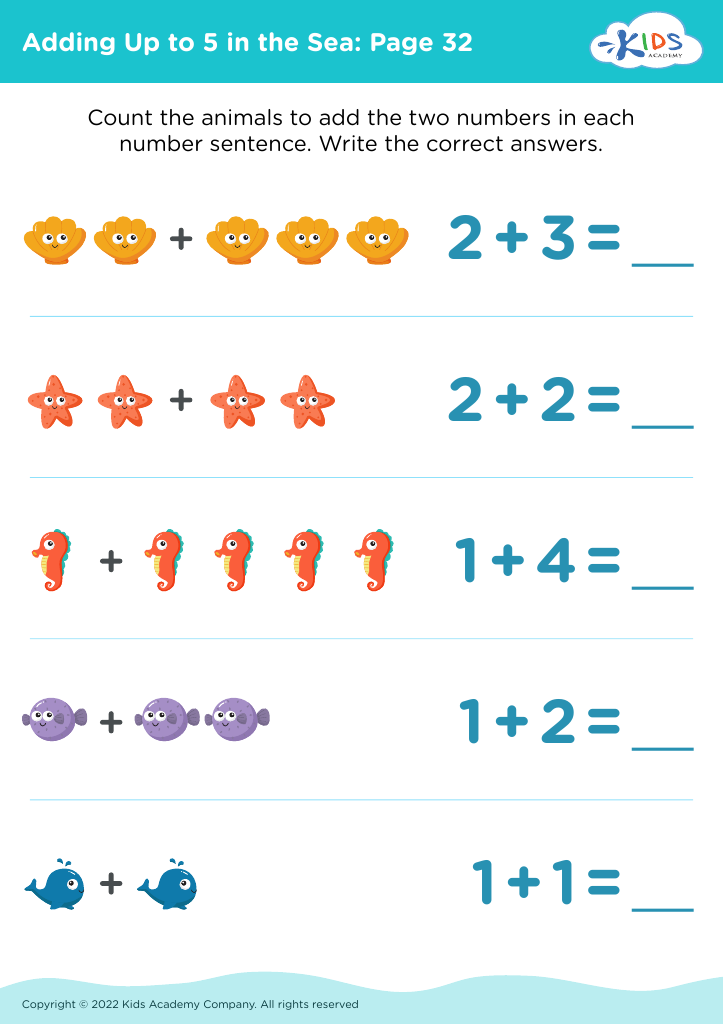
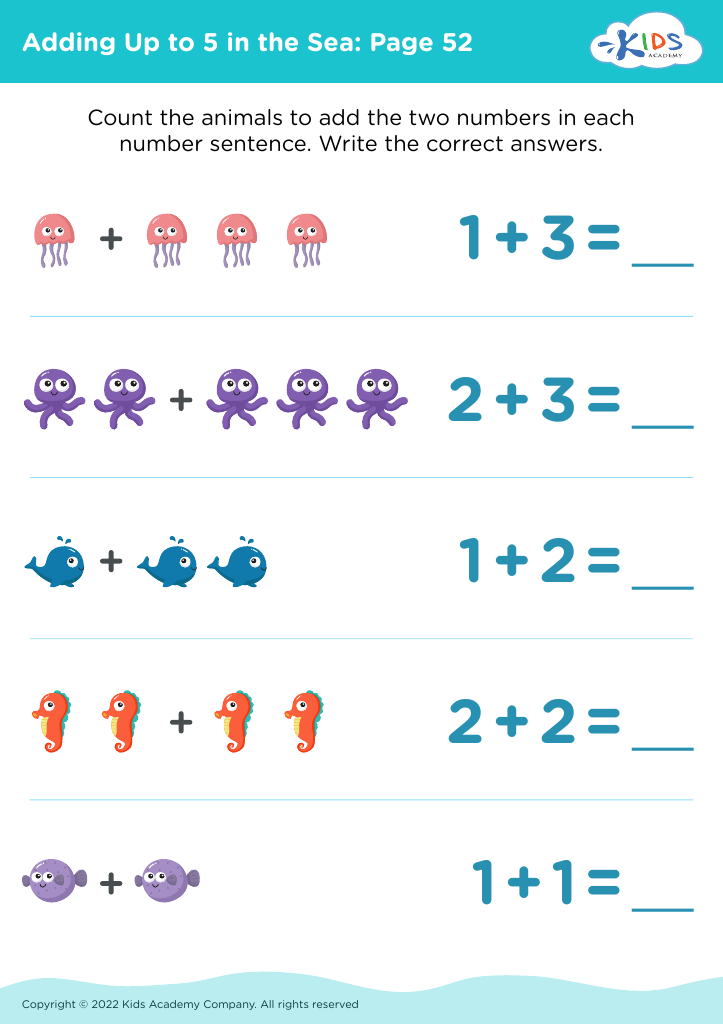



Fine motor skills, particularly the ability to write numbers, are essential for children aged 5-6 as they directly impact their academic success and overall development. Fine motor skills involve small muscle movements, largely controlled by the hands and fingers. In the context of writing numbers, well-developed fine motor skills enable children to hold pencils appropriately, control their movements, and form digits clearly.
Teachers and parents should care about fostering these skills because they lay the groundwork for more complex tasks in later education, such as math calculations and writing sentences. For instance, when children engage in fun activities like “Adding in the Sea,” they practice writing numbers through play, making learning enjoyable and effective. This playful approach helps them visualize math concepts while improving their hand-eye coordination and dexterity.
Moreover, strong fine motor skills contribute to a child’s confidence and independence, encouraging them to engage actively in classroom activities. As they progress, children with well-developed fine motor skills are better equipped to tackle challenges in both academic and everyday settings. Fostering these skills early can set the stage for a lifelong love of learning and a solid foundation in math and literacy skills.