Animal recognition Adding on the Farm Worksheets for Ages 5-6 - Page 2
31 filtered results
-
From - To
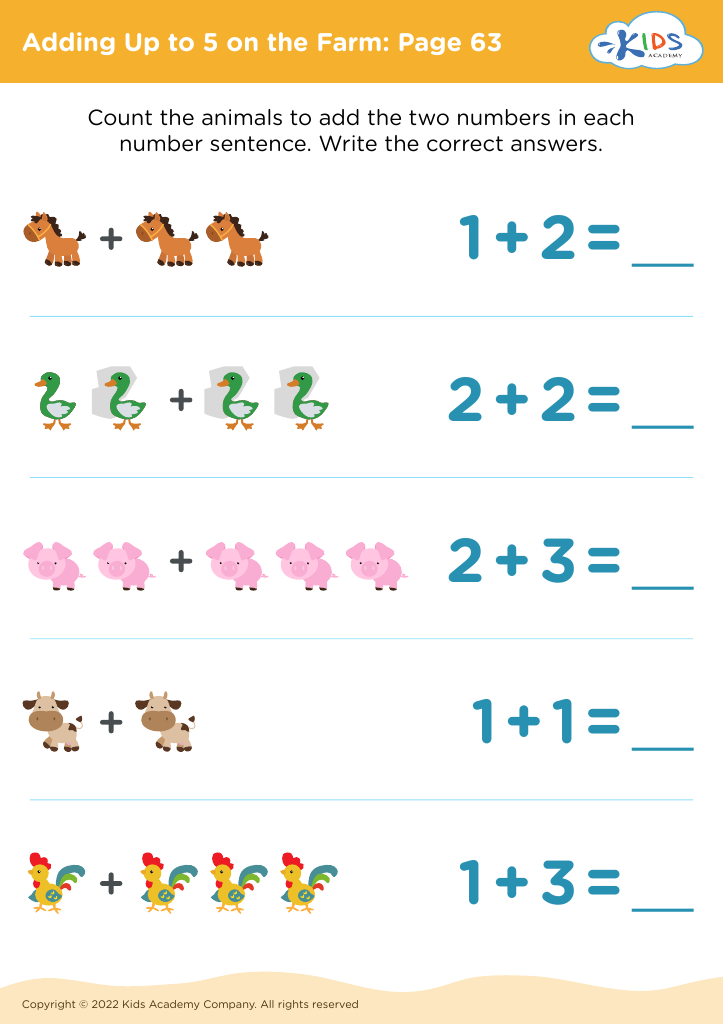
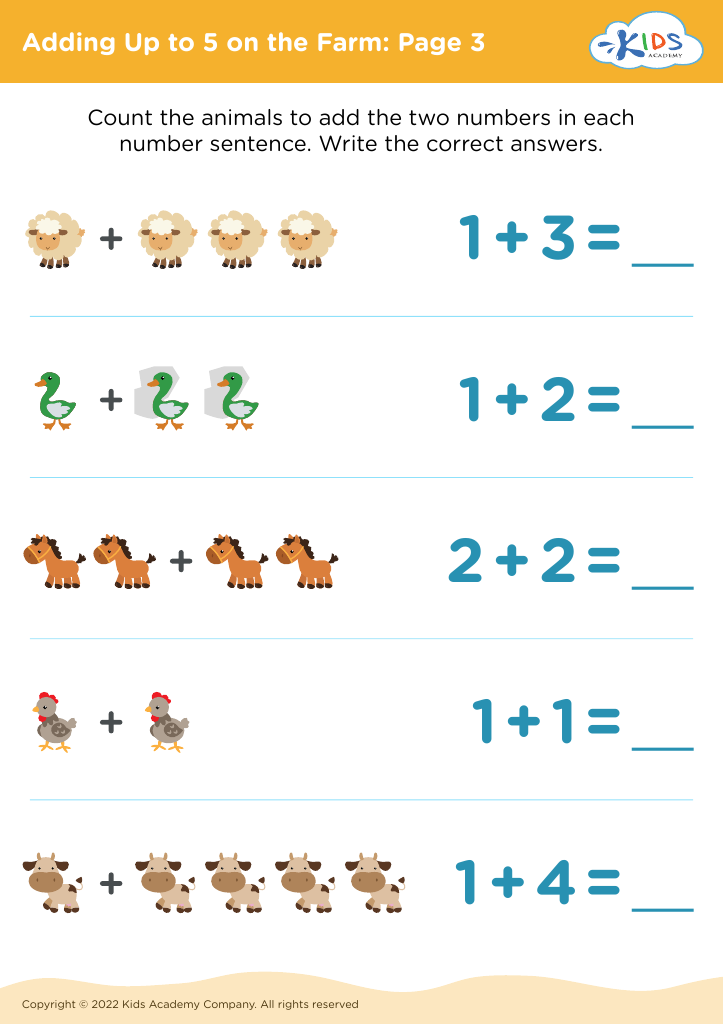
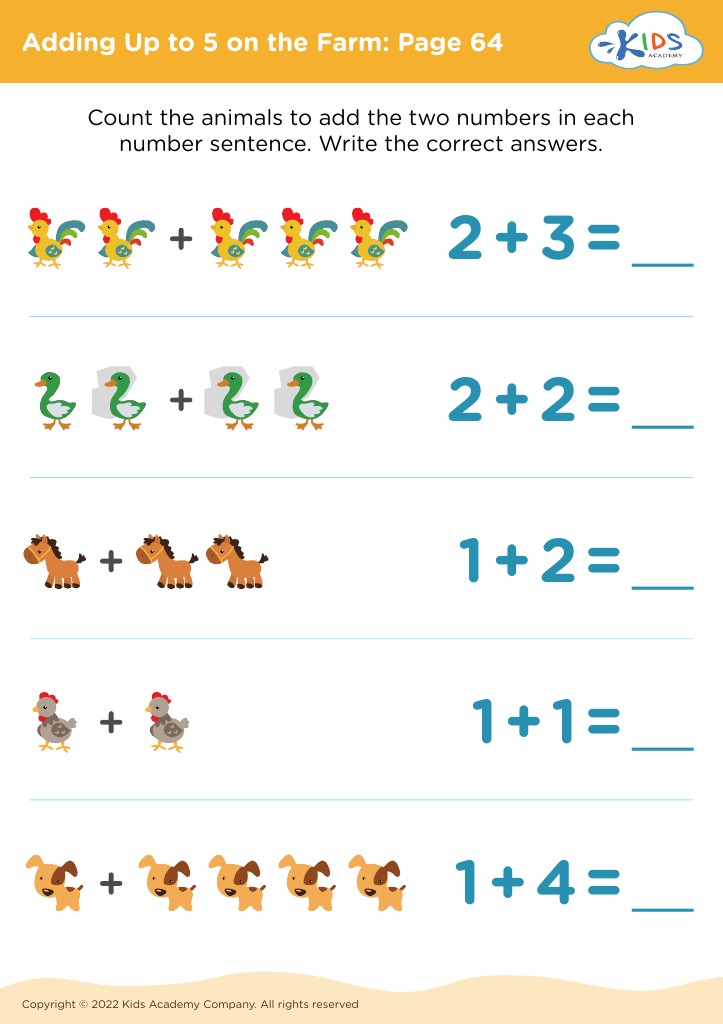
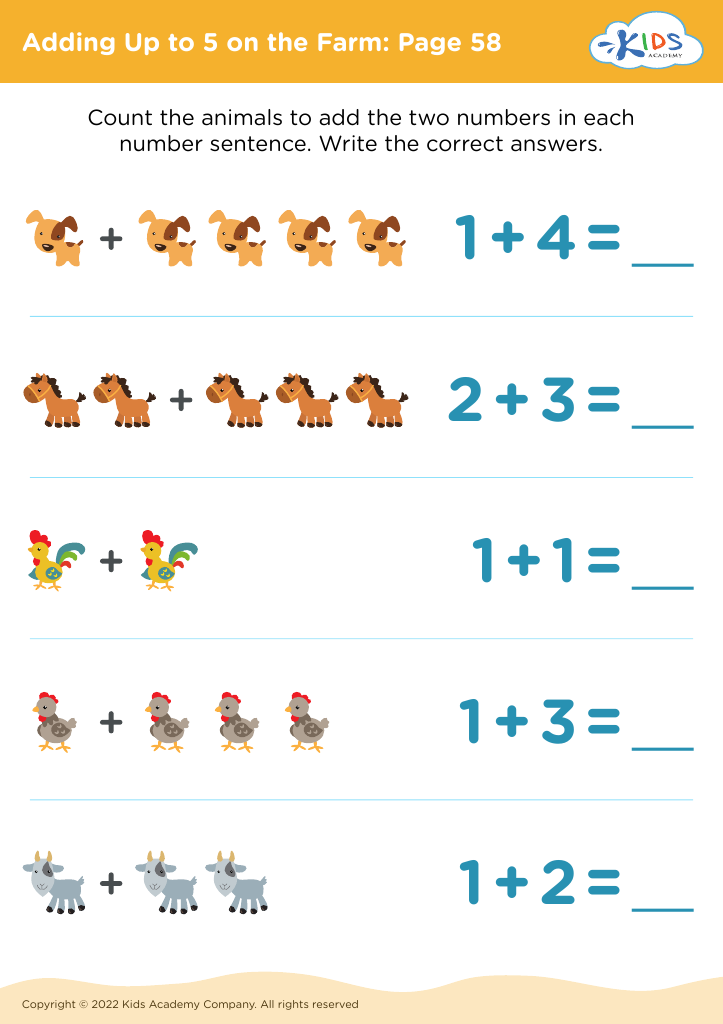
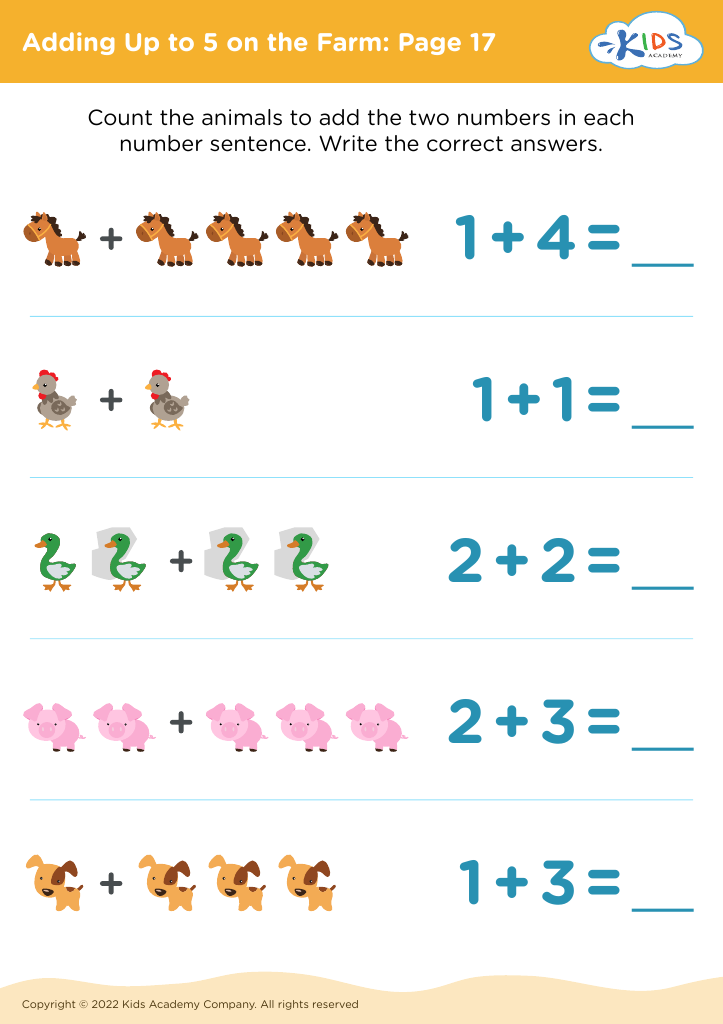
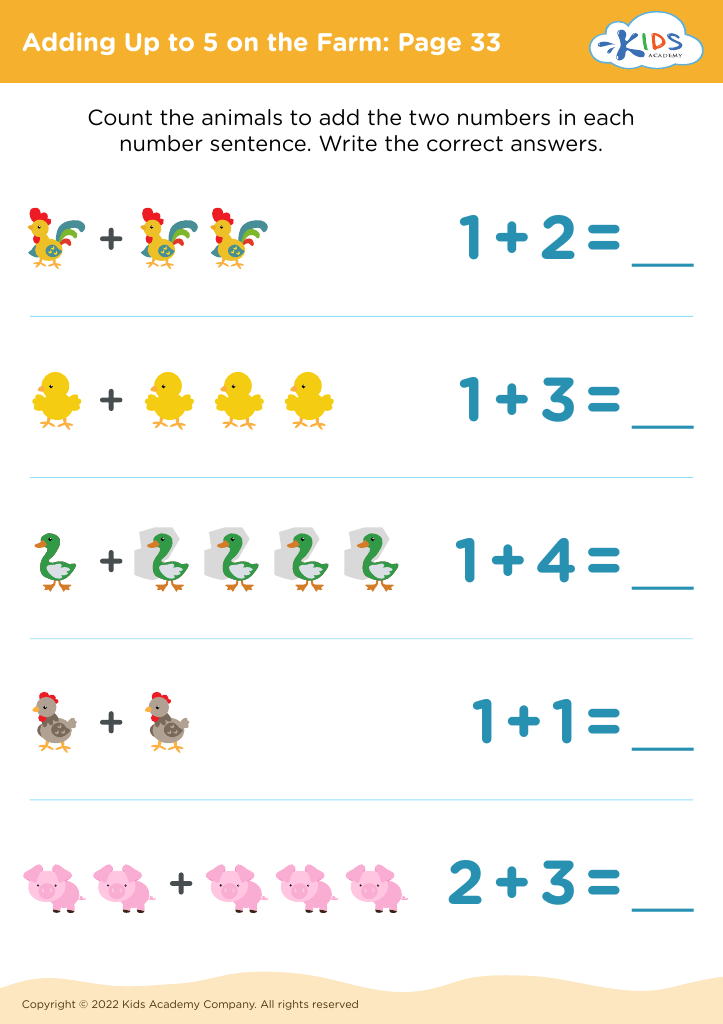
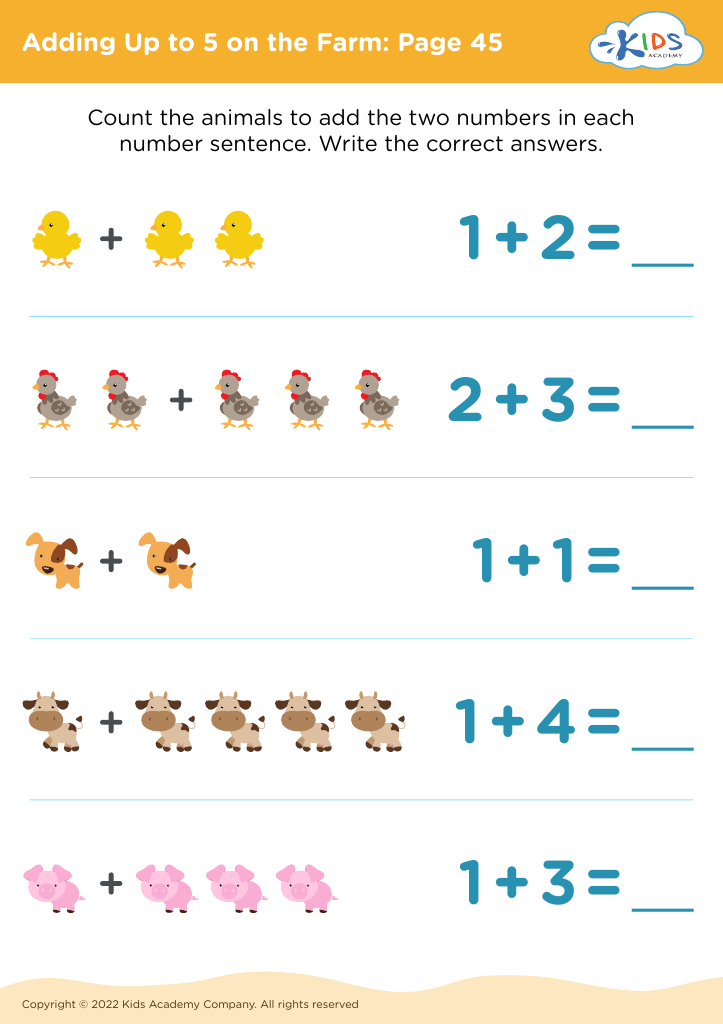



Animal recognition adding on the farm is a key activity for children aged 5-6 that merges cognitive development with engaging, hands-on learning. Firstly, recognizing animals, such as cows, pigs, and chickens, is not only about identifying these creatures but also about enhancing memory and observational skills. This foundational knowledge prepares children for more complex science topics and environmental understanding in future education stages.
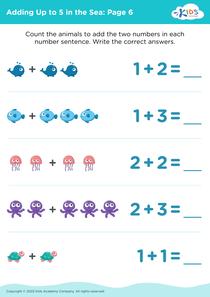
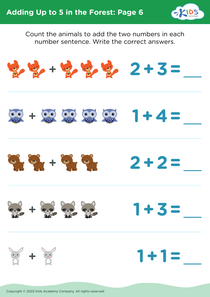
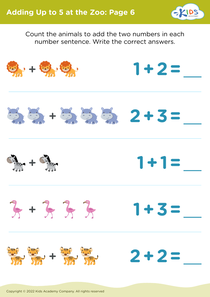
Integration of arithmetic enhances this further. For instance, when children count the number of animals and add them together (e.g., "If there are 3 cows and 2 pigs, how many animals do we have in total?"), they practice basic addition, which is crucial for their mathematical development. This method transforms abstract numbers into concrete scenarios, making arithmetic more relatable and fun.
Furthermore, this activity encourages storytelling and imaginative play, vital for developing language and social skills. Talking about animals and their roles on the farm can lead to discussions about food sources, habitats, and care needs, broadening their worldly understanding.
Engaging both parents and teachers in these activities provides a supportive environment, fostering trust and a love for learning. Incorporating animal recognition with basic math challenges creates a balanced educational approach that primes young learners for academic success while nurturing their natural curiosity about the world.