

%20(1).jpg)





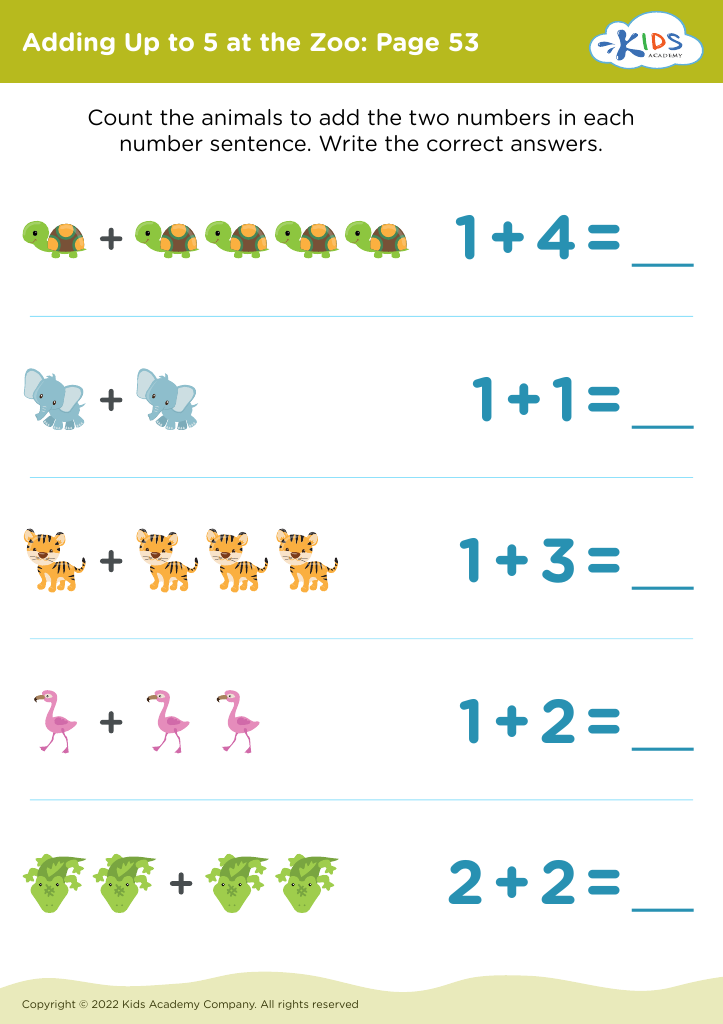
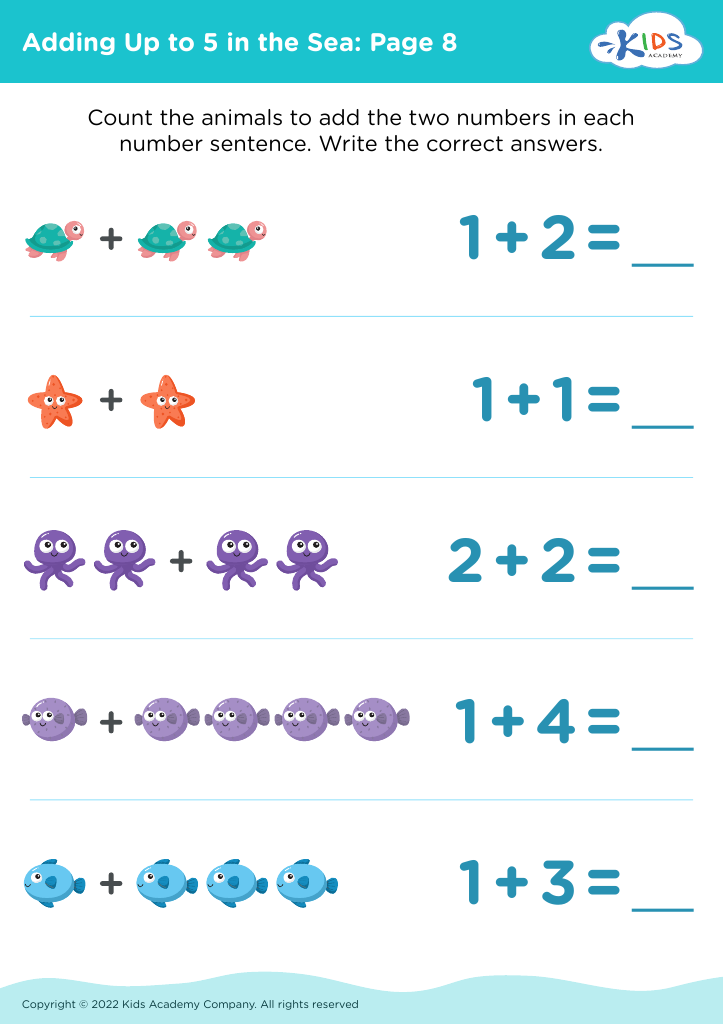
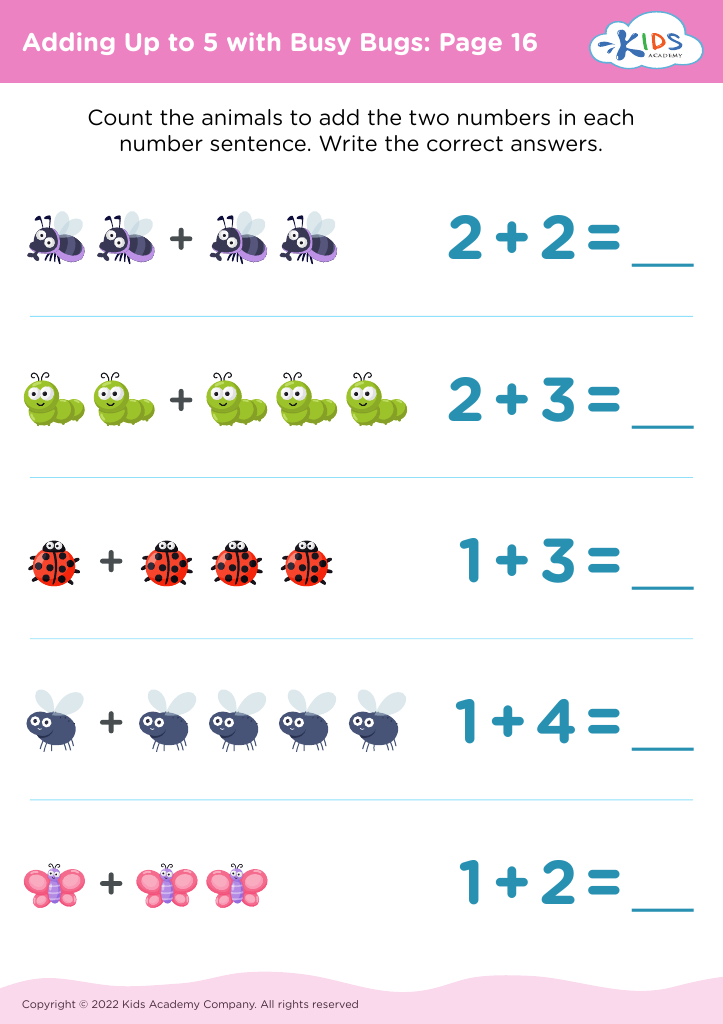
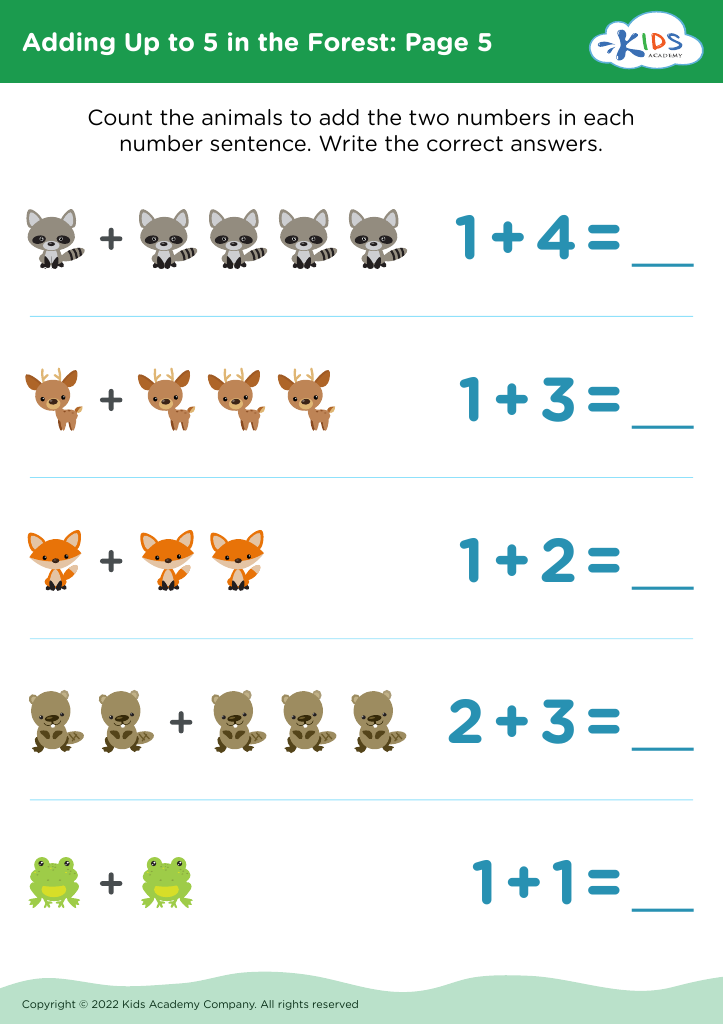
Developing addition skills, especially adding up to 5, for children aged 5-6, is a foundational step in their mathematical journey. First and foremost, mastering this basic arithmetic operation boosts a child's numerical confidence and lays the groundwork for more complex math concepts. Supportive guidance from parents or teachers can help children see math as fun and achievable, fostering a positive attitude towards learning.
Addition adds up to critical problem-solving skills—not just in future mathematics, but in everyday life. Whether baking cookies by following a recipe, sharing toys with friends, or summarizing a group of small numbers in their surroundings, children employ these fundamental skills constantly.
Furthermore, proficiency in early addition enhances logical thinking and pattern recognition. When children understand and apply adding up to 5, their brains are making crucial neural connections, setting up abilities in reasoning and logical sequencing.
Lastly, early math success is shown to correlate with future academic achievements. By ensuring that kids grasp the basics of addition, parents, and teachers invest in their overall academic progression, including later success in STEM fields.
Therefore, nurturing addition skills in young children paves the way for a multitude of cognitive benefits, reinforcing both everyday practical skills and future academic potential.








