Check out this FREE Trial Lesson on Adding Up to 5 for age 5-6!

Short and Long Vowel Sort

Favorites
With answer key
Interactive
  • 5-6
  • Basic Addition Skills
  • Adding Up to 5
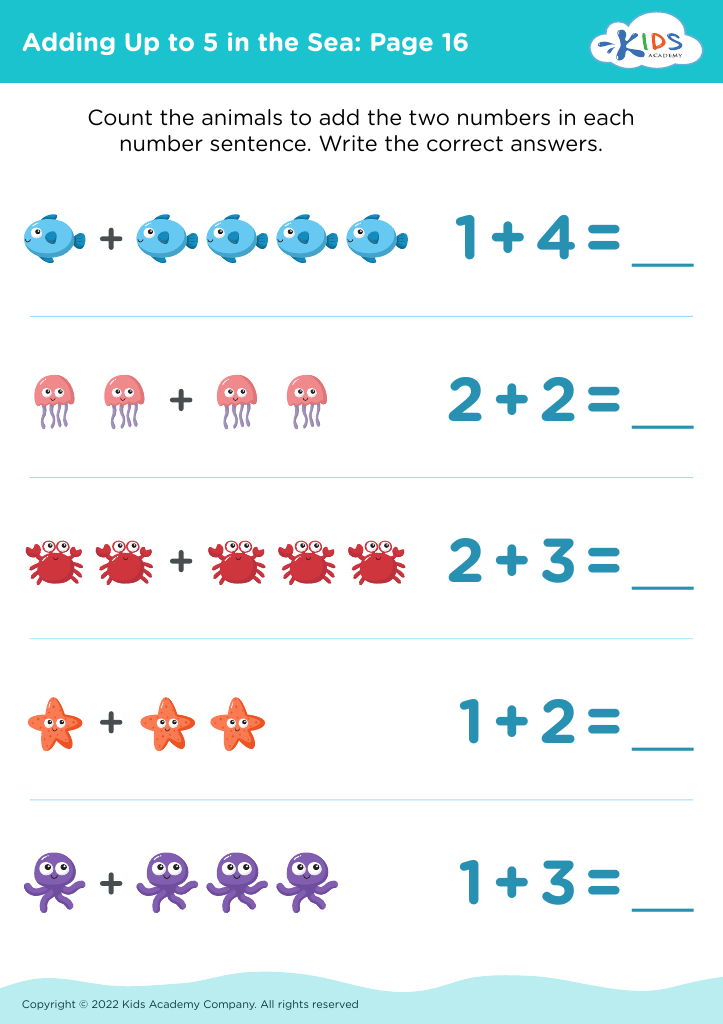
Adding Up to 5 in the Sea: Page 16
Worksheet
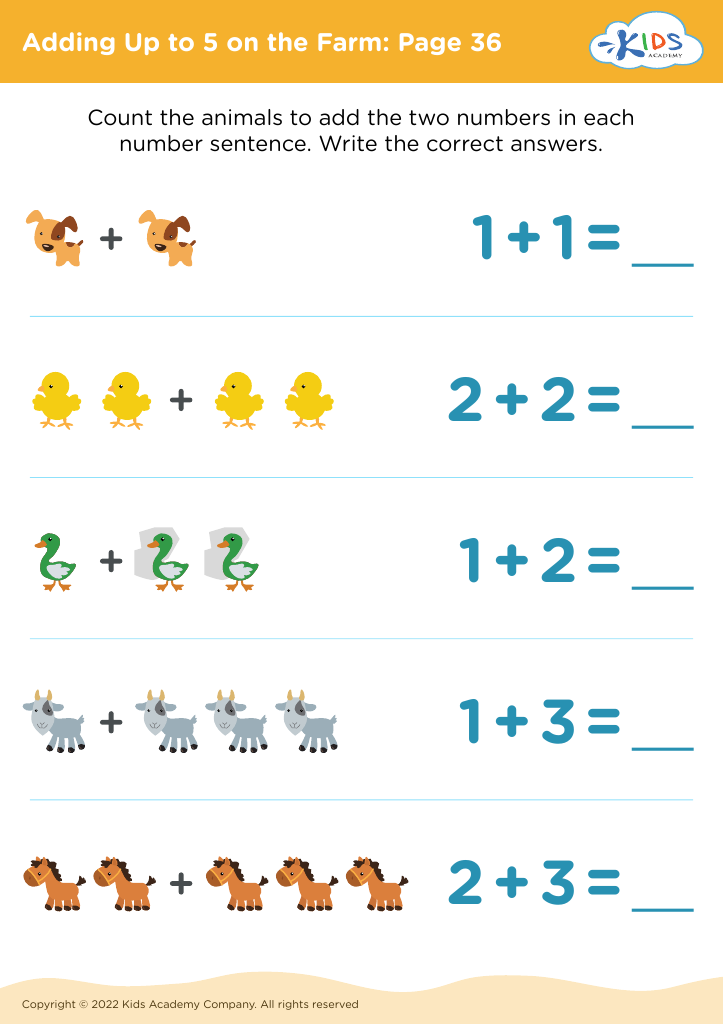
Adding Up to 5 on the Farm: Page 36
Worksheet
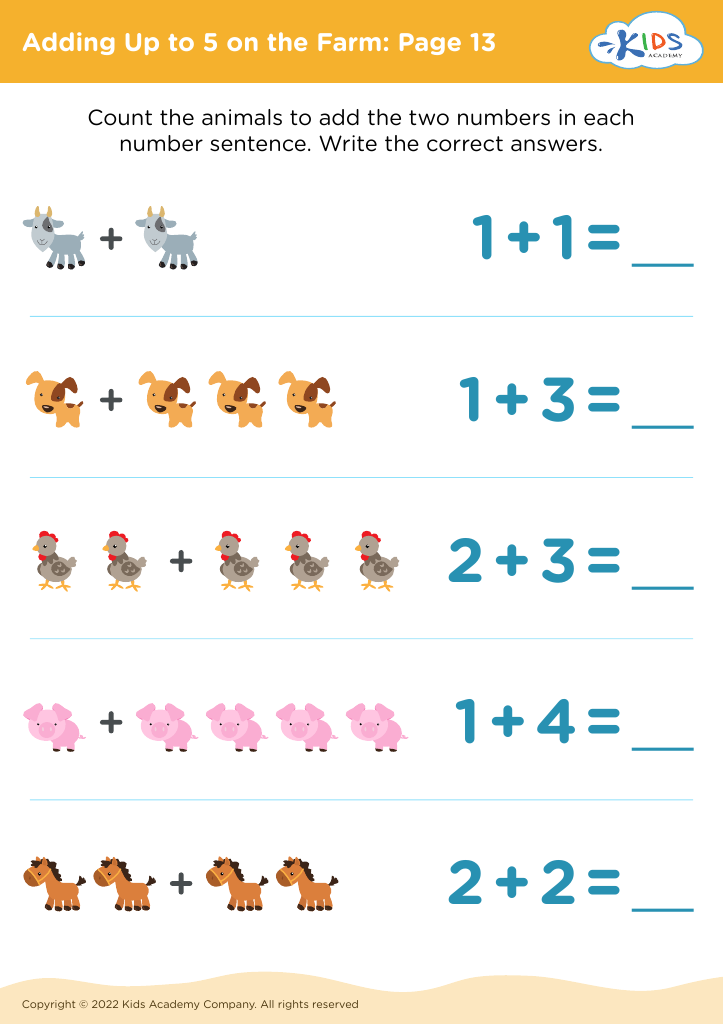
Adding Up to 5 on the Farm: Page 13
Worksheet
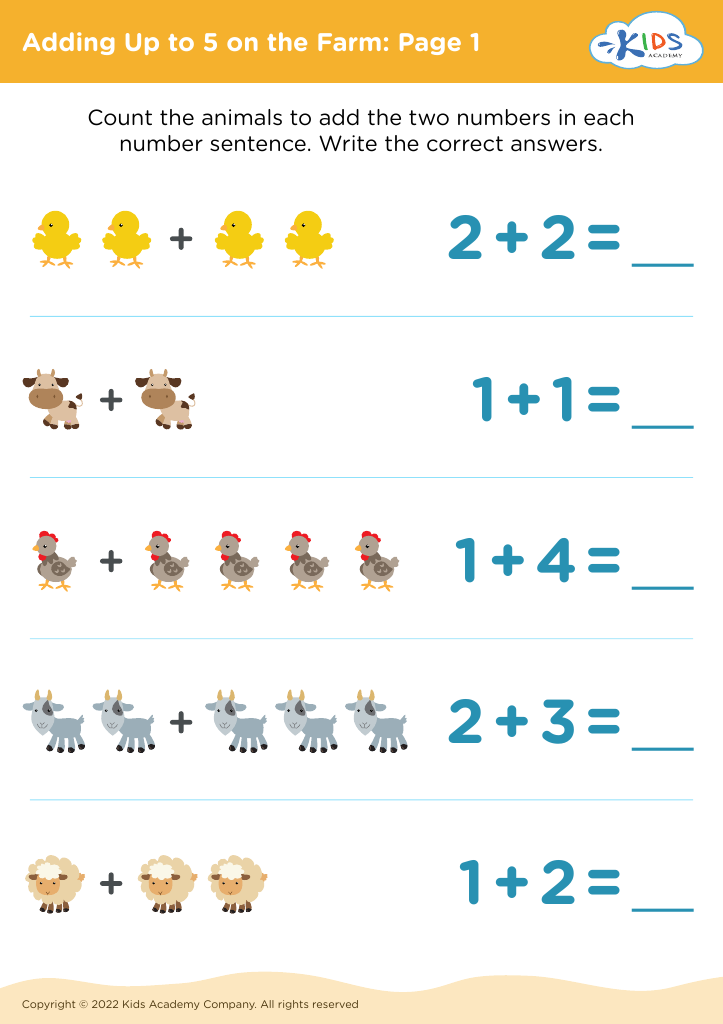
Adding Up to 5 on the Farm: Page 1
Worksheet
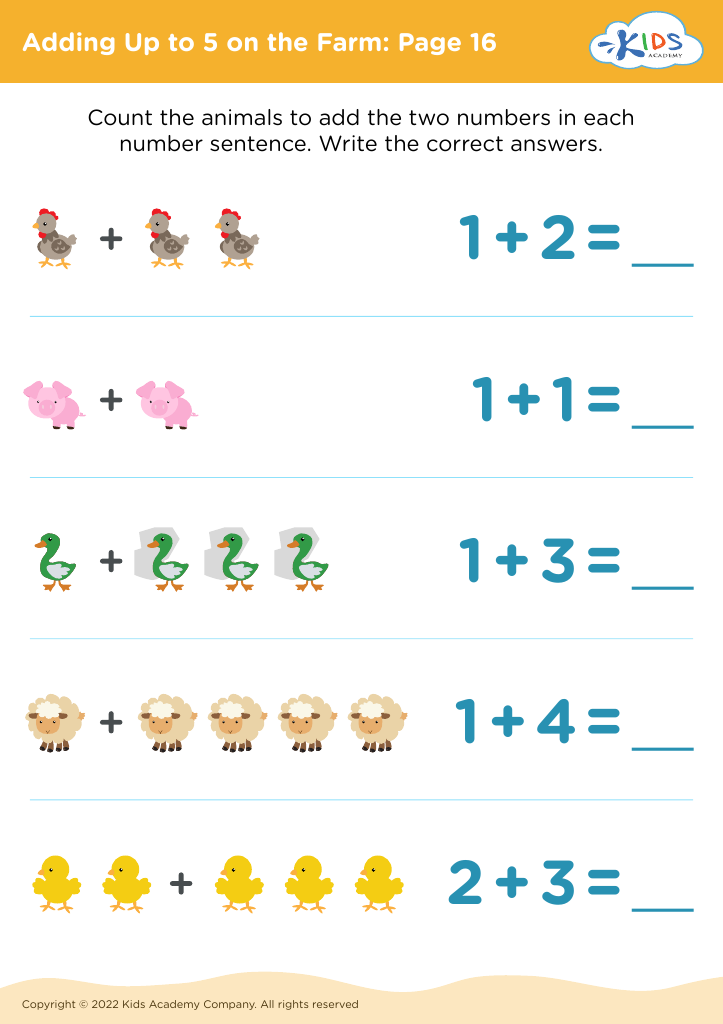
Adding Up to 5 on the Farm: Page 16
Worksheet
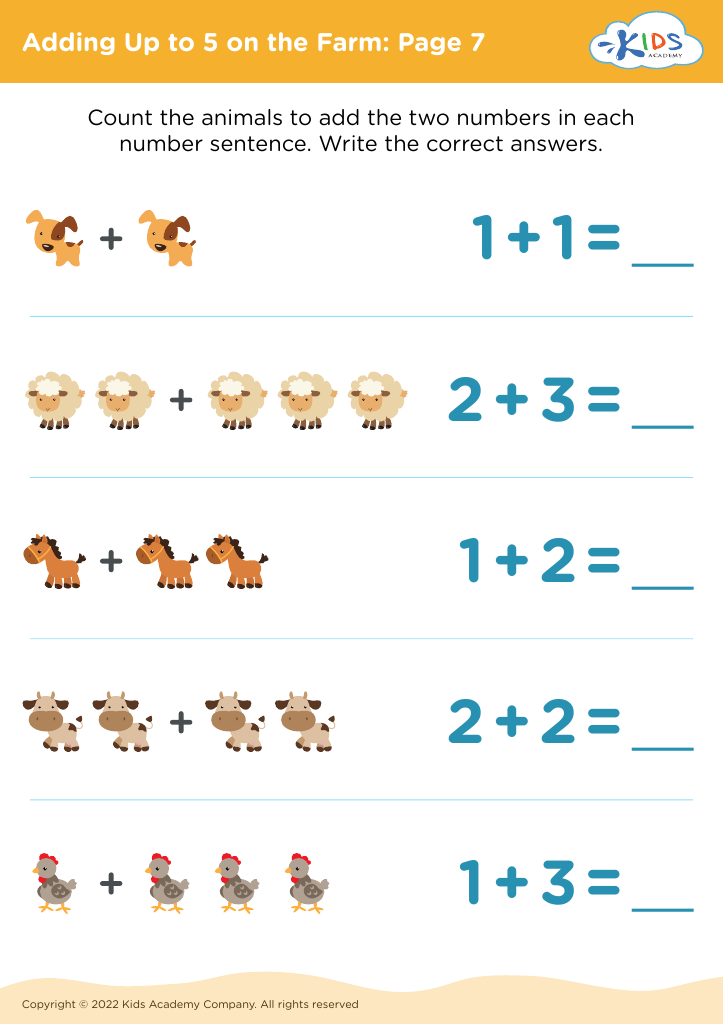
Adding Up to 5 on the Farm: Page 7
Worksheet
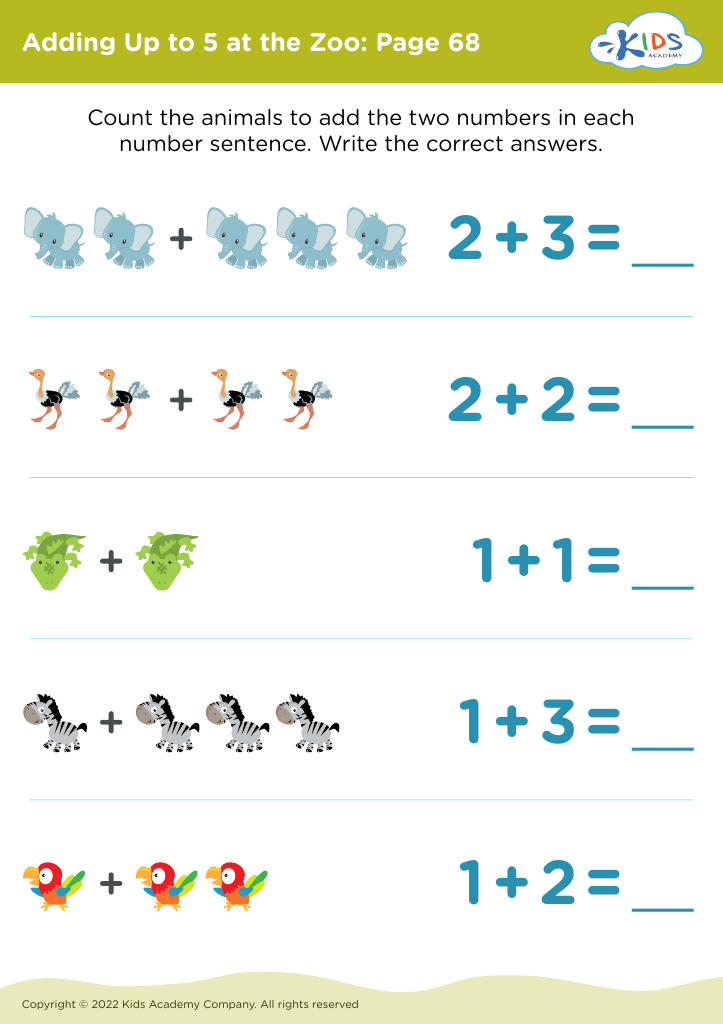
Adding Up to 5 at the Zoo: Page 68
Worksheet
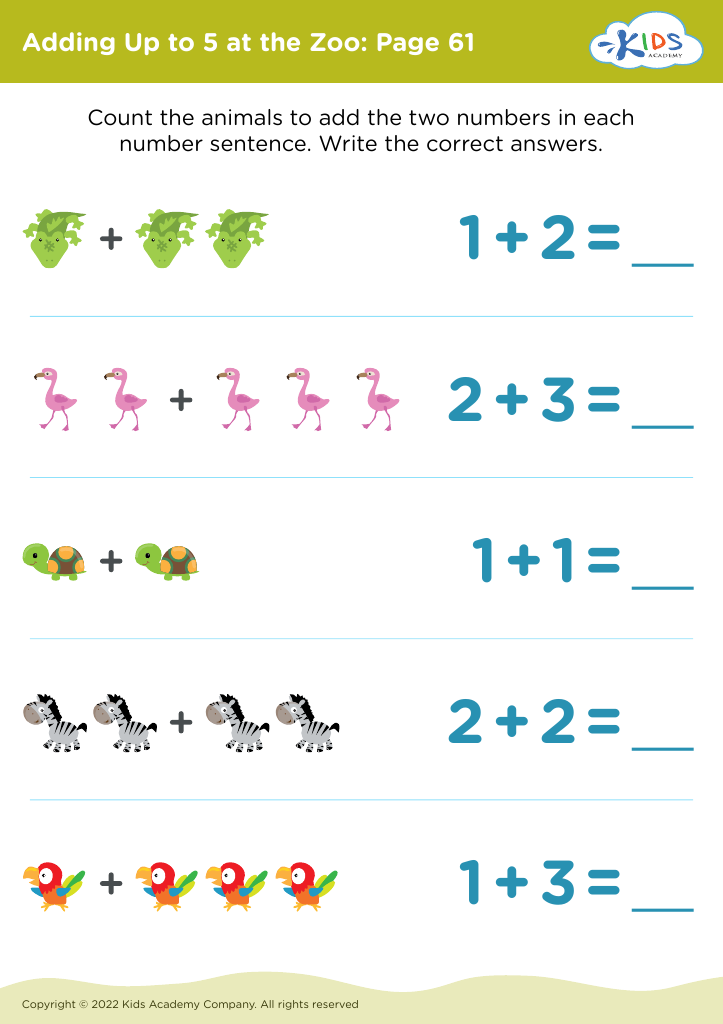
Adding Up to 5 at the Zoo: Page 61
Worksheet
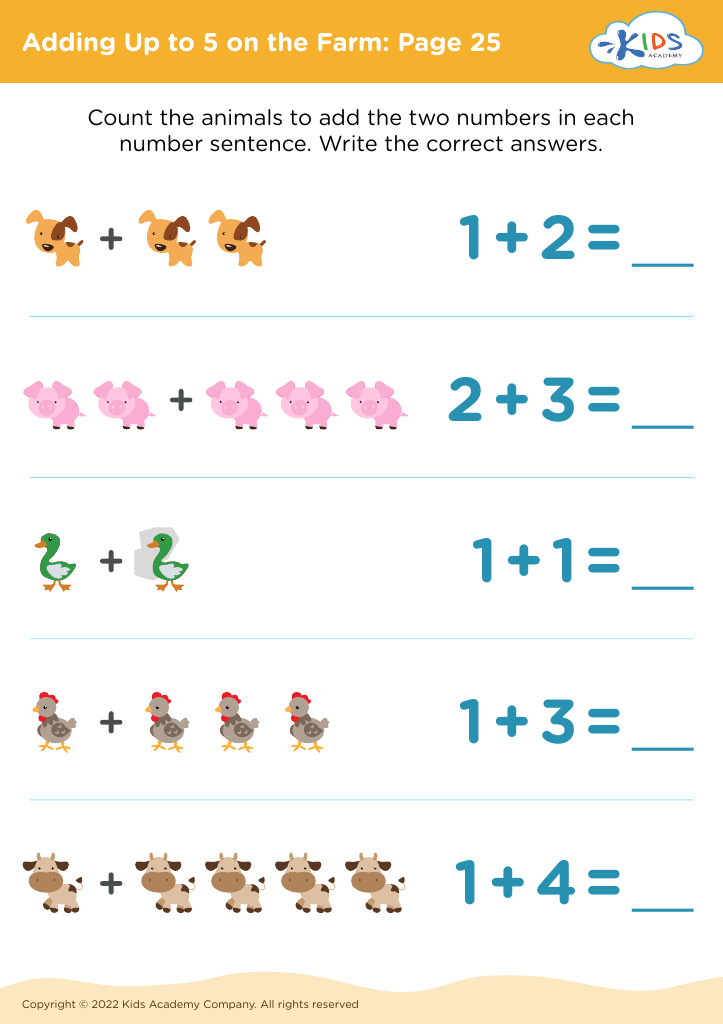
Adding Up to 5 on the Farm: Page 25
Worksheet
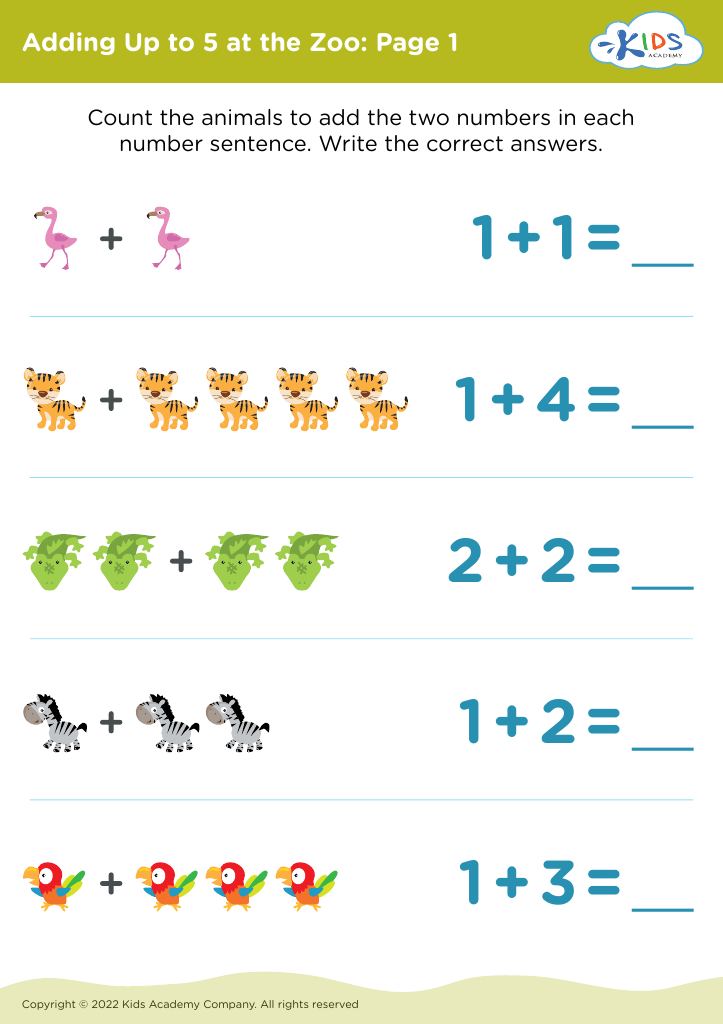
Adding Up to 5 at the Zoo: Page 1

Adding Up to 5 at the Zoo: Page 1

Adding Up to 5 at the Zoo: Page 1
Worksheet
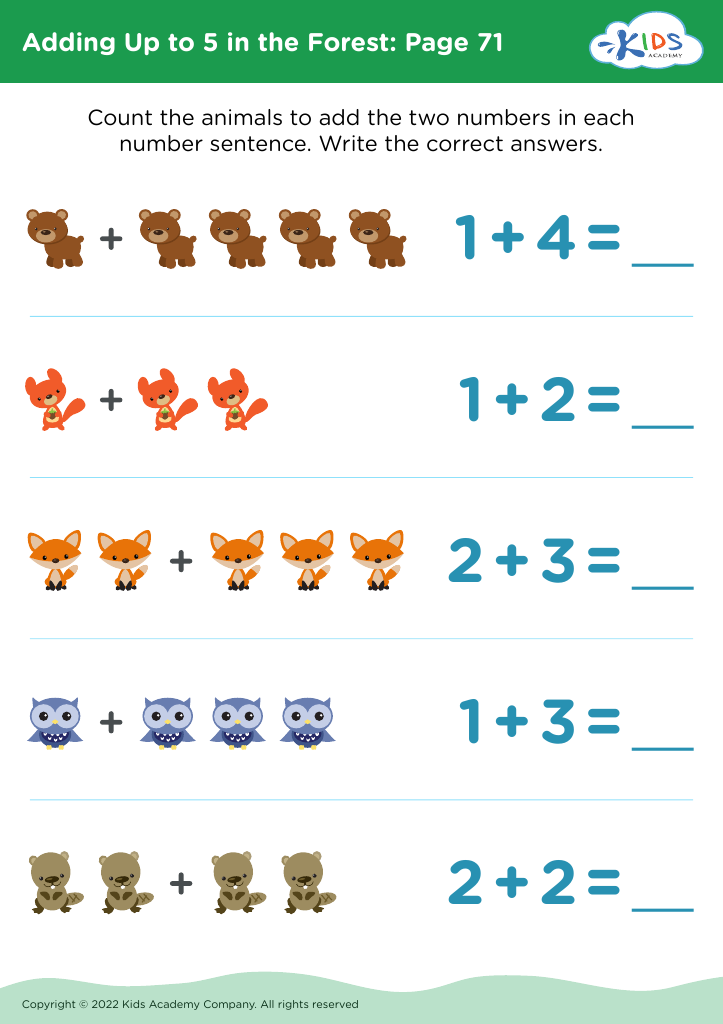
Adding Up to 5 in the Forest: Page 71
Worksheet
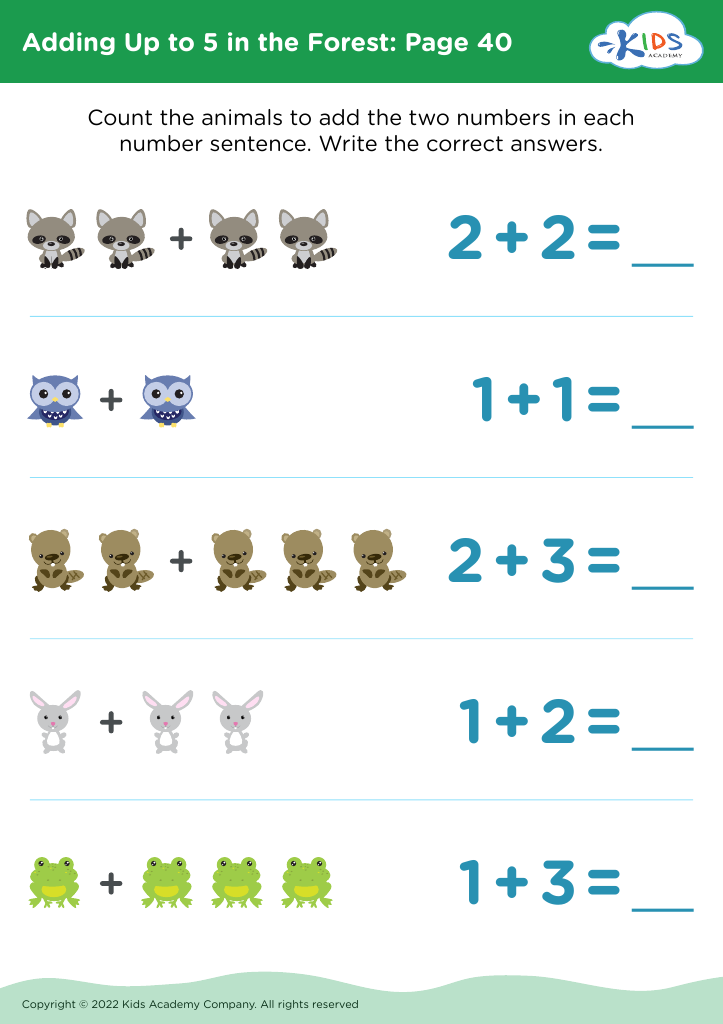
Adding Up to 5 in the Forest: Page 40
Worksheet
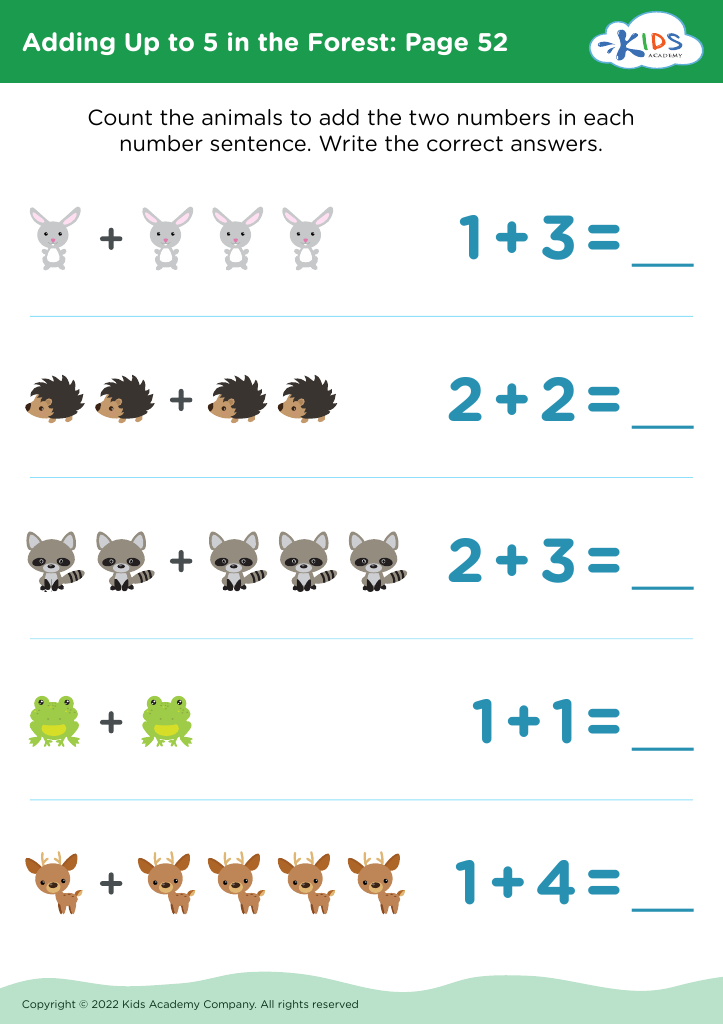
Adding Up to 5 in the Forest: Page 52
Worksheet
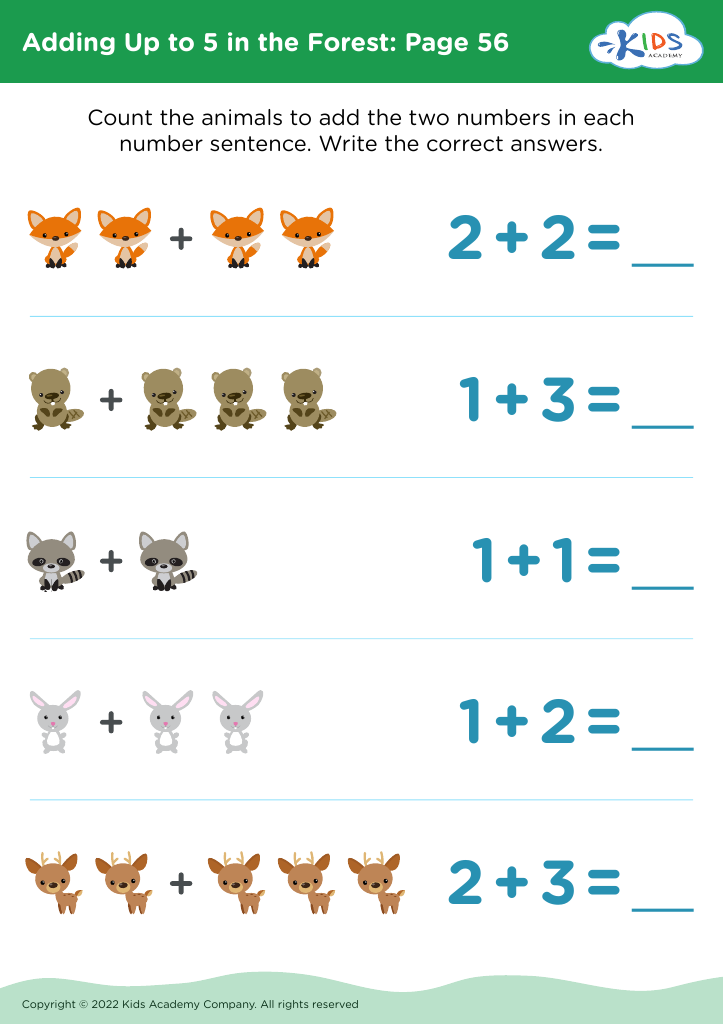
Adding Up to 5 in the Forest: Page 56
Worksheet
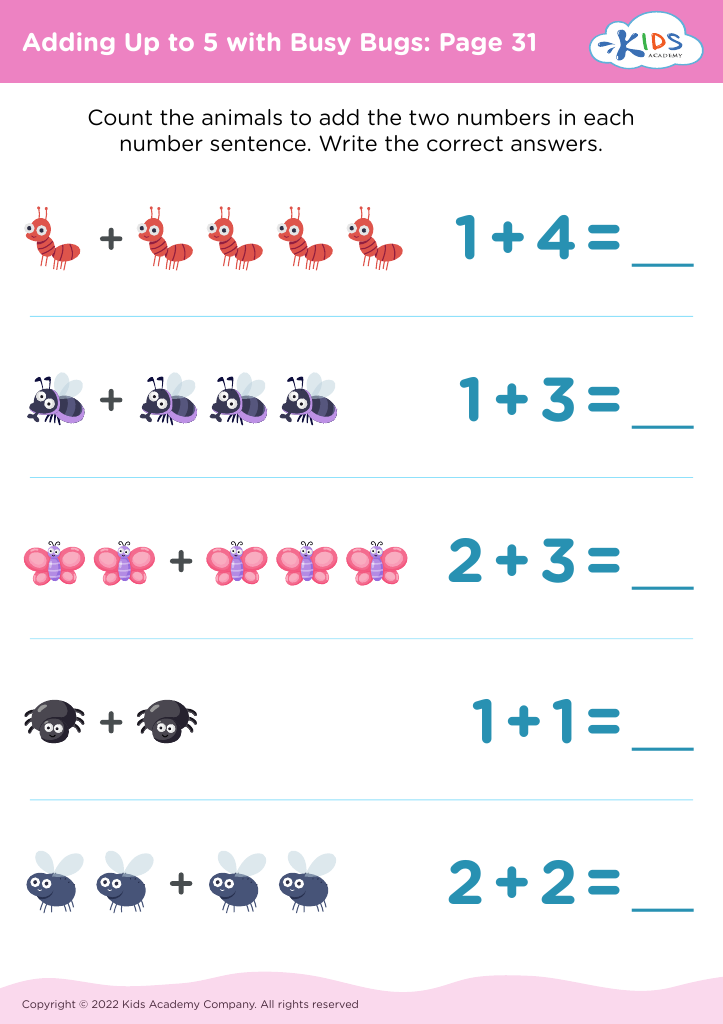
Adding Up to 5 with Busy Bugs: Page 31
Worksheet
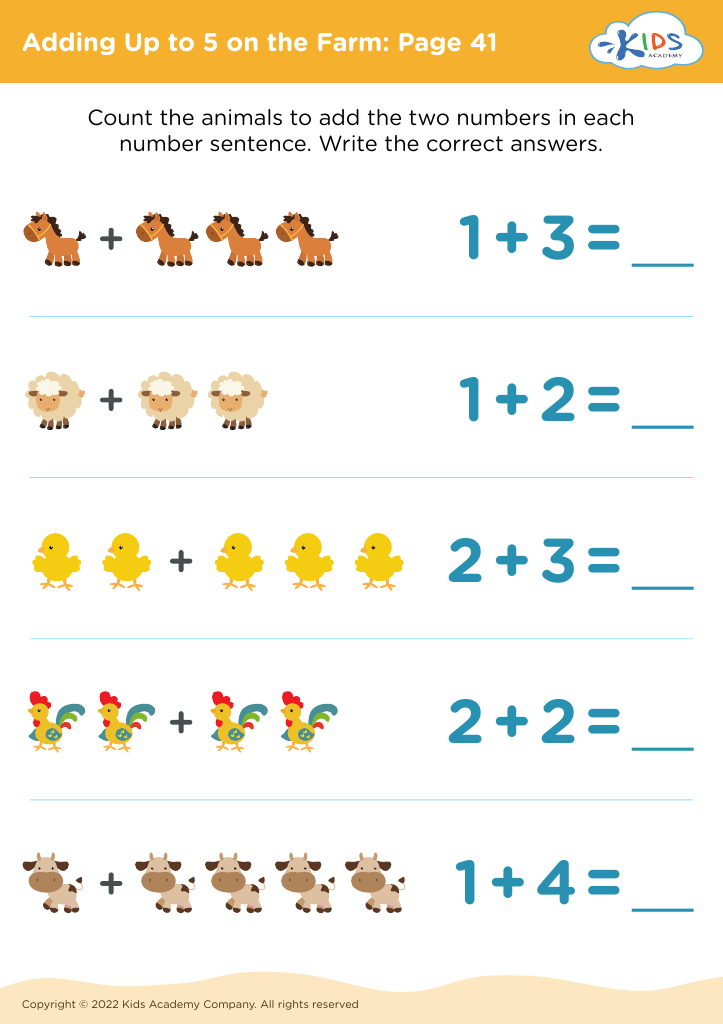
Adding Up to 5 on the Farm: Page 41
Worksheet
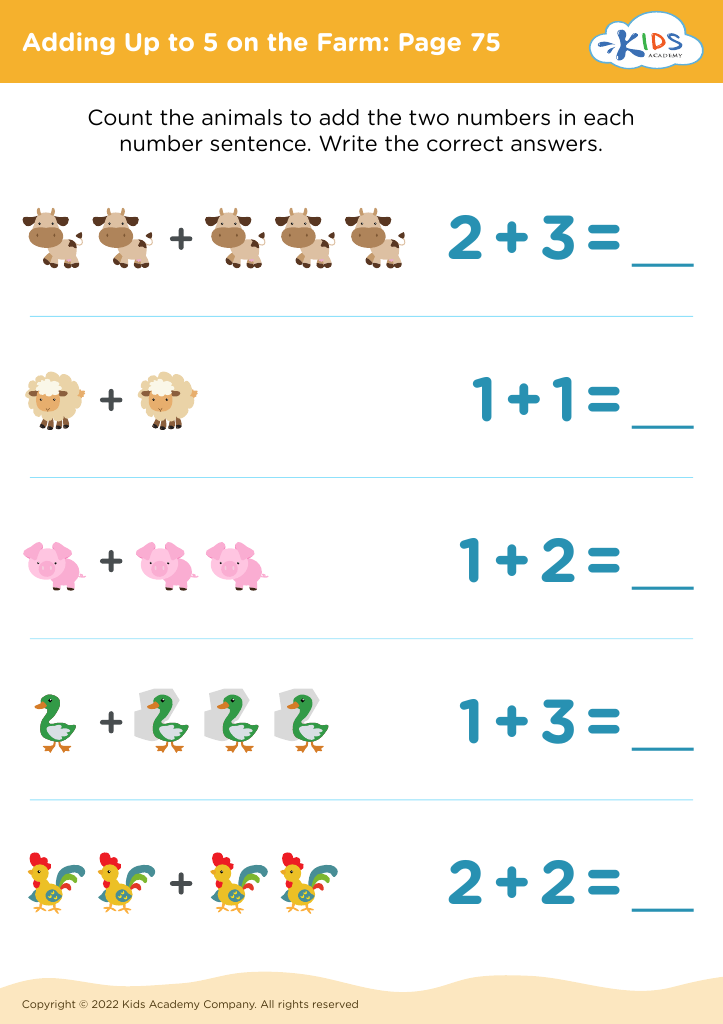
Adding Up to 5 on the Farm: Page 75
Worksheet
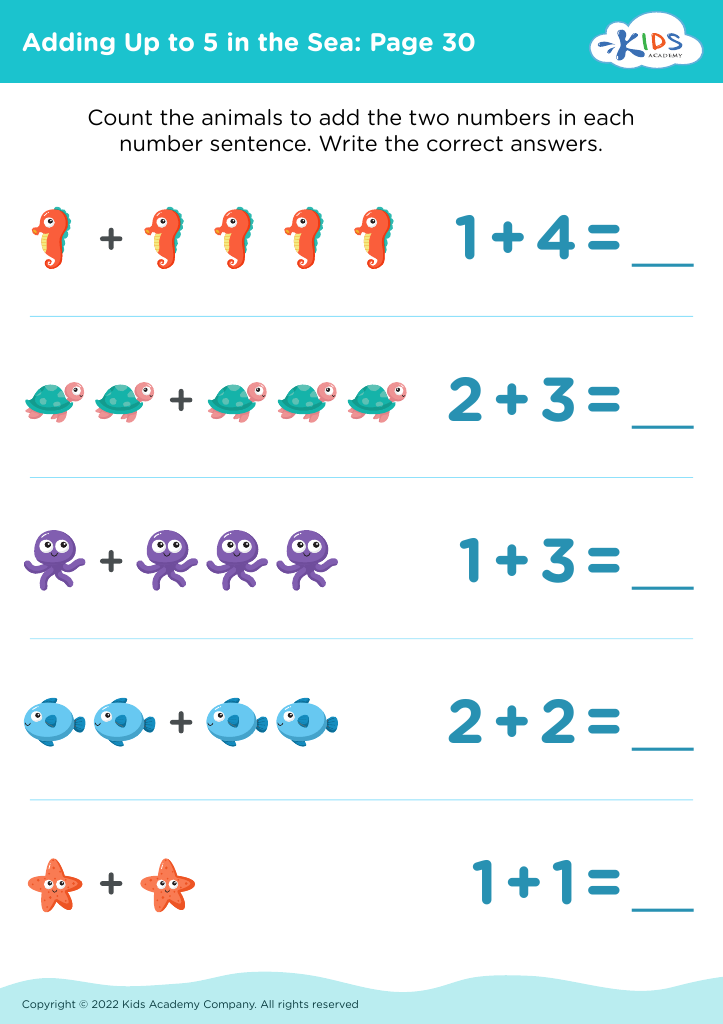
Adding Up to 5 in the Sea: Page 30
Worksheet
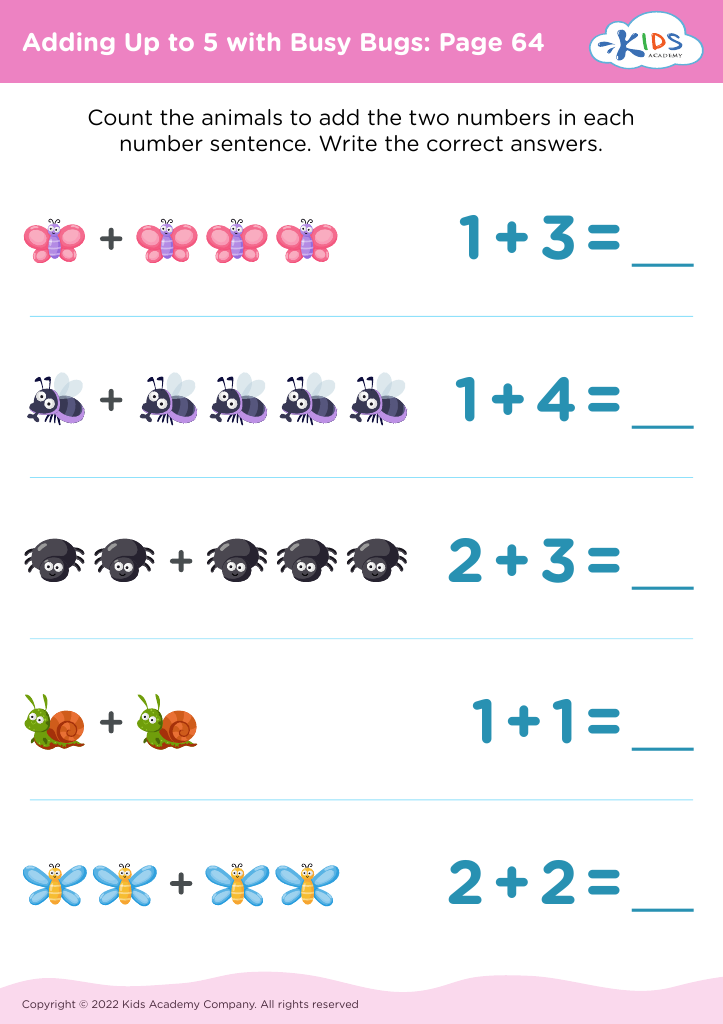
Adding Up to 5 with Busy Bugs: Page 64
Worksheet
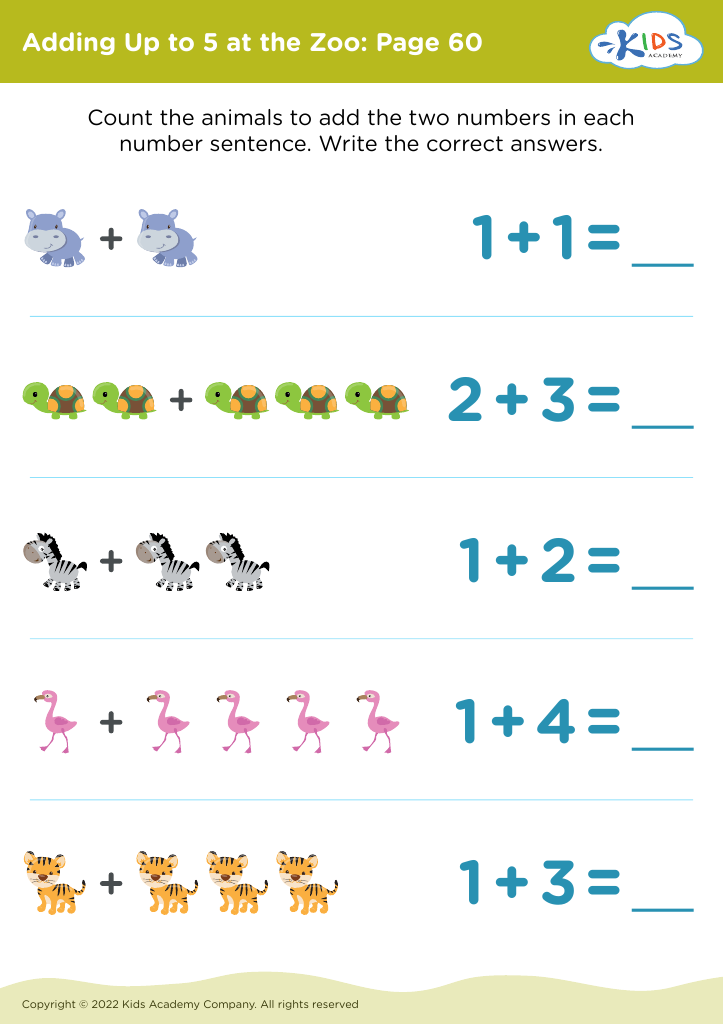
Adding Up to 5 at the Zoo: Page 60
Worksheet
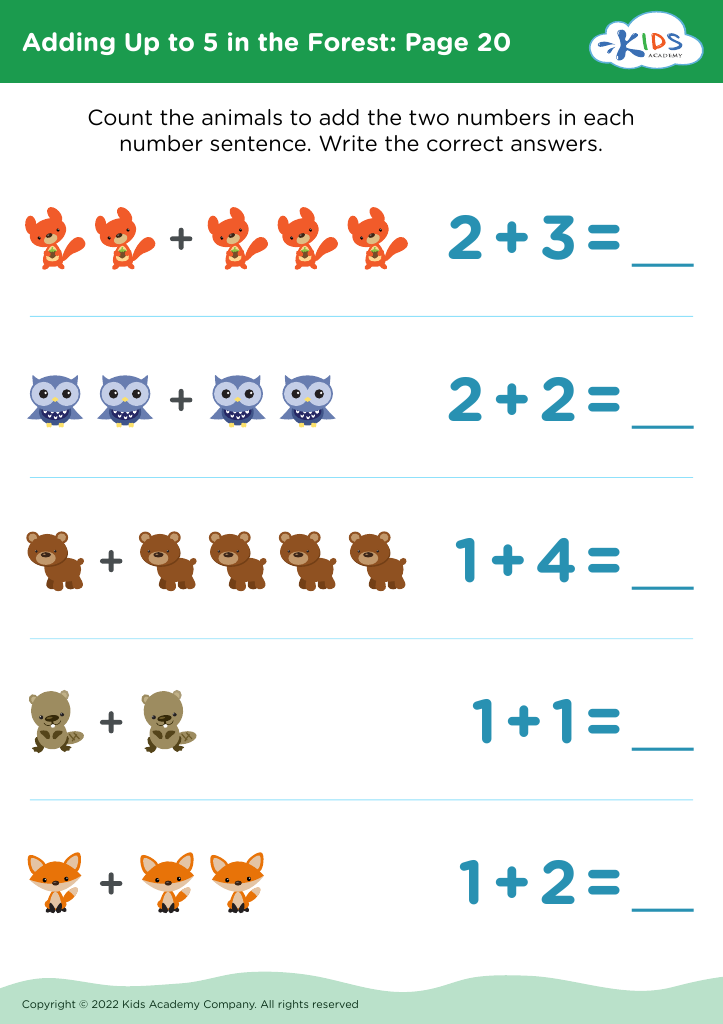
Adding Up to 5 in the Forest: Page 20
Worksheet
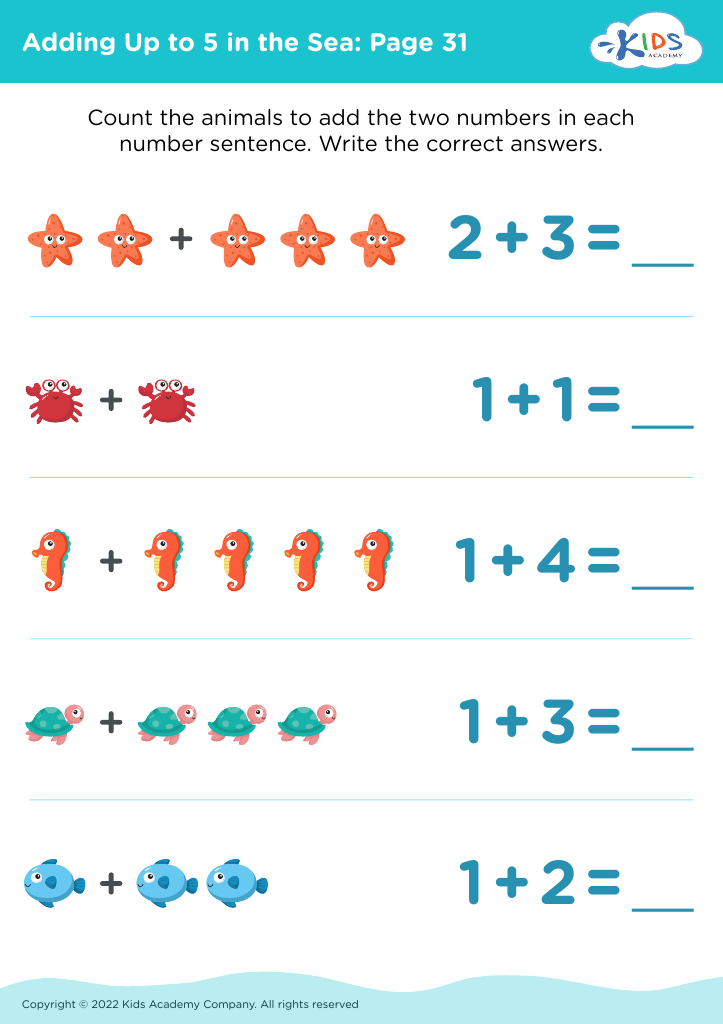
Adding Up to 5 in the Sea: Page 31
Worksheet
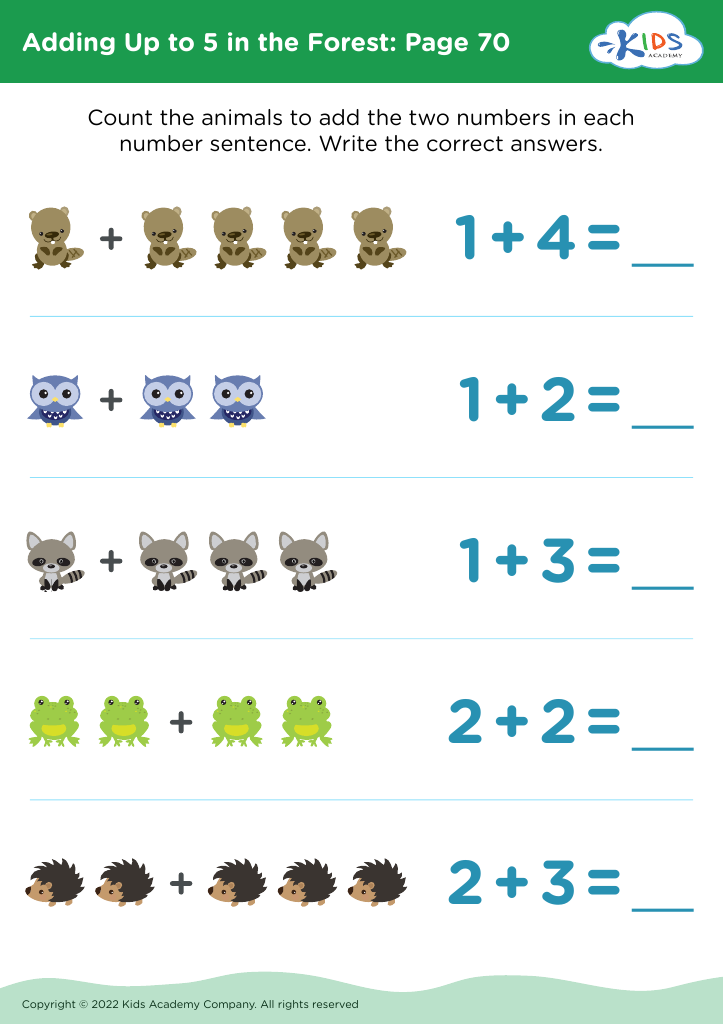
Adding Up to 5 in the Forest: Page 70
Worksheet
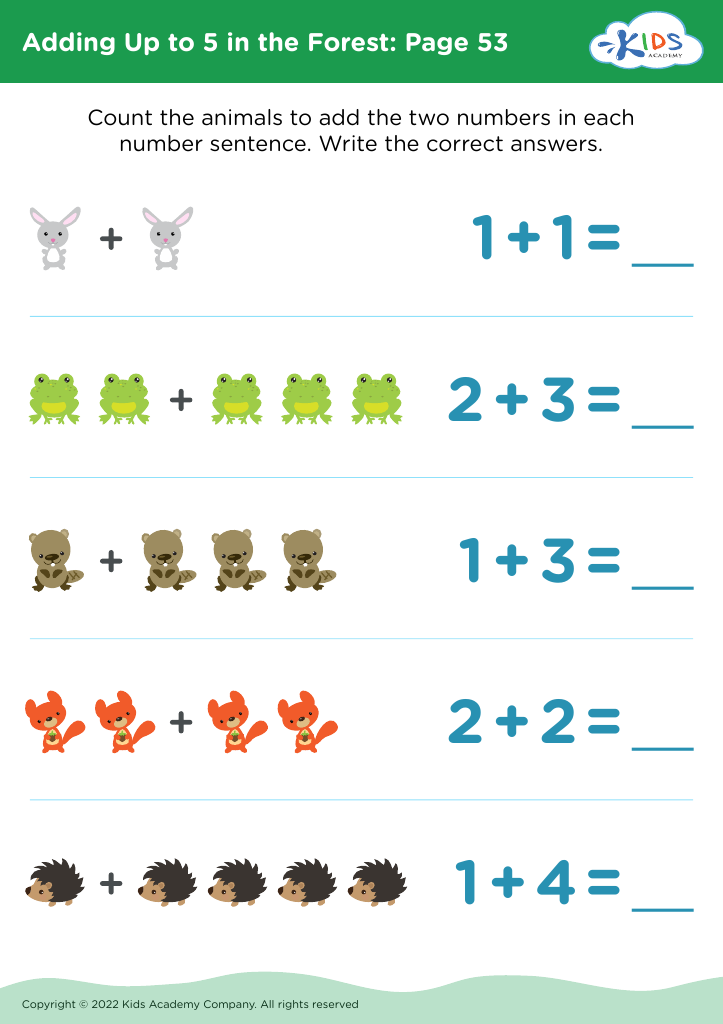
Adding Up to 5 in the Forest: Page 53
Worksheet


Basic addition skills, particularly for the numbers 1 to 5, form the foundation of a child's mathematical understanding and are critical for their overall cognitive development. At ages 5-6, children are at a key developmental stage where they begin to grasp numerical concepts, which influences their future academic success. Teaching children to add amounts up to 5 fosters their ability to recognize relationships between numbers, enhancing their problem-solving skills.

Mastering simple addition not only helps with math but also promotes confidence in young learners. As they practice these skills, children learn to approach challenges with a positive mindset, which benefits their general learning experiences. Furthermore, early proficiency in basic addition sets the stage for more complex mathematical concepts, ensuring a smoother transition to higher-grade levels.

For parents and teachers, nurturing basic addition skills at this stage is vital. They create a supportive learning environment that makes math enjoyable, encouraging curiosity and engagement. Engaging children through playful activities like counting toys, visual aids, or games can make learning fun. By prioritizing these skills, adults help lay a solid groundwork for a lifetime of learning in math and beyond.