Basic arithmetic practice Adding Up to 5 Worksheets for Ages 5-6
8 filtered results
-
From - To
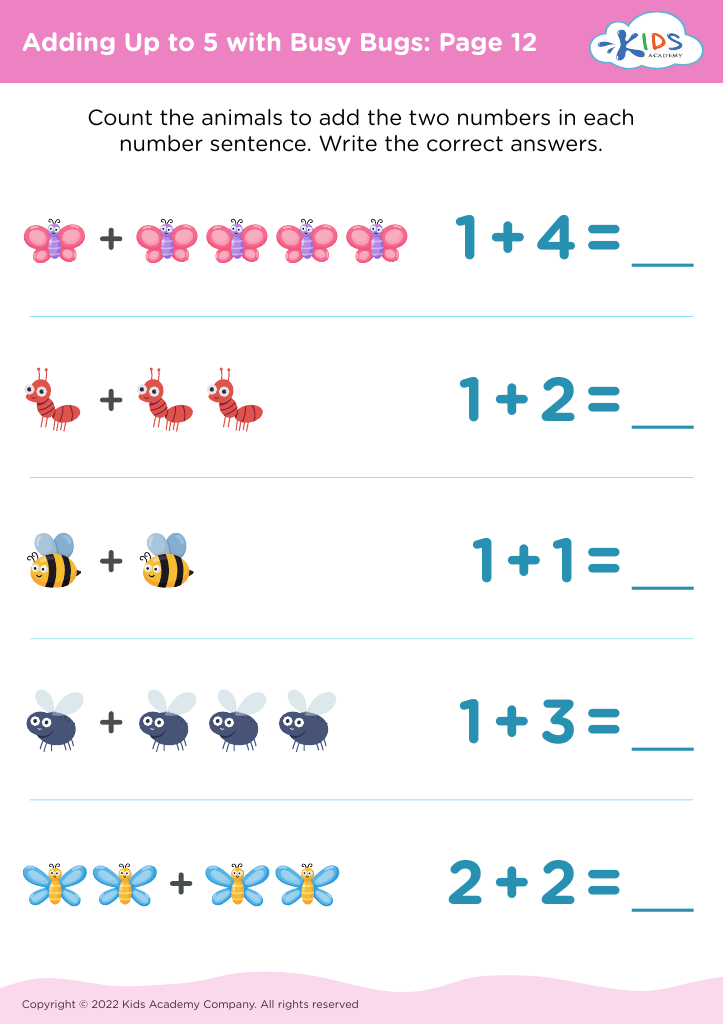
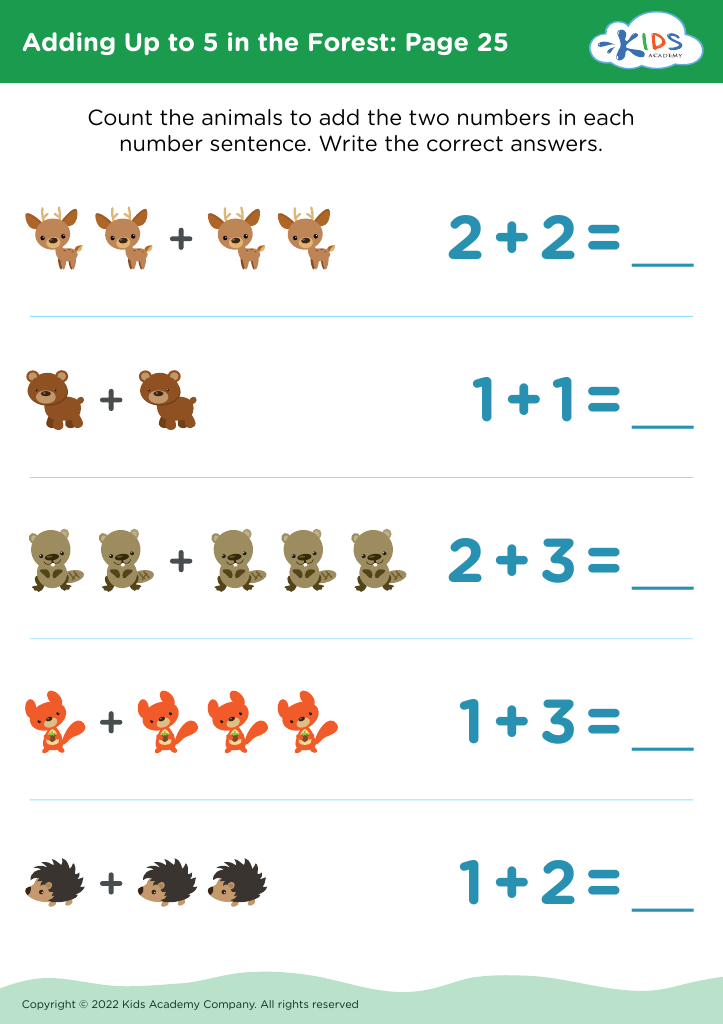
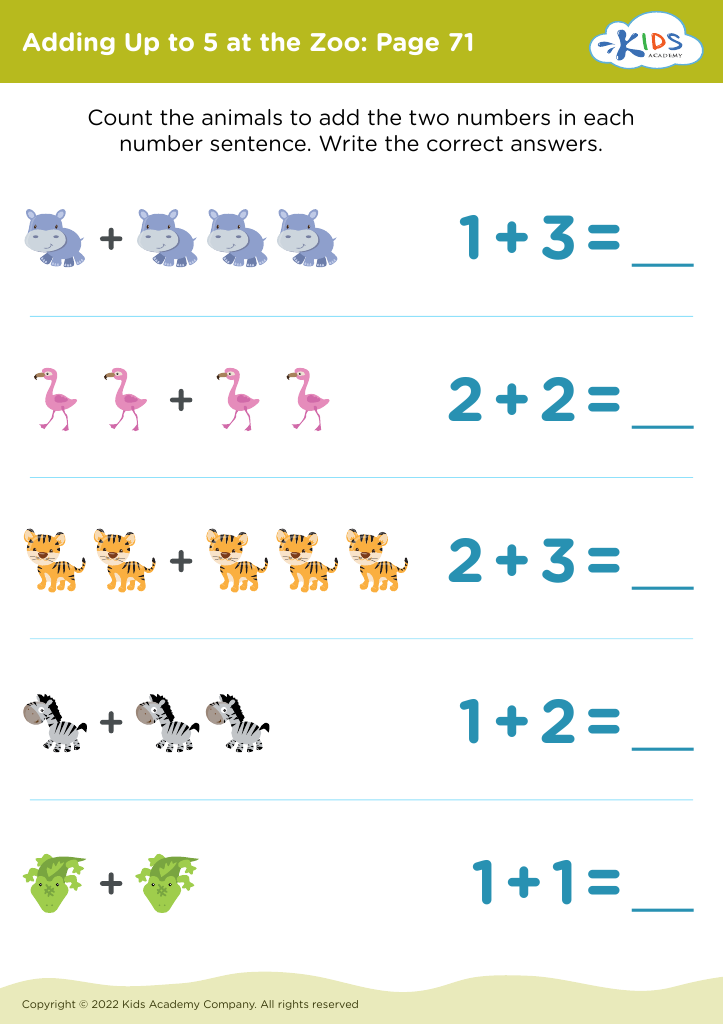
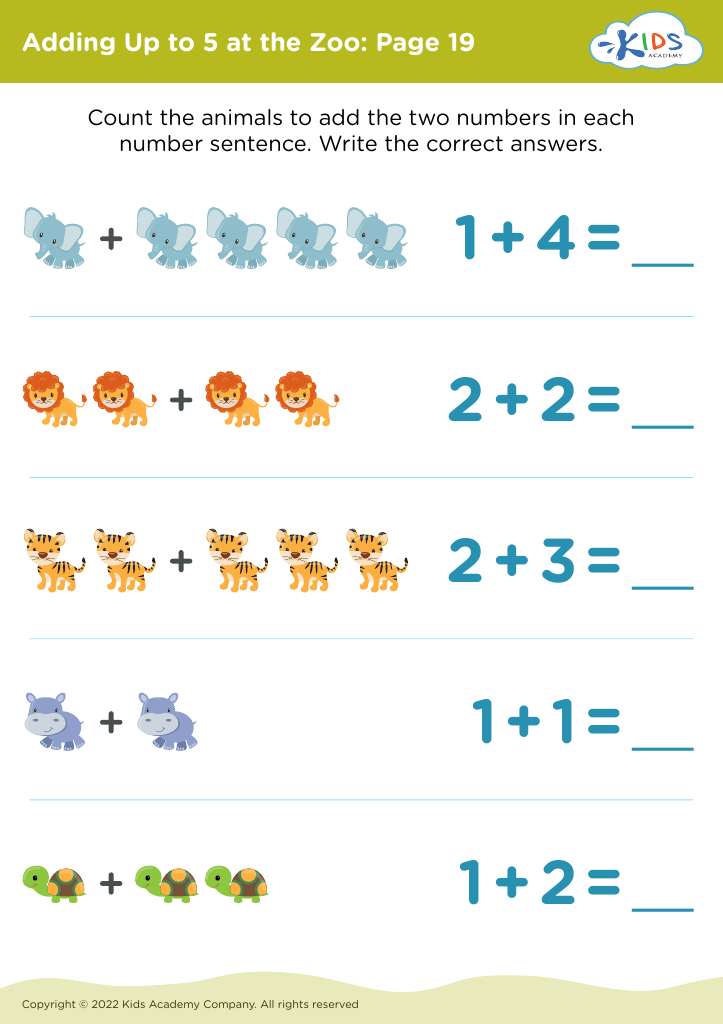
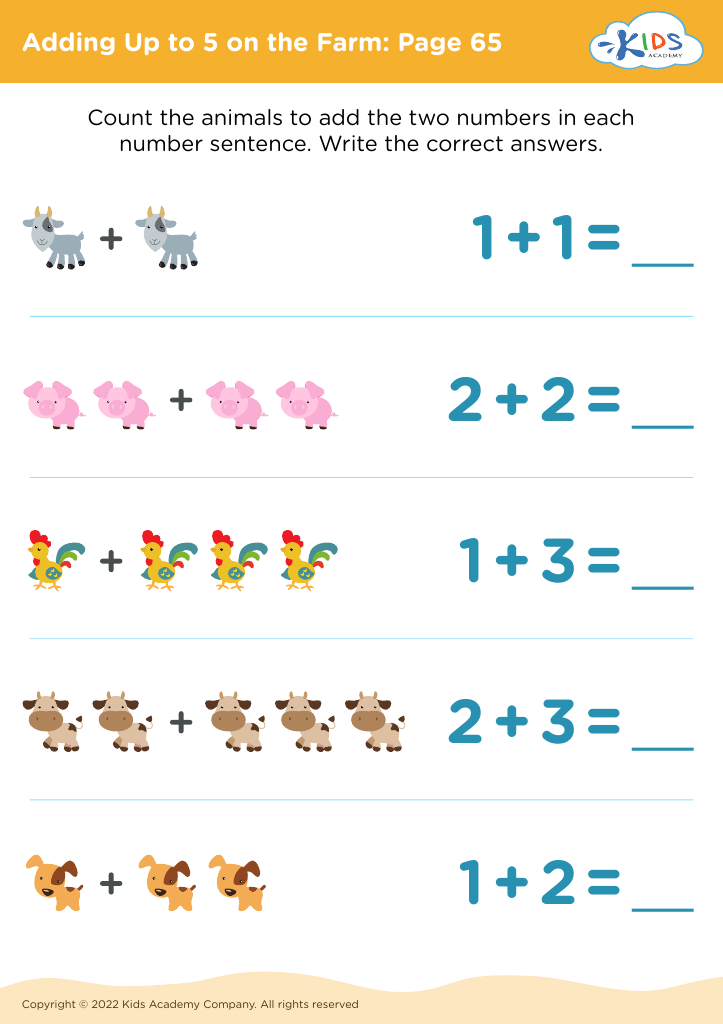
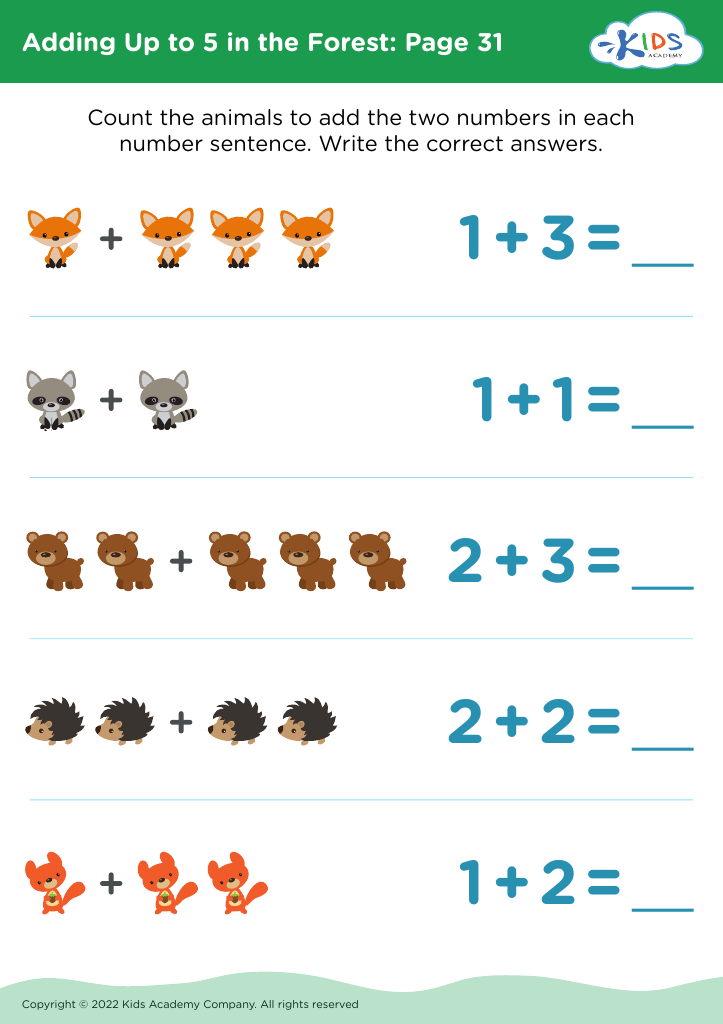
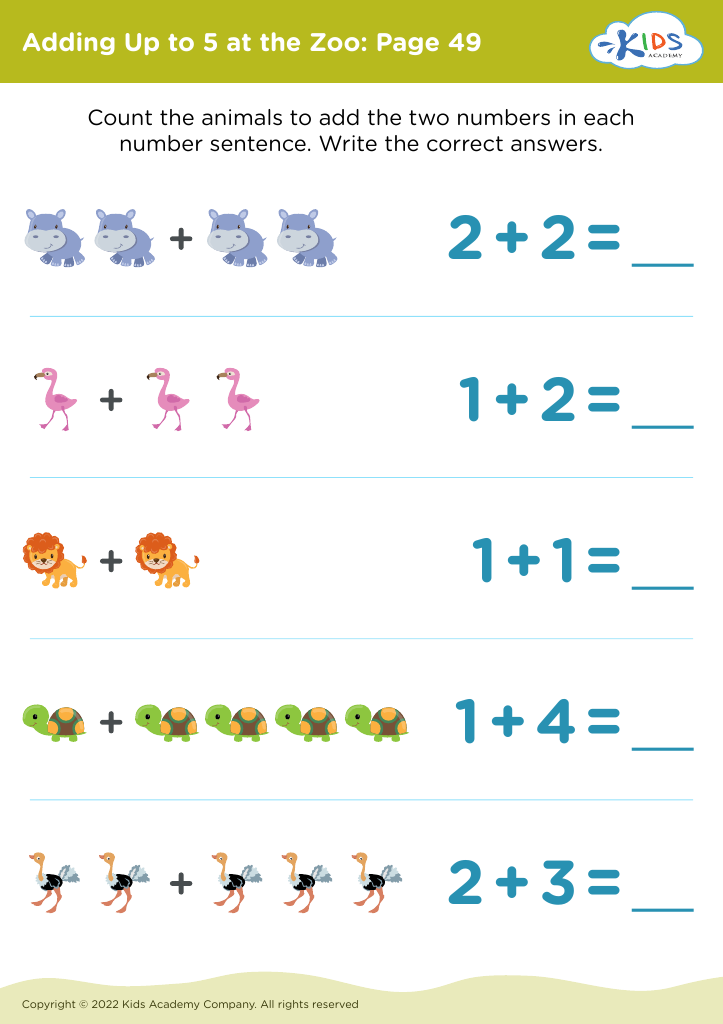
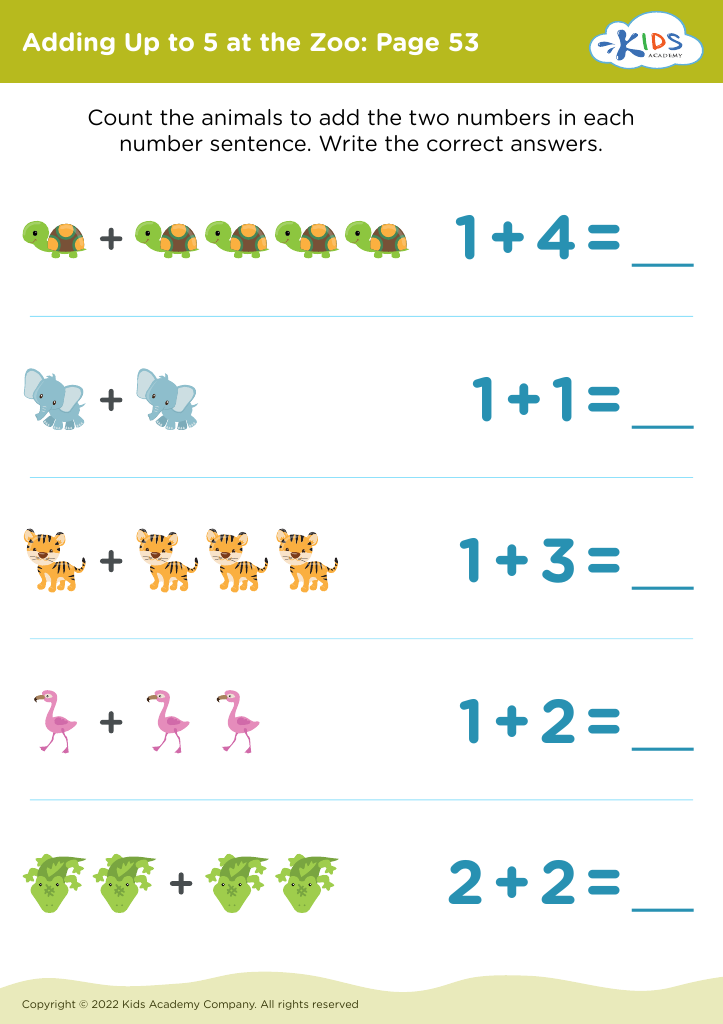
Introducing our "Basic Arithmetic Practice: Adding Up to 5 Worksheets for Ages 5-6," designed to engage young learners in foundational math skills. These printable worksheets from Kids Academy are perfect for children beginning their journey into arithmetic. Each sheet is packed with fun and educational exercises to help kids master addition up to 5, combining learning with engaging visuals. Ideal for both classroom activities and home practice, these worksheets aim to strengthen mathematical confidence and proficiency. Give your child the tools they need to succeed with early math concepts through interactive and hands-on practice.



.jpg)

%20(1).jpg)


Parents and teachers should emphasize basic arithmetic practice, particularly adding up to 5, for children aged 5-6 because it serves as the foundation for future math skills critical for both academic and daily life. At this early age, children's brains are at a developmental stage where absorbing fundamental concepts is more natural and effective. Mastering simple addition boosts their numerical fluency, making more complex mathematical operations less daunting as they progress through school.
Introducing basic arithmetic practice aids in developing essential cognitive skills such as problem-solving, logical thinking, and attention to detail. It helps children gain confidence in their ability to tackle mathematical tasks, thus fostering a positive attitude toward the subject. Such confidence is crucial because a positive early math experience often correlates with continued interest and better performance in math throughout their educational journey.
Additionally, arithmetic practice enhances children's understanding of number sense — the ability to recognize, compare, and manipulate numbers efficiently. Activities like counting objects, using fingers, or drawing visuals engage multiple senses, reinforcing learning and retention. Ultimately, laying a strong arithmetic foundation not only supports academic success but also equips children with practical skills applicable in everyday tasks, fostering independence and critical thinking from a young age.








