Filters

21 filtered results

Clear all filters
Favorites
With answer key
Interactive

21 filtered results

Difficulty Level

Grade


Boost your child’s math confidence with our "Basic Math Skills: Adding Up to 5 Worksheets," designed for ages 5-6. These engaging worksheets offer fun, interactive activities that help young learners master basic addition concepts. Children will explore numbers through colorful visuals and relatable themes, making counting enjoyable. Each worksheet aims to develop essential skills such as number recognition, problem-solving, and critical thinking, all while fostering a love for math. Perfect for parents and teachers alike, these resources support early math development in an exciting way. Download today and start your child’s journey to mathematical fluency!
Check out this FREE Trial Lesson on Adding Up to 5 for age 5-6!

My Family

Favorites
With answer key
Interactive
  • 5-6
  • Basic Math Skills
  • Adding Up to 5
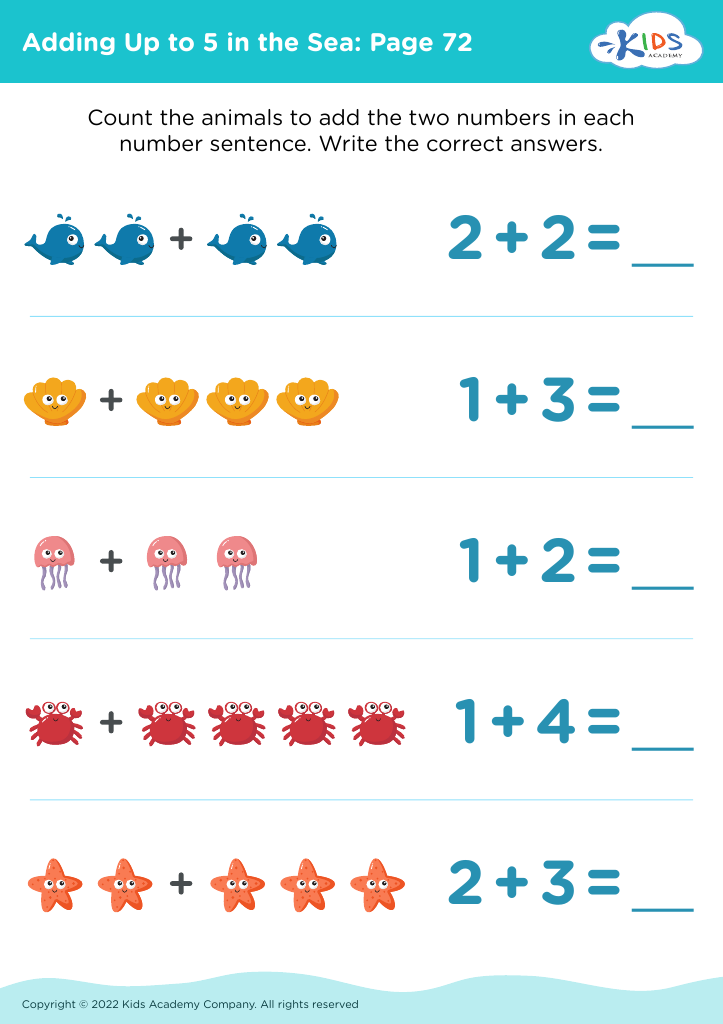
Adding Up to 5 in the Sea: Page 72
Worksheet
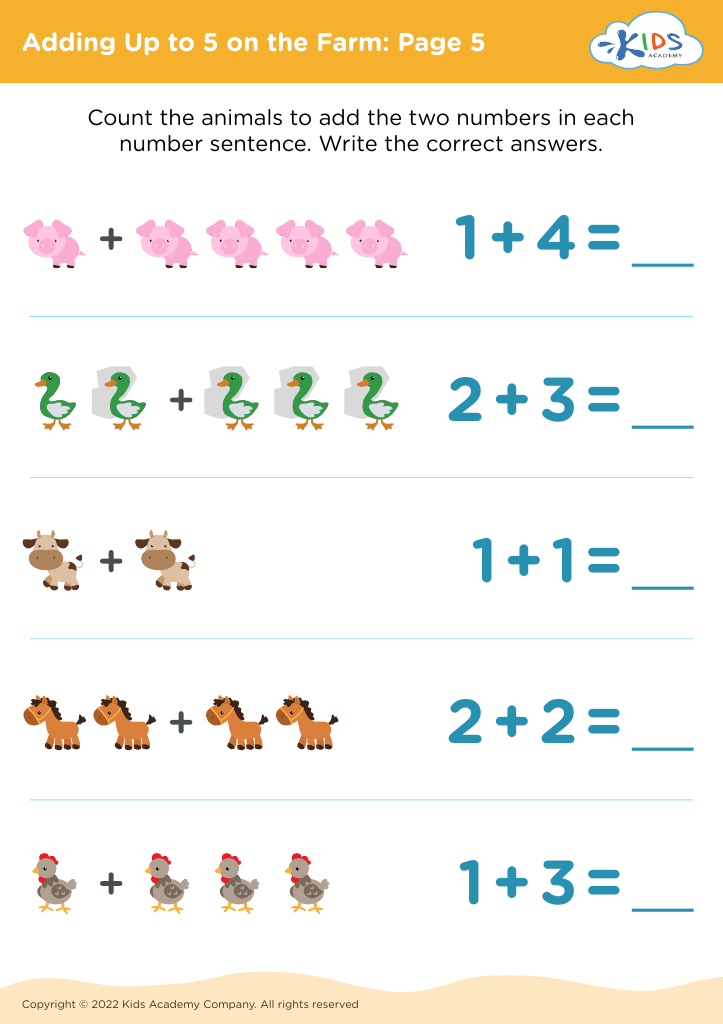
Adding Up to 5 on the Farm: Page 5
Worksheet
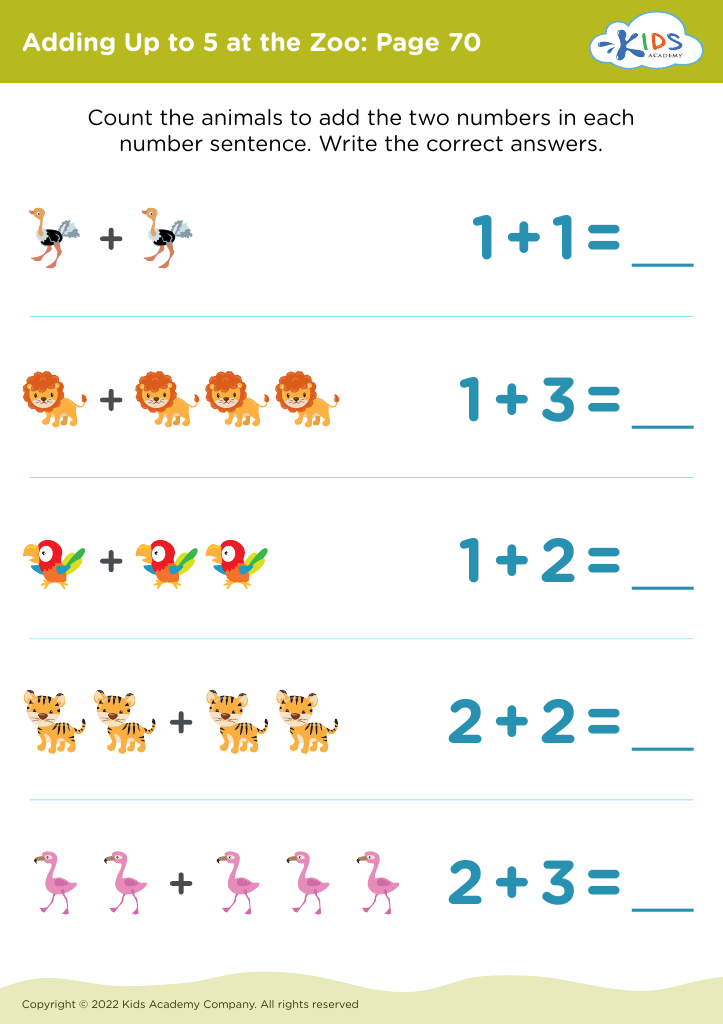
Adding Up to 5 at the Zoo: Page 70
Worksheet
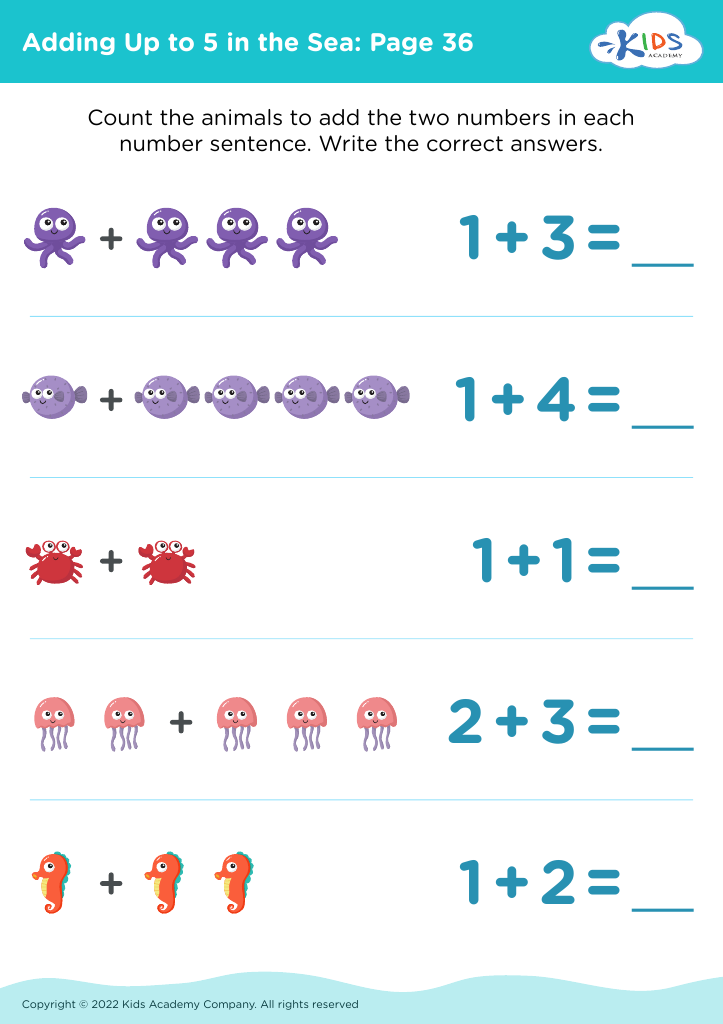
Adding Up to 5 in the Sea: Page 36
Worksheet
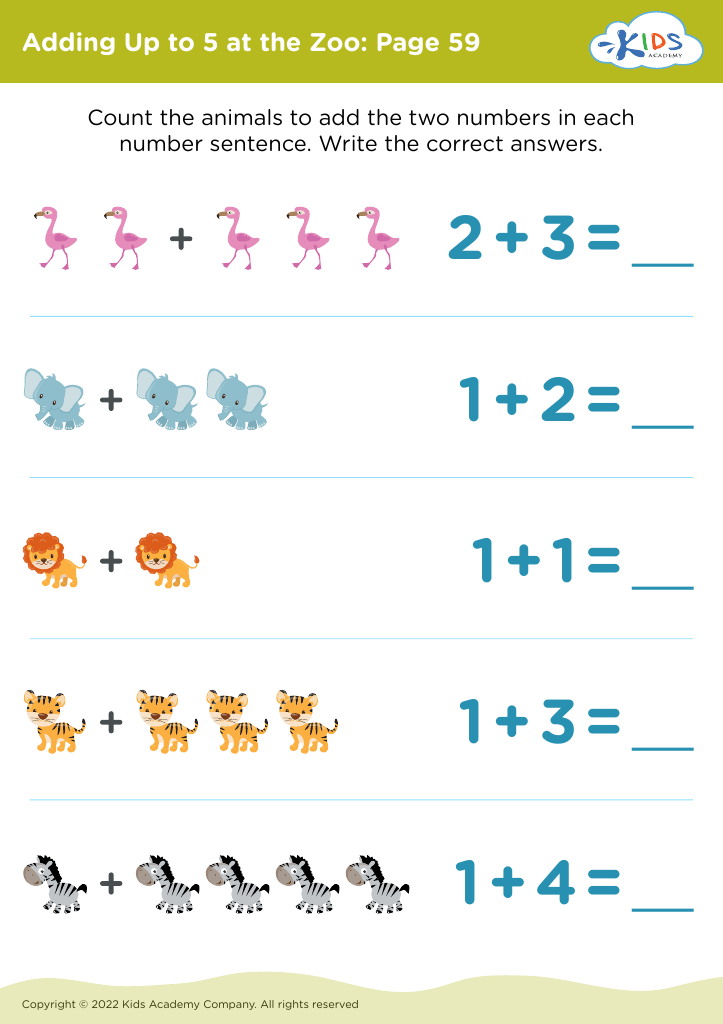
Adding Up to 5 at the Zoo: Page 59
Worksheet
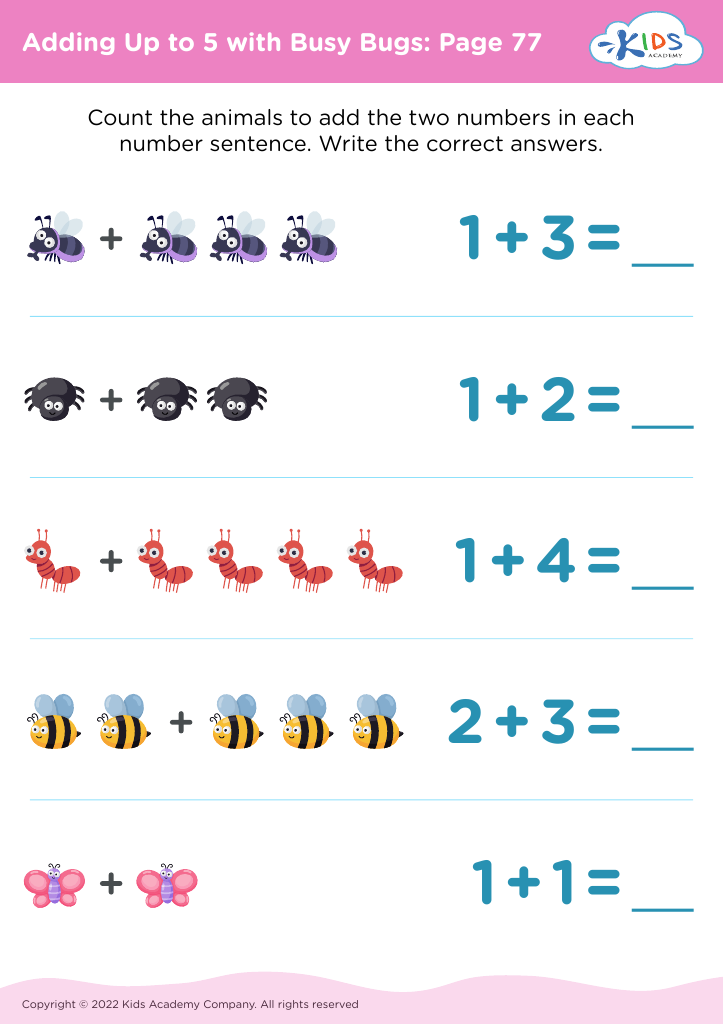
Adding Up to 5 with Busy Bugs: Page 77
Worksheet
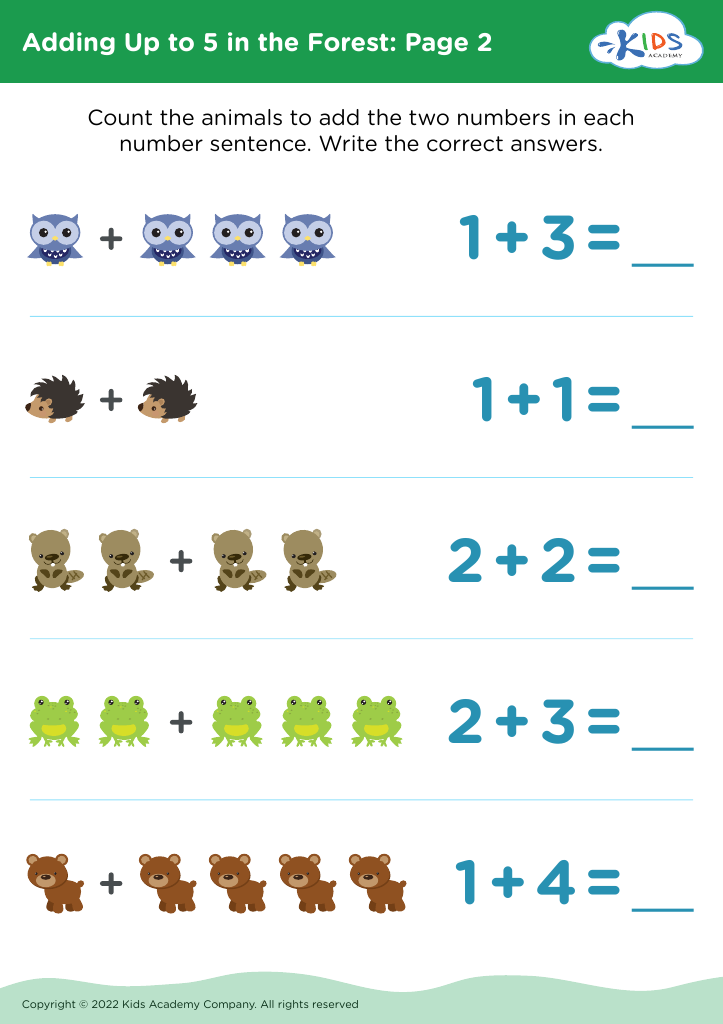
Adding Up to 5 in the Forest: Page 2
Worksheet
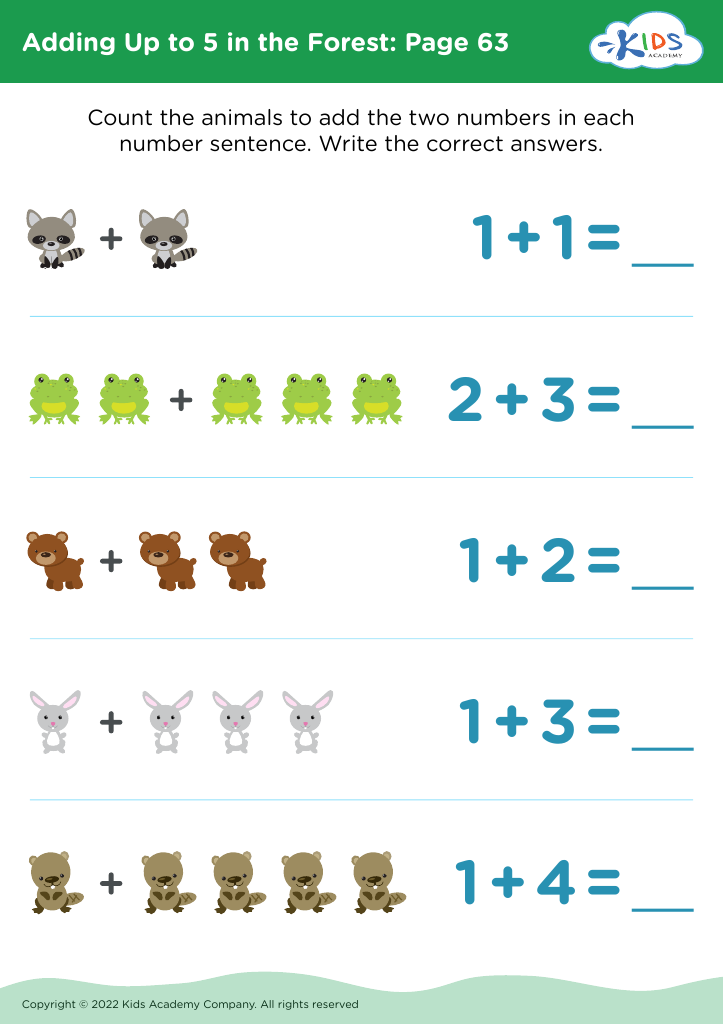
Adding Up to 5 in the Forest: Page 63
Worksheet
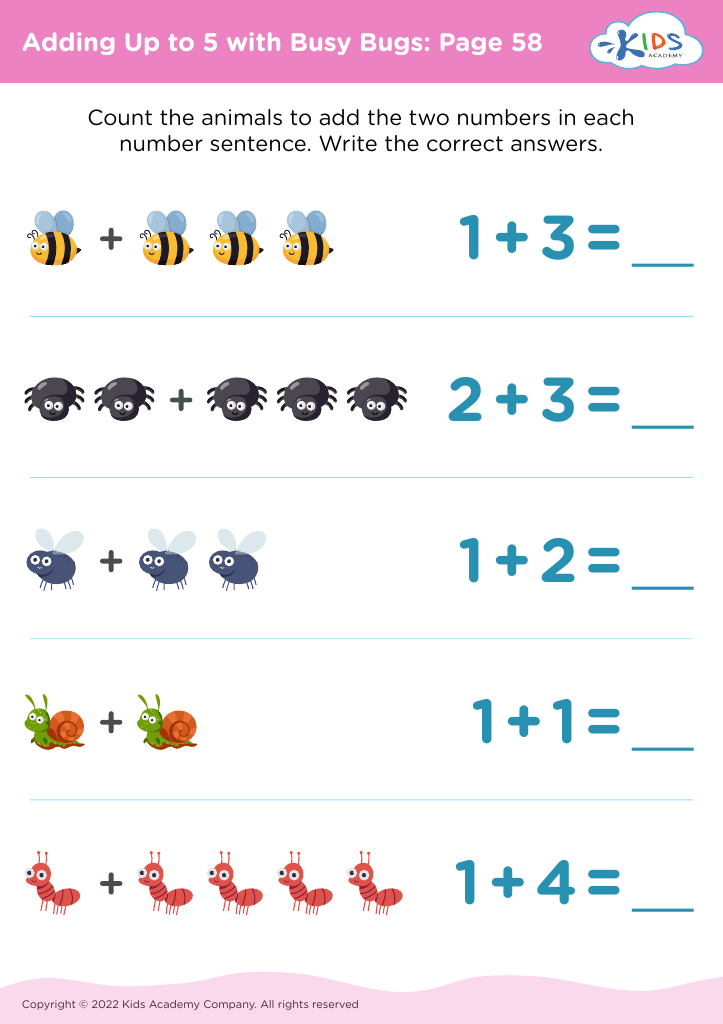
Adding Up to 5 with Busy Bugs: Page 58
Worksheet
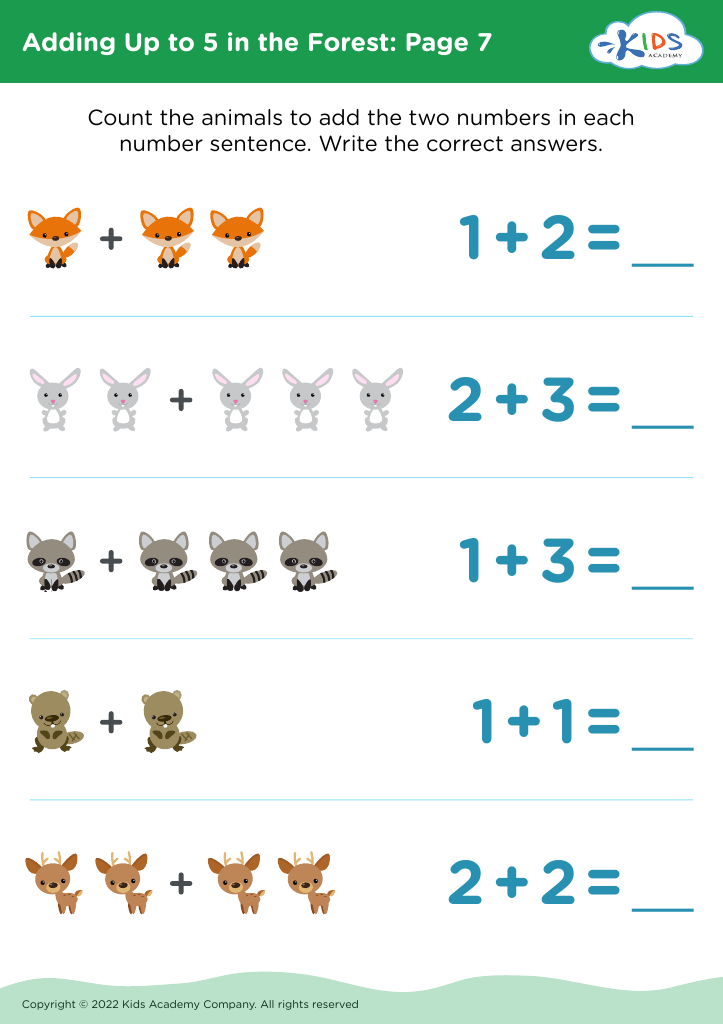
Adding Up to 5 in the Forest: Page 7
Worksheet
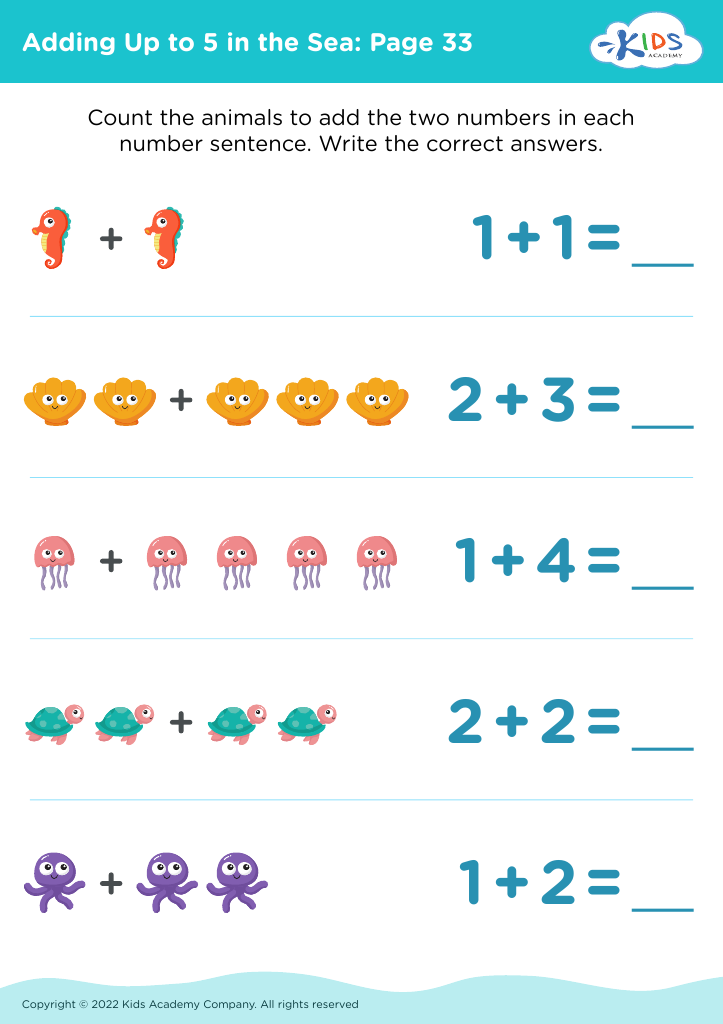
Adding Up to 5 in the Sea: Page 33
Worksheet
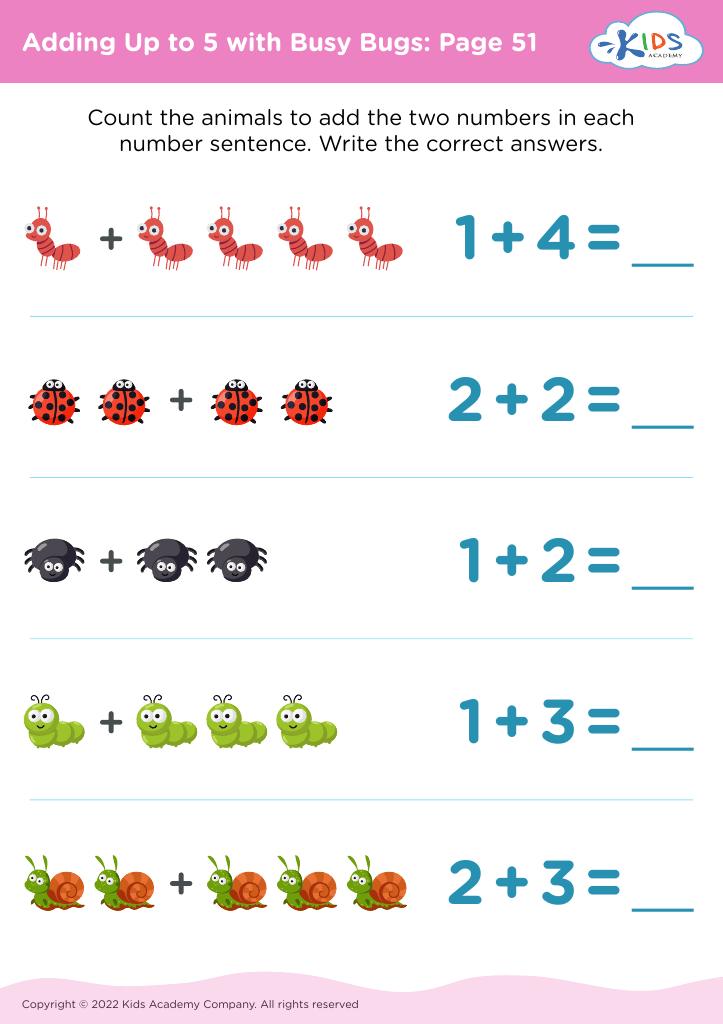
Adding Up to 5 with Busy Bugs: Page 51
Worksheet
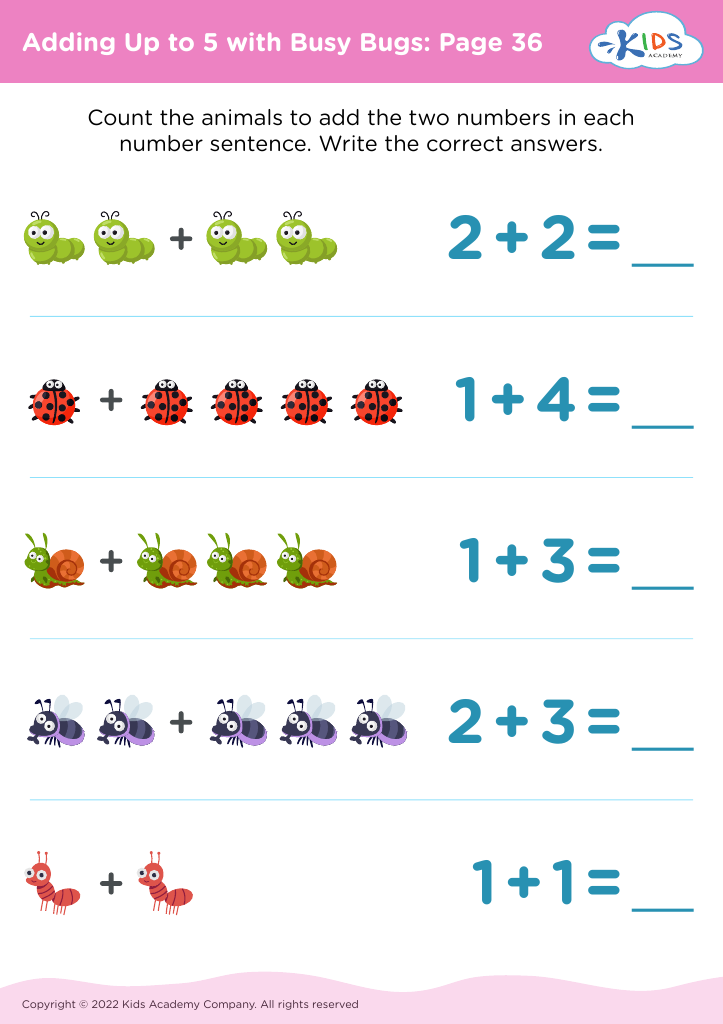
Adding Up to 5 with Busy Bugs: Page 36
Worksheet
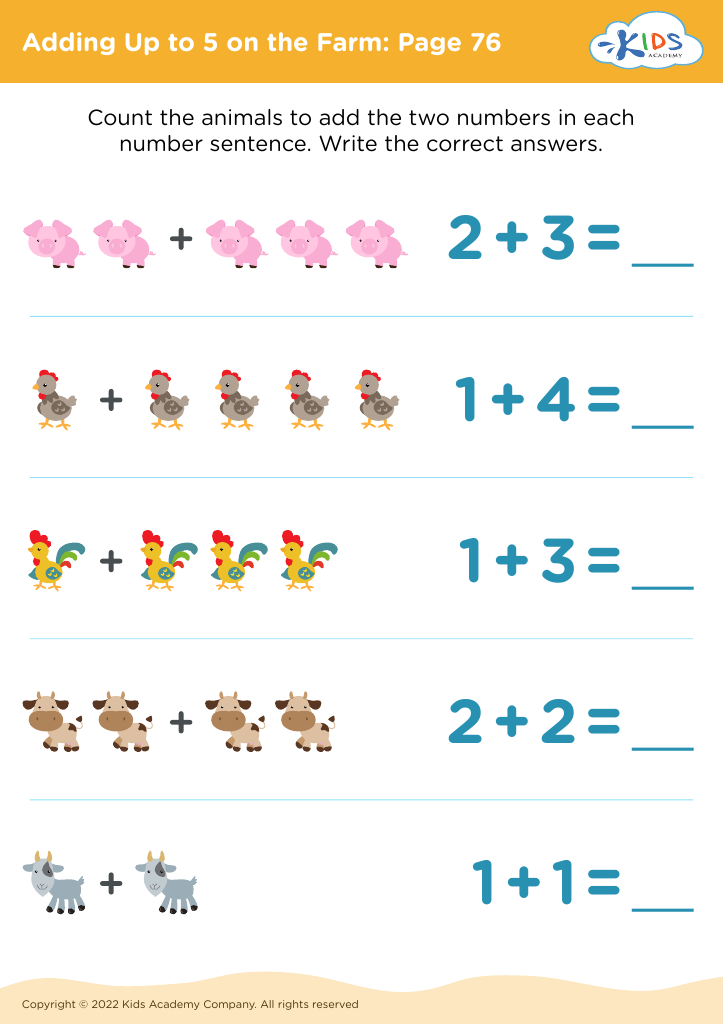
Adding Up to 5 on the Farm: Page 76
Worksheet
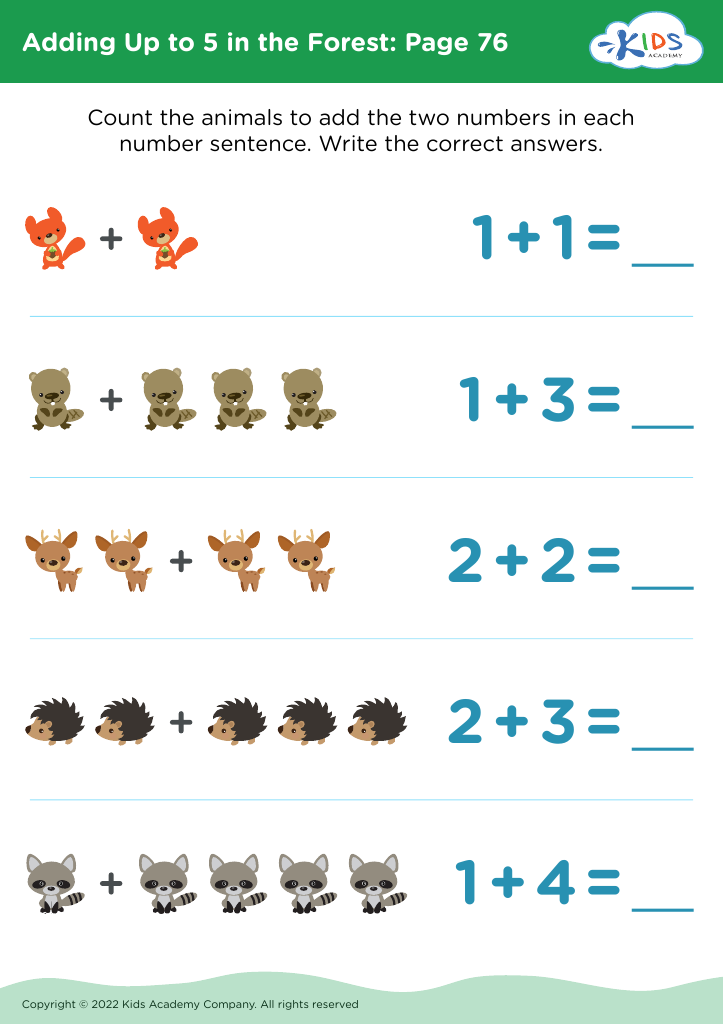
Adding Up to 5 in the Forest: Page 76
Worksheet
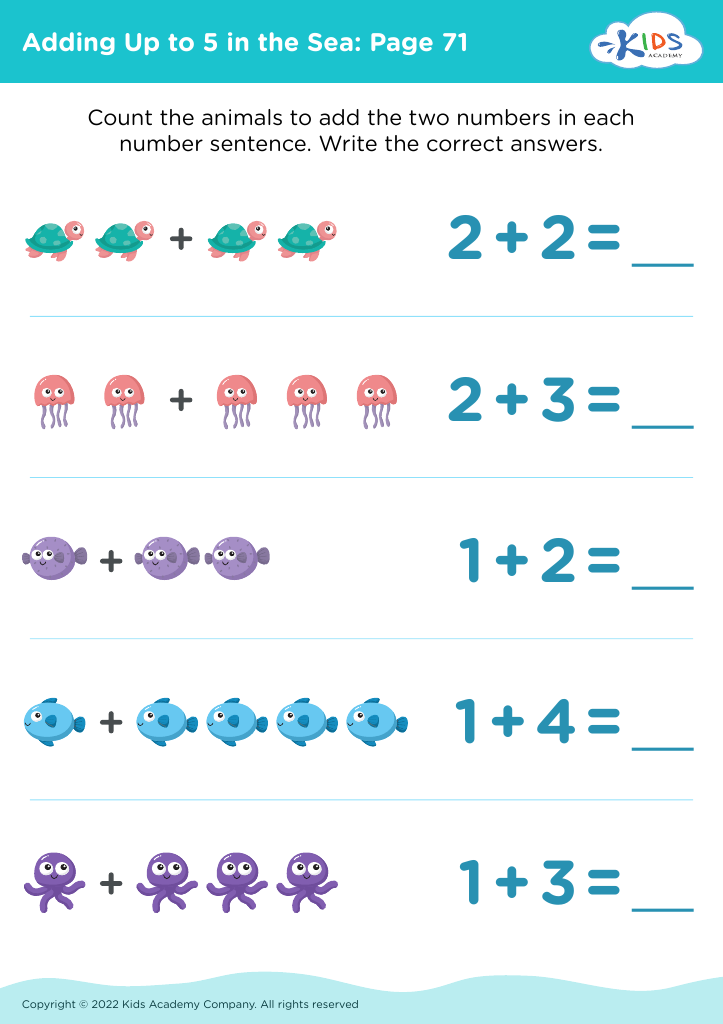
Adding Up to 5 in the Sea: Page 71
Worksheet
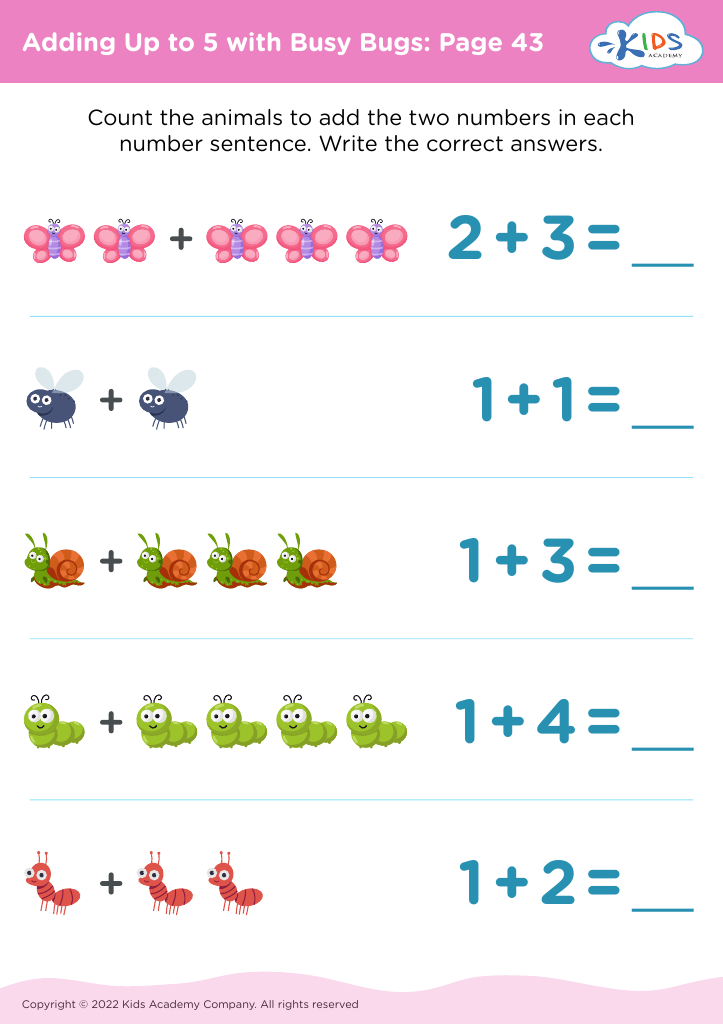
Adding Up to 5 with Busy Bugs: Page 43
Worksheet
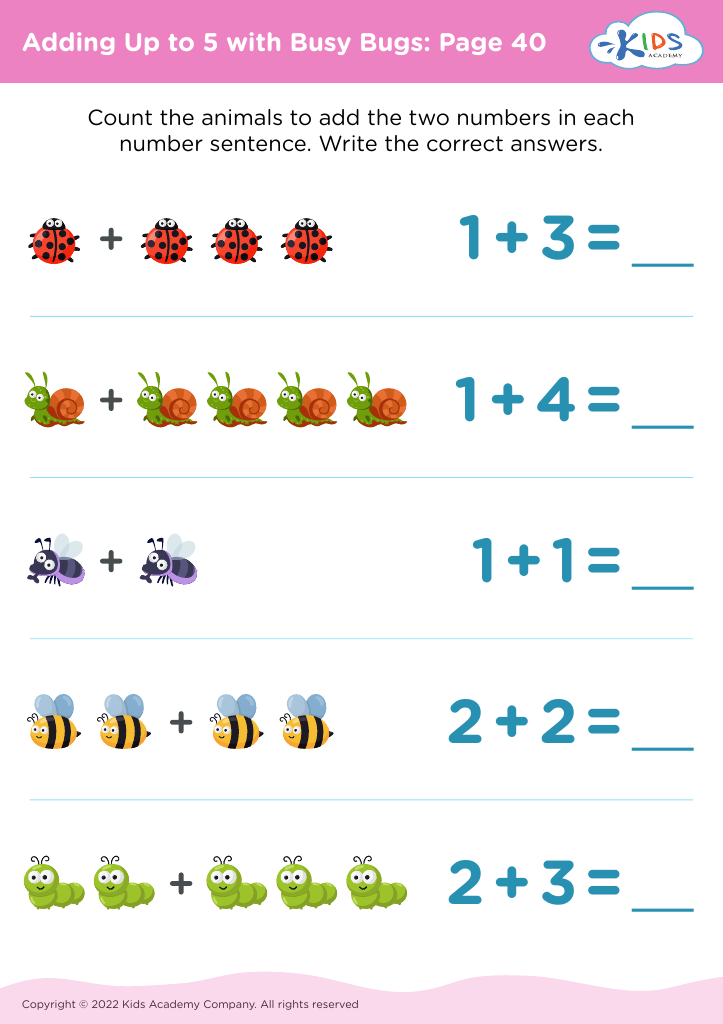
Adding Up to 5 with Busy Bugs: Page 40
Worksheet
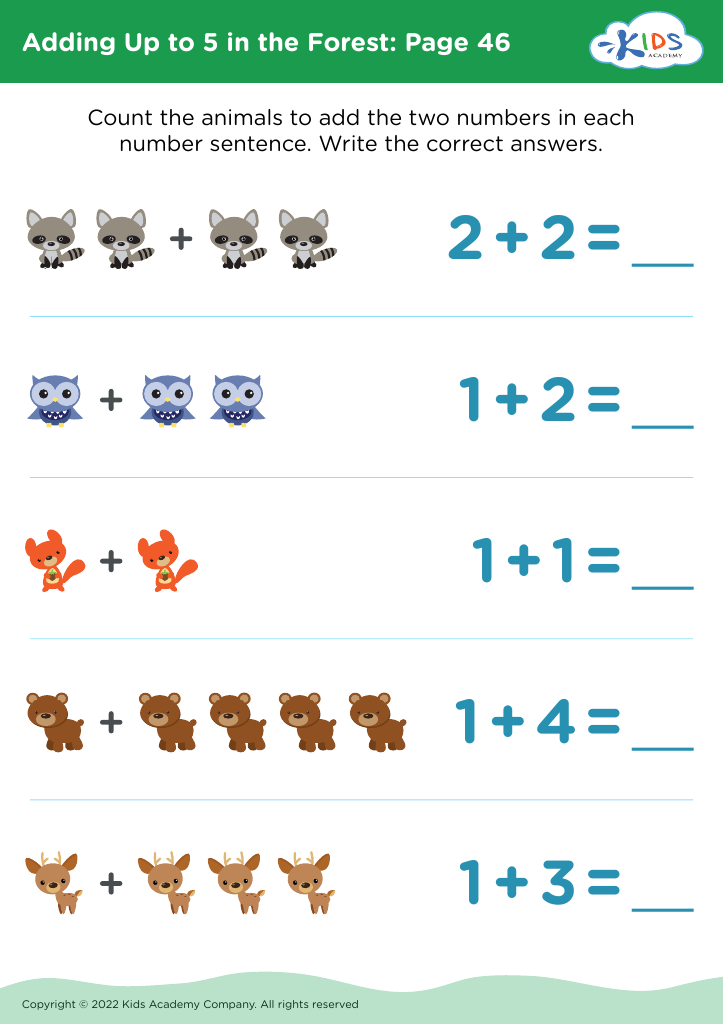
Adding Up to 5 in the Forest: Page 46
Worksheet
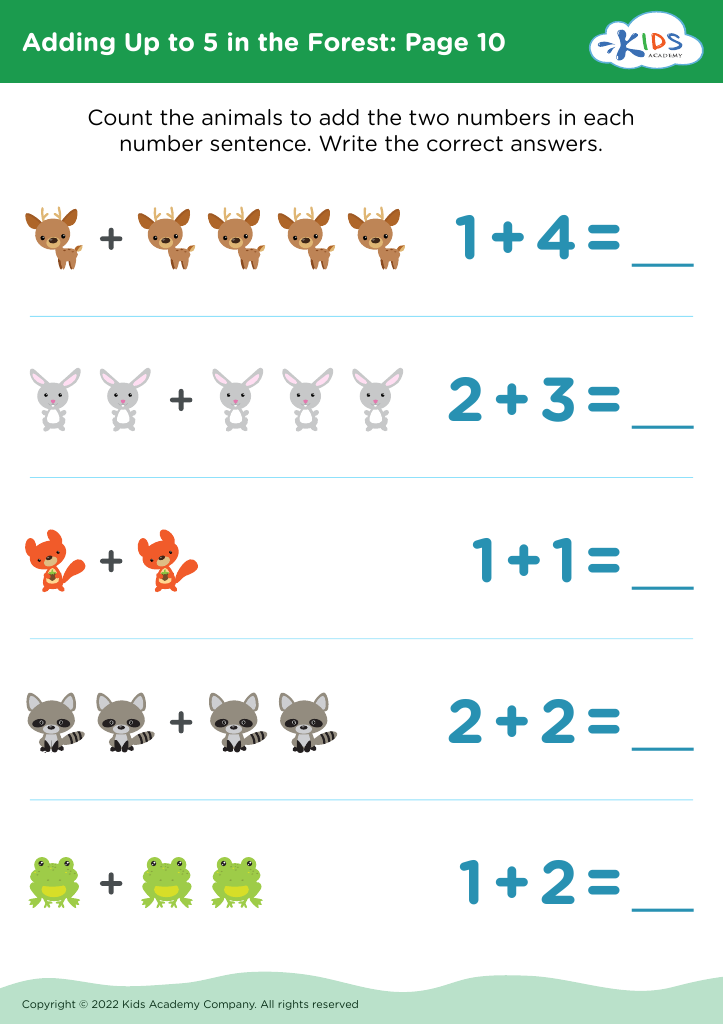
Adding Up to 5 in the Forest: Page 10
Worksheet
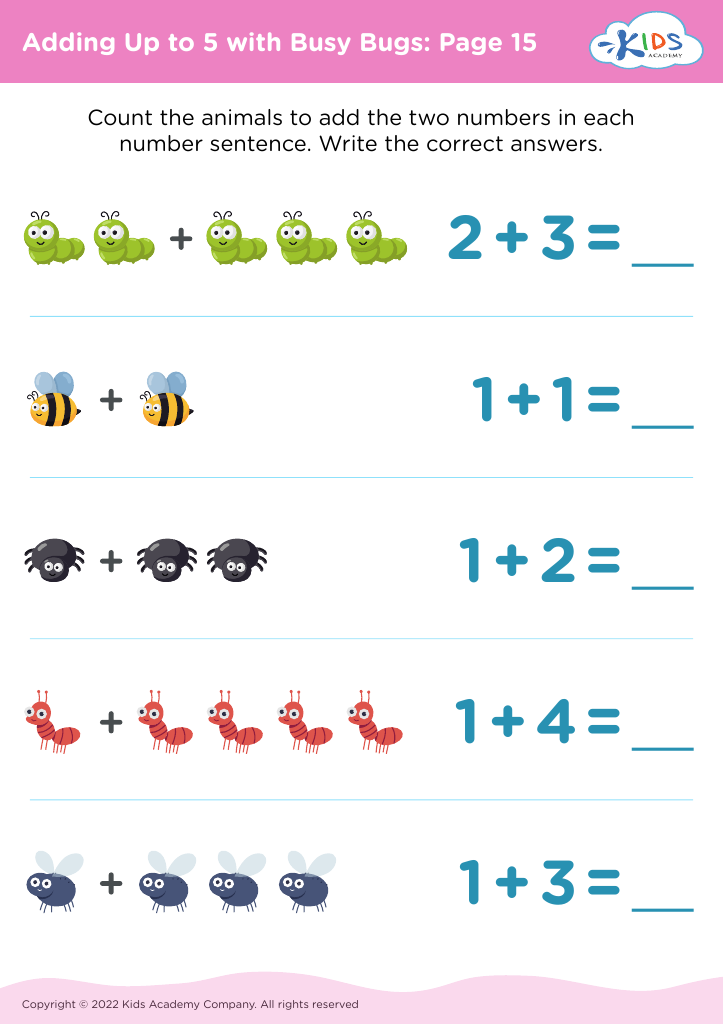
Adding Up to 5 with Busy Bugs: Page 15
Worksheet


Parents and teachers should prioritize basic math skills like adding up to 5 for children aged 5-6 because this foundational knowledge is crucial for cognitive development and early learning. Mastering simple addition lays the groundwork for mathematical understanding, enabling children to recognize patterns, solve problems, and develop critical thinking skills.

At this age, children are naturally curious, and engaging them in basic math through interactive activities can enhance their enthusiasm for learning. These skills not only support math comprehension but also boost confidence in their abilities, setting a positive tone for future academic experiences.

Furthermore, basic math is closely tied to daily life; children encounter adding and counting in everyday situations, such as playing games or sharing snacks. Providing early exposure helps them apply math concepts practically, promoting meaningful learning.

Moreover, proficiency in basic math can lead to better performance in school as curricula become increasingly complex. By nurturing these skills early, parents and teachers contribute to each child's enduring success in mathematics and overall education. Encouraging the mastery of adding up to 5 creates a strong foundation for future math concepts, ensuring children feel competent and empowered in their learning journey.