Developing Concentration Adding Up to 5 Worksheets for Ages 5-6
5 filtered results
-
From - To
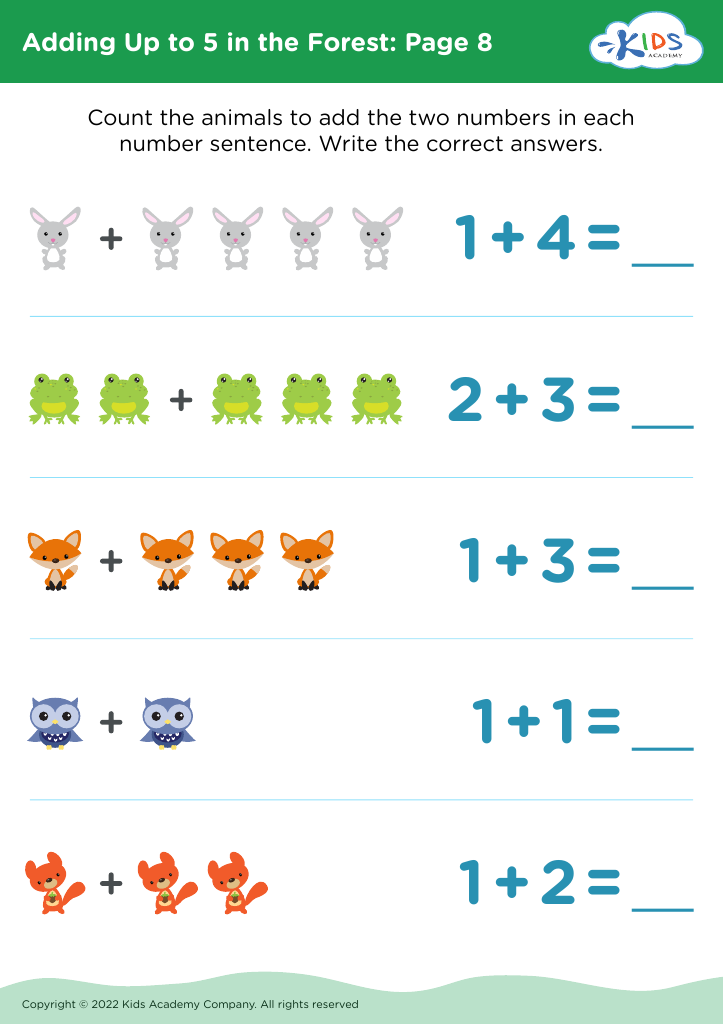
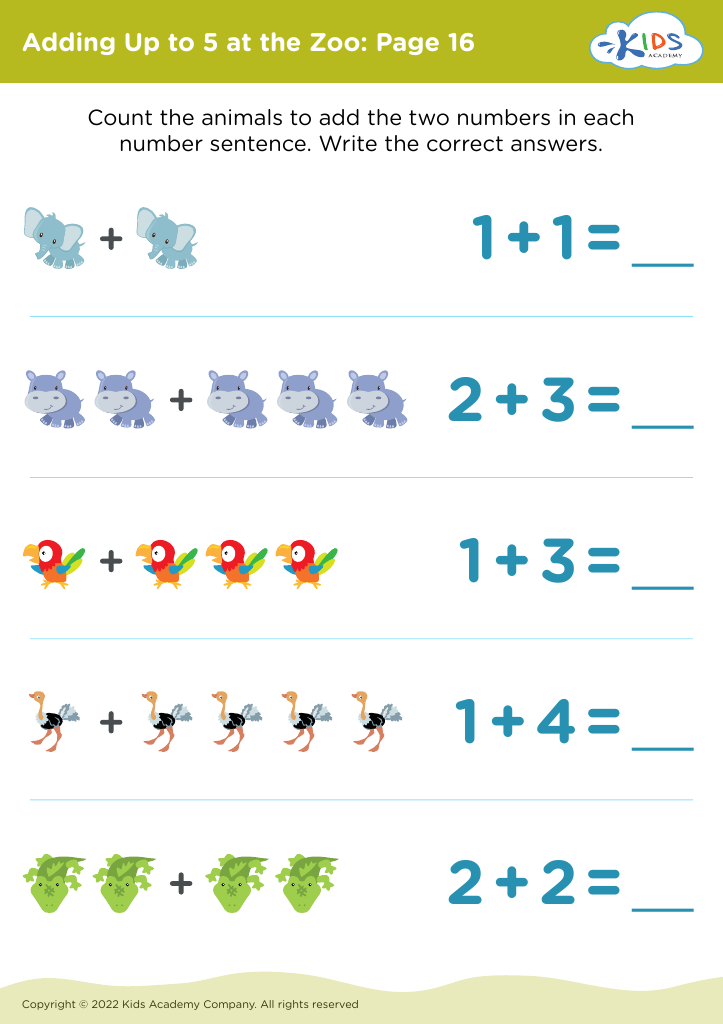
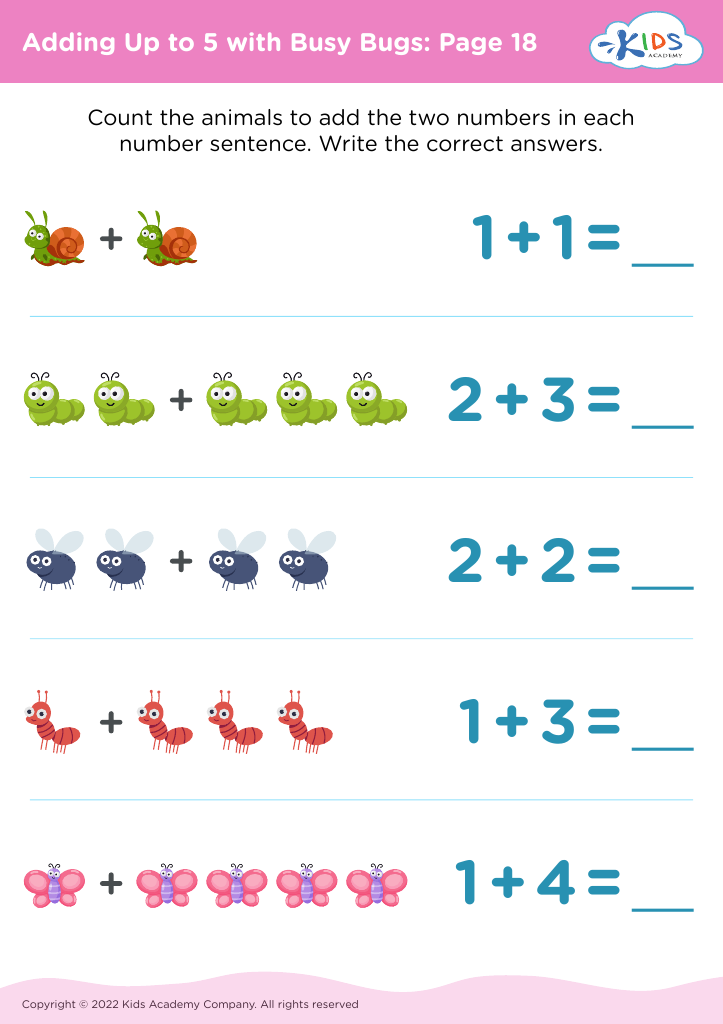
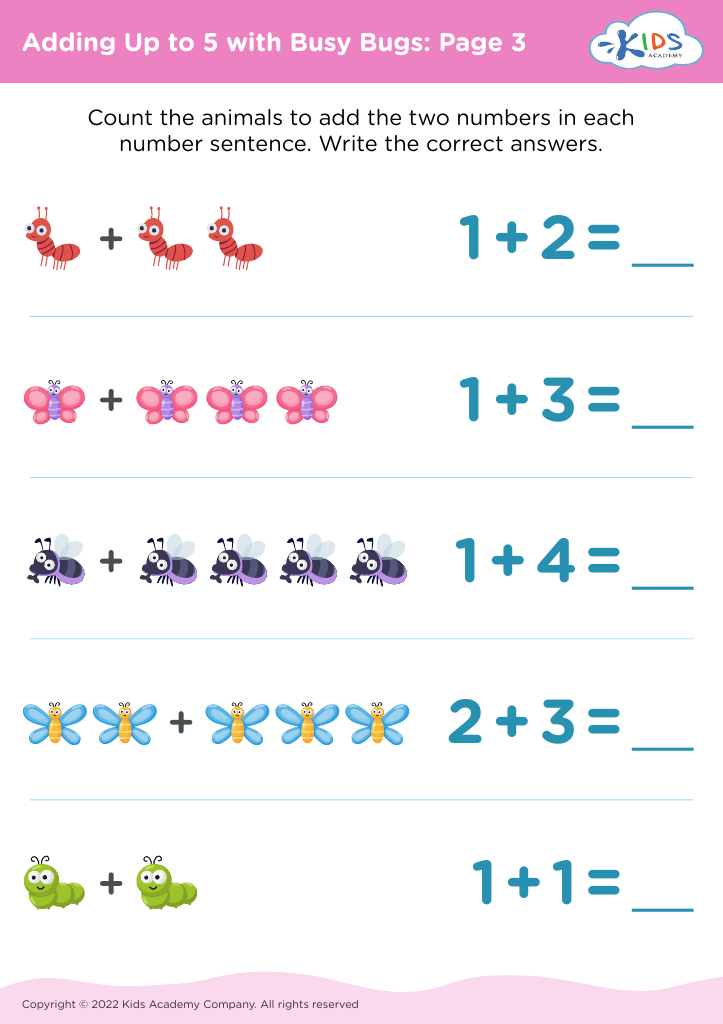
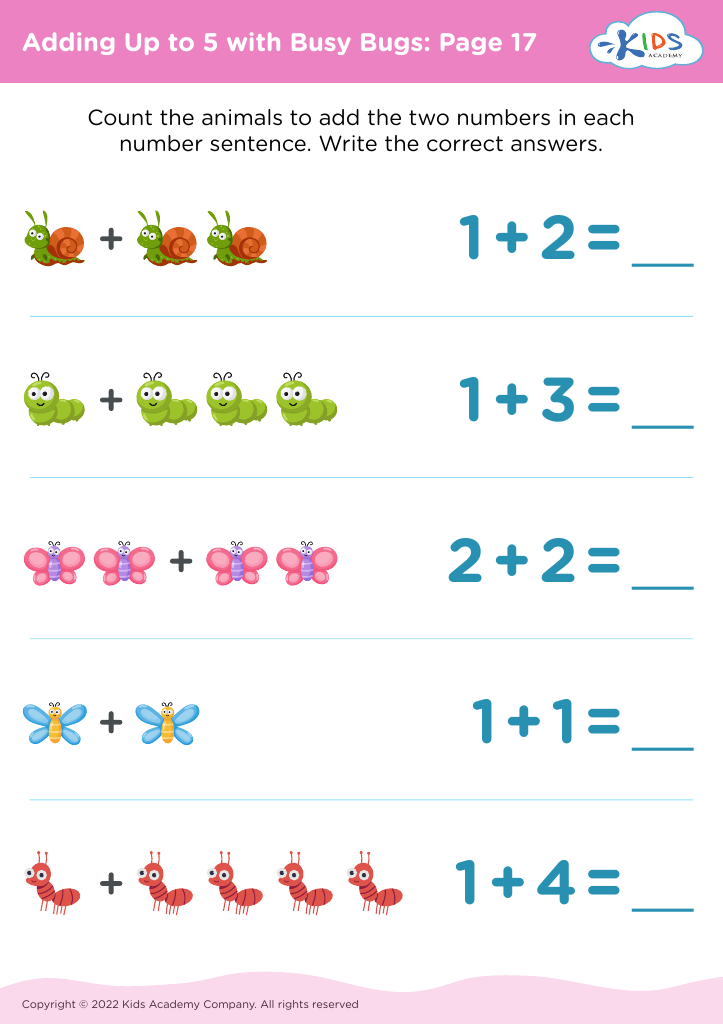
Unlock your child's potential with our "Developing Concentration: Adding Up to 5 Worksheets" designed specifically for ages 5-6. These engaging and interactive worksheets enhance focus while teaching essential math skills. Each activity is thoughtfully crafted to make learning enjoyable, offering fun exercises that promote concentration and reinforce the concept of addition. Children will boost their confidence as they practice adding numbers up to 5, improving not only their numerical skills but also their ability to concentrate on tasks. Perfect for home or classroom use, these worksheets are a valuable resource for young learners embarking on their educational journey. Explore now!


%20(1).jpg)



.jpg)

Developing concentration skills in young children, particularly when learning fundamental concepts like adding up to 5, is essential for several reasons. At ages 5-6, children are at a critical developmental stage where attention spans are still being formed. Fostering concentration during activities such as simple addition helps them build a foundation for future learning, promoting not only mathematical skills but also overall academic success.
When children focus on crucial tasks like adding numbers, they enhance their executive functioning skills, which include memory, self-control, and cognitive flexibility. These skills are vital for a child's ability to perform well in school and navigate everyday challenges. Concentration activities also lay the groundwork for effective problem-solving abilities, helping children approach complex subjects as they advance in their education.
Moreover, engaging parents and teachers in this developmental process creates a supportive learning environment. Collaborative efforts can lead to innovative strategies for making math fun and stimulating for young learners. Ultimately, improving concentration while teaching addition is not just about mastering numbers; it's about equipping children with skills they will use throughout their lives, enhancing their confidence, resilience, and love for learning.








