Enhances concentration Adding Up to 5 Worksheets for Ages 5-6
4 filtered results
-
From - To
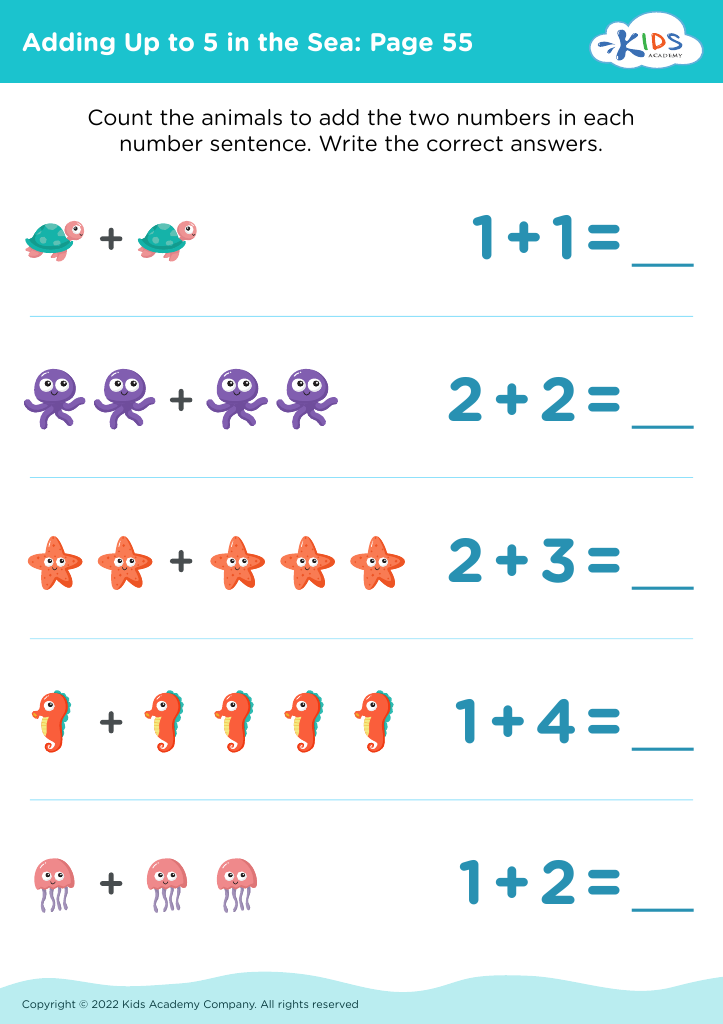
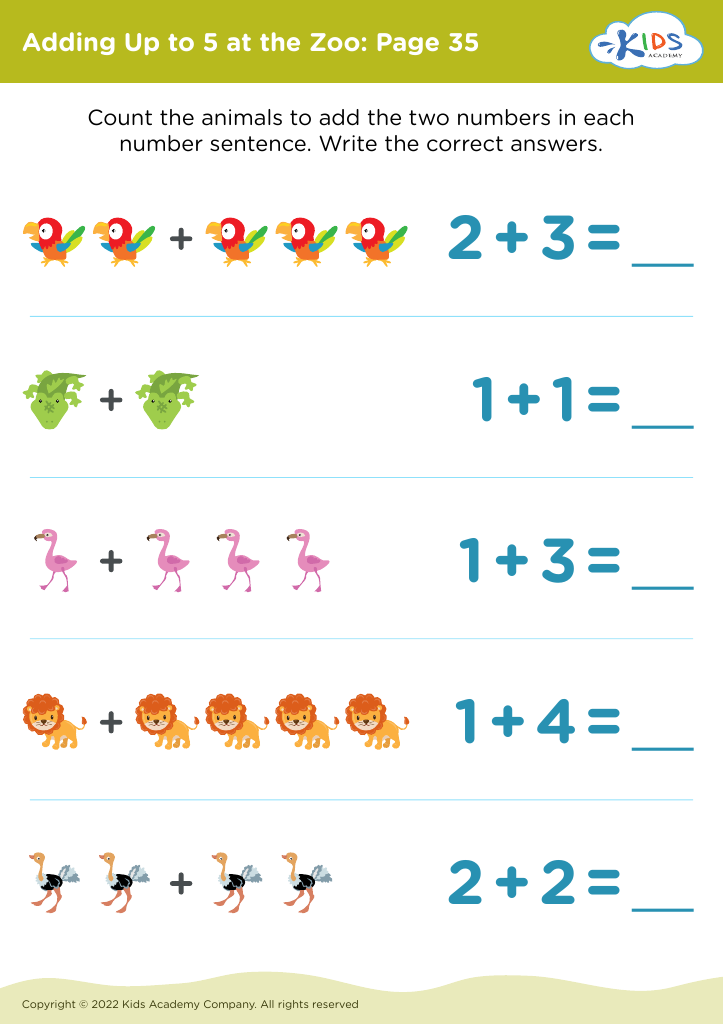
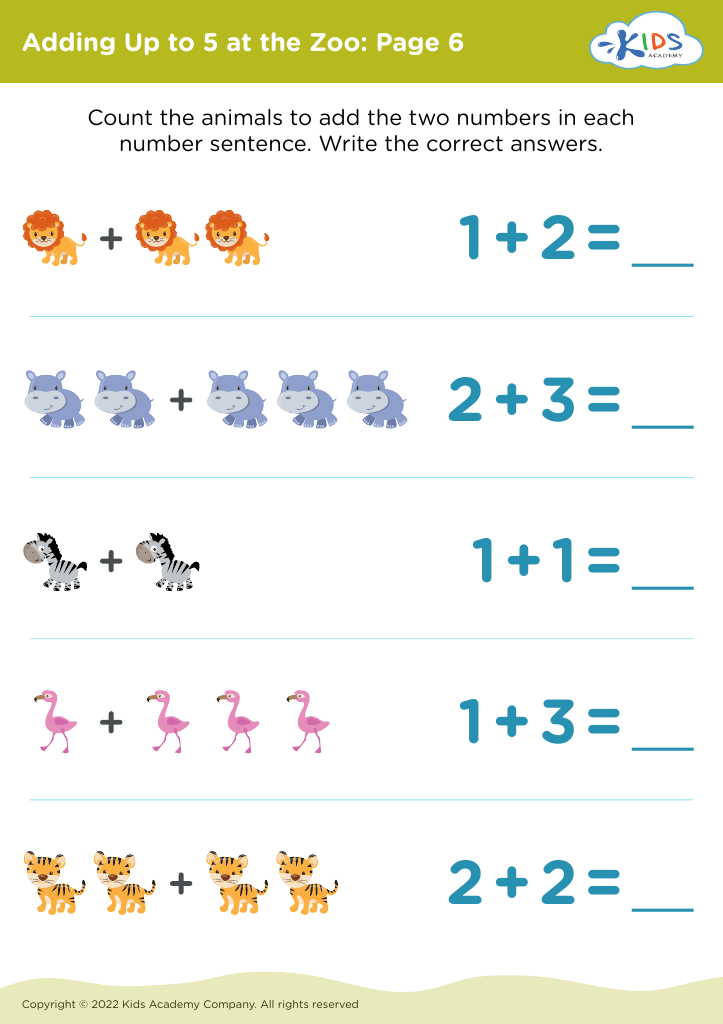
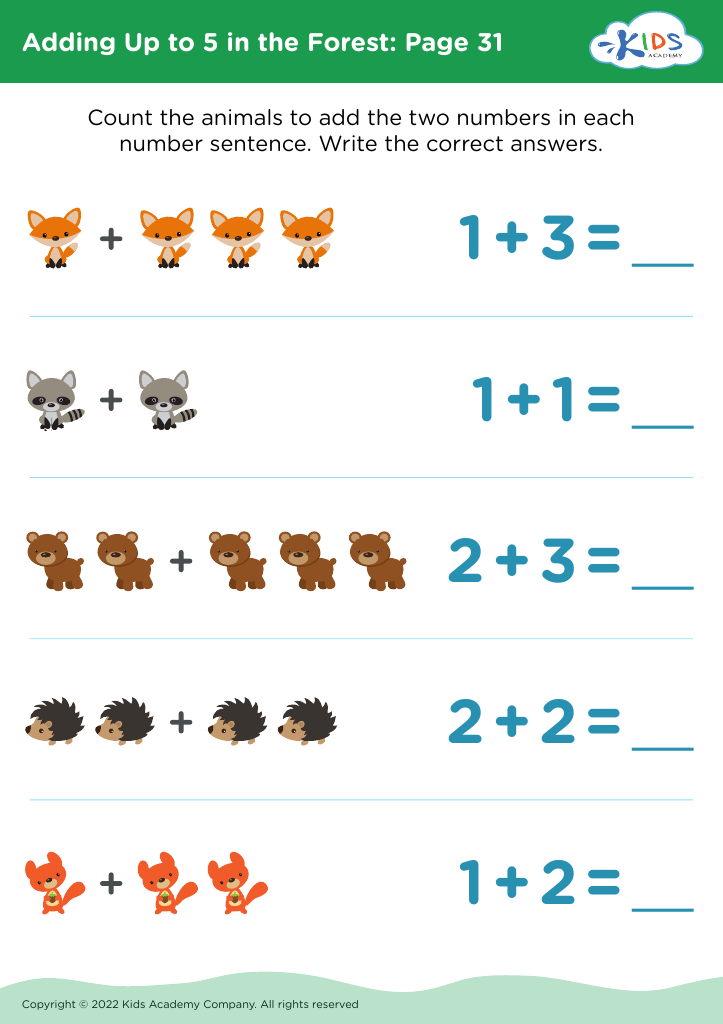
Enhance your child’s concentration with our "Adding Up to 5" worksheets, designed specifically for ages 5 to 6. These engaging activities help young learners develop their math skills while honing their focus and attention. Each worksheet features colorful illustrations and interactive exercises that make learning enjoyable. Through fun math challenges and visual aids, children will practice addition in an exciting way, boosting their confidence and concentration. By reinforcing key concepts, our worksheets lay a strong foundation for their future learning. Download now to inspire your little ones to explore the world of numbers and improve their concentration skills seamlessly!







.jpg)
Enhancing concentration when learning to add up to 5 is crucial for children aged 5-6, as it lays the foundation for essential mathematical skills and cognitive development. At this age, children are not only exploring numbers but also developing their ability to focus, which impacts their overall learning process. When parents and teachers prioritize activities that enhance concentration, they help students better engage with mathematical concepts such as addition, encouraging a deeper understanding.
Concentration exercises, paired with engaging addition games, stimulate the brain, enabling children to absorb information more effectively. Improved concentration leads to increased confidence in tackling more challenging math problems in the future. Moreover, this enhancement fosters social skills, particularly during group activities where collaboration is key.
Investing time in concentration-building activities also promotes emotional regulation, reducing instances of frustration and anxiety during learning. As students become more focused, they are better equipped to participate in classroom discussions and group tasks.
By integrating concentration-enhancing activities into lessons and home study routines, parents and teachers can significantly boost children’s academic success, making math enjoyable and approachable. Ultimately, cultivating concentration skills helps children develop a love for learning that extends beyond math, benefiting their education as a whole.








