Fine Motor Skills (coloring) Adding Up to 5 Worksheets for Ages 5-6
3 filtered results
-
From - To
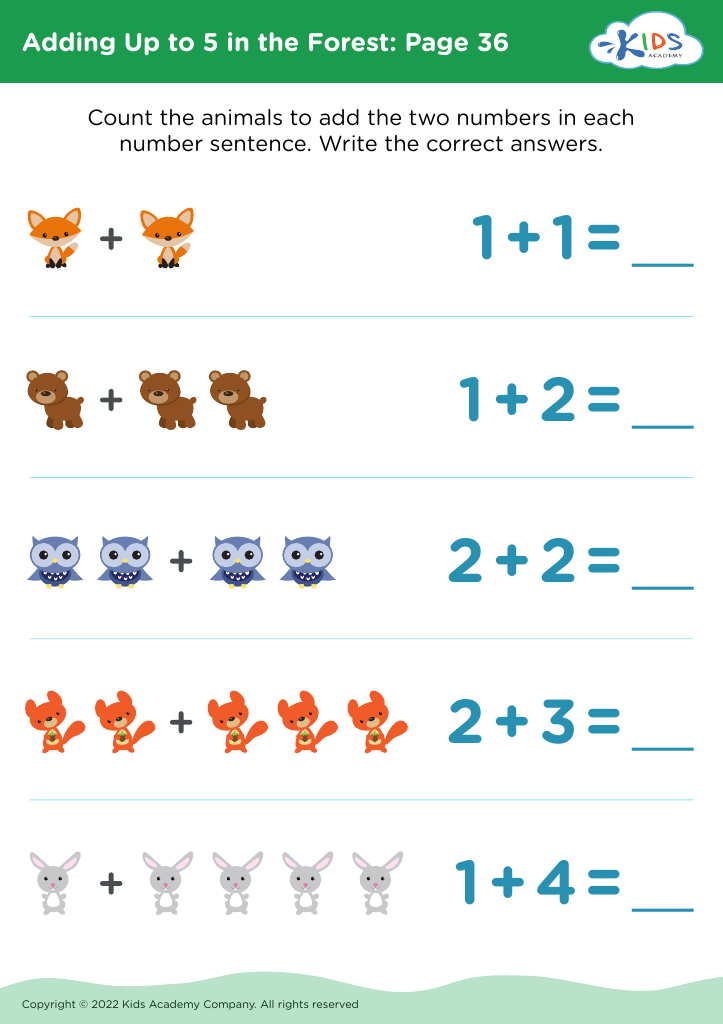
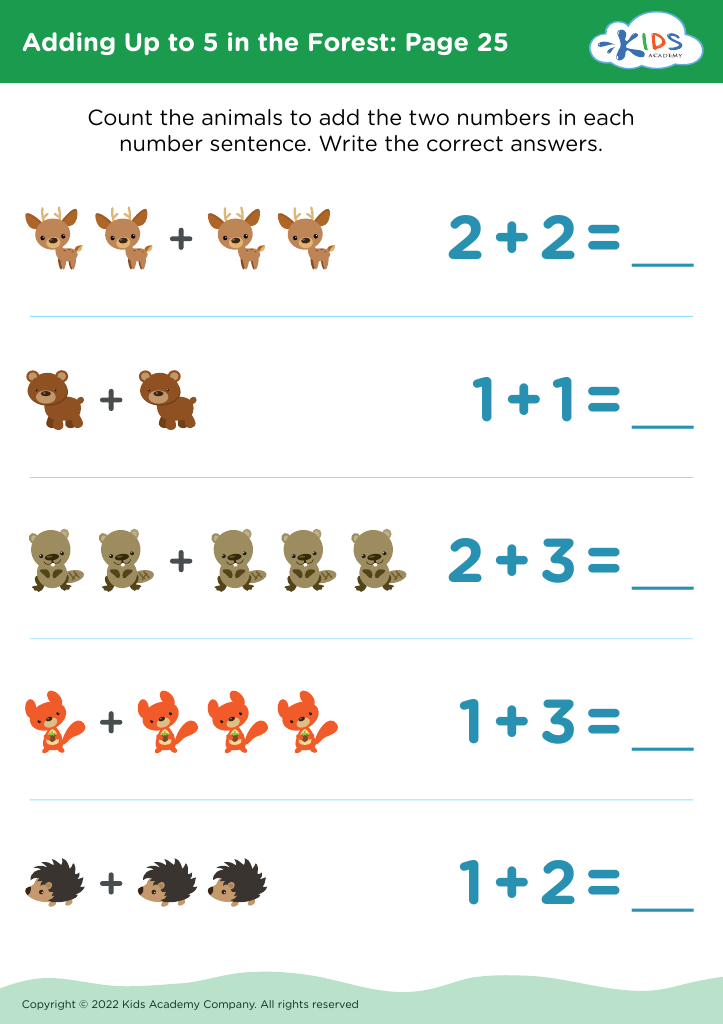
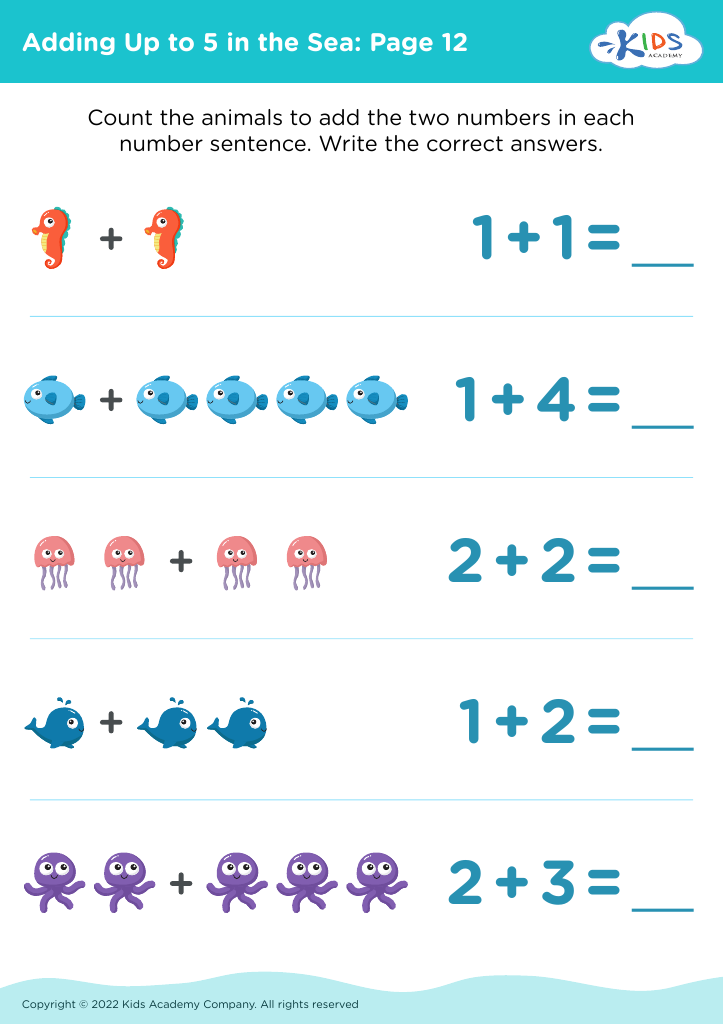
Enhance your child's fine motor skills while fostering early math concepts with our "Adding Up to 5 Worksheets" designed for ages 5-6. These engaging worksheets combine coloring activities with basic addition, ensuring an interactive learning experience. As children practice adding numbers up to 5, they develop hand-eye coordination and dexterity through fun coloring tasks. Each worksheet encourages creativity and math fluency, giving little learners a unique way to visualize numbers. Perfect for parents and educators, these printable resources help young minds thrive in a playful learning environment. Explore our collection today and watch your child's skills blossom!


%20(1).jpg)





Fine motor skills, such as coloring, play a crucial role in a child's development, particularly for children aged 5-6. These skills involve the coordination of small muscle movements, especially in the hands and fingers. Engaging in activities like coloring not only fosters creativity but also aids in enhancing dexterity, hand-eye coordination, and control. Fine motor skills are foundational for more complex tasks, such as writing, which will be essential in a child's academic journey.
In parallel, learning to add up to 5 is a key mathematical milestone at this age. This foundational skill supports children in understanding number relationships, promoting critical thinking, and enhancing problem-solving abilities. By integrating fine motor activities with mathematical concepts, educators and parents can create a holistic learning environment that bolsters both artistic and cognitive skills.
Moreover, focusing on these skills early helps to build confidence in younger learners, as mastering both coloring and basic addition promotes a sense of accomplishment. By prioritizing fine motor development and early mathematical understanding, parents and teachers can ensure that children are set on a path toward academic success and essential life skills. Encouraging both these areas is vital for nurturing well-rounded, capable learners.








