Fine motor skills (writing) Adding Up to 5 Worksheets for Ages 5-6 - Page 2
32 filtered results
-
From - To




%20(1).jpg)


.jpg)
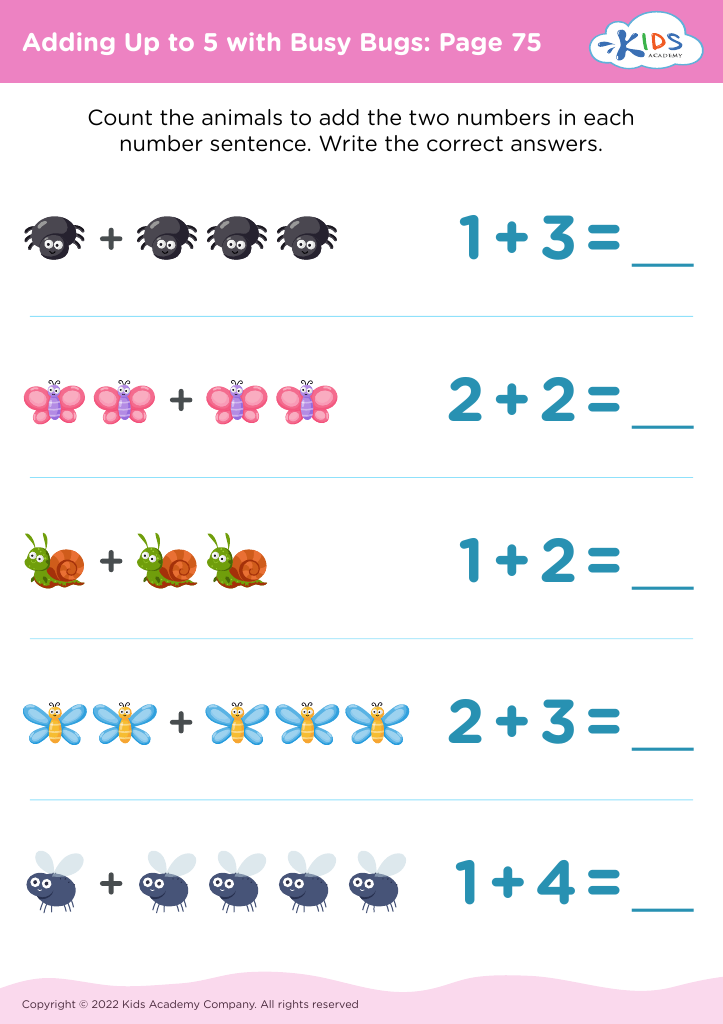
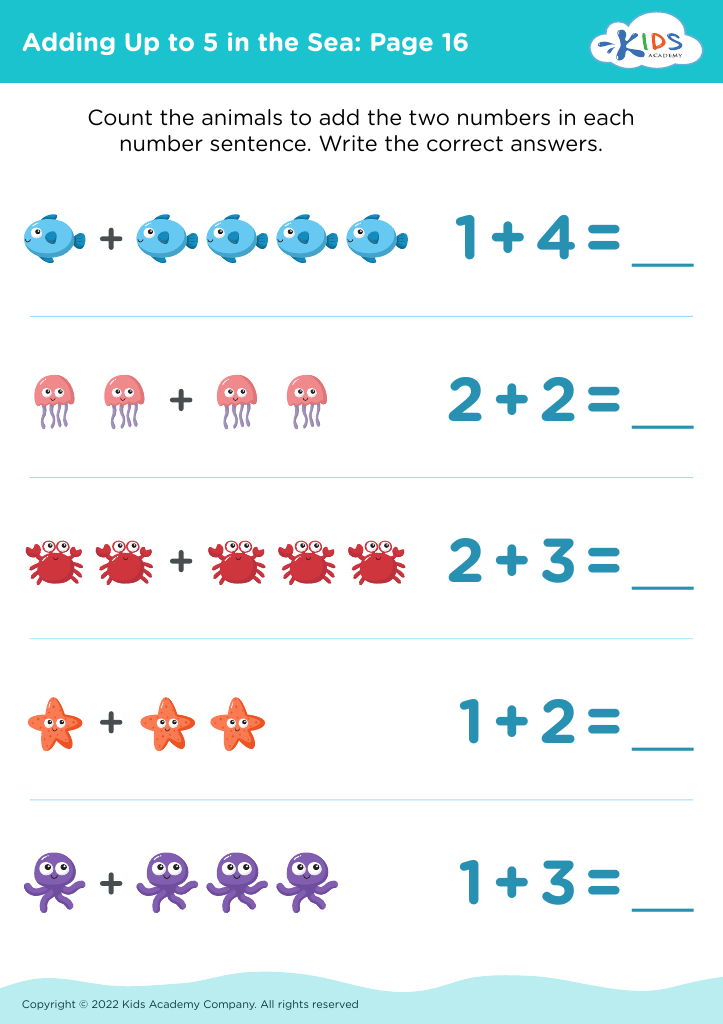
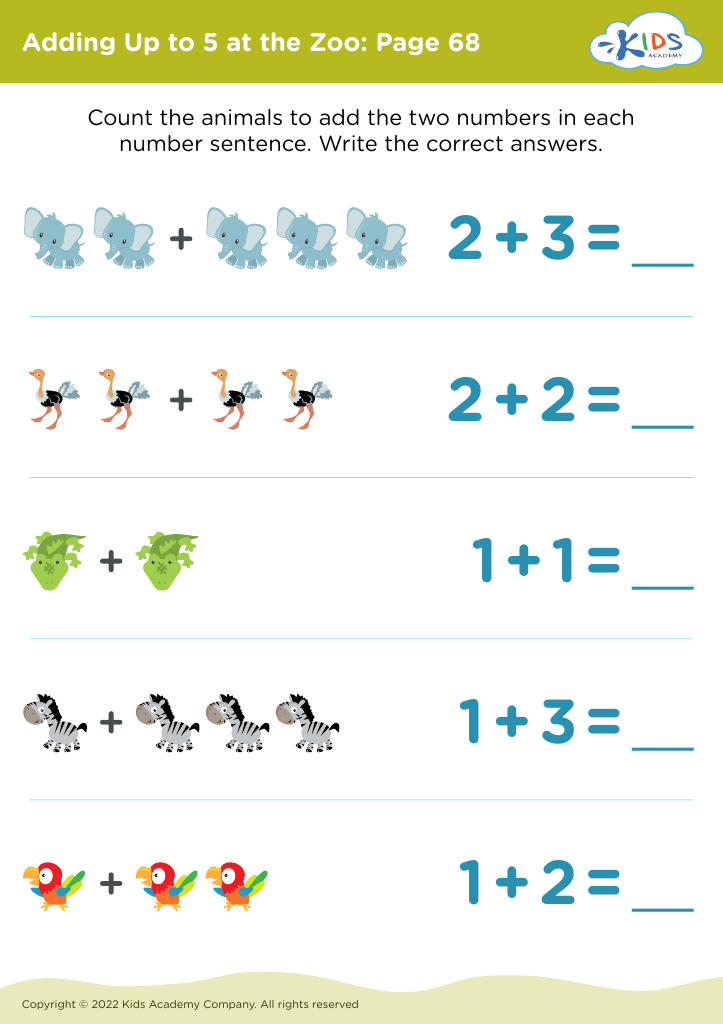
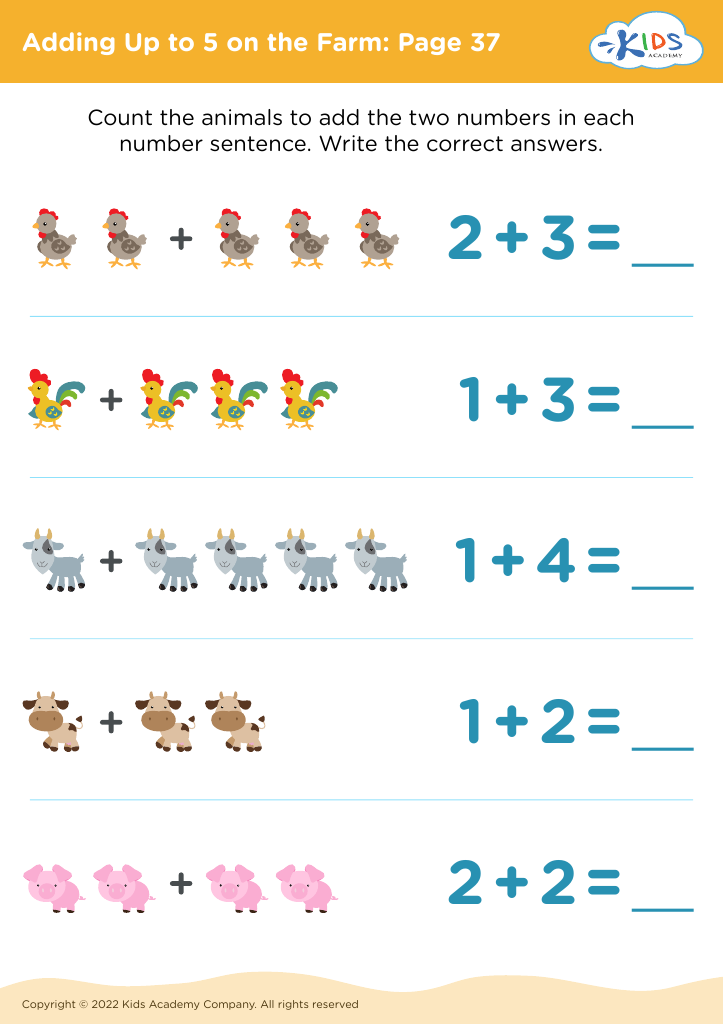
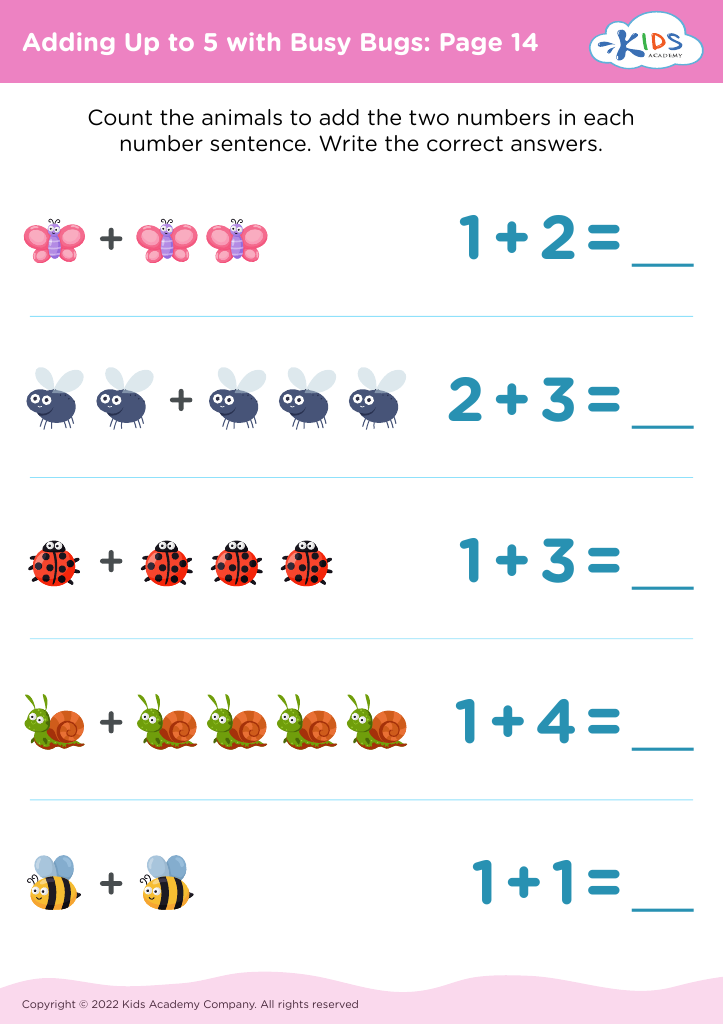
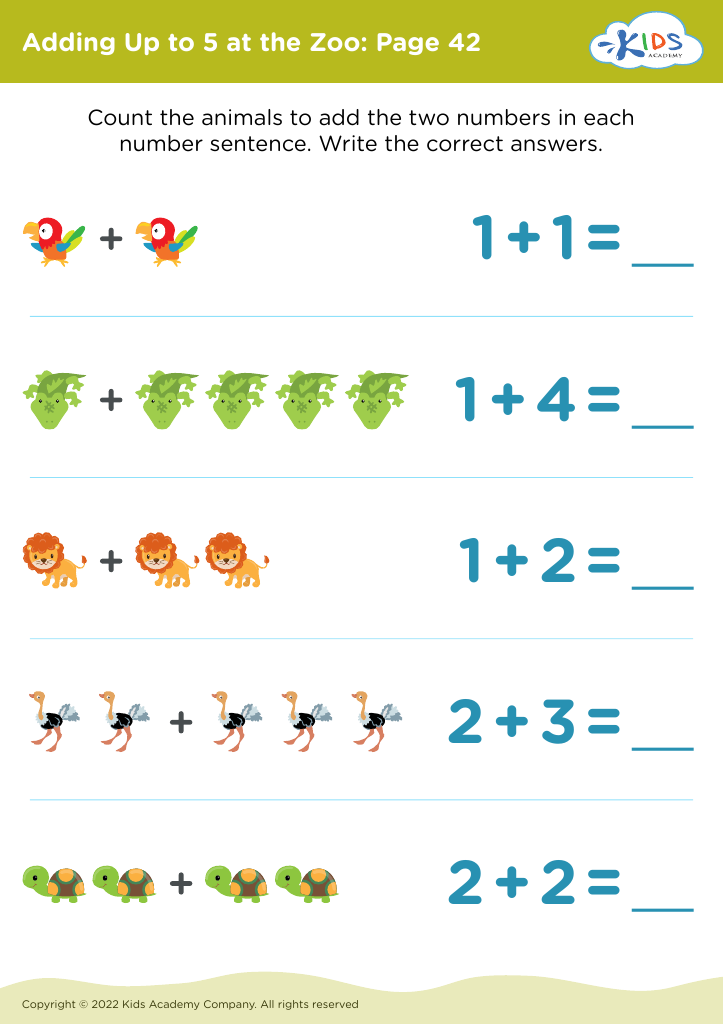
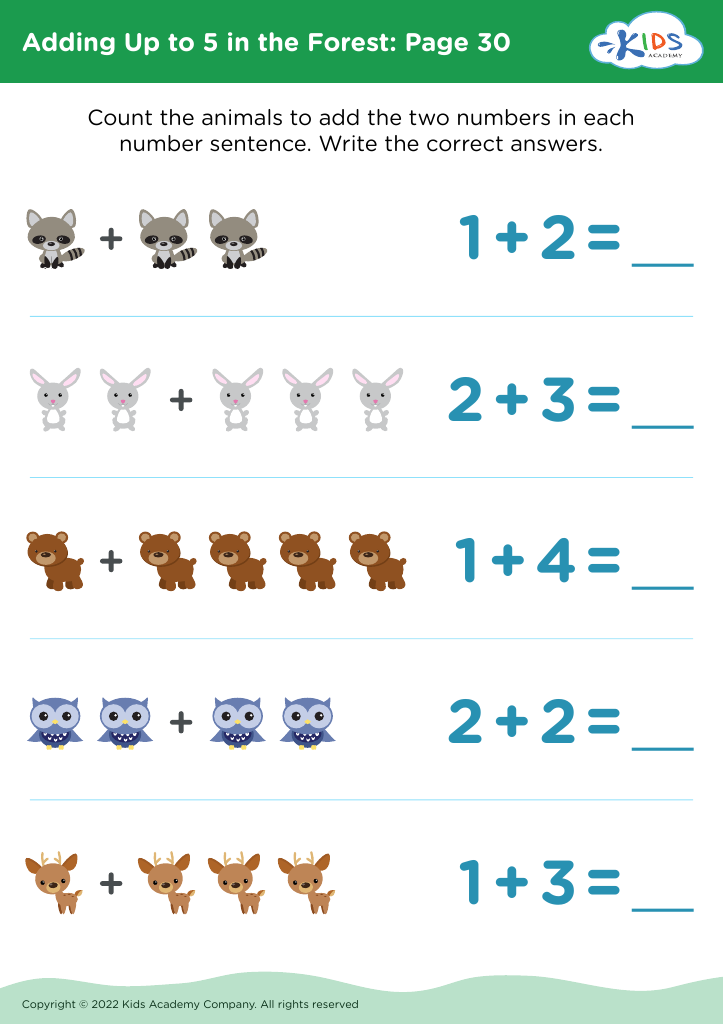
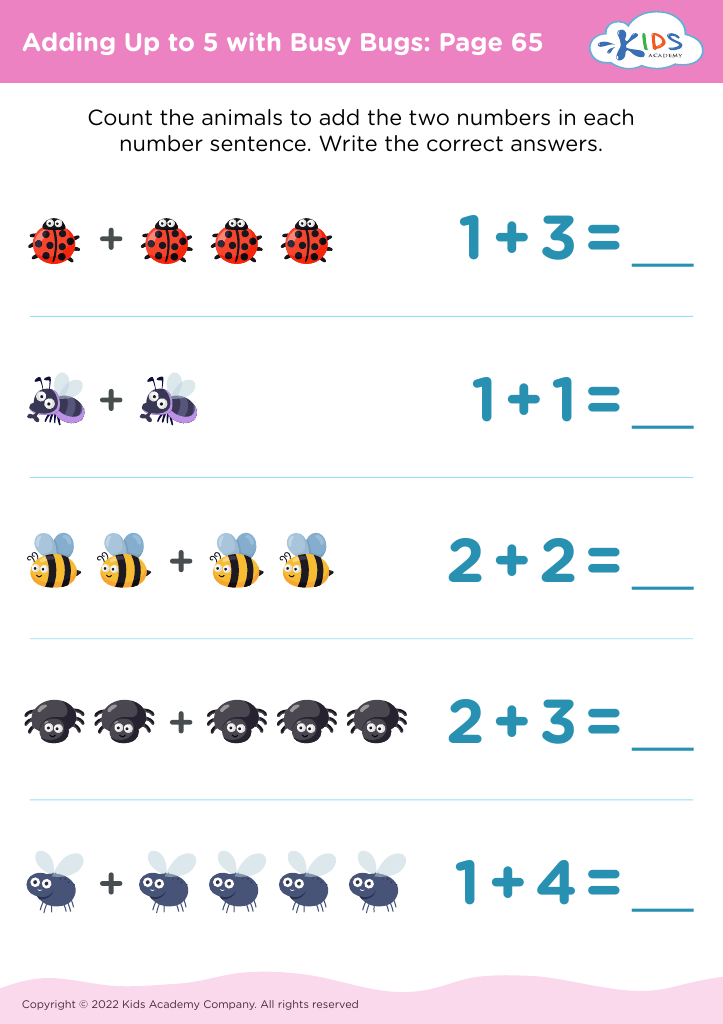
Fine motor skills are crucial for children aged 5-6, as they are foundational for various everyday tasks, including writing and basic arithmetic, such as adding up to 5. Developing these skills helps with hand-eye coordination, grip strength, and dexterity, all of which are essential for effective writing. When children practice fine motor activities like tracing, cutting, and coloring, they refine their ability to manipulate objects, which can significantly boost their writing abilities.
Additionally, as children learn to add numbers up to 5, they engage in cognitive processes that support early math skills. This combination of fine motor skill development and basic numeracy lays the groundwork for more complex problem-solving abilities. Moreover, classroom activities that promote such skills foster confidence and independence, encouraging children to express their thoughts clearly and accurately.
Parents and teachers should recognize that these skills not only impact academic success but also contribute to a child's overall development, enhancing their self-esteem and motivation. By providing children with opportunities to practice fine motor skills alongside early math concepts, adults can better prepare them for future learning, ultimately ensuring lifelong academic and personal success. Investing time in these areas early on can lead to a solid foundation for future growth.








