


.jpg)




Fine motor skills are crucial for children's overall development, particularly for those aged 5-6 as they begin foundational learning in both academic and everyday contexts. These skills involve the coordination of small muscles, which are essential for tasks like writing, cutting, and manipulating small objects. When teaching young children to add up to 5, engaging their fine motor skills strengthens their cognitive abilities and self-confidence in mathematics.
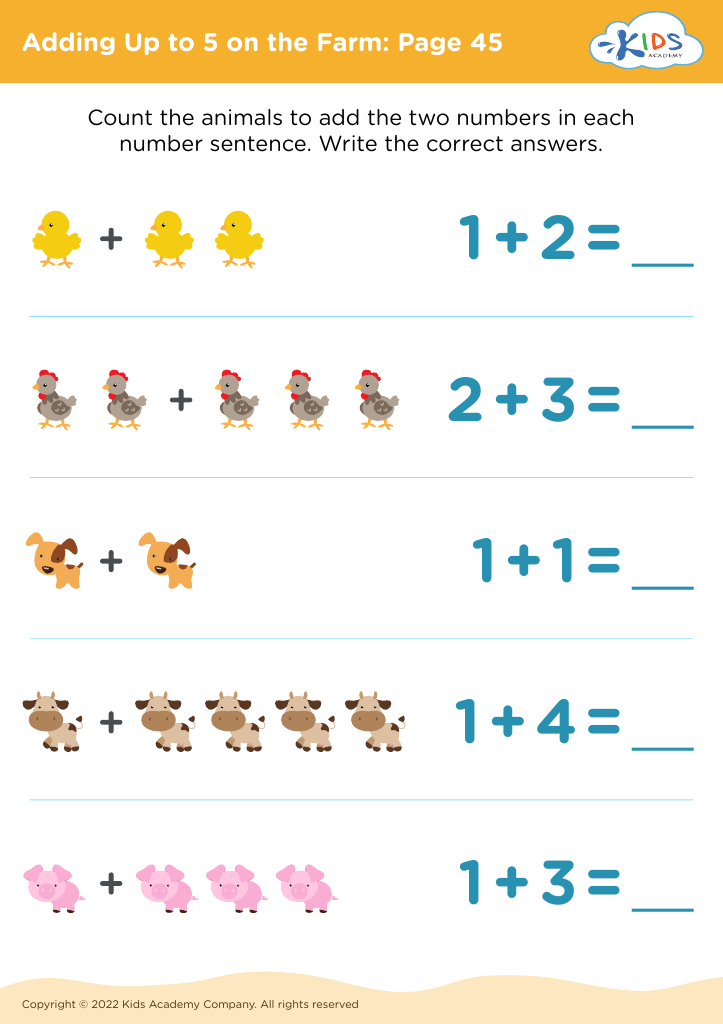
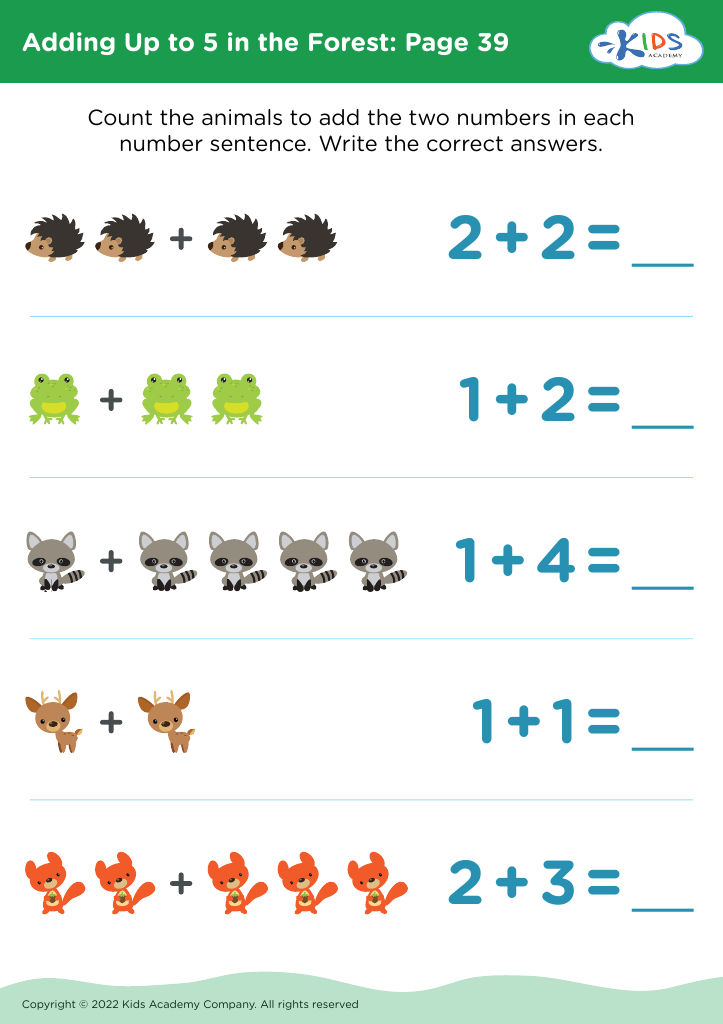
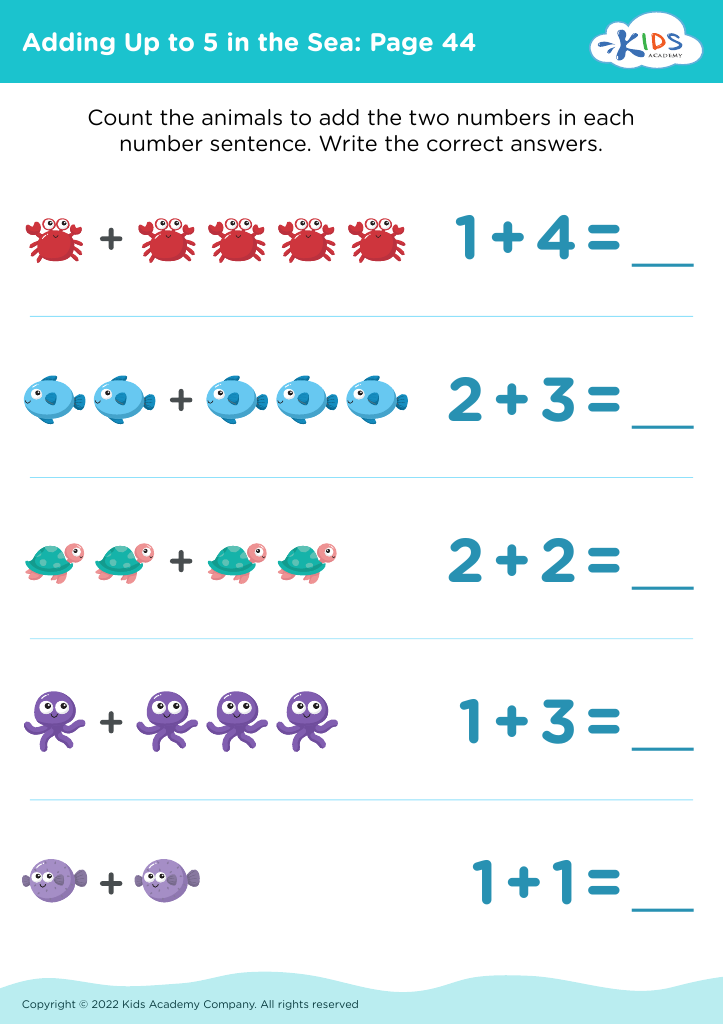
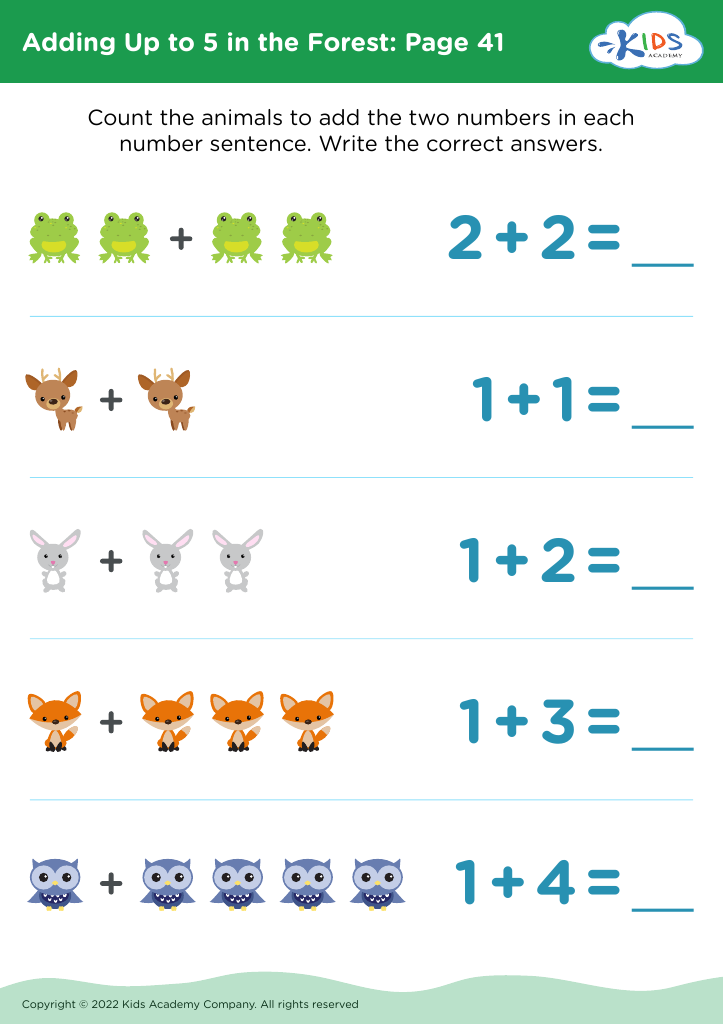
Practicing these skills often improves hand-eye coordination, dexterity, and focus—important precursors to more advanced learning. Activities that promote fine motor development, such as using counters or fingers to represent numbers, help children visualize and physically engage with the concept of addition. Not only does this make math more stimulating, but it also lays the groundwork for more complex mathematical concepts in the future.
Furthermore, when parents and teachers emphasize fine motor skills, they enhance children's independence. Being able to perform tasks like writing their names or solving simple math problems naturally boosts their enthusiasm for learning. In turn, this creates a vibrant, engaging environment that fosters enthusiasm and curiosity about life-long learning. Prioritizing the development of fine motor skills in young children eventually benefits their academic success and self-esteem.








