
Following instructions Adding Up to 5 Worksheets for Ages 5-6
3 filtered results
Difficulty Level
Grade
Age
-
From - To
Subject
Activity
Standards
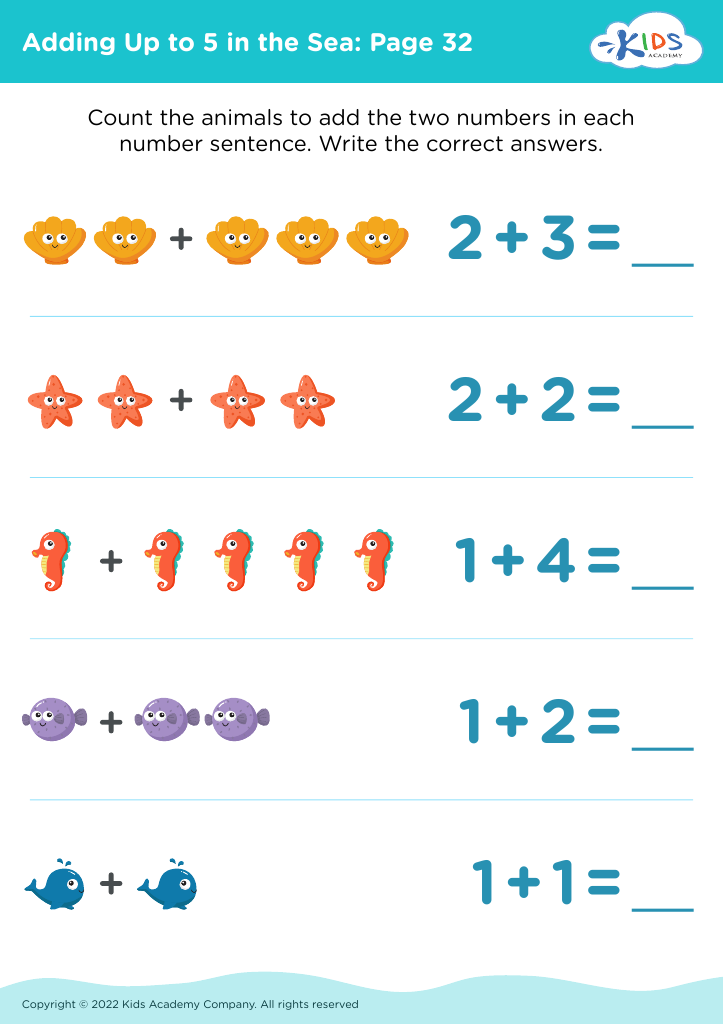
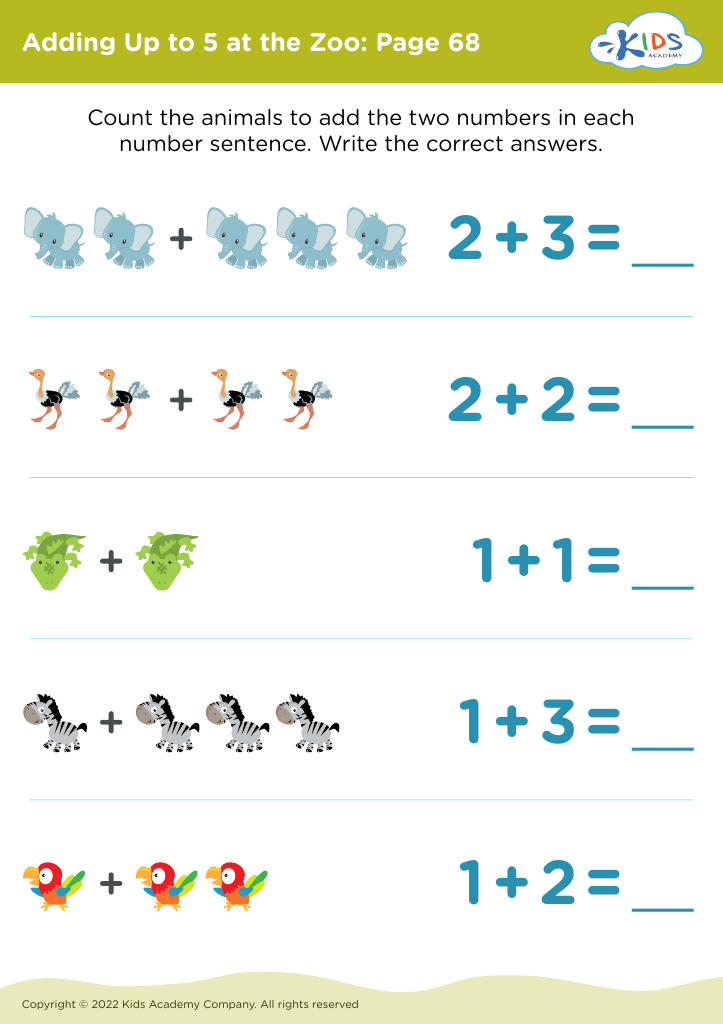
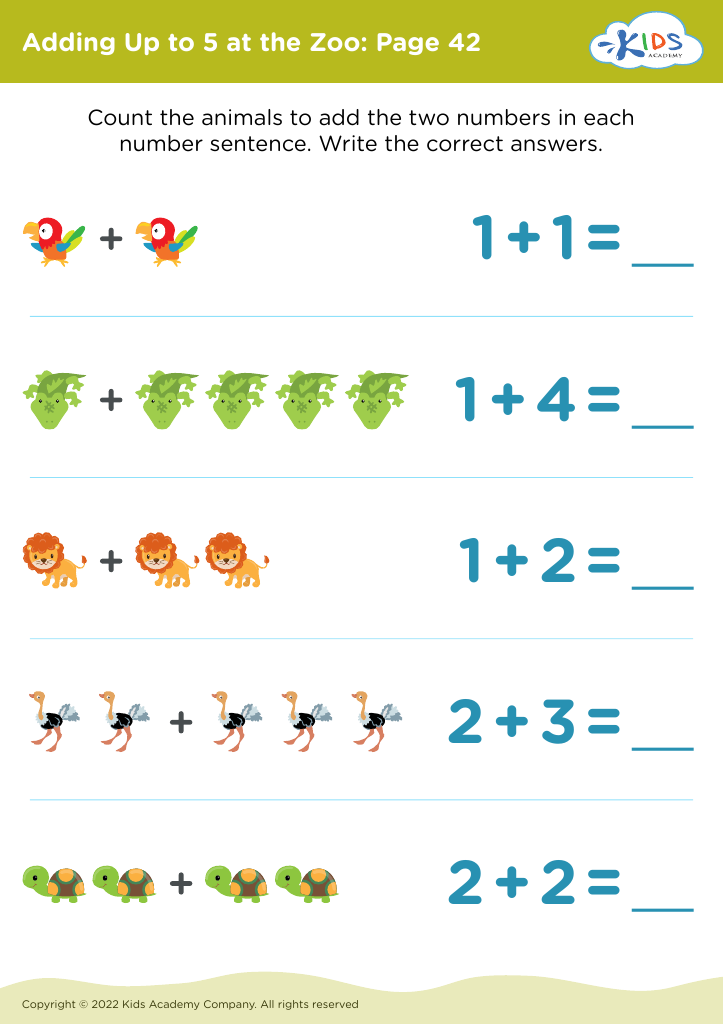
Discover our engaging "Following Instructions Adding Up to 5 Worksheets" specially designed for children ages 5-6. These worksheets blend math practice with the development of essential listening and comprehension skills. Perfect for early learners, they provide a fun way for kids to learn to follow multi-step instructions while mastering addition concepts up to 5. Each activity promotes critical thinking and boosts confidence in mathematics, all while ensuring that learning is enjoyable. Ideal for classroom use or at-home practice, our worksheets are crafted to foster independent learning and build foundational math skills. Download now to enhance your child's learning journey!
Favorites
With answer key
Interactive
Join Kids Academy for Free
Who is primarily going to use this learning content?







%20(1).jpg)
Following instructions and mastering basic addition skills, such as adding up to 5, are fundamental components of early childhood education that significantly impact a child's cognitive and social development. For children aged 5-6, understanding how to follow instructions not only enhances their ability to solve problems but also promotes discipline and patience. These skills are important in classroom settings, allowing children to engage more effectively with their teachers and peers.
When it comes to addition, grasping the concept of adding up to 5 lays the groundwork for future mathematical understanding. Early math skills encourage analytical thinking, helping children develop confidence in their abilities. Mastering these basic skills supports their ability to navigate more complex math operations in later years.
Moreover, these early learning experiences form the basis for essential life skills. Being able to effectively follow instructions fosters independence and enhances self-regulation, as children learn to complete tasks and understand expectations. Lastly, parents and teachers play a crucial role in creating a stimulating learning environment. Engaging children in playful, enjoyable activities that involve following instructions and adding can inspire a lifelong love of learning, making these foundational skills worth prioritizing.








