Filters

349 filtered results

Clear all filters
Favorites
With answer key
Interactive

349 filtered results

Difficulty Level

Grade


Check out this FREE Trial Lesson on Adding Up to 5 for age 5-6!

P

Favorites
With answer key
Interactive
  • 5-6
  • Number Recognition
  • Adding Up to 5
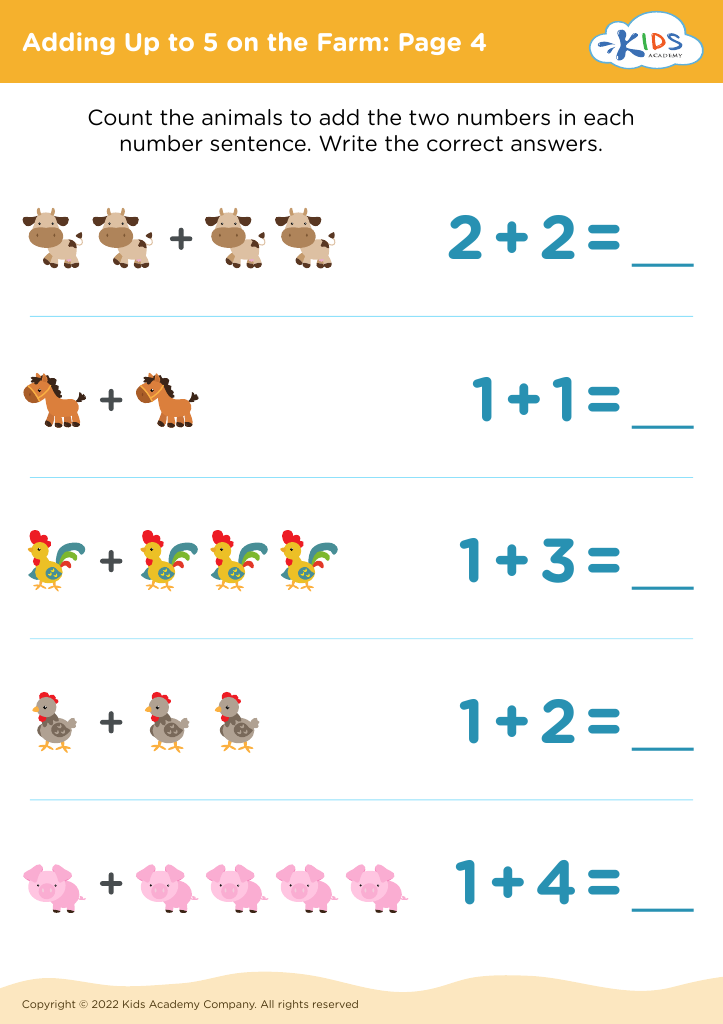
Adding Up to 5 on the Farm: Page 4
Worksheet
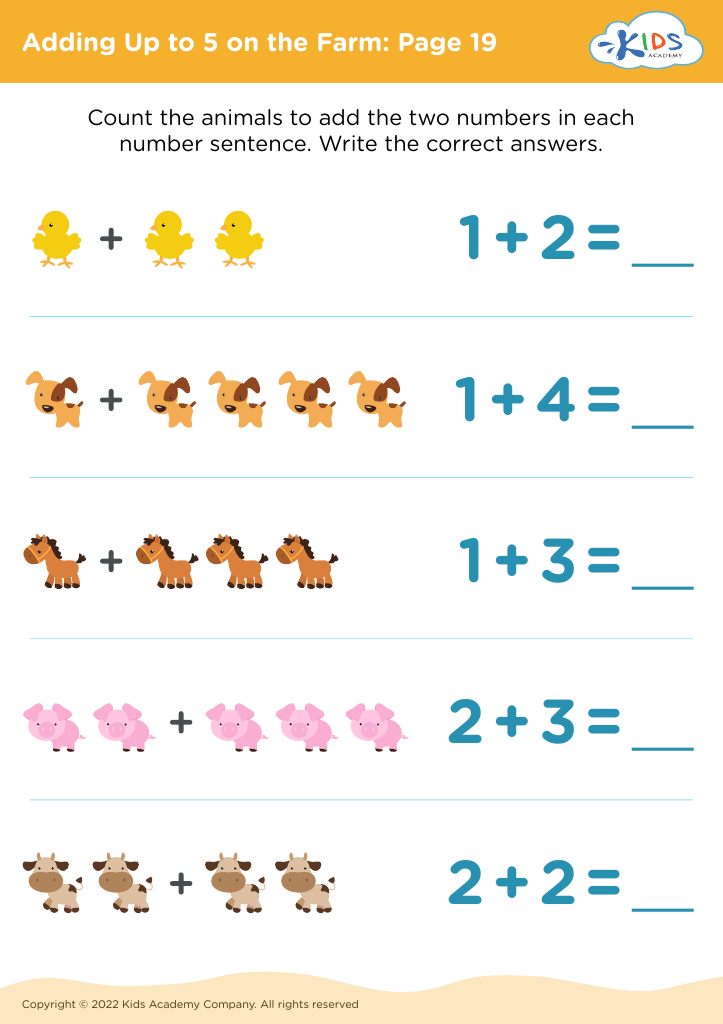
Adding Up to 5 on the Farm: Page 19
Worksheet
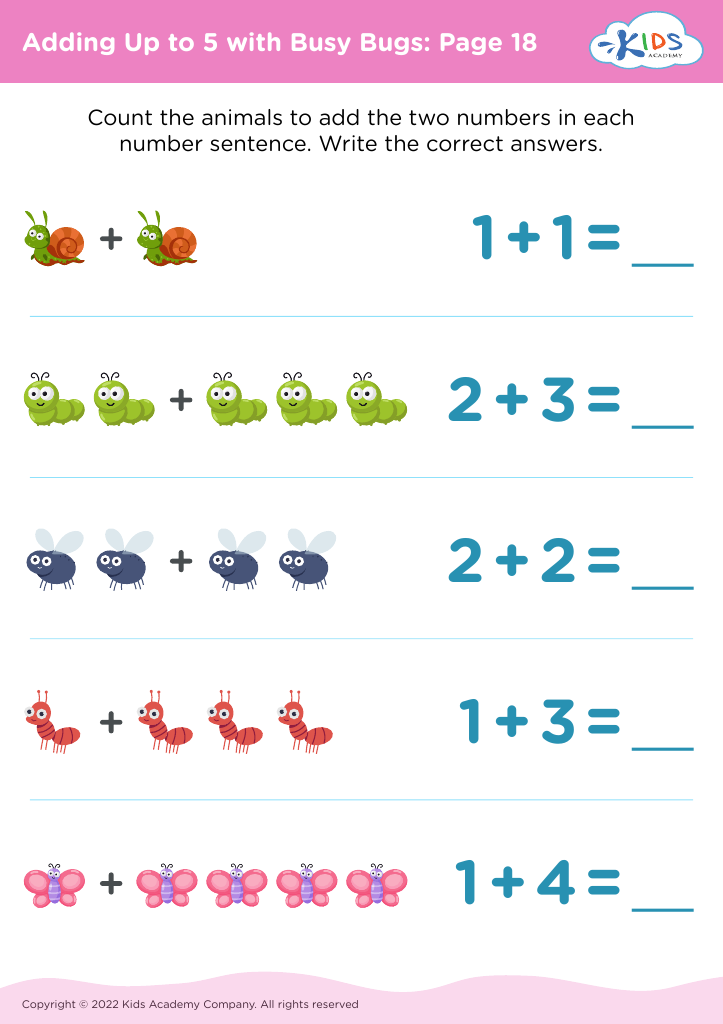
Adding Up to 5 with Busy Bugs: Page 18
Worksheet
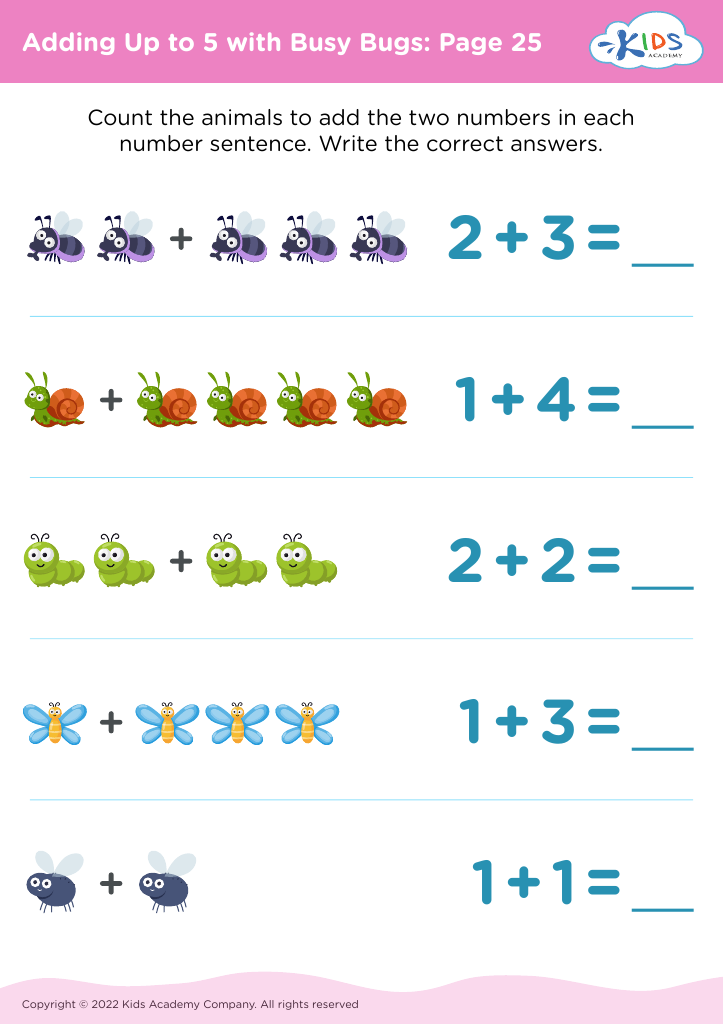
Adding Up to 5 with Busy Bugs: Page 25
Worksheet
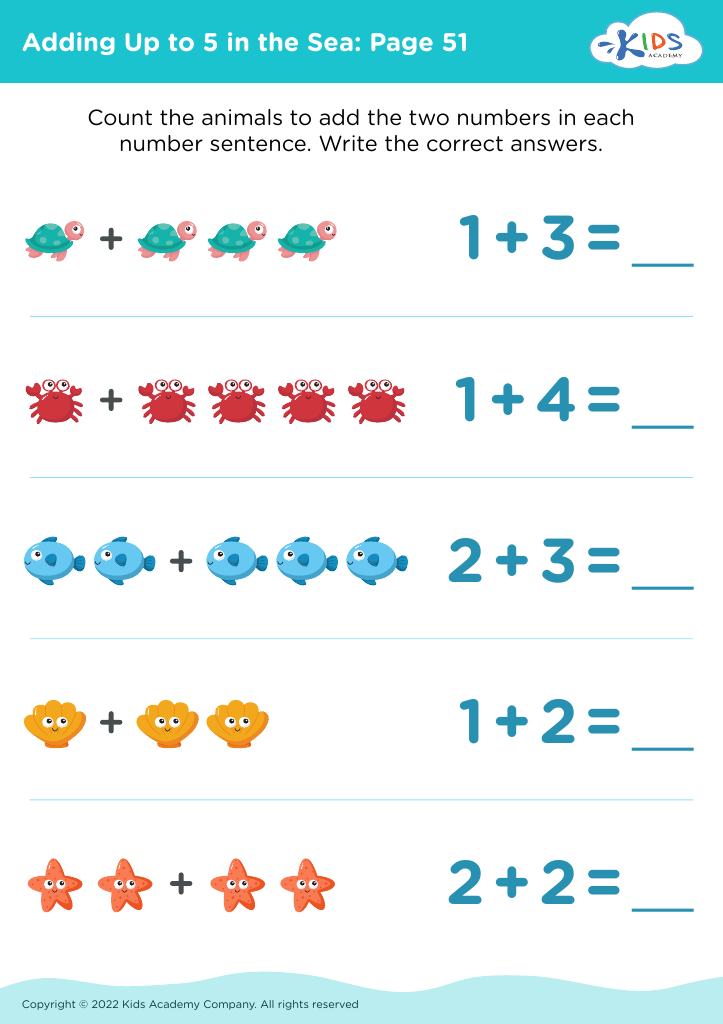
Adding Up to 5 in the Sea: Page 51
Worksheet
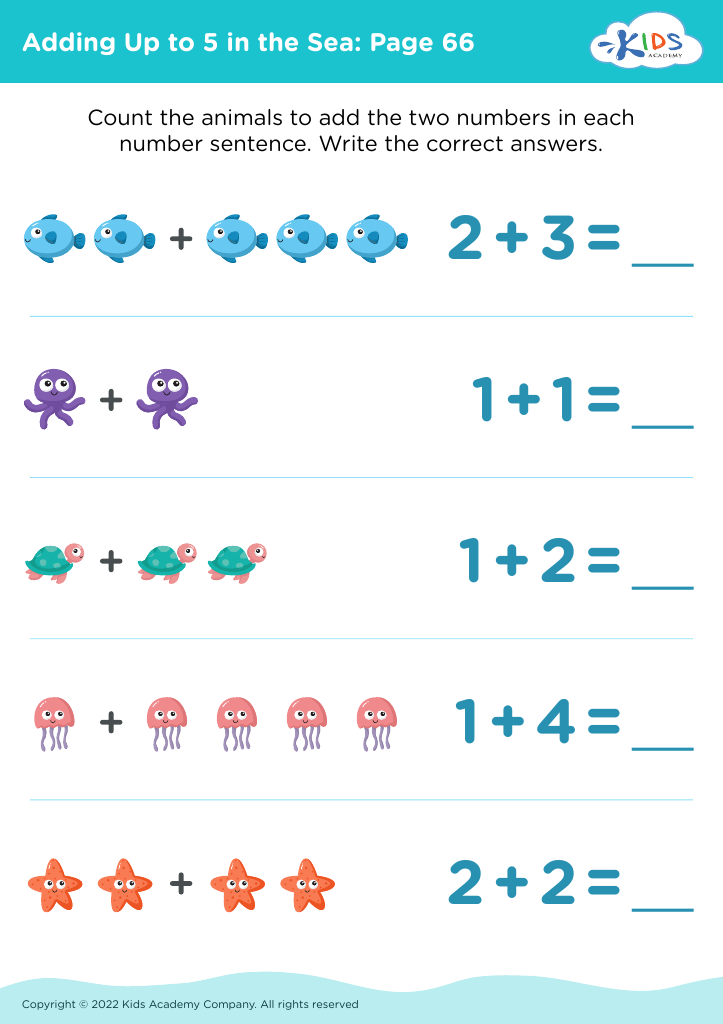
Adding Up to 5 in the Sea: Page 66
Worksheet
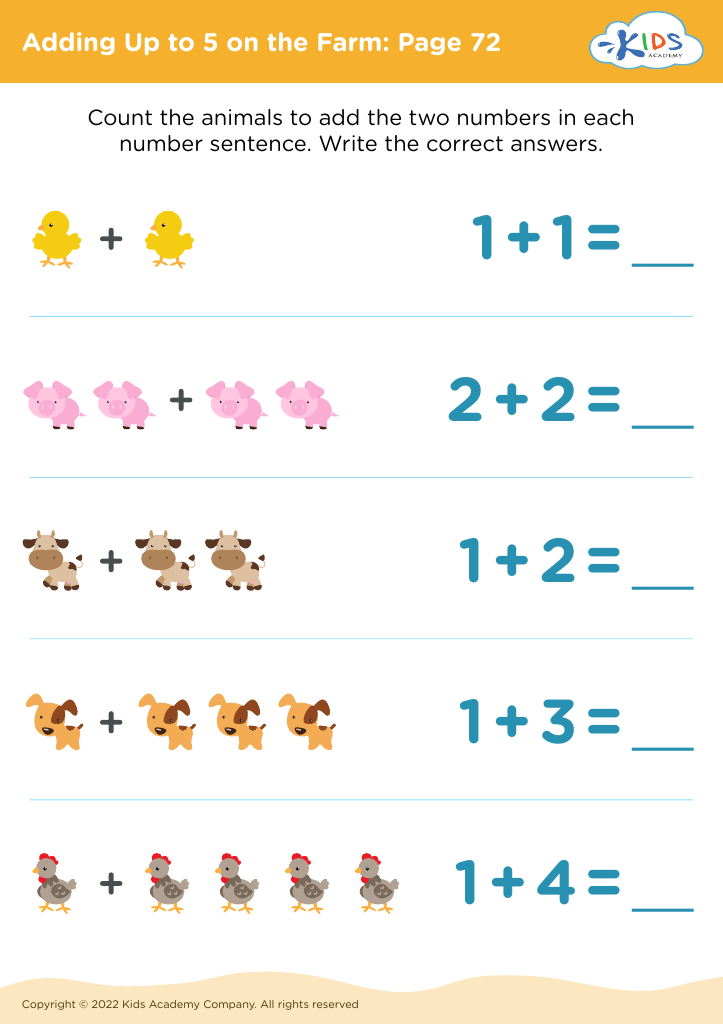
Adding Up to 5 on the Farm: Page 72
Worksheet
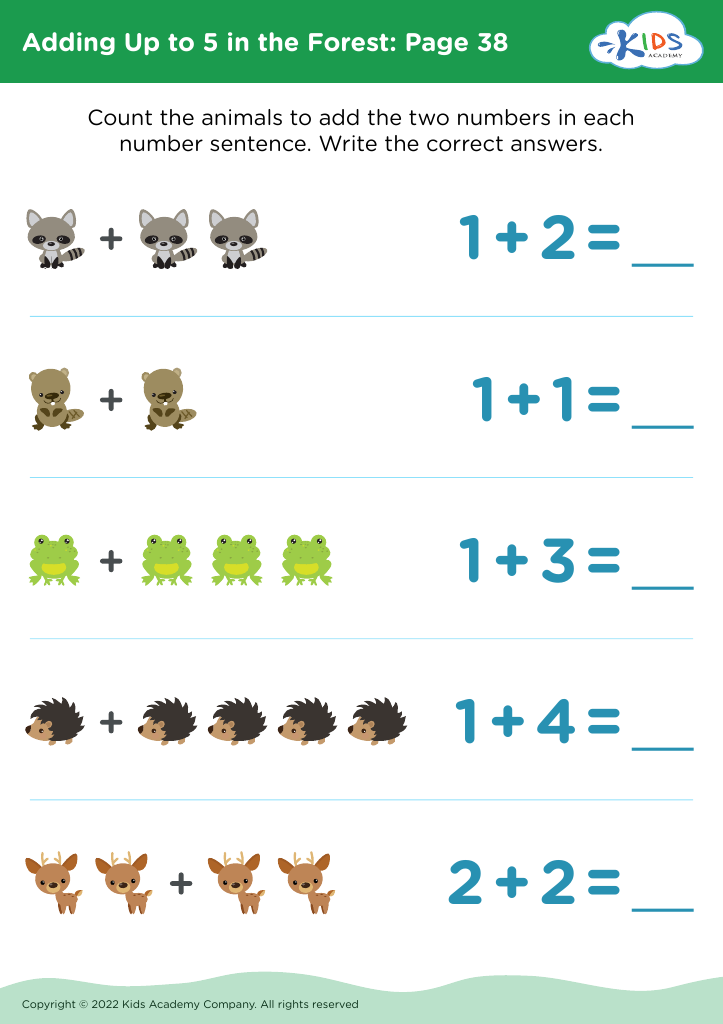
Adding Up to 5 in the Forest: Page 38
Worksheet
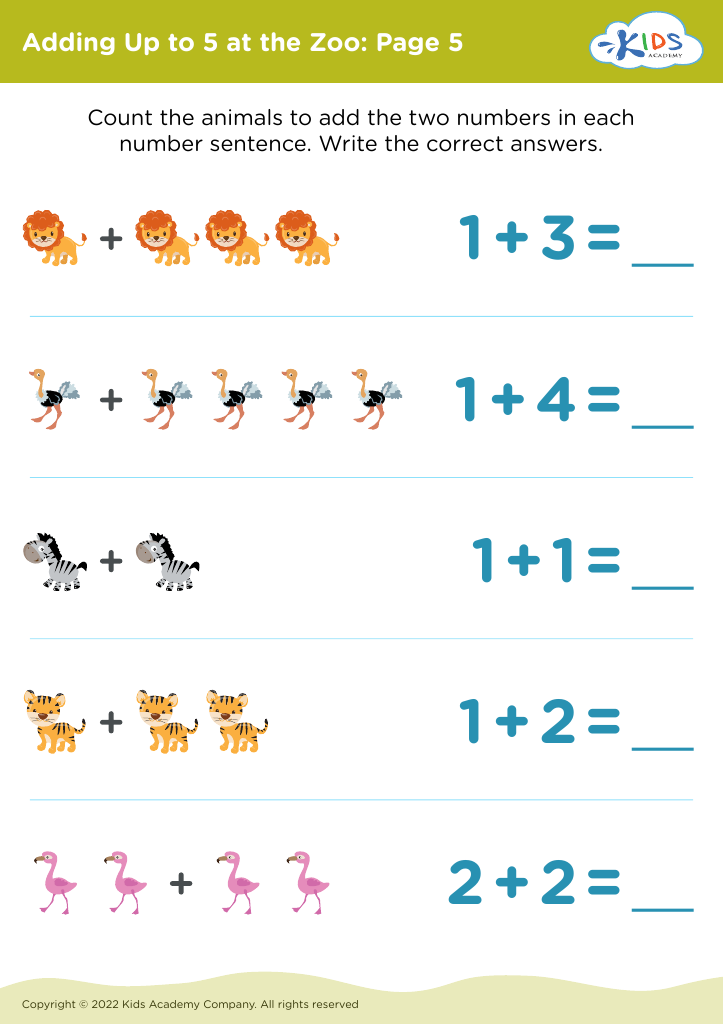
Adding Up to 5 at the Zoo: Page 5

Adding Up to 5 at the Zoo: Page 5

Adding Up to 5 at the Zoo: Page 5
Worksheet
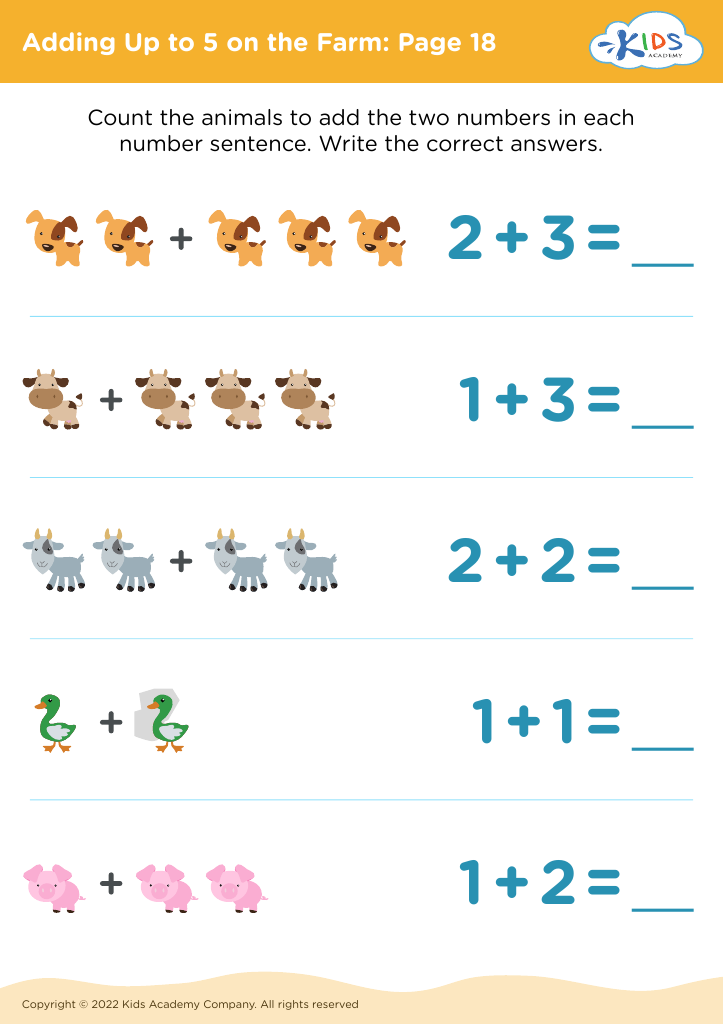
Adding Up to 5 on the Farm: Page 18
Worksheet
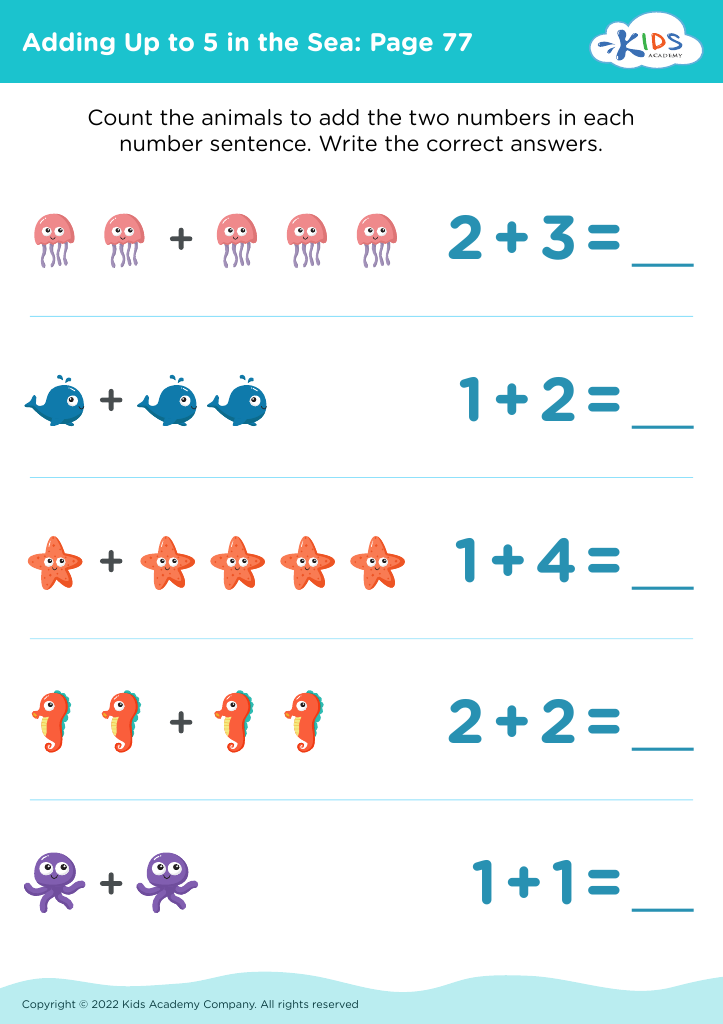
Adding Up to 5 in the Sea: Page 77
Worksheet
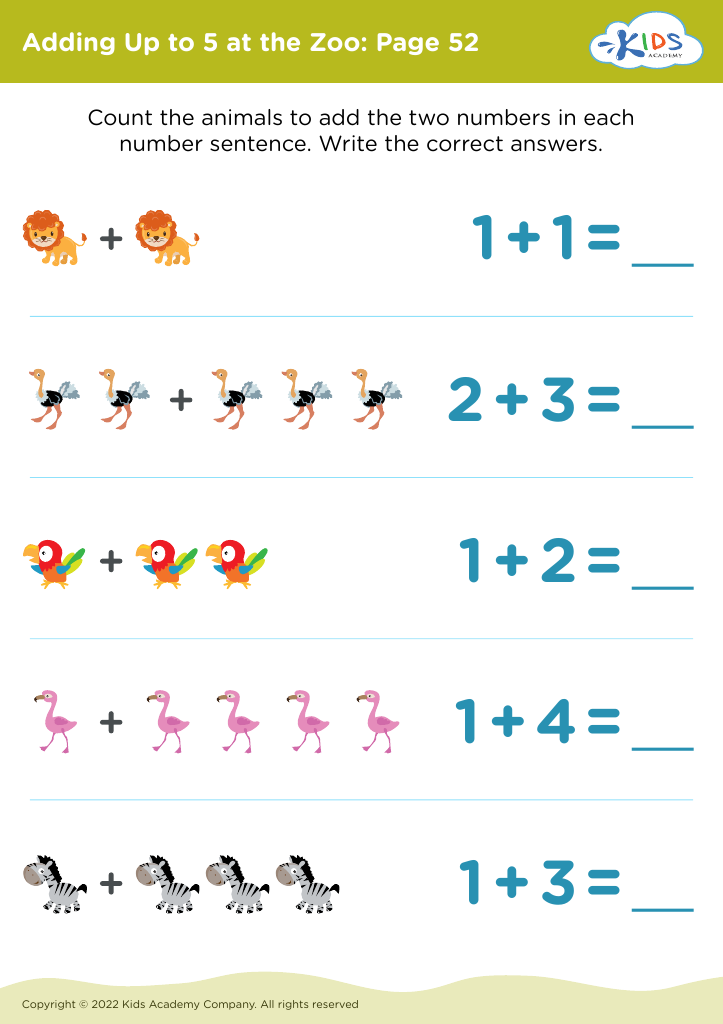
Adding Up to 5 at the Zoo: Page 52
Worksheet
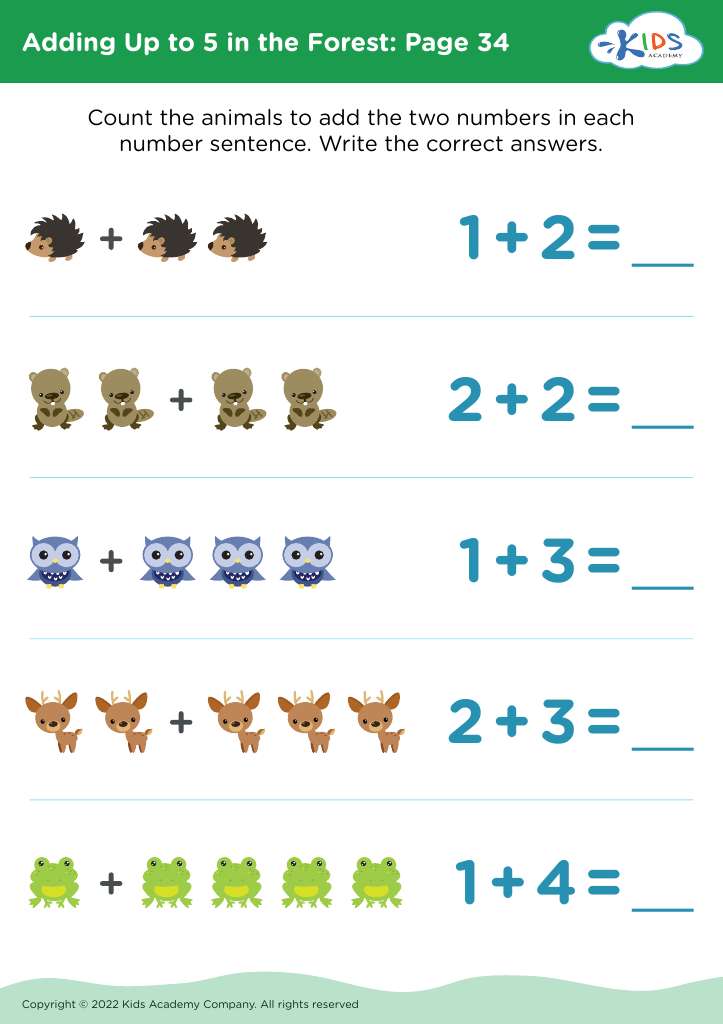
Adding Up to 5 in the Forest: Page 34
Worksheet
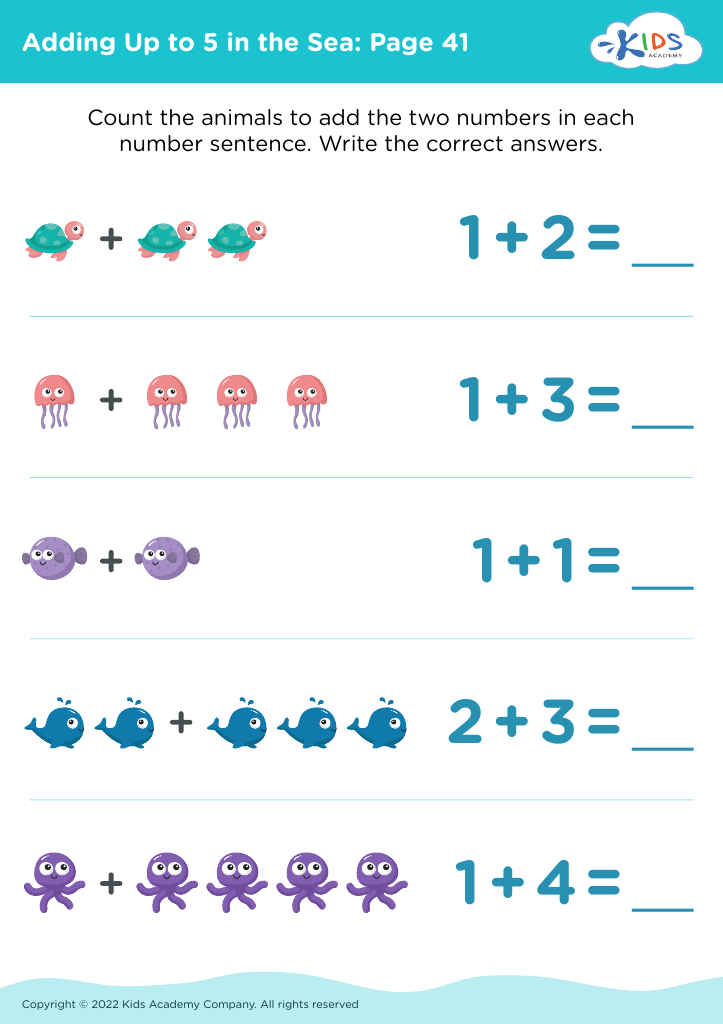
Adding Up to 5 in the Sea: Page 41
Worksheet
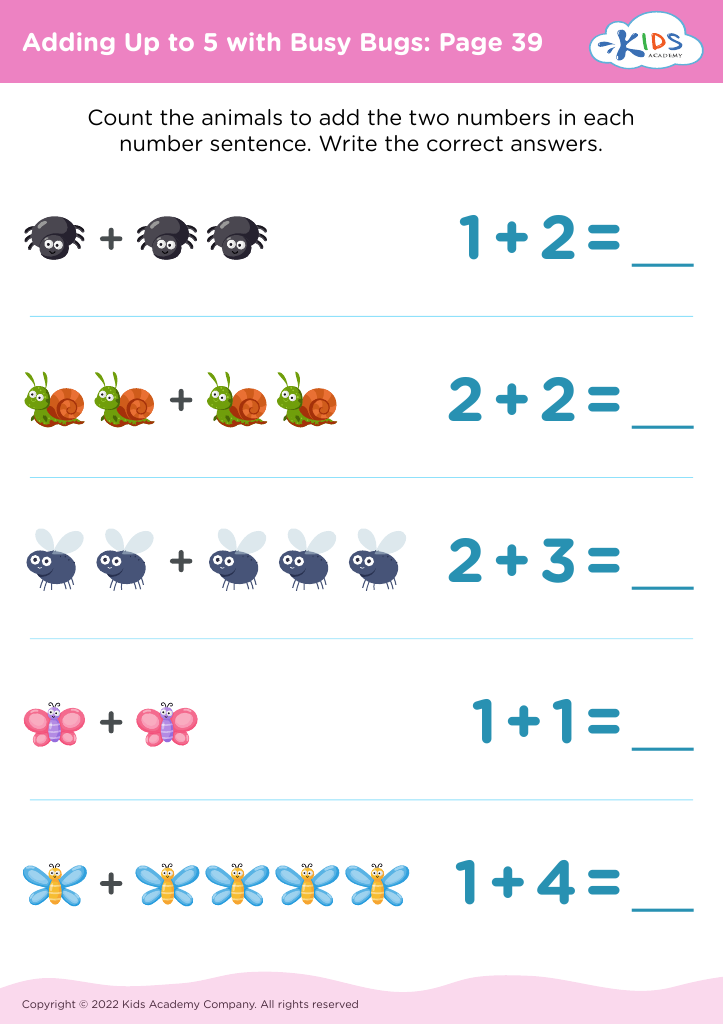
Adding Up to 5 with Busy Bugs: Page 39
Worksheet
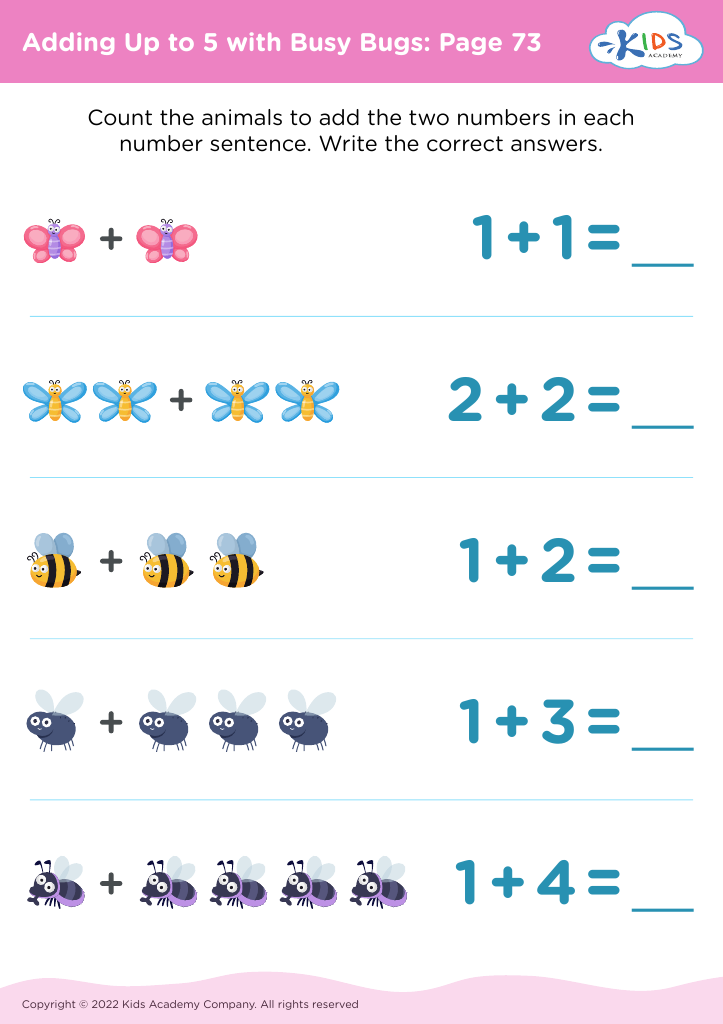
Adding Up to 5 with Busy Bugs: Page 73
Worksheet
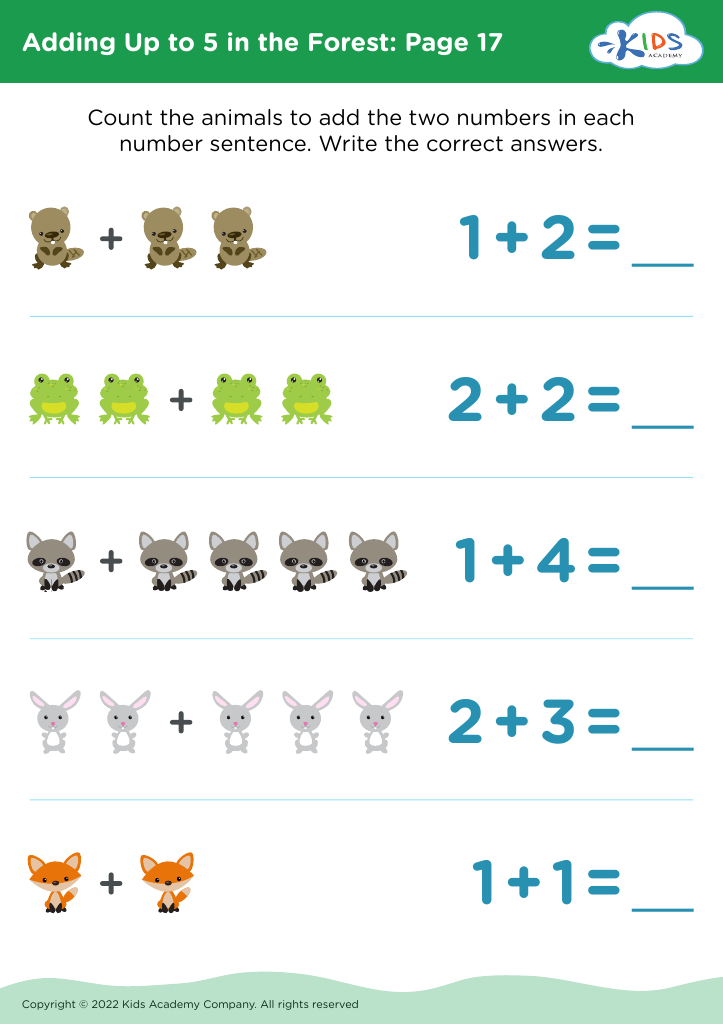
Adding Up to 5 in the Forest: Page 17
Worksheet
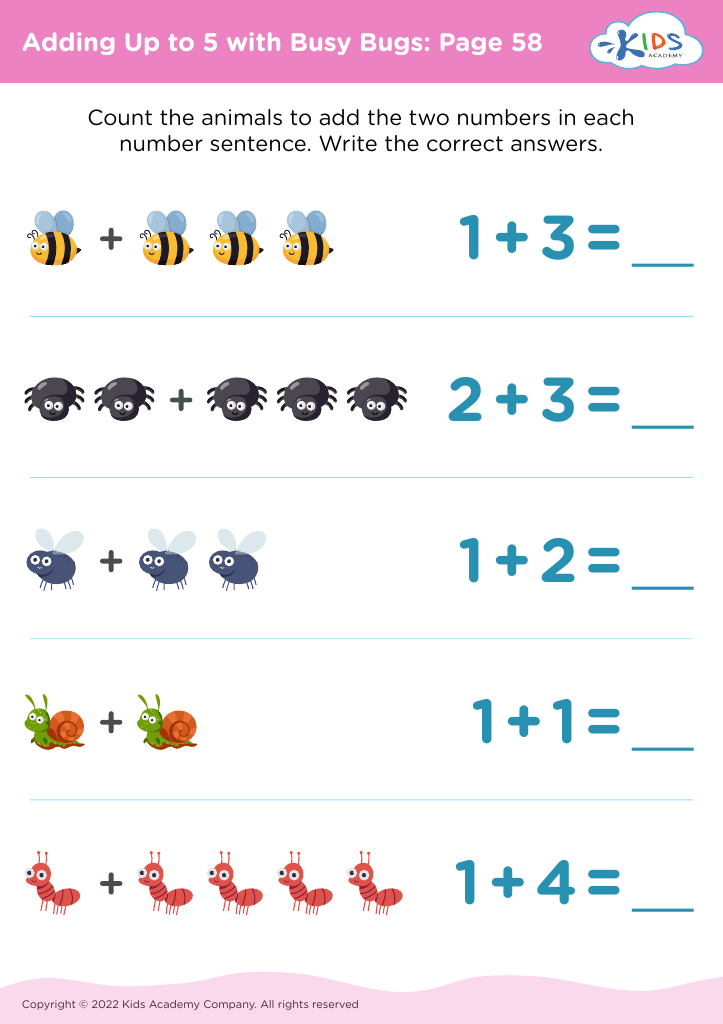
Adding Up to 5 with Busy Bugs: Page 58
Worksheet
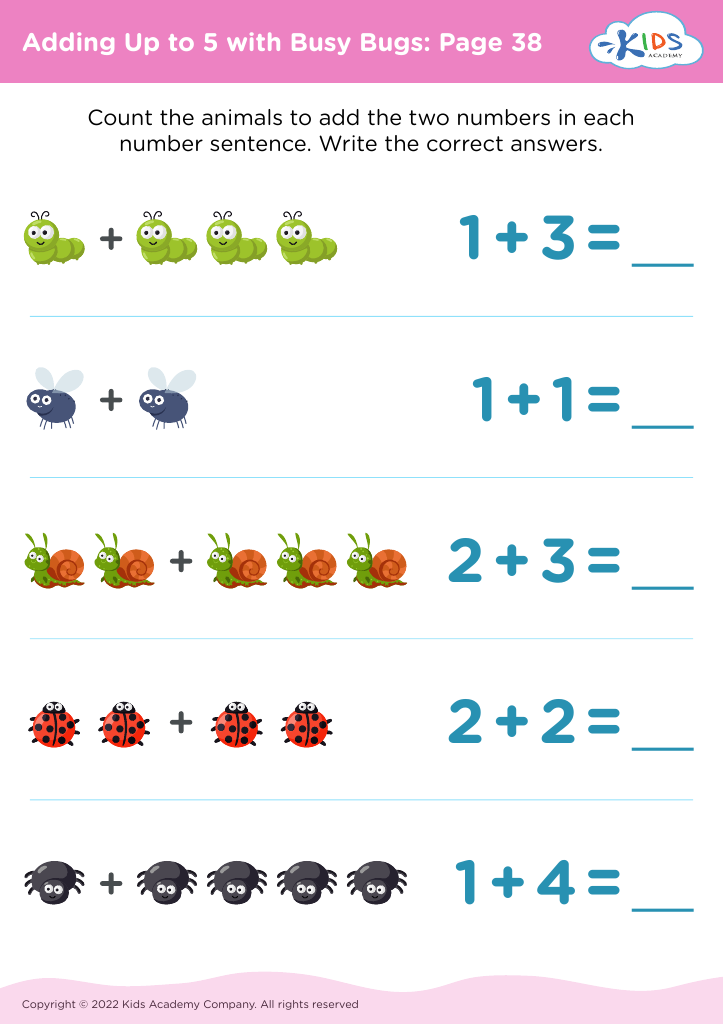
Adding Up to 5 with Busy Bugs: Page 38
Worksheet
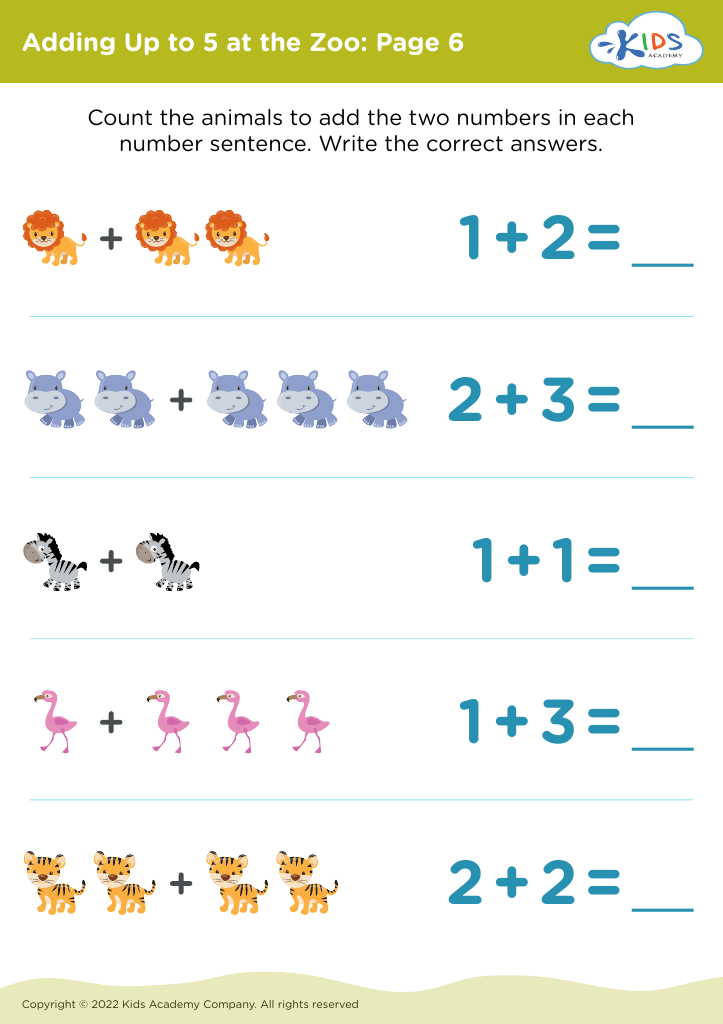
Adding Up to 5 at the Zoo: Page 6

Adding Up to 5 at the Zoo: Page 6

Adding Up to 5 at the Zoo: Page 6
Worksheet
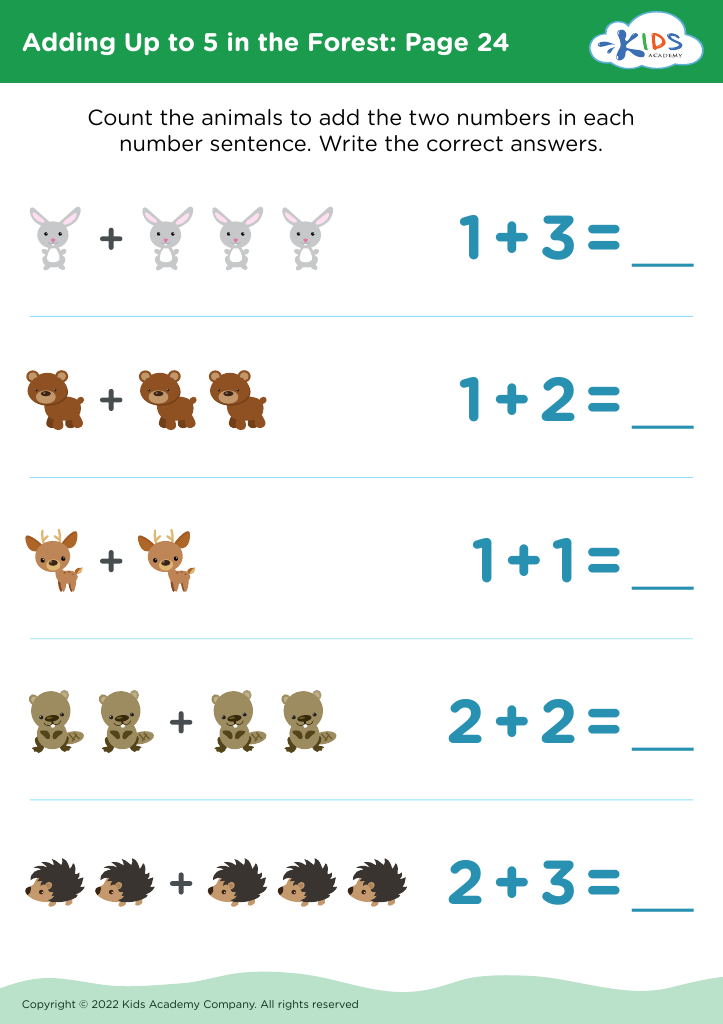
Adding Up to 5 in the Forest: Page 24
Worksheet
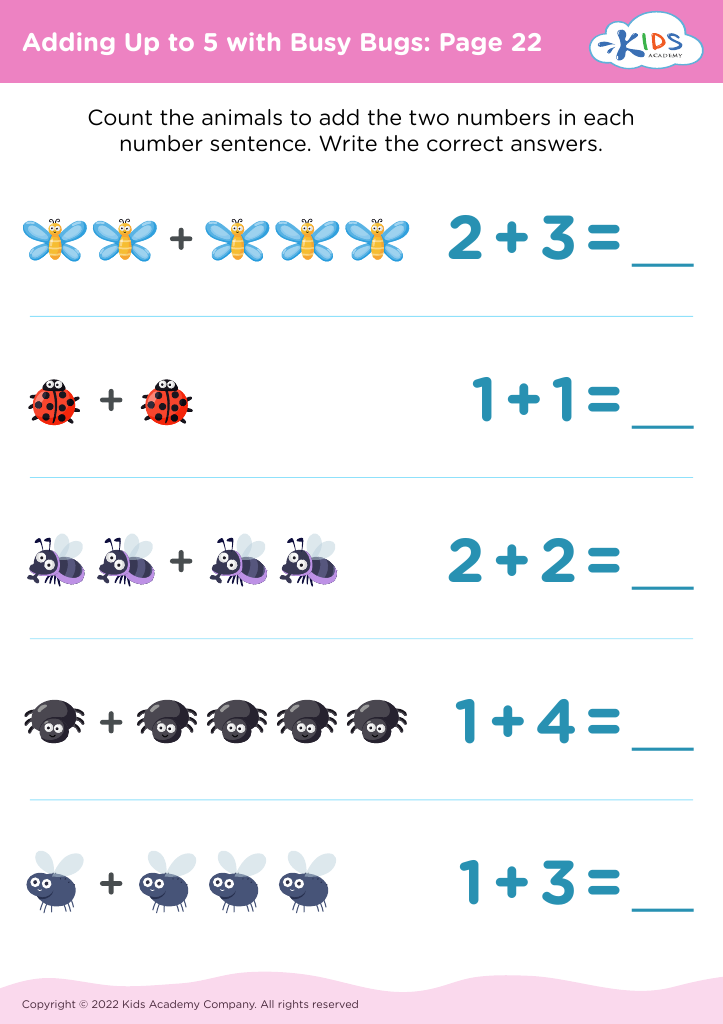
Adding Up to 5 with Busy Bugs: Page 22
Worksheet
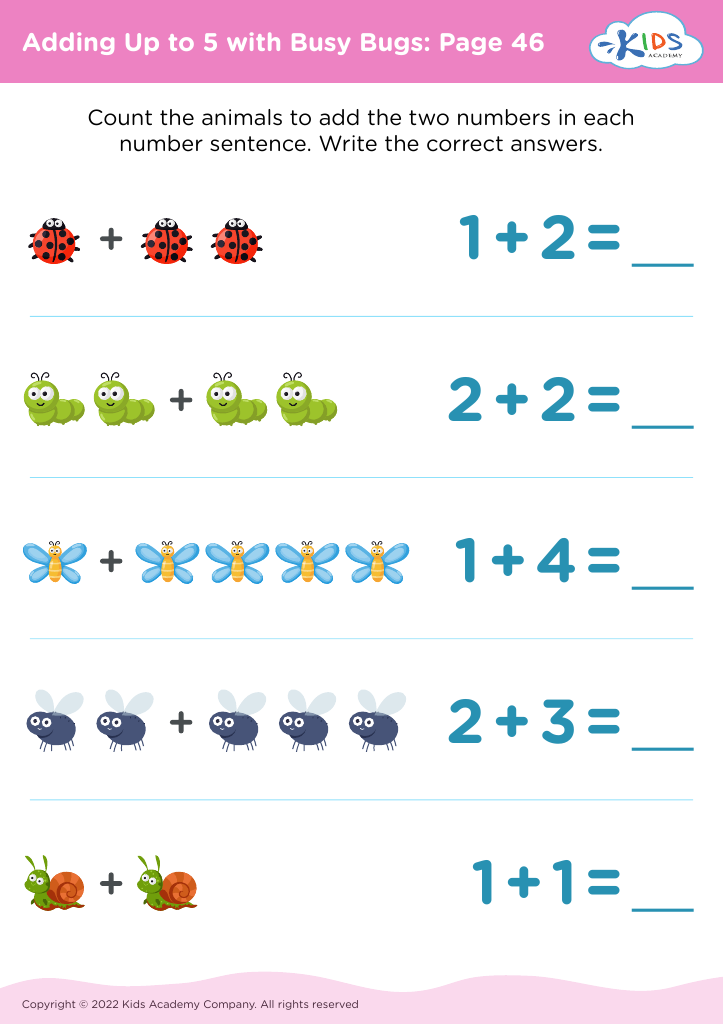
Adding Up to 5 with Busy Bugs: Page 46
Worksheet
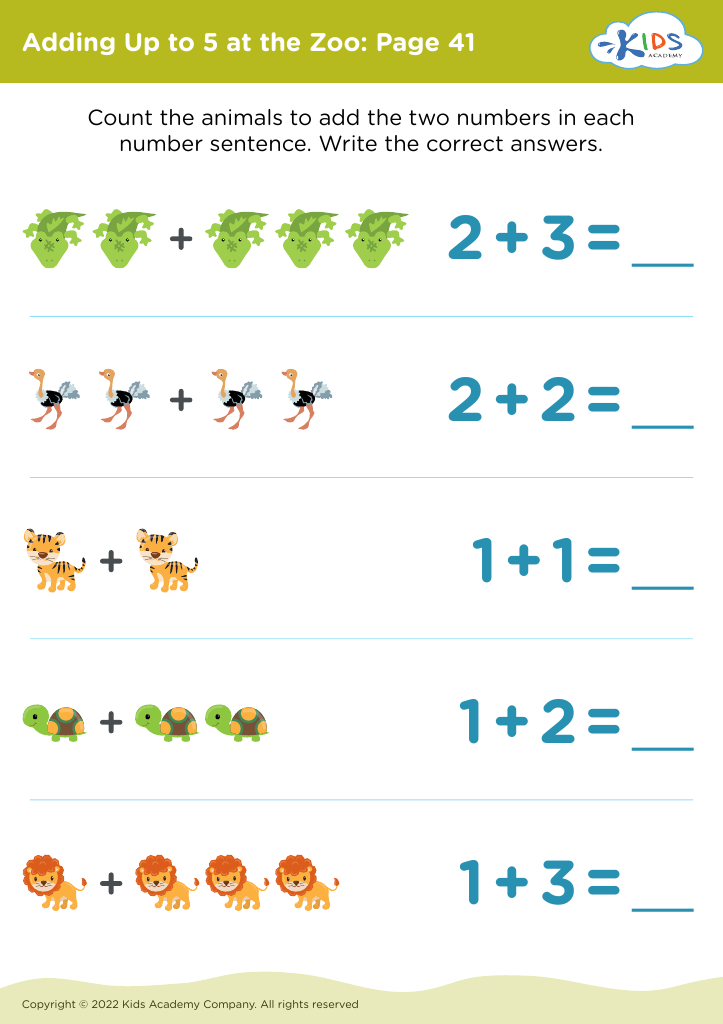
Adding Up to 5 at the Zoo: Page 41
Worksheet


Number recognition adding up to 5 is a crucial foundational skill for children aged 5-6 because it sets the stage for all future math learning. At this age, children are in a critical period of cognitive development, where they can absorb new information rapidly. By mastering the ability to recognize and add numbers up to 5, children develop a solid understanding of basic math concepts.

Firstly, understanding numbers and how they work fosters critical thinking and problem-solving skills. It enables children to move on to more complex mathematical tasks with confidence. These early math skills are not isolated but often integrated into daily life and other subjects like science and reading.

Secondly, grasping these fundamental numbers helps children build confidence in their abilities, leading to a positive attitude toward learning, which is essential for long-term academic success. When children successfully recognize and add small numbers, they experience a sense of achievement, encouraging them to tackle more complex challenges in the future.

Furthermore, early number recognition is linked to better performance in later grades. Research shows that children who have a strong understanding of math in preschool are more likely to excel in school. By focusing on this skill, parents and teachers provide the tools necessary for successful future learning and equip children with essential lifelong skills.