Filters

37 filtered results

Clear all filters
Favorites
With answer key
Interactive

37 filtered results

Difficulty Level

Grade


Check out this FREE Trial Lesson on Adding Up to 5 for age 5-6!

Match Objects that Fit Together

Favorites
With answer key
Interactive
  • 5-6
  • Problem-Solving Skills
  • Adding Up to 5
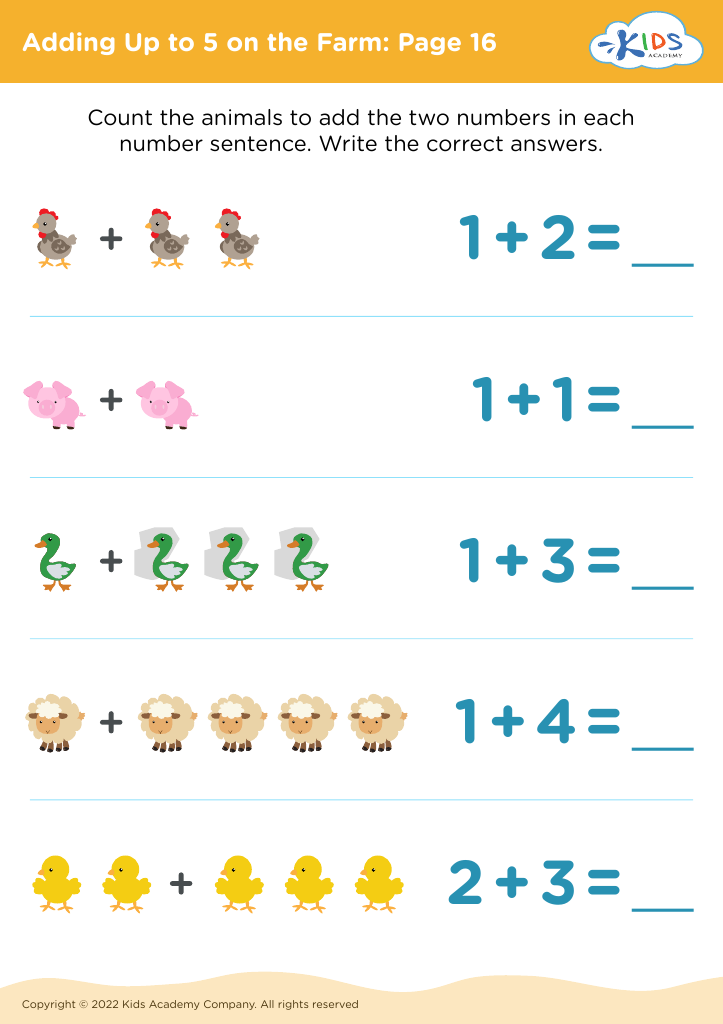
Adding Up to 5 on the Farm: Page 16
Worksheet
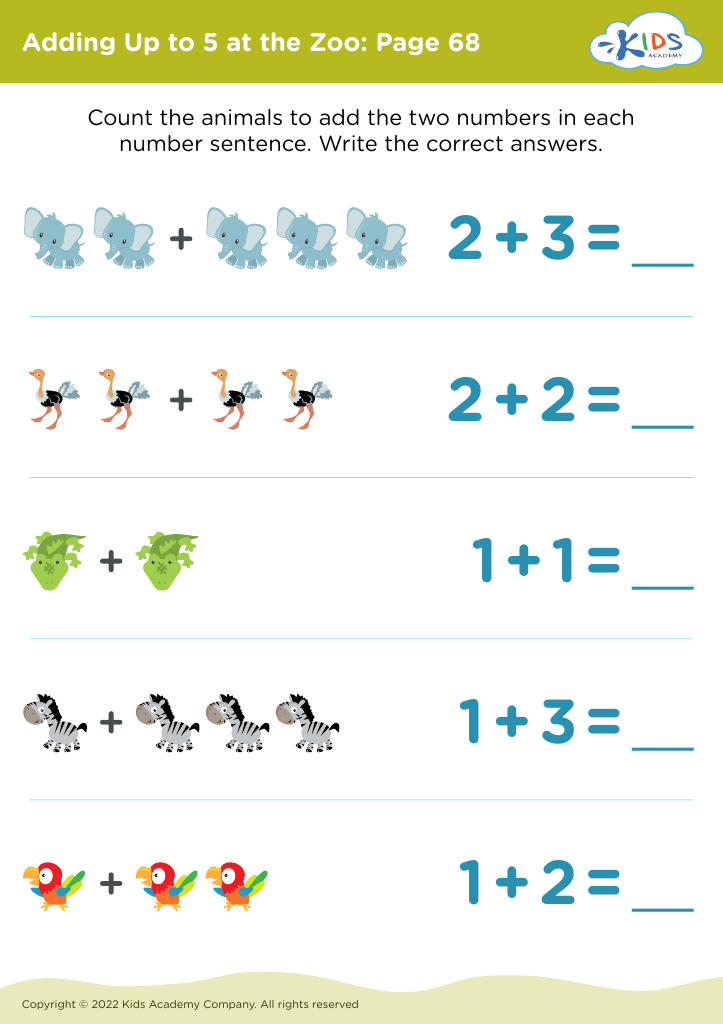
Adding Up to 5 at the Zoo: Page 68
Worksheet
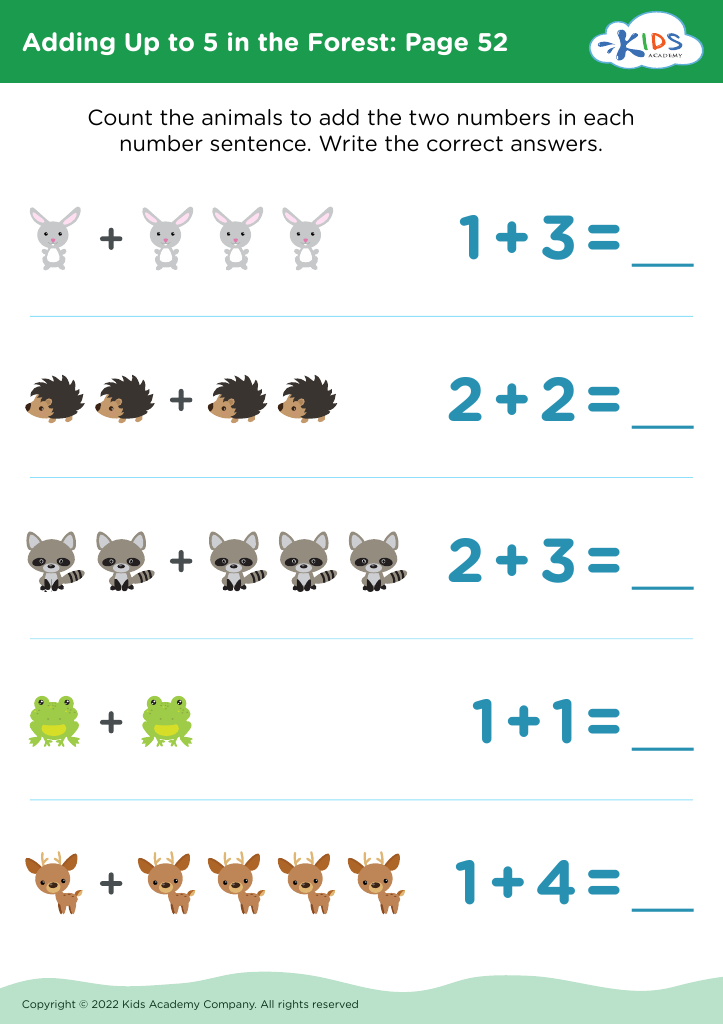
Adding Up to 5 in the Forest: Page 52
Worksheet
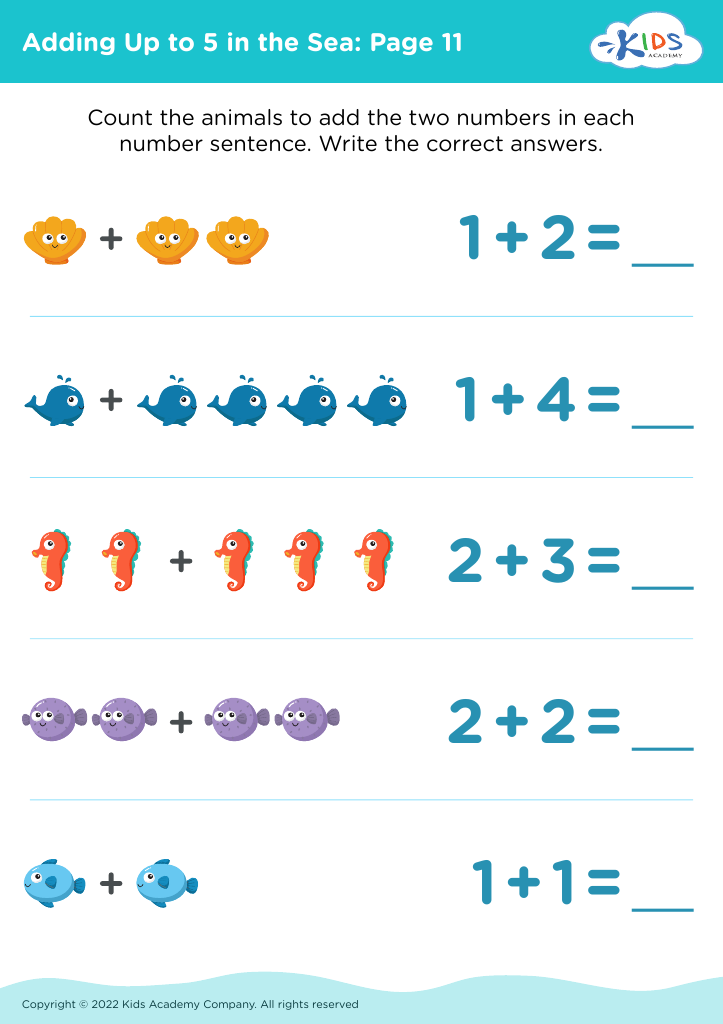
Adding Up to 5 in the Sea: Page 11
Worksheet
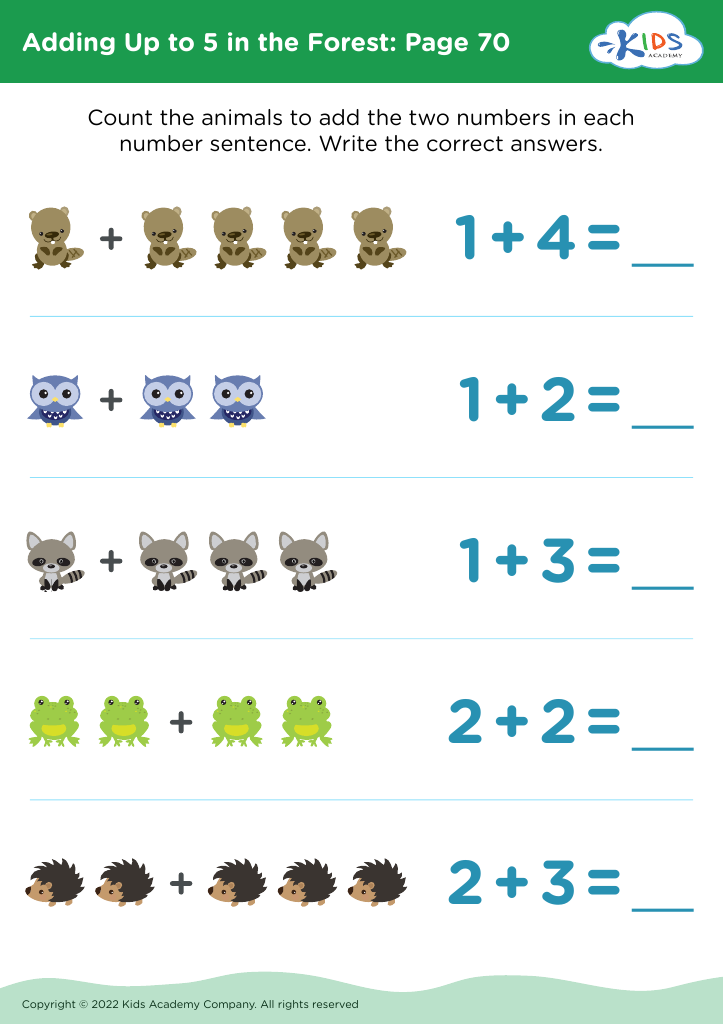
Adding Up to 5 in the Forest: Page 70
Worksheet
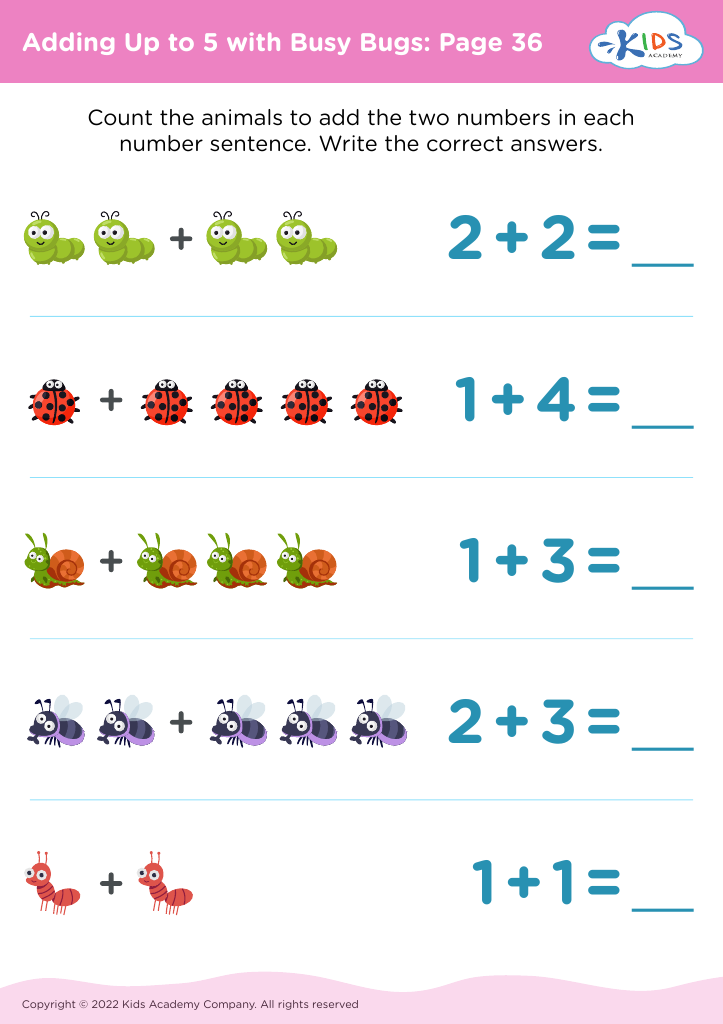
Adding Up to 5 with Busy Bugs: Page 36
Worksheet
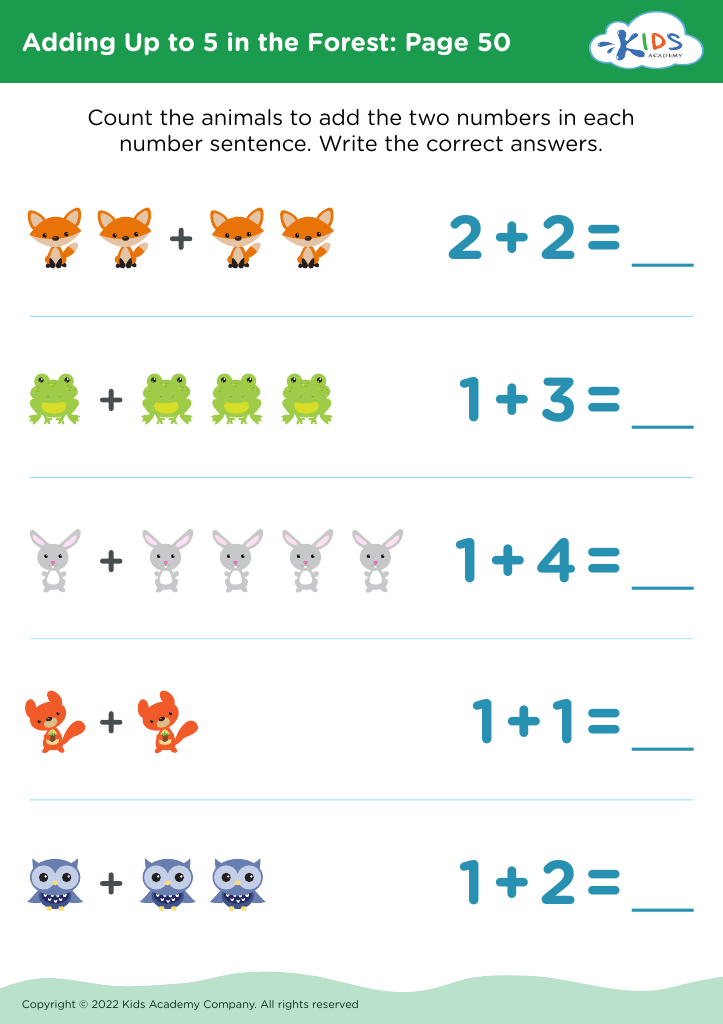
Adding Up to 5 in the Forest: Page 50
Worksheet
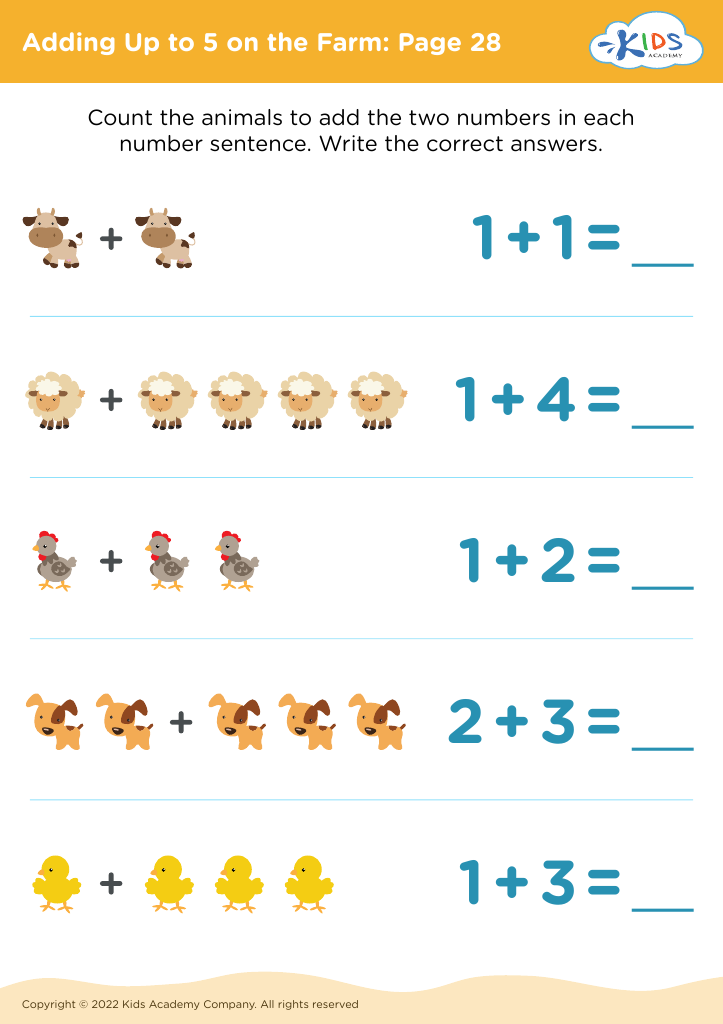
Adding Up to 5 on the Farm: Page 28
Worksheet
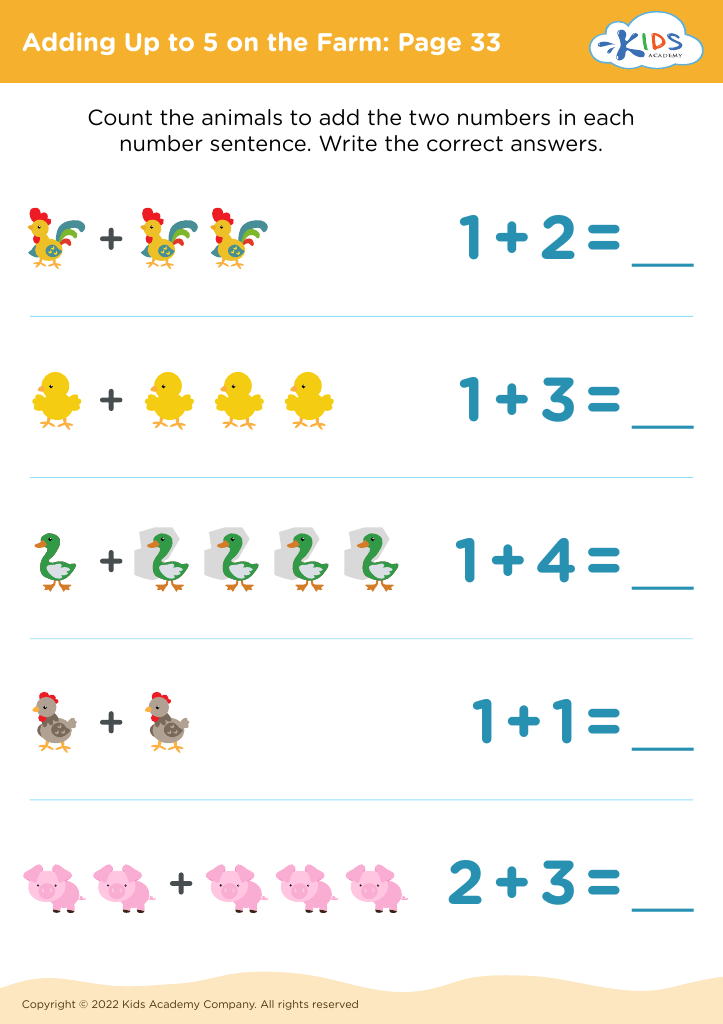
Adding Up to 5 on the Farm: Page 33
Worksheet
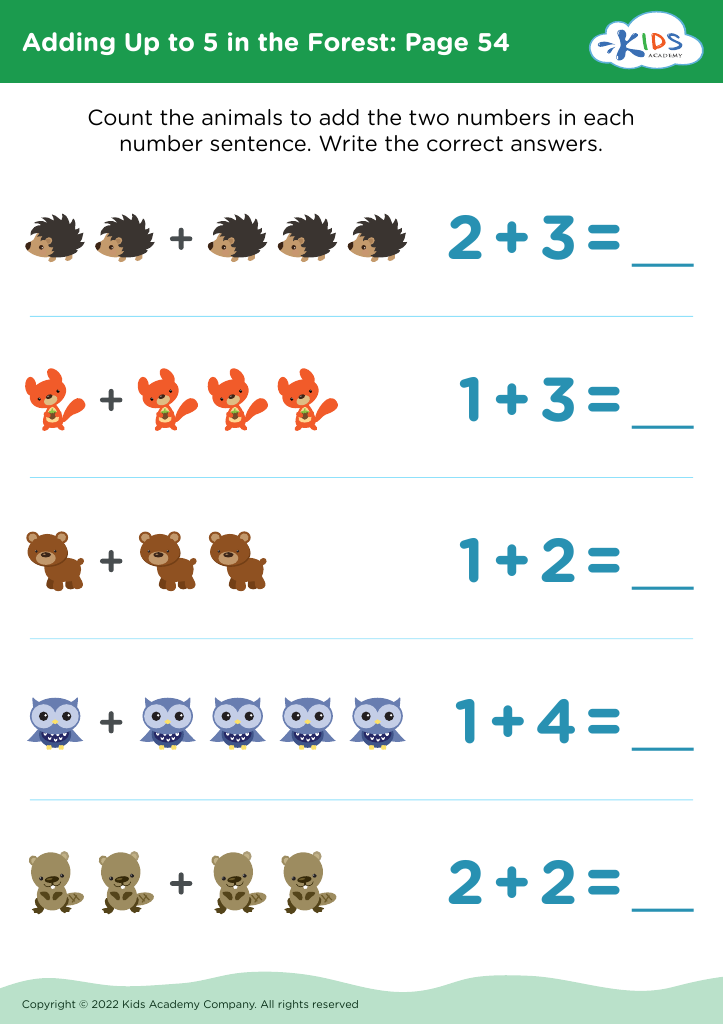
Adding Up to 5 in the Forest: Page 54
Worksheet
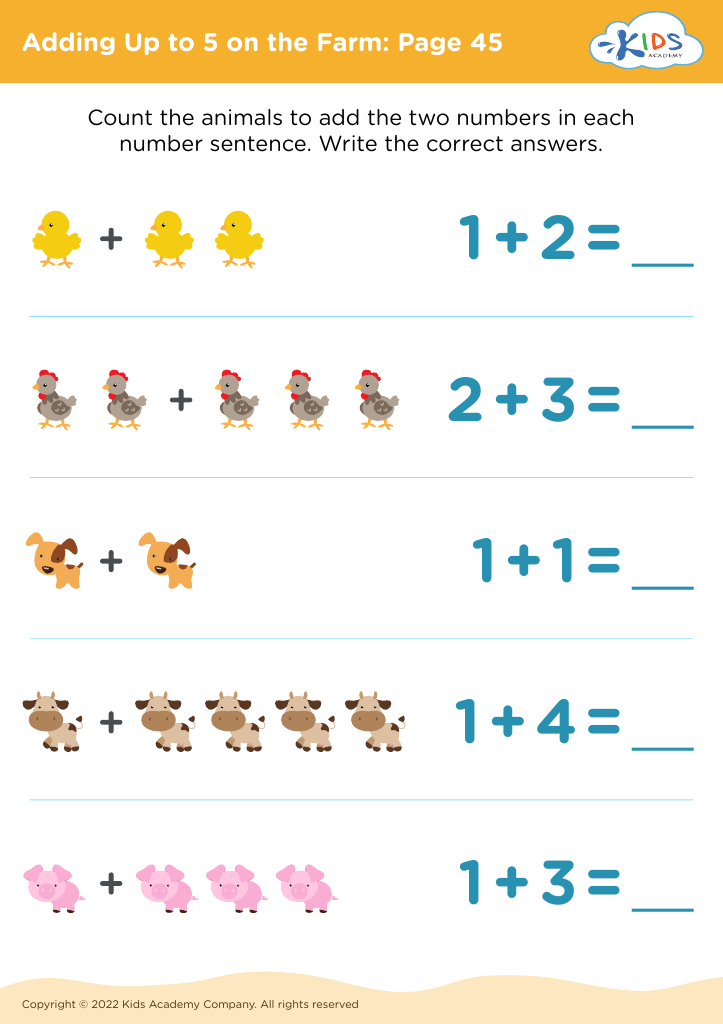
Adding Up to 5 on the Farm: Page 45
Worksheet
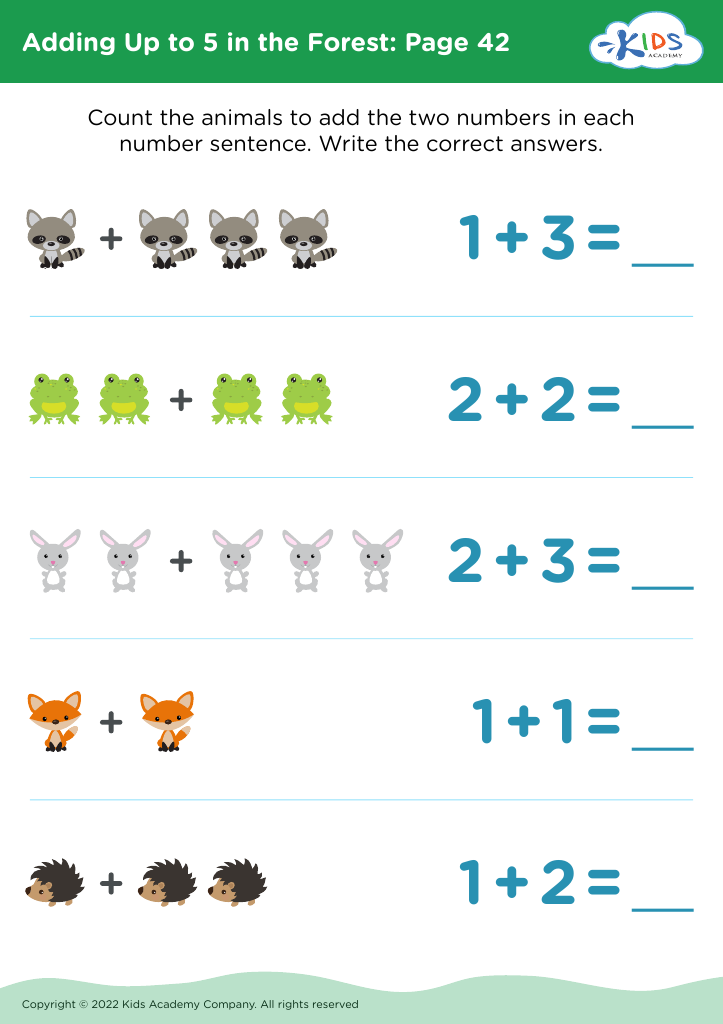
Adding Up to 5 in the Forest: Page 42
Worksheet
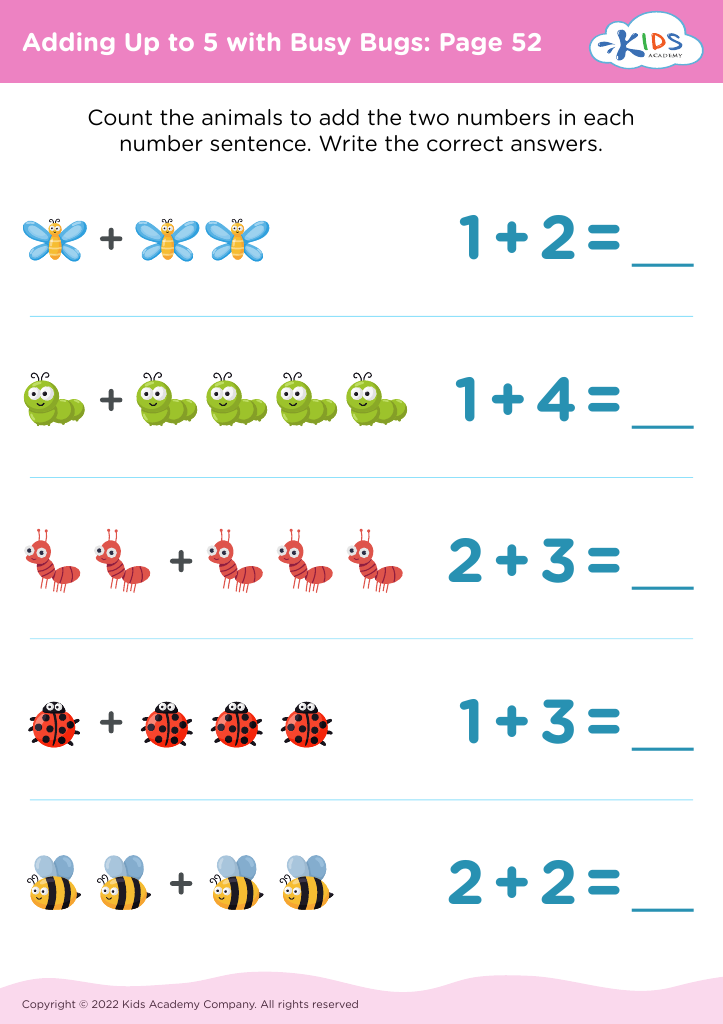
Adding Up to 5 with Busy Bugs: Page 52
Worksheet


Problem-solving skills are crucial for children ages 5-6, as they form the foundation for future learning and critical thinking. At this early age, children are developing cognitive abilities that will influence their approach to challenges throughout their lives. Focusing on problem-solving with simple math like adding up to 5 helps children understand numbers and the relationships between quantities, enhancing their numerical literacy.

For parents and teachers, fostering these skills is essential because they encourage logical reasoning and creativity. As children encounter different scenarios requiring problem-solving, they learn to approach problems methodically, explore various strategies, and evaluate outcomes. This mindset not only applies to math but also to everyday life situations, encouraging resilience and adaptability.

Additionally, mastering early math concepts builds confidence in children, making them more willing to tackle complex problems as they progress through school. Engaging activities, like games and hands-on group work, can make learning enjoyable while enhancing social skills and teamwork.

In summary, prioritizing basic problem-solving skills in mathematics—a fundamental aspect of early education—empowers children to become capable thinkers and learners, reinforcing both academic success and personal development.