Sea creatures identification Adding Up to 5 Worksheets for Ages 5-6
3 filtered results
-
From - To
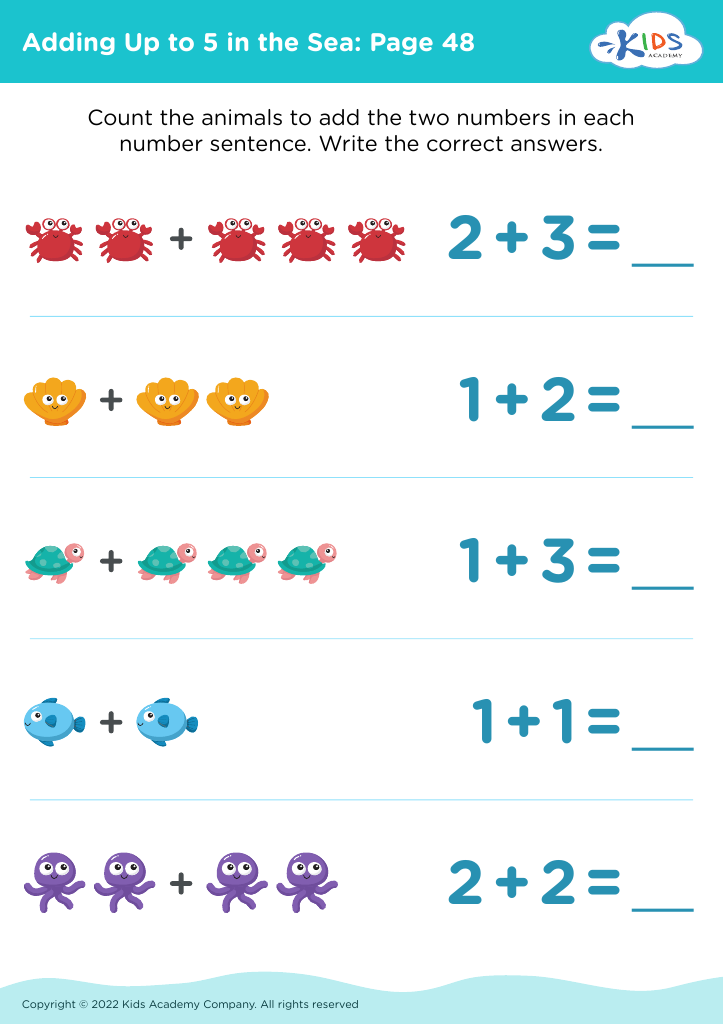
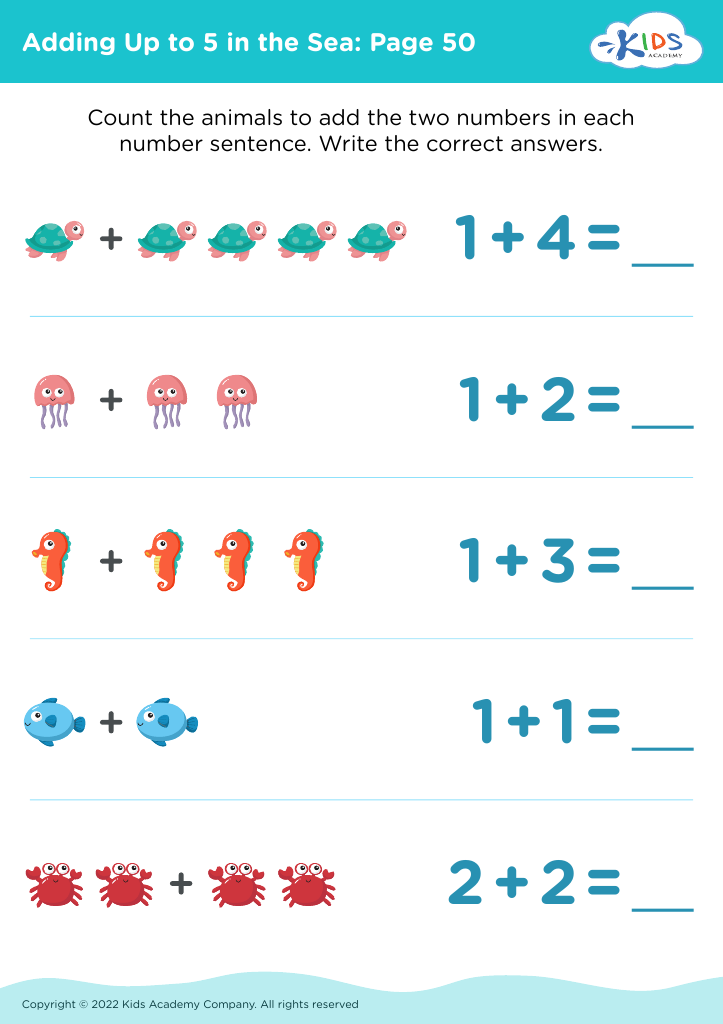
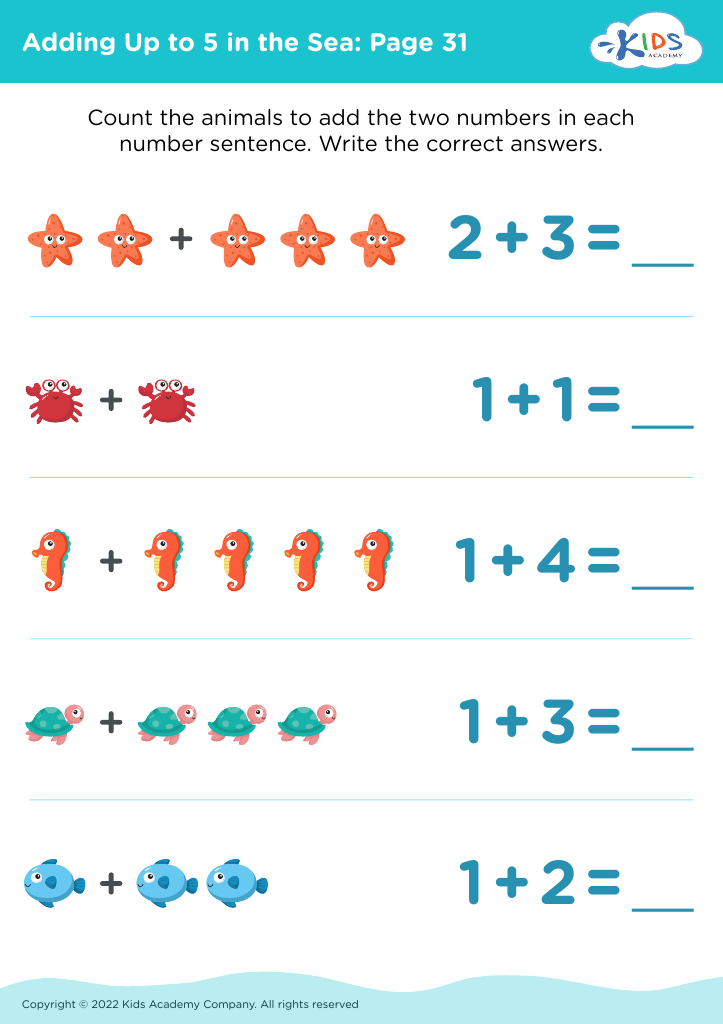
Dive into a fun learning adventure with our "Sea Creatures Identification Adding Up to 5 Worksheets for Ages 5-6"! These lively, engaging worksheets combine basic math skills with fascinating underwater creatures, making learning to add up to 5 a splash! Perfect for young learners aged 5-6, each worksheet features colorful illustrations and imaginative scenarios for counting and identifying sea animals. Not only do these activities enhance math proficiency, but they also introduce early marine biology concepts. Watch your child's confidence grow as they add numbers and discover the wonders of the deep blue sea simultaneously. Make math magical today!






.jpg)

Teaching young children to identify sea creatures and engage in addition activities, such as adding up to 5, provides a dual educational benefit. Firstly, learning about sea creatures expands their knowledge of marine biology, fostering an early appreciation for nature and the environment. By recognizing different sea creatures, children not only learn names but also gain a sense of curiosity about life under the sea. This curiosity can lead to a deeper respect for marine life and a heightened awareness of conservation issues as they grow older.
Secondly, incorporating numeric addition activities helps enhance early math skills in a fun, accessible manner. Learning to add small numbers, like 1 to 5, in the context of counting sea creatures, makes math practical and enjoyable. Using vibrant sea creatures in math problems makes abstract concepts tangible for children, allowing for a hands-on learning experience.
The combination of these two elements makes learning both engaging and comprehensive. It aids cognitive development by intertwining literacy, science, and math, all critical areas of early education. Furthermore, collaborative learning with teachers or parents can enhance children's social skills, attention span, and the ability to follow instructions. So, this multidimensional approach can leave a long-lasting impact on young learners' overall educational development.








