Understanding number value Adding Up to 5 Worksheets for Ages 5-6
3 filtered results
-
From - To
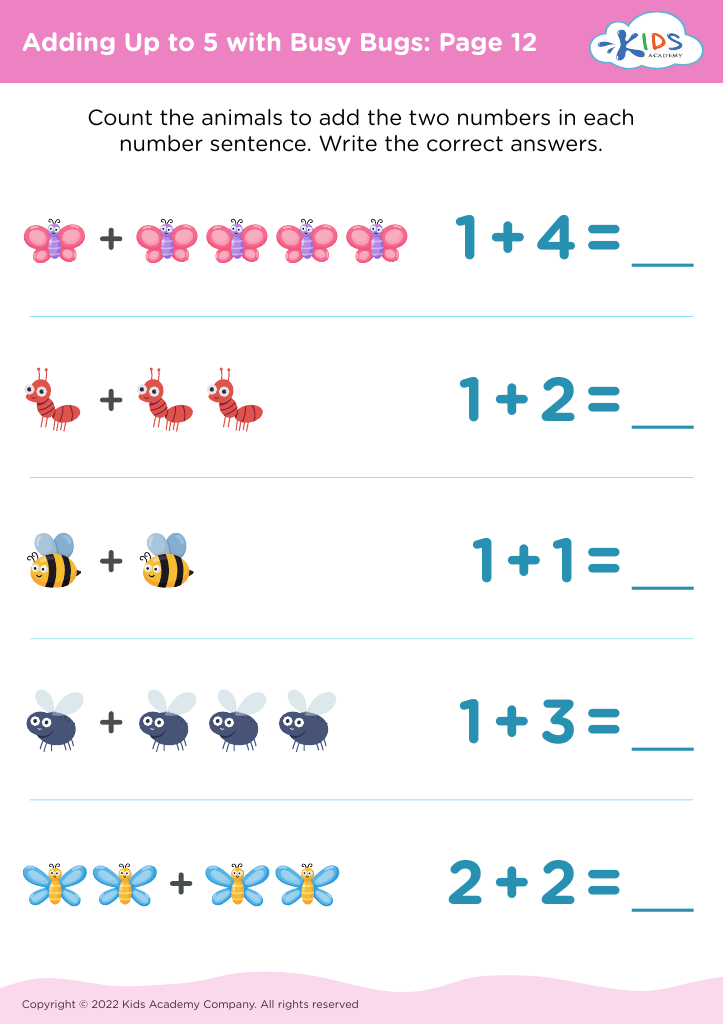
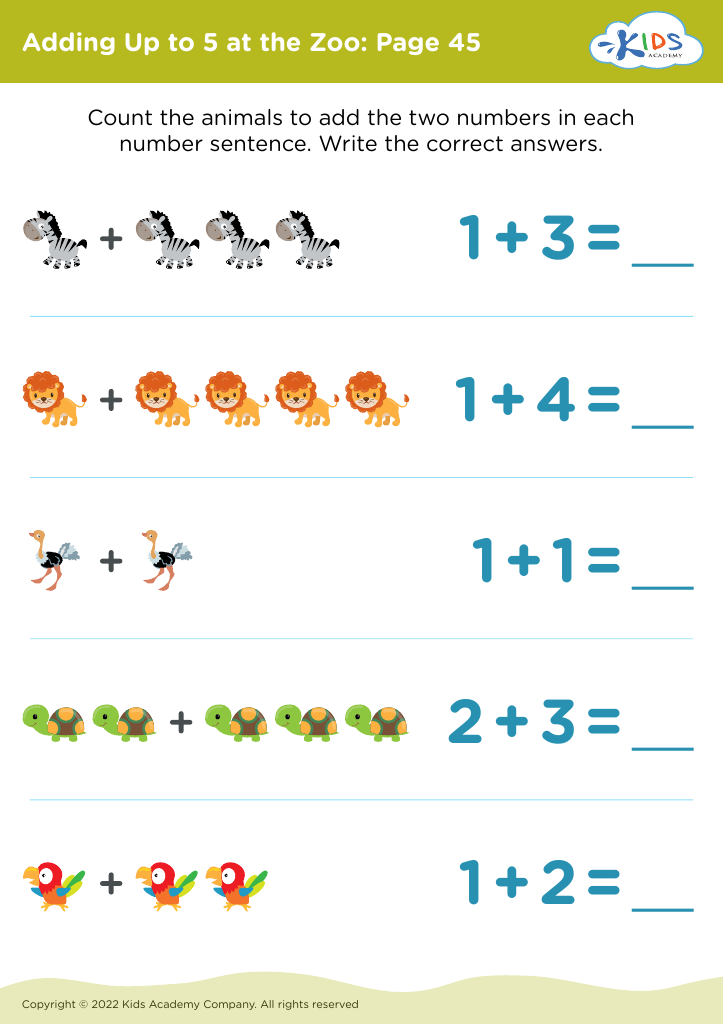
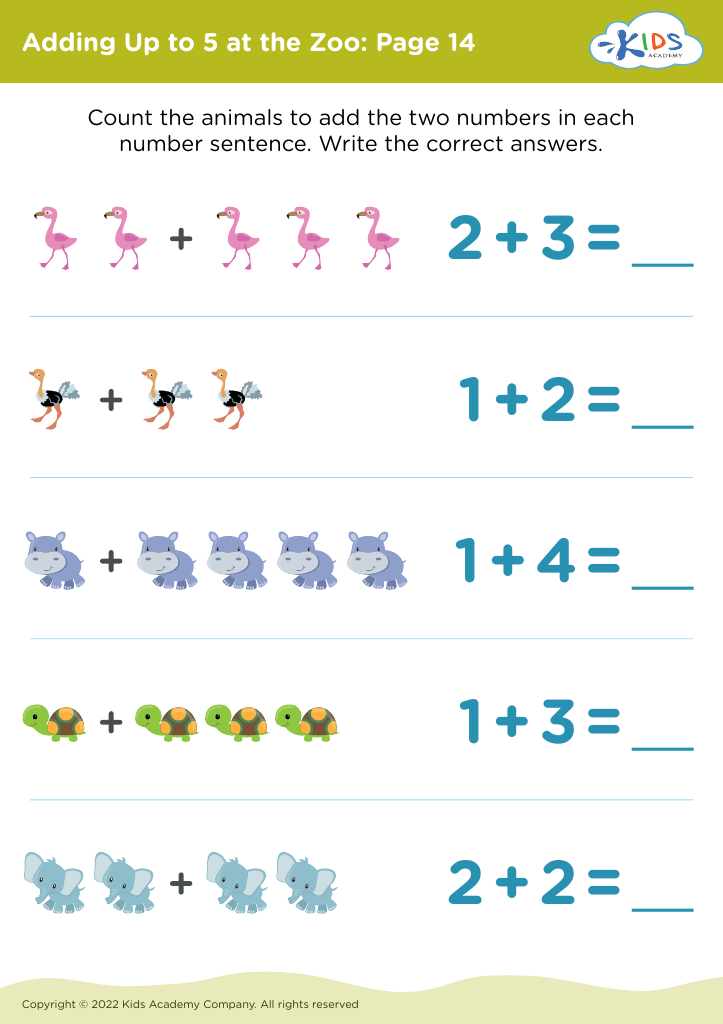
Discover our "Understanding Number Value: Adding Up to 5 Worksheets" designed specifically for children ages 5-6. These engaging, interactive worksheets are perfect for teaching young learners the foundational concepts of number sense and addition. Through fun exercises, students will explore the value of numbers, learn to identify sums, and gain confidence in basic math skills. Our curriculum-aligned resources promote essential cognitive development while keeping children motivated and excited about learning. Start building a strong mathematical foundation for your child with our thoughtfully crafted worksheets that make mastering addition up to 5 both enjoyable and effective! Join us on this learning journey today!


%20(1).jpg)





Understanding number value and the concept of adding up to 5 is crucial for young children ages 5-6, as it lays the foundation for their overall mathematical development. During this early stage, children actively explore numbers, and grasping the value of numbers helps them build a strong number sense.
Knowing how to add numbers to reach 5 enables children to recognize patterns, make connections, and solve problems, skills that are essential not only in math but in everyday situations. Mastery of this concept fosters confidence as children begin to engage with more complex math skills, such as subtraction and even basic multiplication.
Additionally, engaging with numbers through fun activities—such as counting objects or playing simple games—enhances cognitive development and critical thinking. Parents and teachers play a vital role in creating a supportive environment where children can practice these skills.
Moreover, understanding number value cultivates perseverance and a positive attitude towards learning. As children expand their knowledge base, they become more adept in handling larger numbers and complex equations in the future. Thus, prioritizing early math skills is essential for laying the groundwork for lifelong mathematical comprehension.








