Understanding number values Adding Up to 5 Worksheets for Ages 5-6
3 filtered results
-
From - To
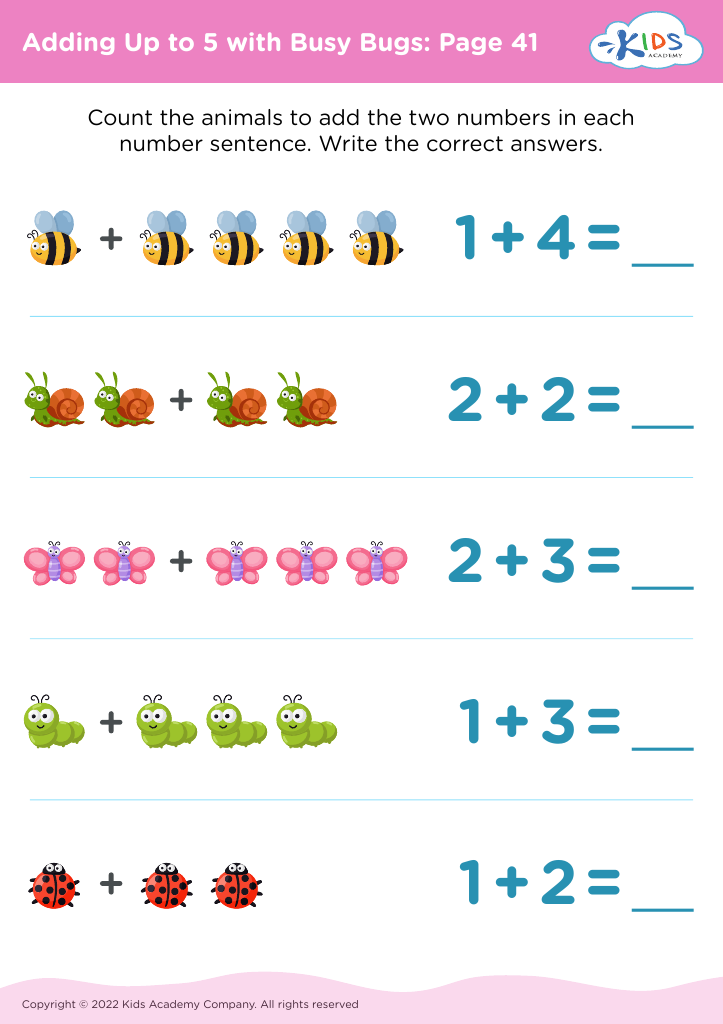
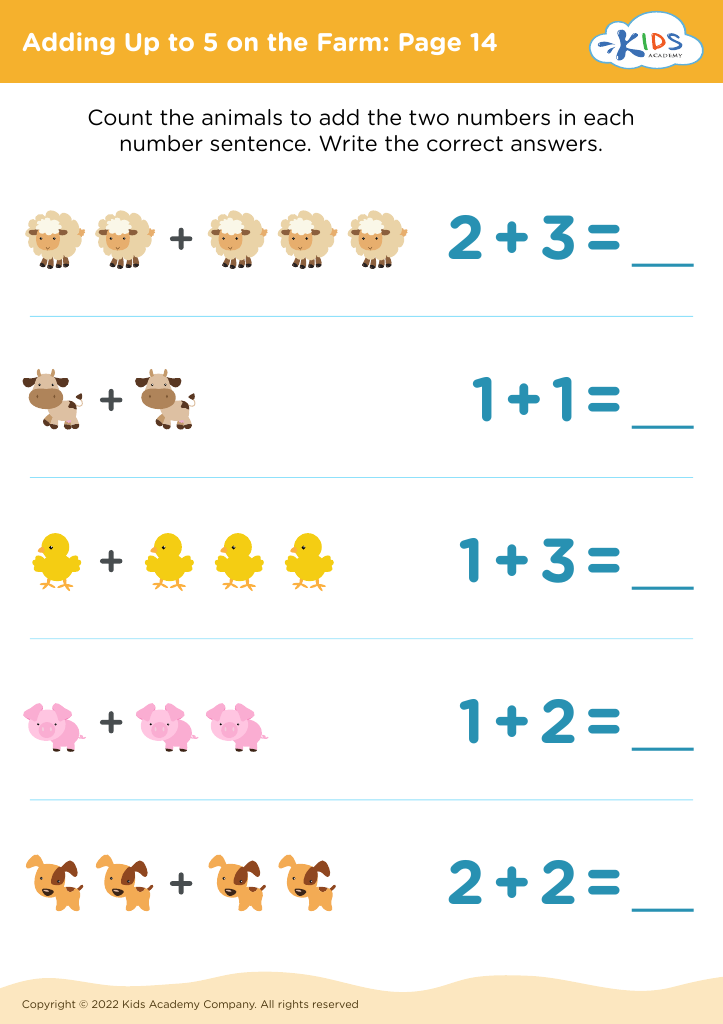
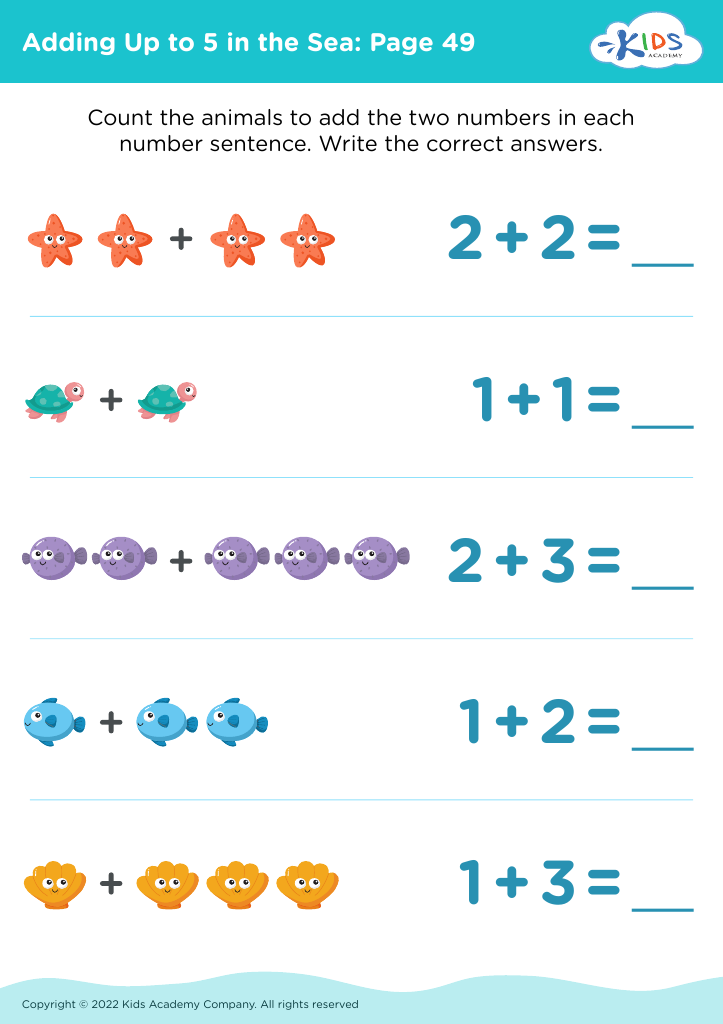
Explore our engaging “Understanding Number Values: Adding Up to 5” worksheets, designed specifically for children ages 5-6. These interactive worksheets help young learners grasp fundamental math concepts by teaching them how to recognize and combine numbers up to five. Through fun exercises and colorful illustrations, kids will enhance their counting skills, number recognition, and addition abilities. Our worksheets promote a solid mathematical foundation, ensuring that children gain confidence and proficiency in early math concepts. Perfect for classroom activities or at-home learning, these resources make mastering number values a joyful experience. Get ready to inspire your little mathematicians today!



.jpg)




Understanding number values and being able to add up to 5 is crucial for children aged 5-6 as it lays the foundation for their future mathematical skills. At this age, children are developing their cognitive abilities and learning basic math concepts. Mastery of addition within this range not only builds a strong numerical sense but also enhances critical thinking and problem-solving skills.
Parents and teachers should be particularly focused on this stage because it promotes confidence in handling numbers. When children understand that the numbers from 0 to 5 can form pairs (such as 1+4, 2+3, etc.), they begin to recognize patterns, which is essential for developing further mathematical abilities. This comprehension aids them in more complex operations in the future.
Moreover, the skills learned through activities involving adding up to 5 help children relate math to real-life situations, such as counting objects or sharing. Engaging in playful math activities fosters a positive attitude toward learning, making it enjoyable and less intimidating. Crafting a strong numerical foundation early on positions children for future success not only in math but across other subjects as well, reinforcing the need for parents and teachers to prioritize this critical learning milestone.








