Understanding Quantities Adding Up to 5 Worksheets for Ages 5-6 - Page 2
36 filtered results
-
From - To






.jpg)

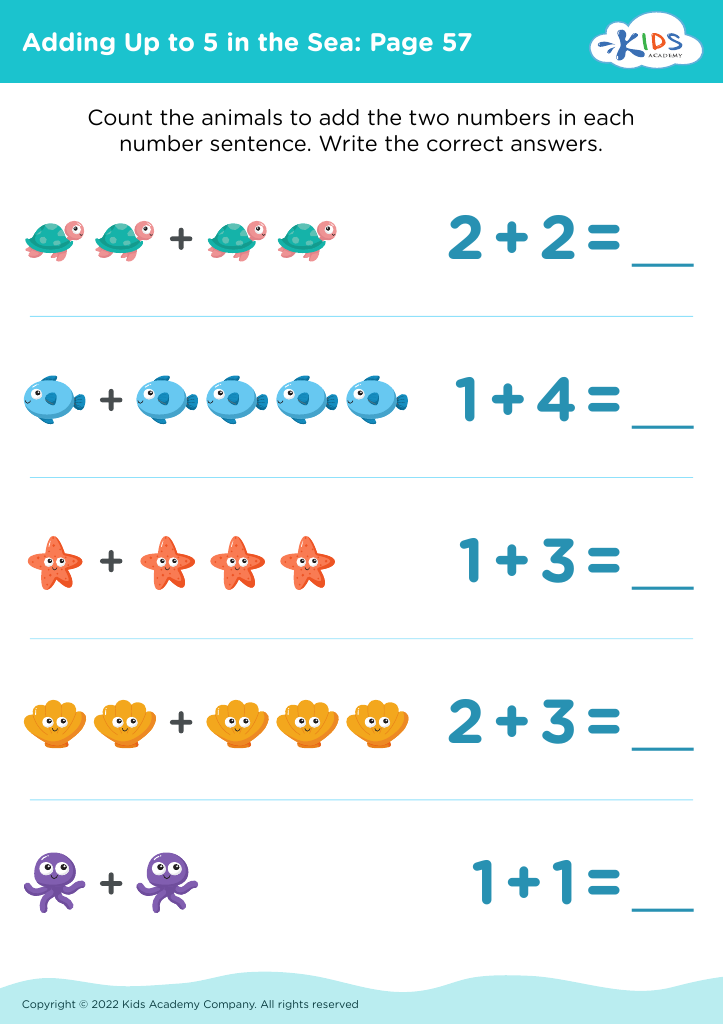
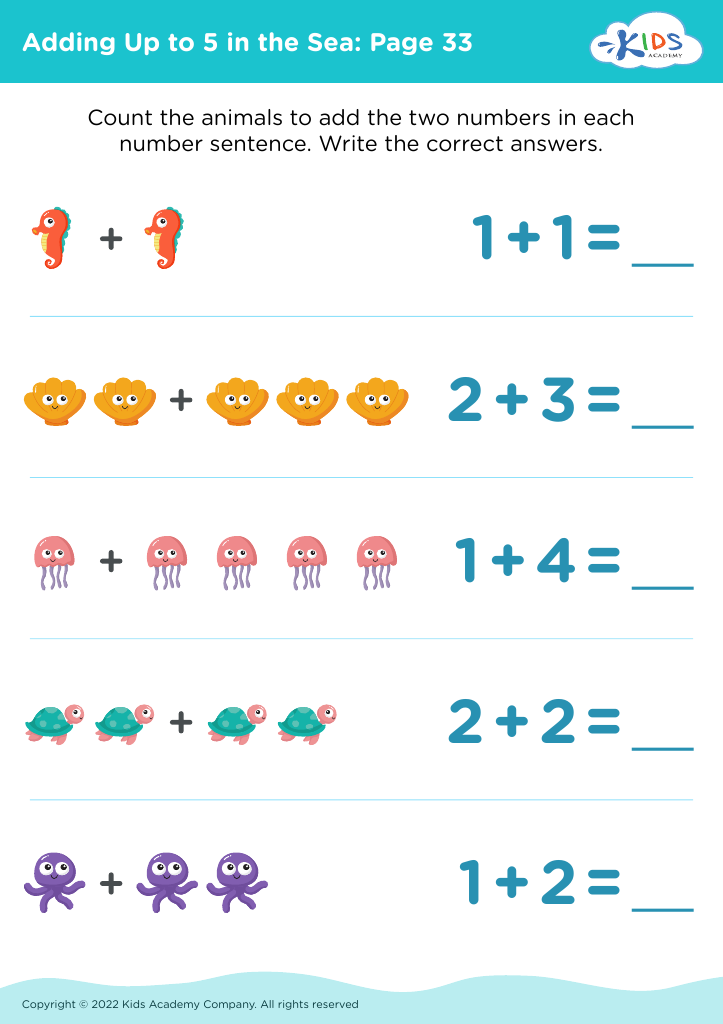
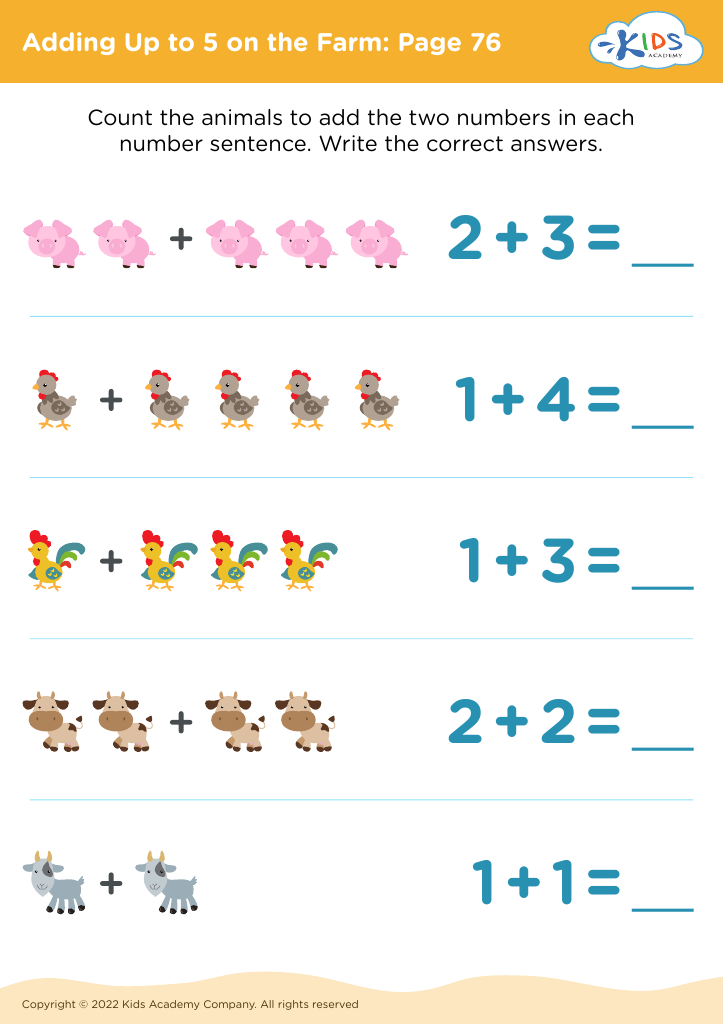
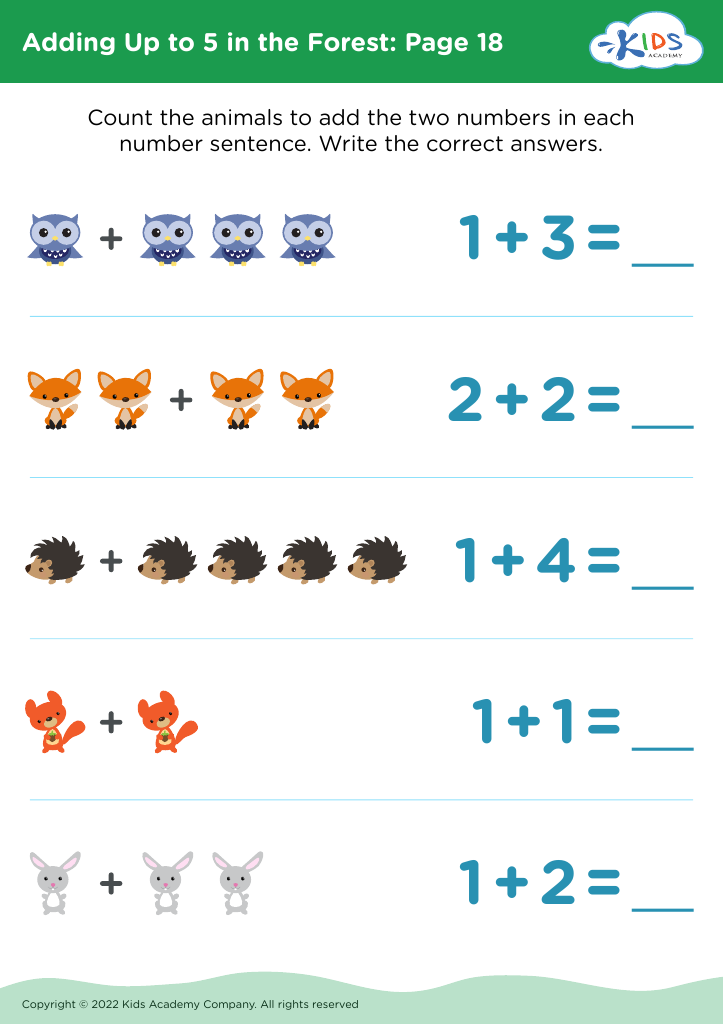
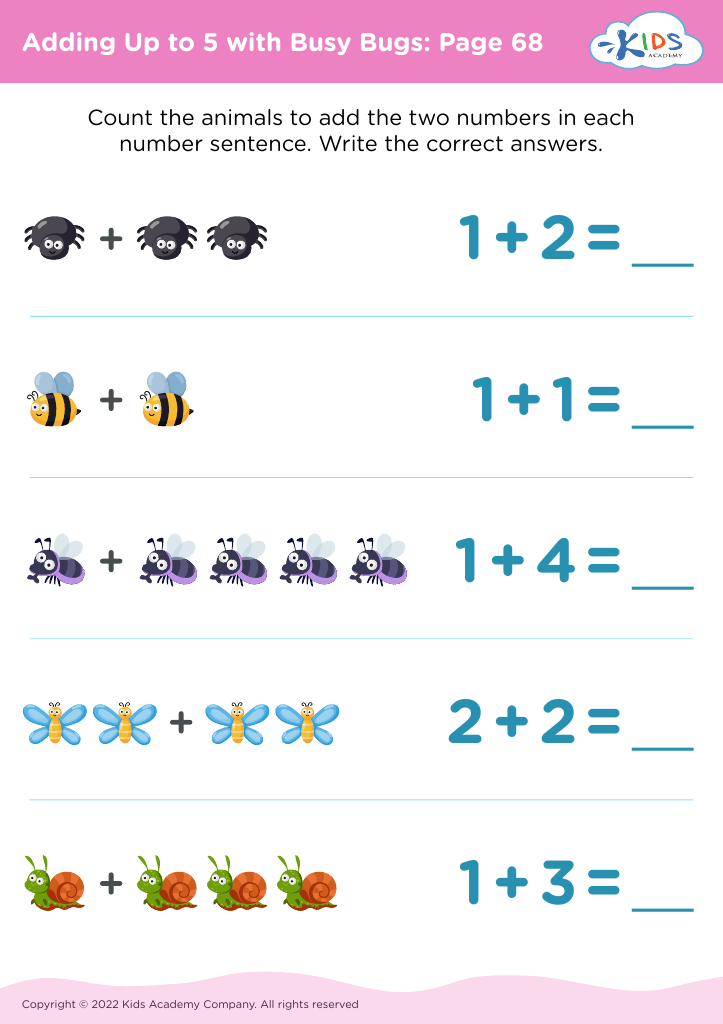
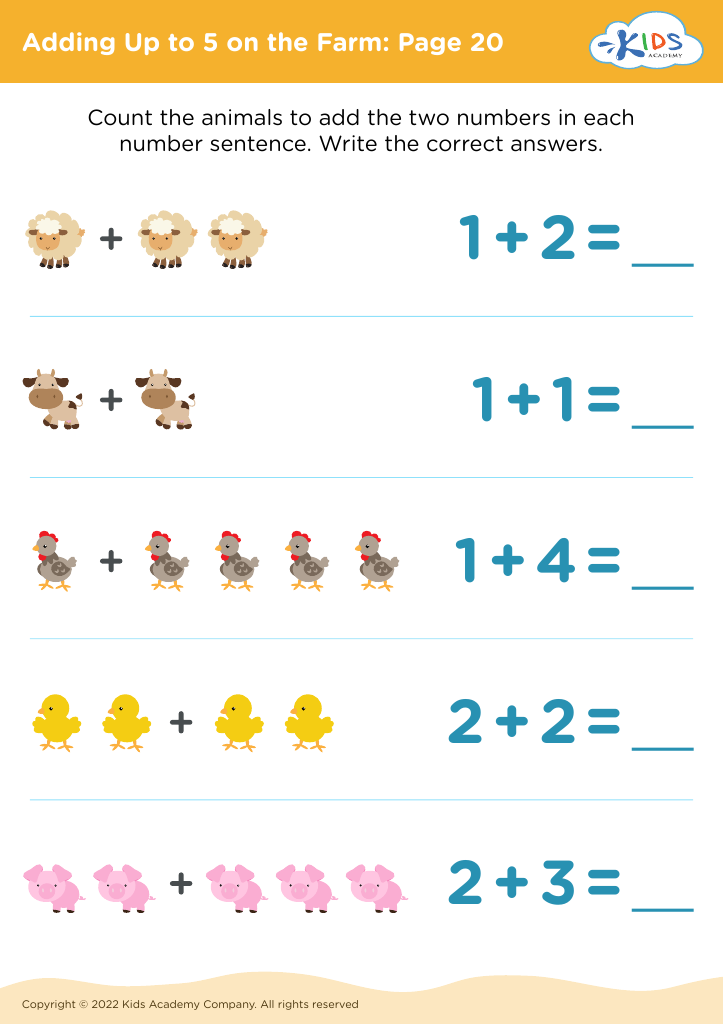
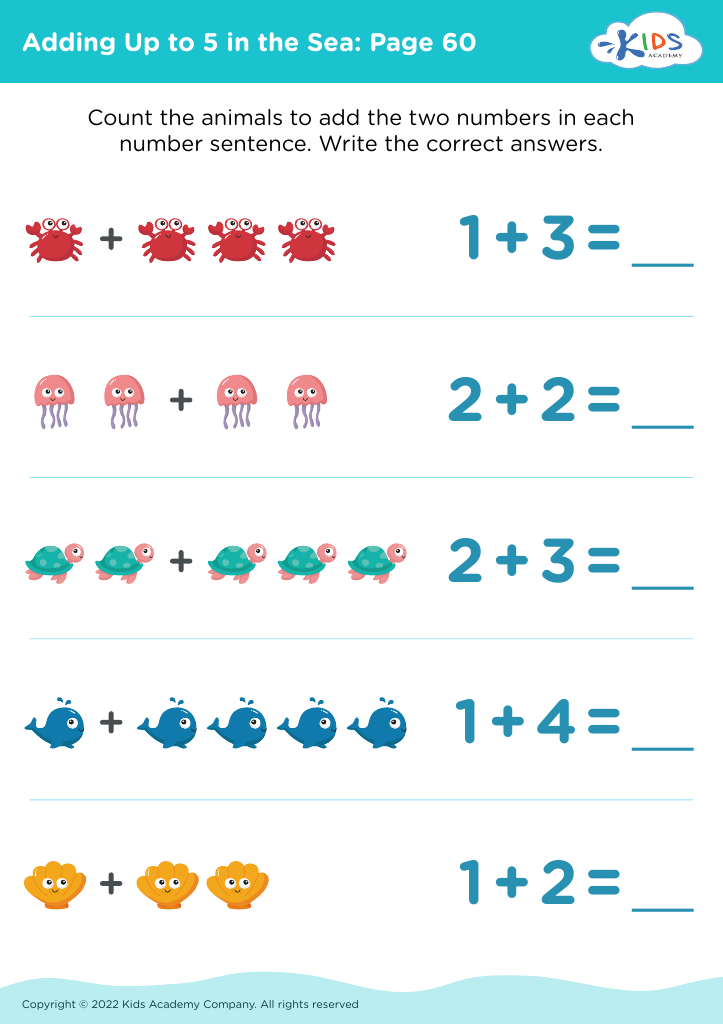
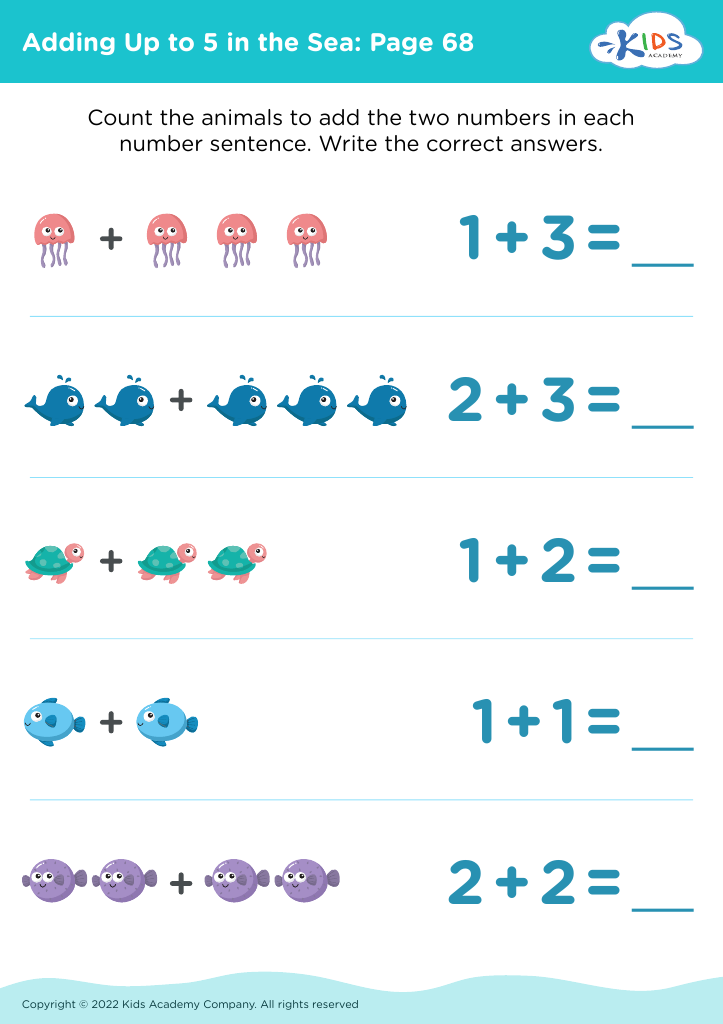
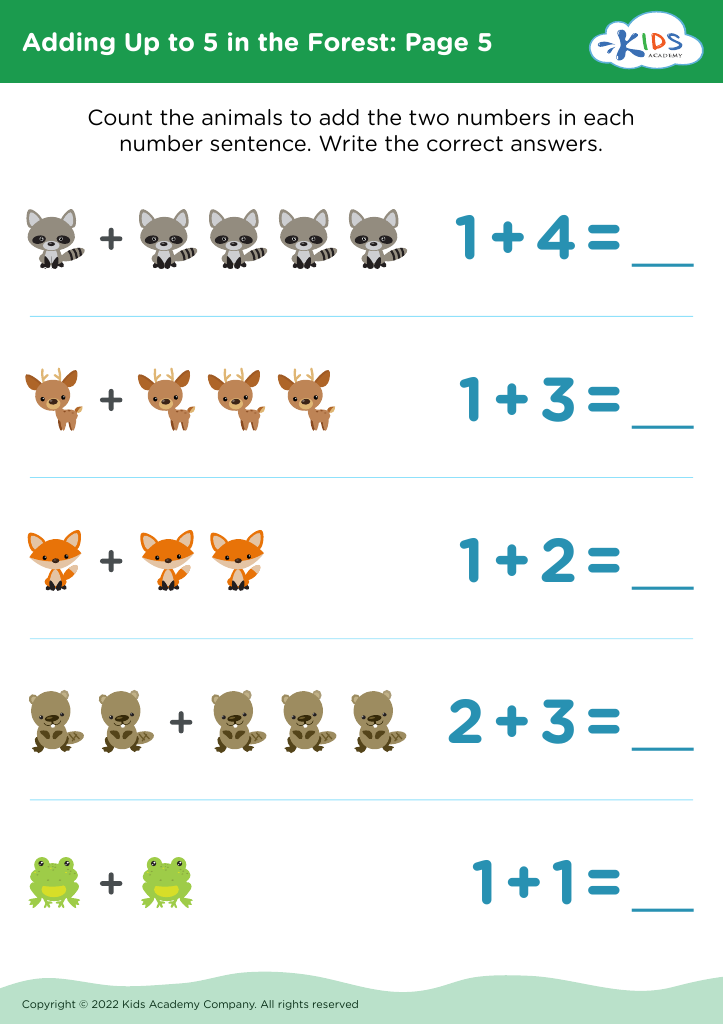
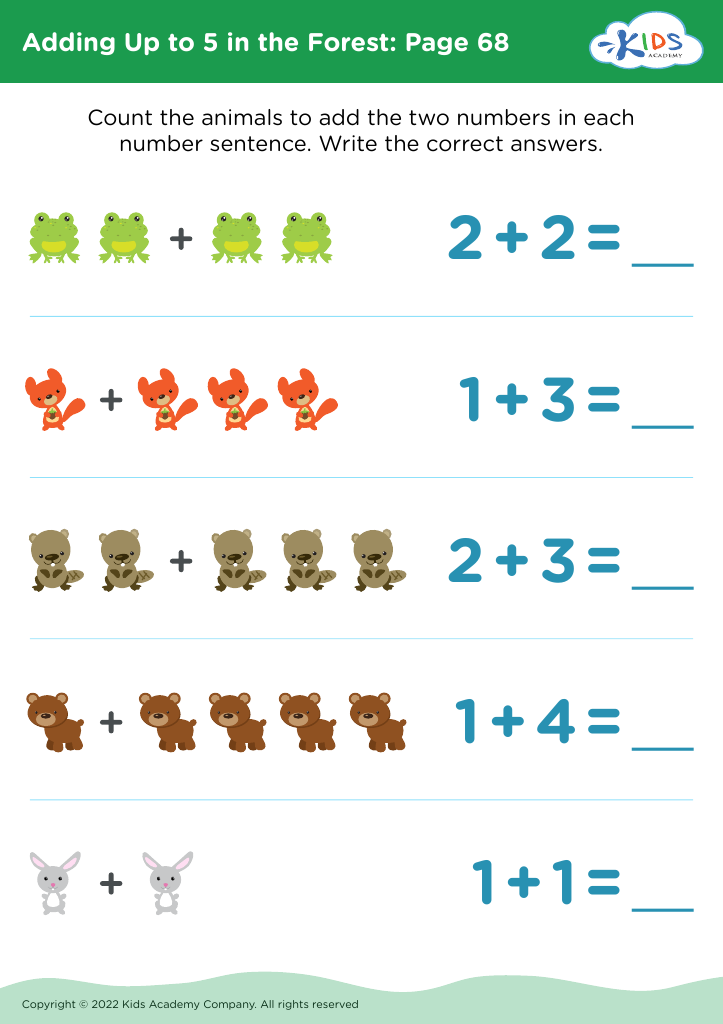
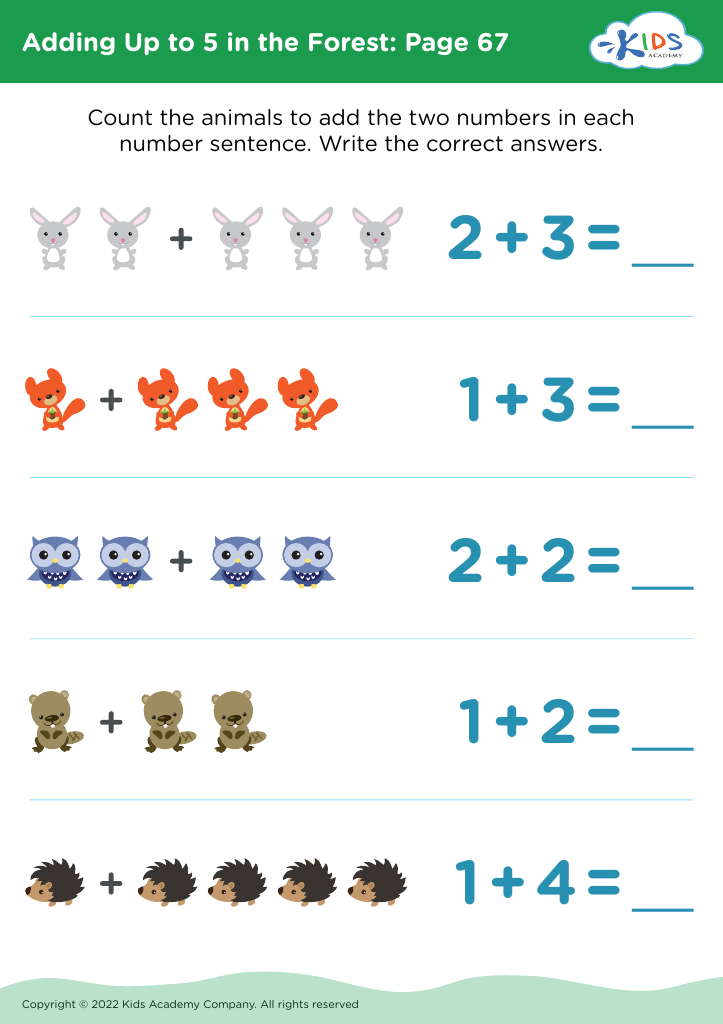
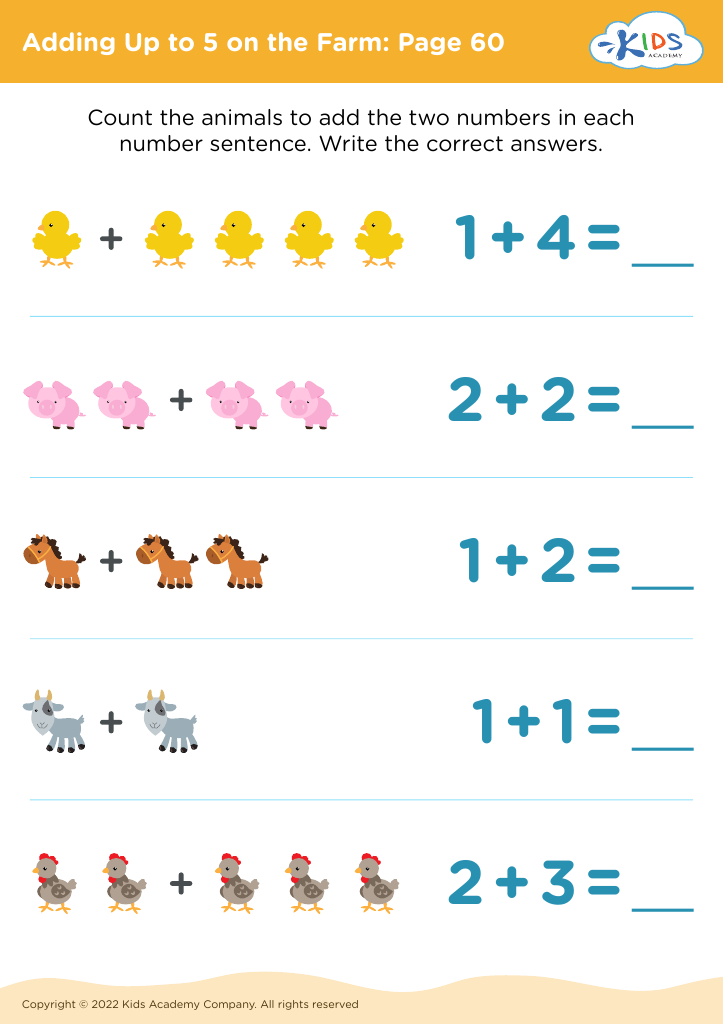
Understanding quantities that add up to 5 is essential for young learners as it forms a foundational concept for their mathematical development. For children aged 5-6, grasping the idea of small numbers and how they can combine to create larger totals encourages critical thinking and problem-solving skills. When parents and teachers emphasize this concept, they help children develop an intuitive number sense, paving the way for future mathematical tasks.
Mastering these early arithmetic skills supports children's confidence in handling numbers, promoting a positive attitude towards math in the long run. Through activities that focus on combining different quantities to make 5, children also enhance their ability to recognize patterns and relationships between numbers.
Moreover, understanding these basic combinations fosters cognitive development and enhances proficiency in other subjects, such as science and economics, where mathematical reasoning is often required. By nurturing these early skills, parents and teachers play a vital role in laying the groundwork for success in more complex mathematical concepts, ensuring that children develop the competence needed to tackle future challenges. Cultivating a strong mathematical foundation from an early age not only benefits academic achievement but also prepares children for real-life problem-solving situations.








