Underwater animal identification Adding Up to 5 Worksheets for Ages 5-6
3 filtered results
-
From - To
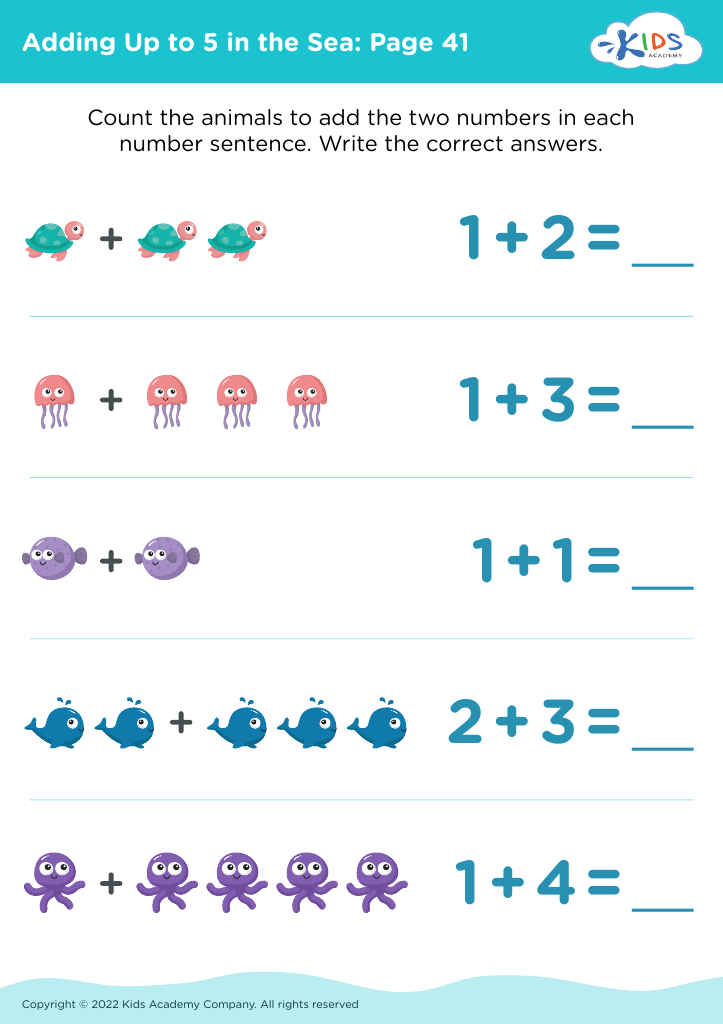
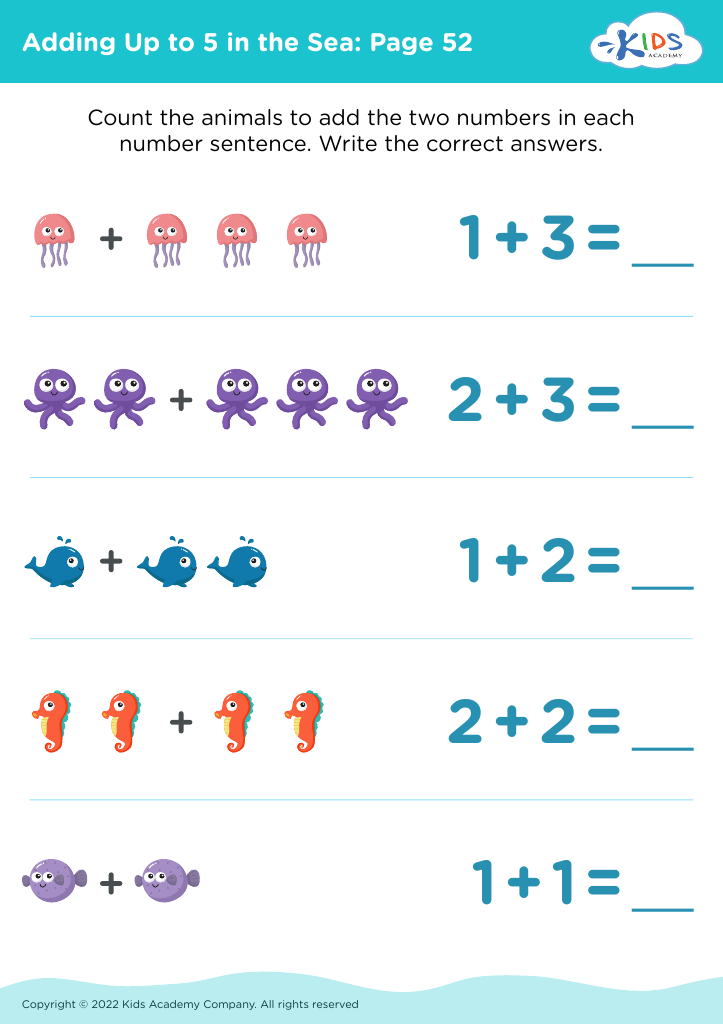
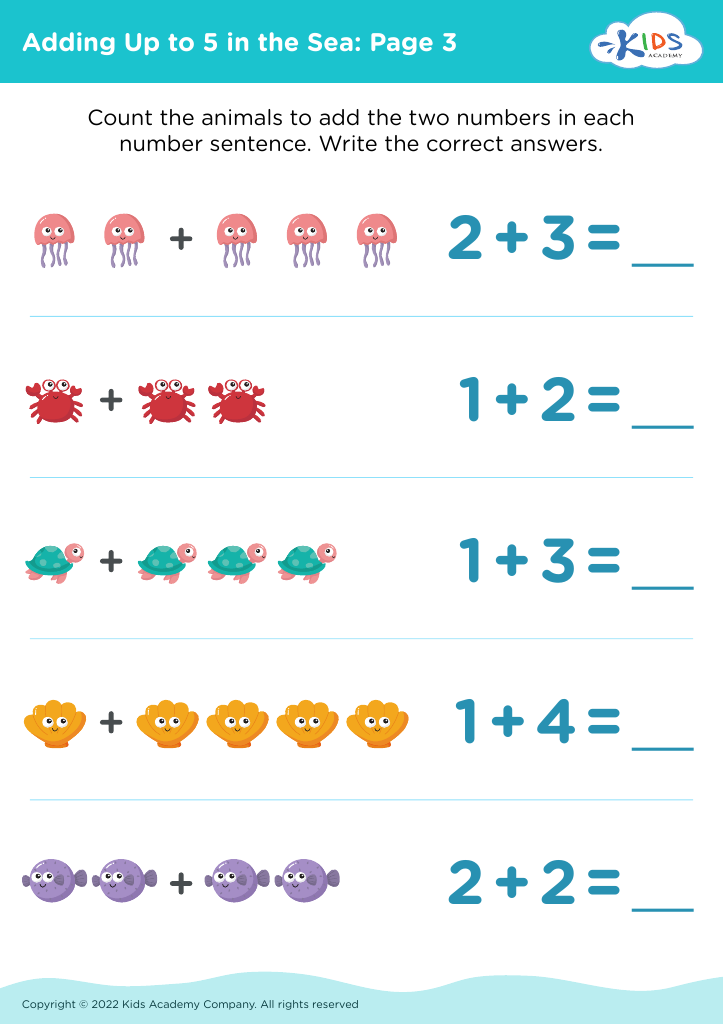
Dive into fun with our "Underwater Animal Identification: Adding Up to 5 Worksheets" designed for children ages 5-6! These engaging worksheets combine the excitement of underwater exploration with essential math skills as young learners identify various marine animals while practicing simple addition. Each worksheet features vibrant images and interactive questions that promote recognition and counting, helping children develop confidence in their math abilities. Perfect for home or classroom use, these resources make learning enjoyable and effective. Encourage your little ones to make waves in their education while discovering the fascinating world beneath the sea! Download and explore essential math skills today!





%20(1).jpg)


Parents and teachers should care about underwater animal identification for young learners aged 5-6 as it fosters curiosity and builds foundational skills in science and mathematics. Understanding marine life can spark children's interest in environmental stewardship and biodiversity, encouraging them to care for our oceans and ecosystems.
By incorporating activities related to underwater animal identification, children enhance their observation skills and learn to categorize and differentiate various species. This encourages critical thinking as they discover the roles different animals play within their habitats.
Integrating this knowledge with early math concepts, such as "Adding Up to 5," creates an engaging and interactive learning environment. For example, counting and adding the number of sea turtles or colorful fish provides a contextual way to practice basic arithmetic. This hands-on approach consolidates mathematical concepts while promoting memory retention.
Moreover, such learning experiences can cultivate teamwork and communication skills when children collaborate on projects or share discoveries. Ultimately, nurturing an awareness of underwater life not only enriches early education but also instills a lasting appreciation for the planet and the importance of every living thing within it. This holistic approach supports a love for learning that extends beyond the classroom.








