Visual Perception Skills Adding Up to 5 Worksheets for Ages 5-6
4 filtered results
-
From - To
Enhance your child's visual perception skills with our engaging "Adding Up to 5 Worksheets" designed for ages 5-6. These worksheets not only focus on basic addition concepts but also foster essential visual skills needed for math comprehension. Young learners will explore number recognition, counting, and simple addition through colorful visuals and interactive activities. By completing these worksheets, children will sharpen their ability to identify and process visual information, ensuring a solid foundation for future mathematical learning. Perfect for home or classroom use, these resources make learning fun and interactive while supporting cognitive development in young minds! Download and start your journey today!
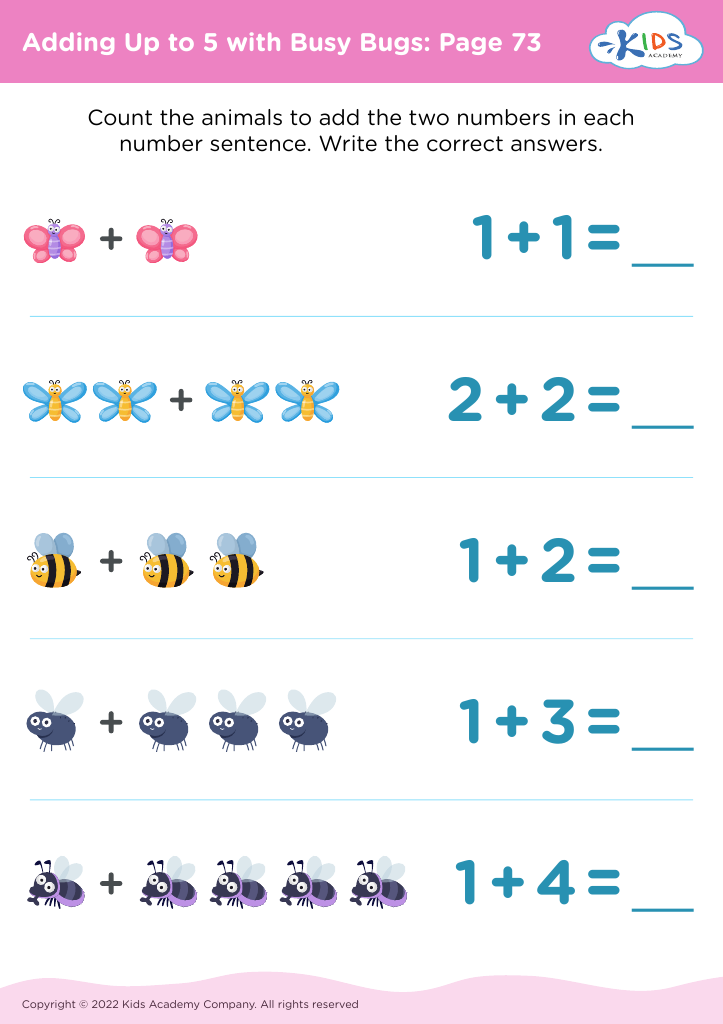
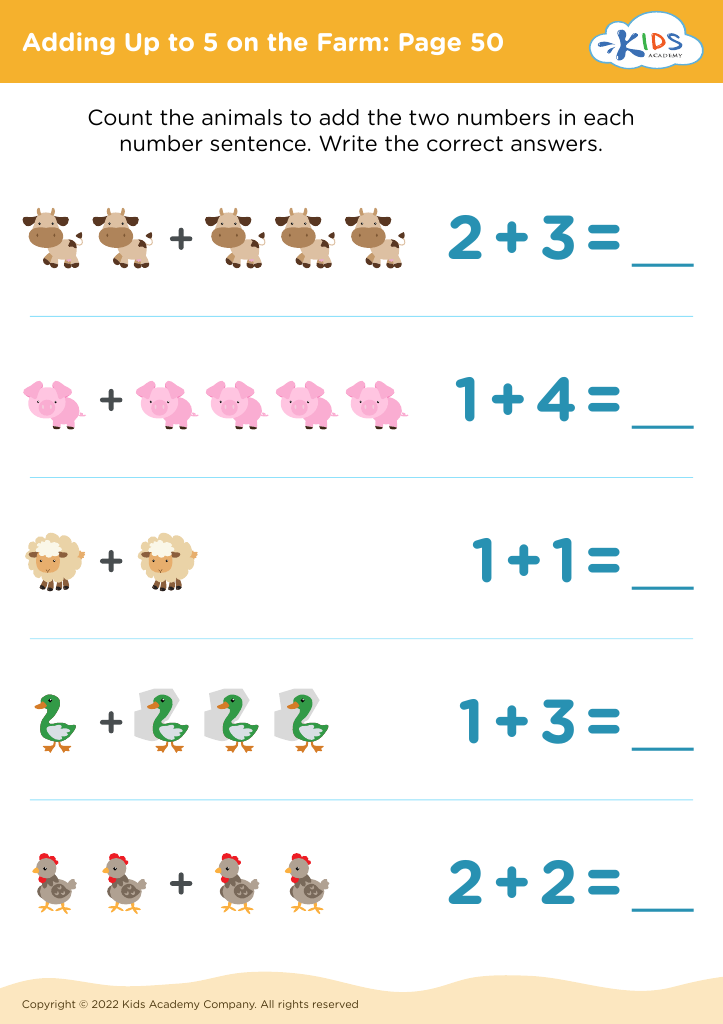
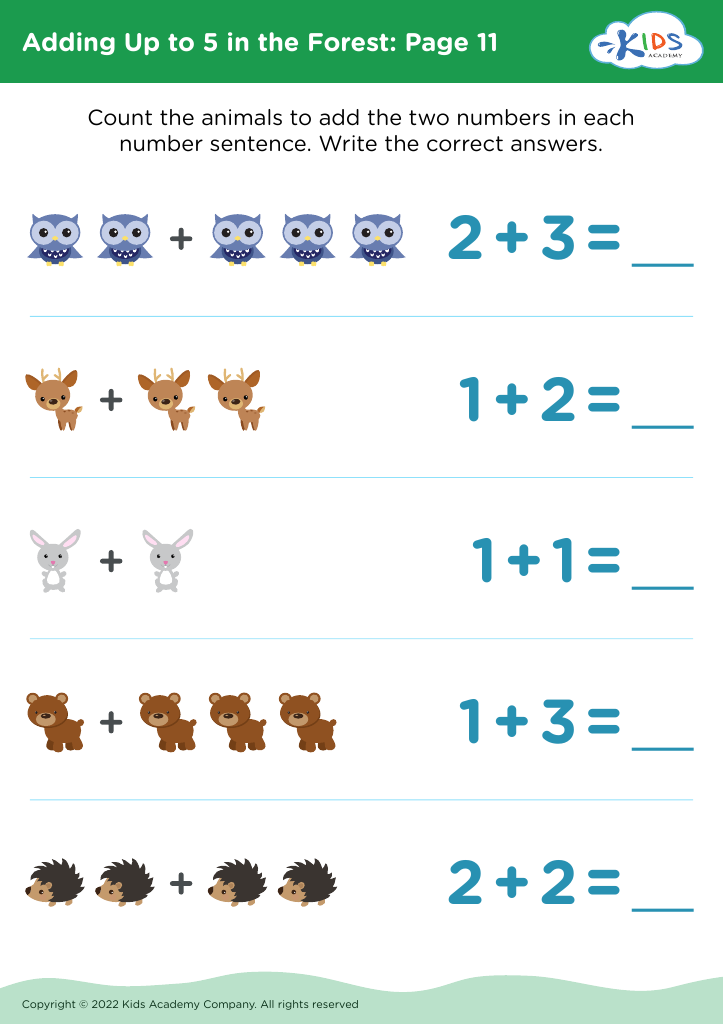
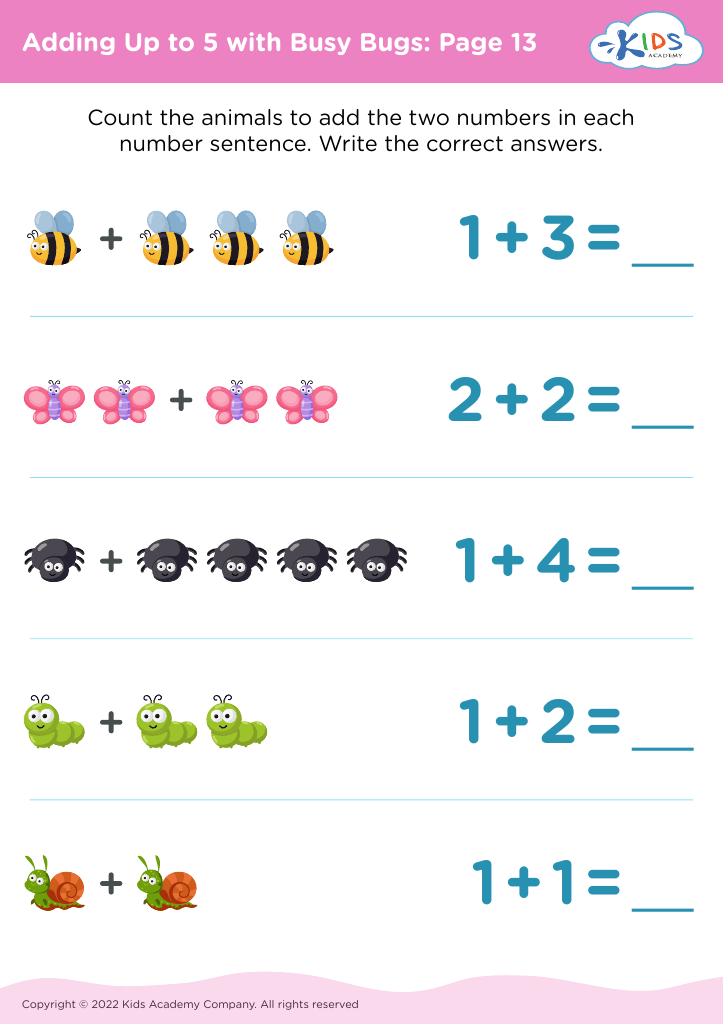








Visual perception skills are essential for children ages 5-6 as they form the foundation for a wide array of learning experiences. At this age, children are rapidly developing their cognitive abilities, and strong visual perception skills directly influence their understanding of numbers and basic mathematics, particularly concepts like adding up to 5.
Firstly, visual perception helps children recognize and differentiate numbers and visual patterns, which is foundational for arithmetic. When children can visually identify groups of objects, they can more easily grasp the concept of addition, setting them up for success in more complex mathematical operations later on.
Moreover, visual perception aids in problem-solving. By allowing children to visualize relationships between numbers and objects, they become more adept at devising strategies for addition, enhancing their overall mathematical confidence.
In addition to academics, strong visual perception skills positively impact a child’s ability to follow directions, improve fine motor skills, and foster social interaction during group activities. For parents and teachers, fostering these skills is crucial, not just for nurturing upcoming mathematicians, but also for promoting holistic development that encompasses spatial awareness, critical thinking, and operational competence in everyday life. By prioritizing visual perception, educators and parents invest in a child’s comprehensive growth and future academic success.








