Basic math concepts Adding with Busy Bugs Worksheets for Ages 5-6
6 filtered results
-
From - To
Discover the joy of learning with "Adding with Busy Bugs Worksheets" for ages 5-6! Designed to engage young minds, these fun, printable worksheets introduce essential basic math concepts through captivating bug-themed activities. Children will enhance their addition skills by counting vibrant illustrations of friendly critters. Each worksheet is crafted to support early learners' development, promoting problem-solving and boosting confidence in math. With colorful visuals and interactive exercises, kids will enjoy their journey into the world of numbers. Help build a solid math foundation for your child with our delightful Busy Bugs Worksheets—perfect for homeschooling or supplemental practice at home!
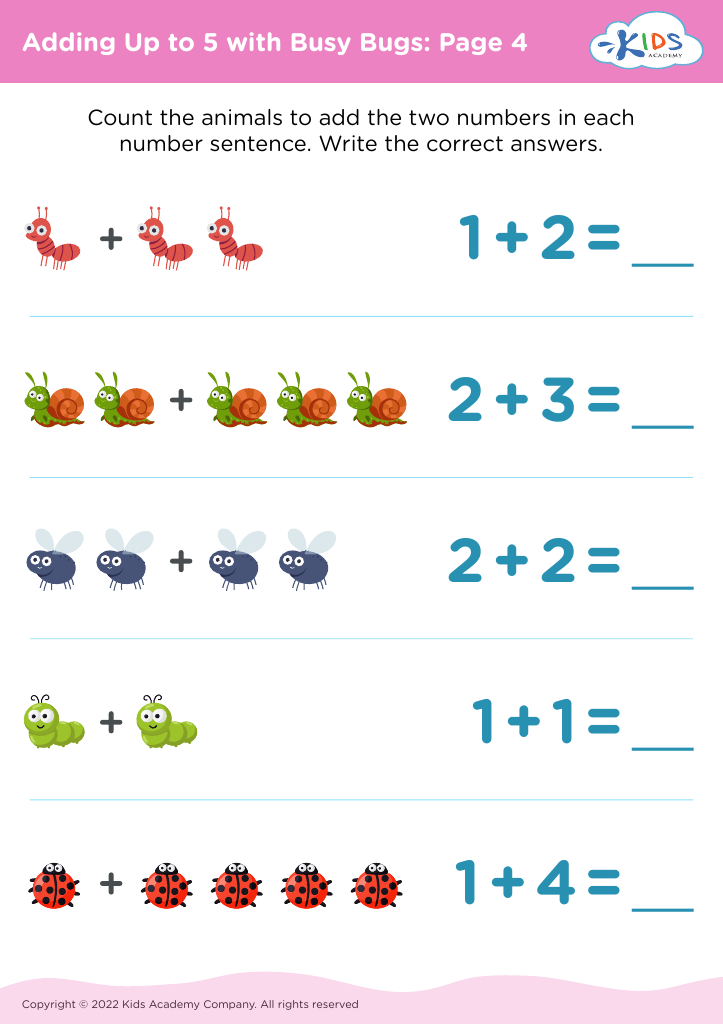
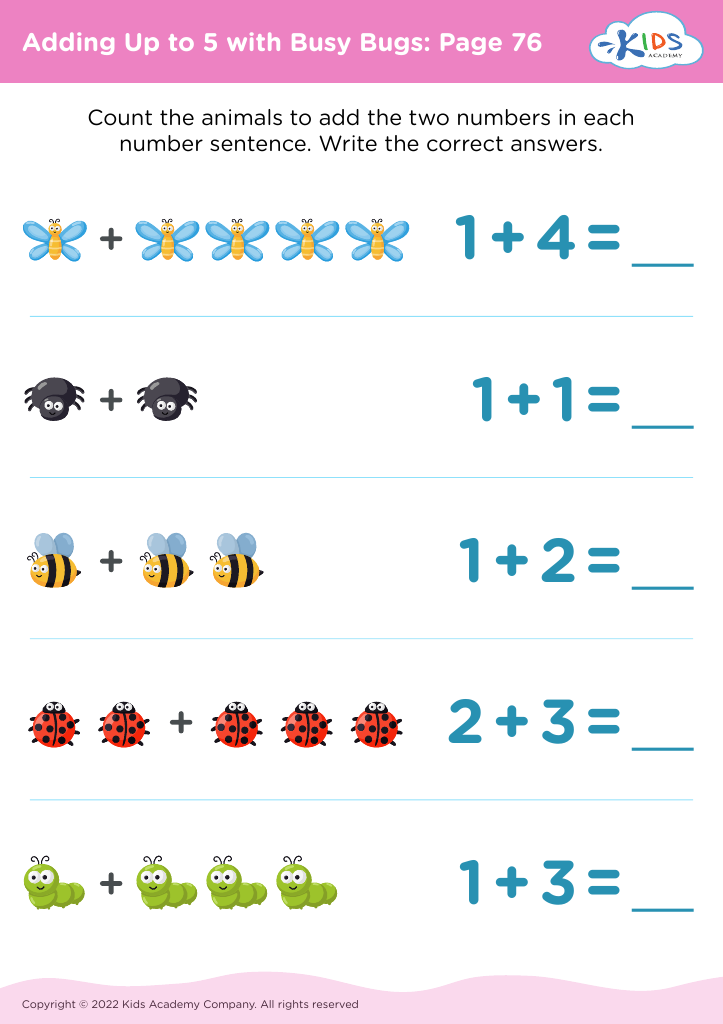
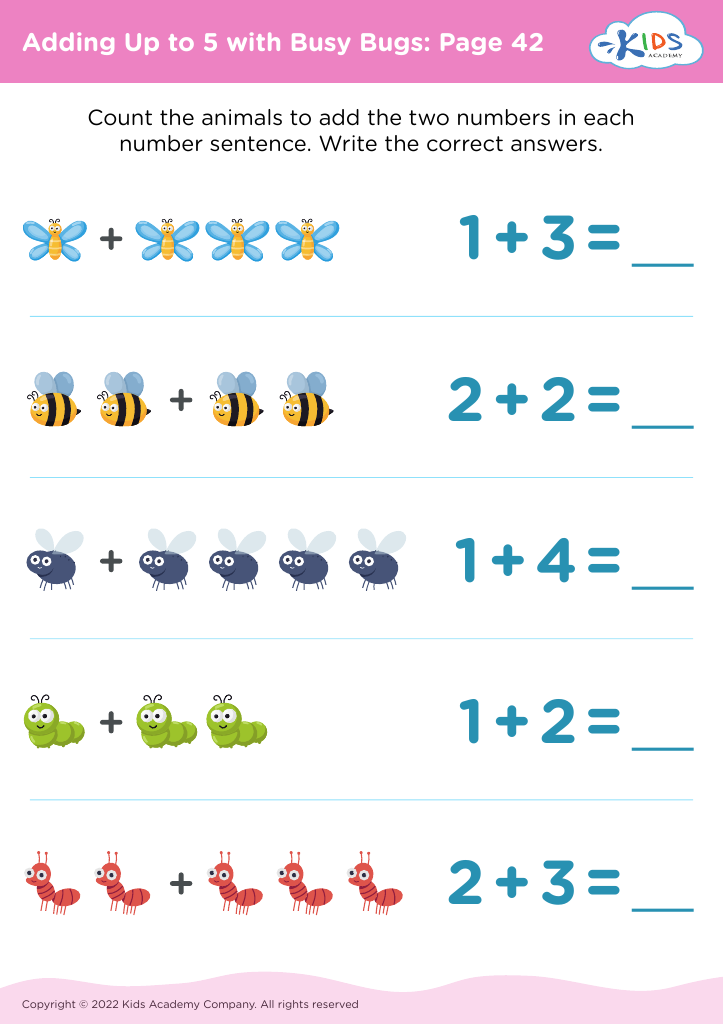
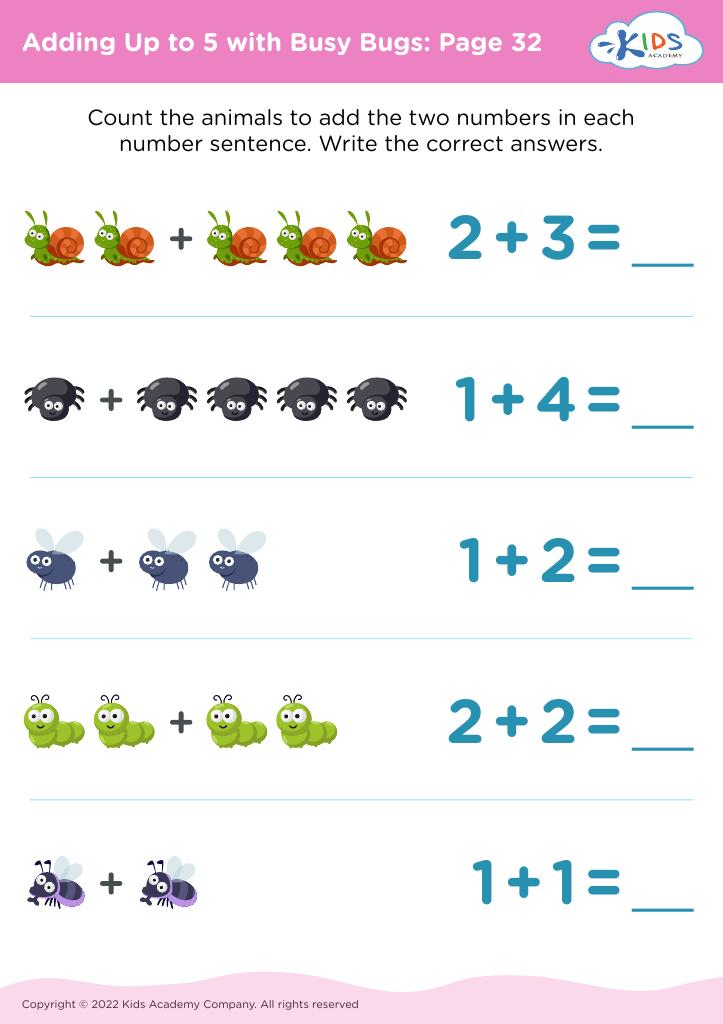
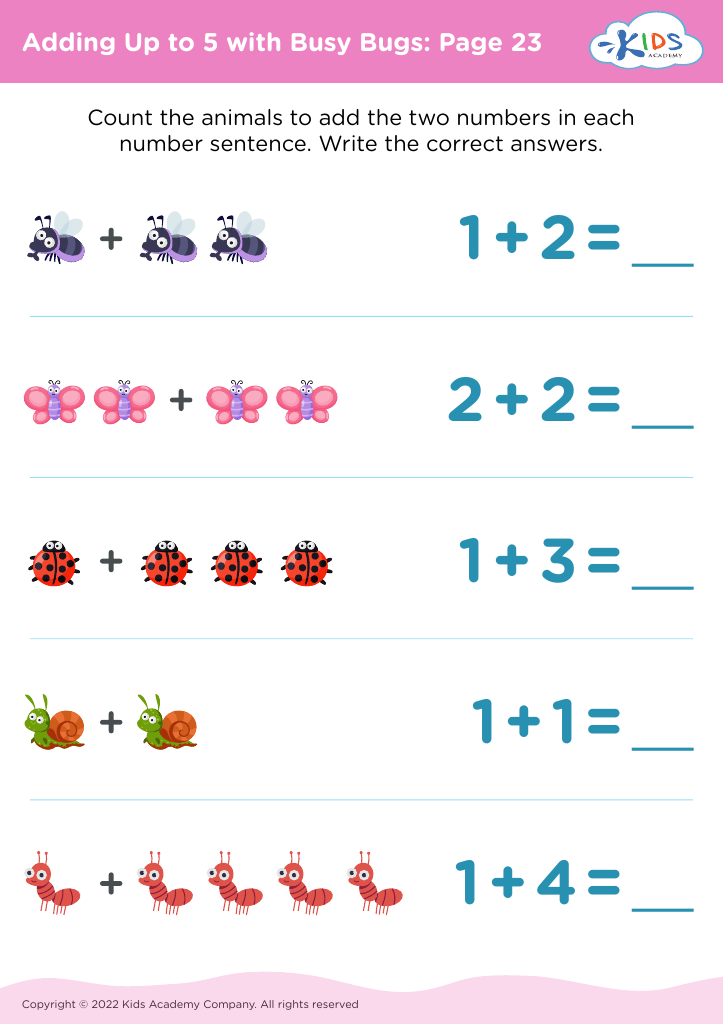
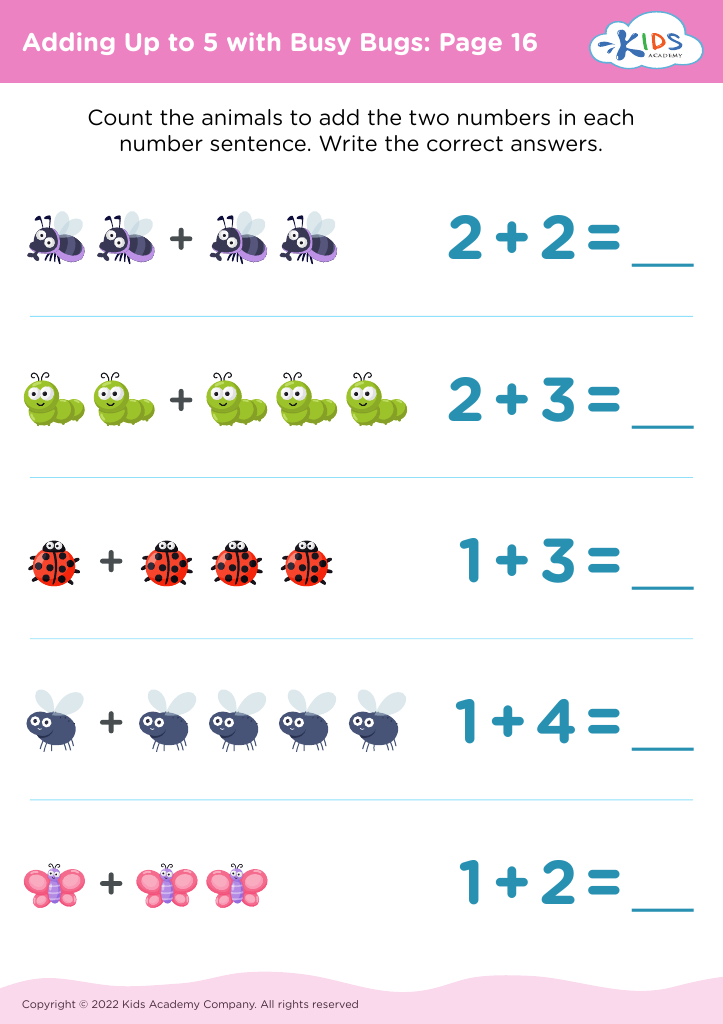



Parents and teachers should care about basic math concepts, such as adding with "Busy Bugs" for ages 5-6, because early math skills form the foundation for future academic success. Engaging activities like "Busy Bugs" make learning fun, inviting young learners to explore numbers through play. This approach nurtures a positive attitude towards math, reducing anxiety and building confidence as children grasp essential concepts.
Moreover, basic addition is a critical life skill; it enhances logical thinking and problem-solving abilities. By integrating visual aids like colorful bugs, kids can more easily relate math to real-world situations, promoting deeper understanding. Activities designed for this age group also help improve fine motor skills and cognitive development, contributing to overall growth.
Additionally, working on math with engaging tools fosters teamwork and collaboration among peers or family members, strengthening social bonds and communication skills. Ultimately, nurturing these basic concepts prepares children not just for academic challenges, but also for everyday situations, like counting, budgeting, or measuring, thereby enhancing their independence and competence in the world around them. By prioritizing enjoyable learning experiences such as "Busy Bugs," parents and educators can create a thriving environment for young learners to excel in math.