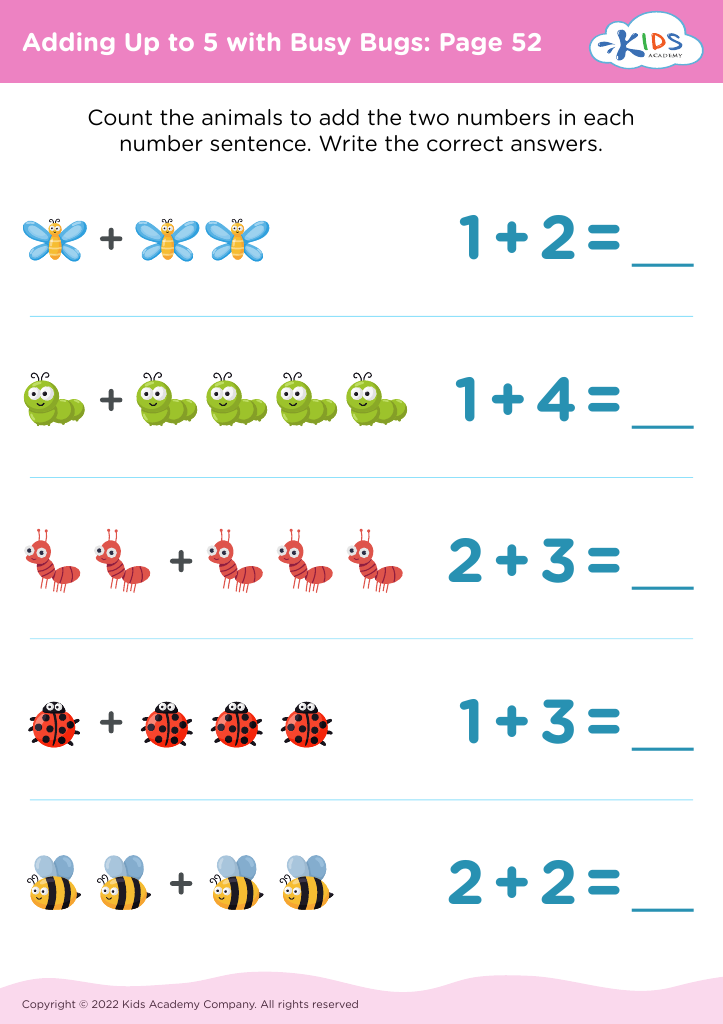



Counting practice, such as the "Adding with Busy Bugs" program designed for ages 5-6, is crucial for young learners as it lays the foundation for essential mathematical skills. Early childhood education focuses on developing number sense, and tools like Busy Bugs make learning engaging and interactive. This program taps into children's natural curiosity and playfulness, fostering a positive attitude towards math.
Parents and teachers should care about such programs because they promote not only counting skills but also critical thinking and problem-solving abilities. When children practice counting through hands-on activities like Busy Bugs, they use visual and tactile methods that enhance retention and understanding. Engaging games help maintain focus and enthusiasm, making math less intimidating for young learners.
In addition, early counting skills support future academic success. Mastery of basic addition sets the stage for more complex concepts in later grades, ensuring students are well-prepared for their educational journey. Moreover, involving parents in their child’s learning process strengthens the home-school connection, encouraging kids to value education. Ultimately, by prioritizing counting practice through playful avenues like Busy Bugs, we equip children with vital skills while making learning enjoyable and meaningful.