Fine motor skills (writing) Addition & Subtraction Worksheets for Ages 5-6 - Page 2
34 filtered results
-
From - To
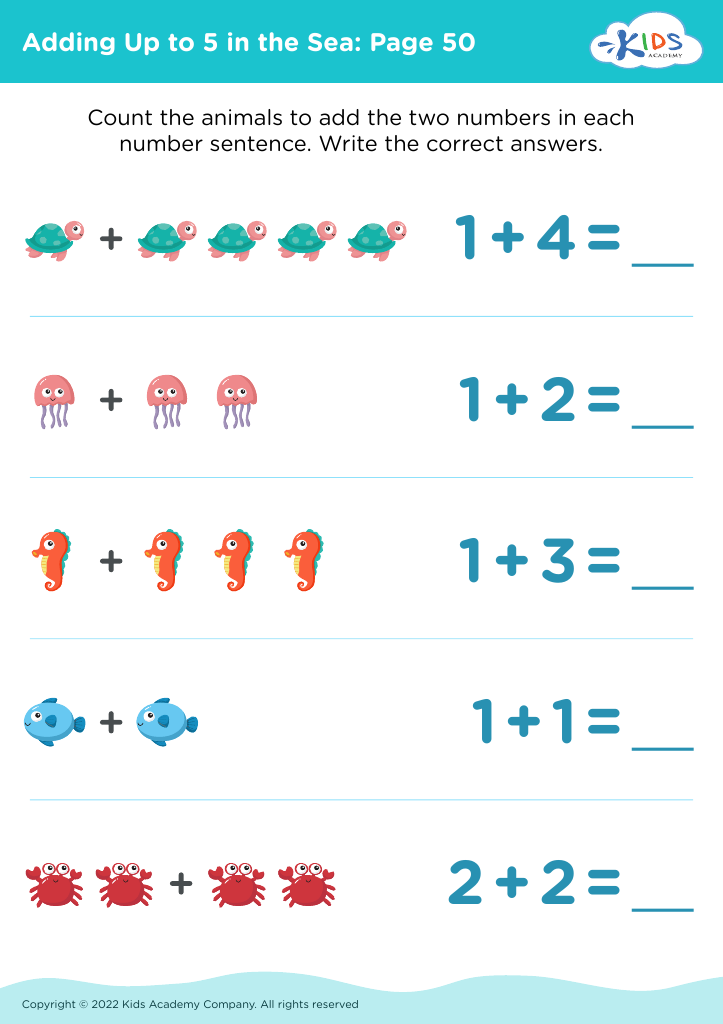
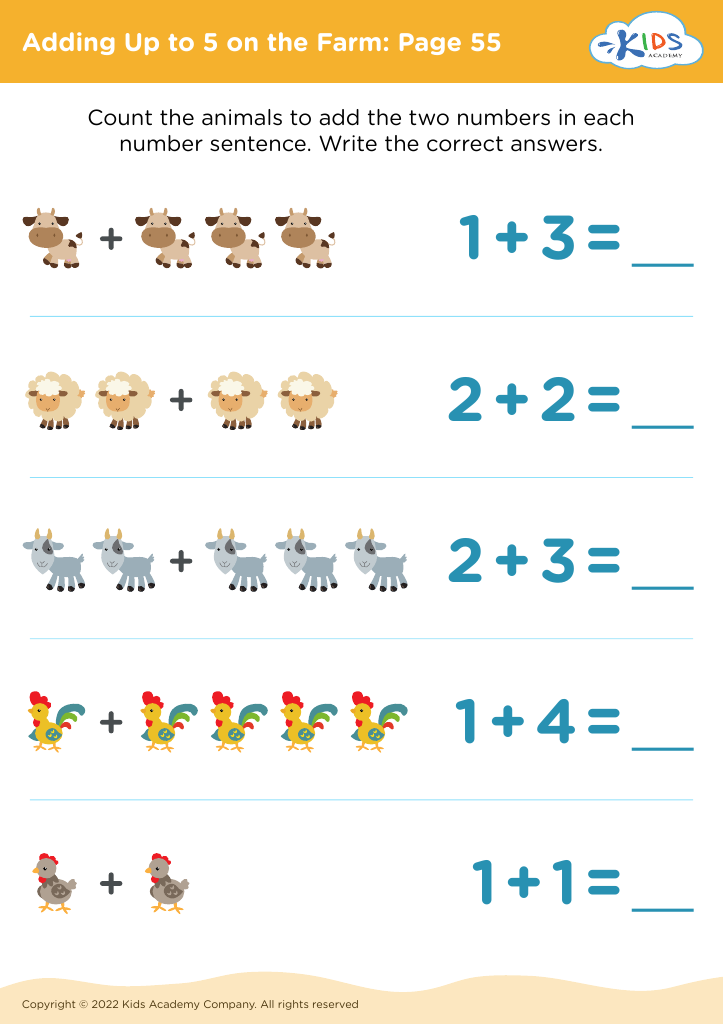
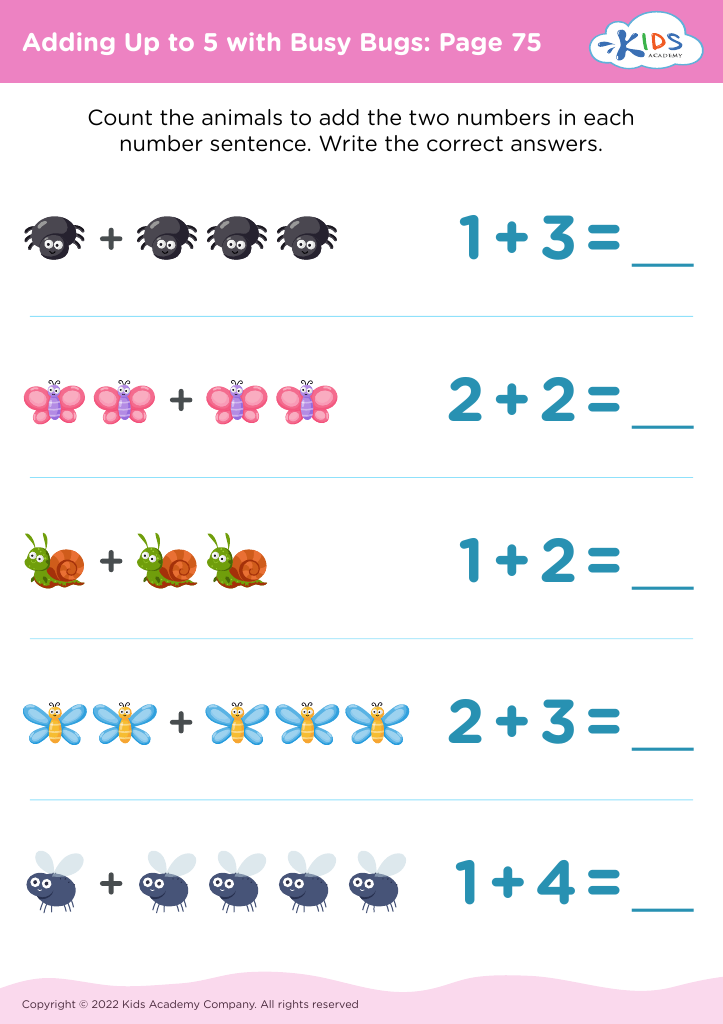
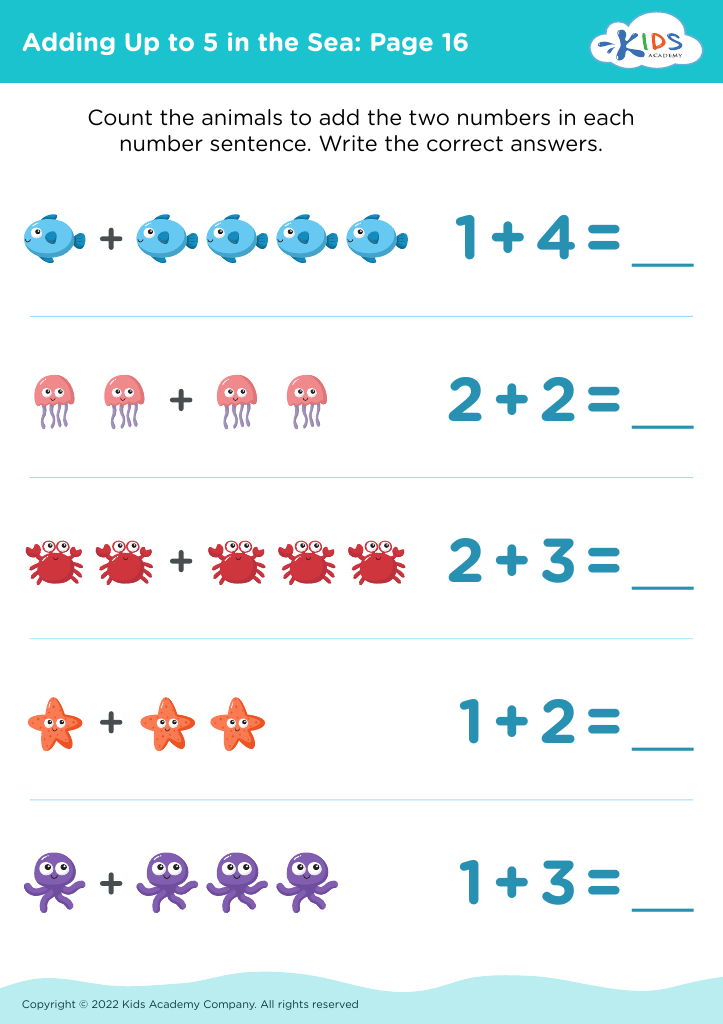
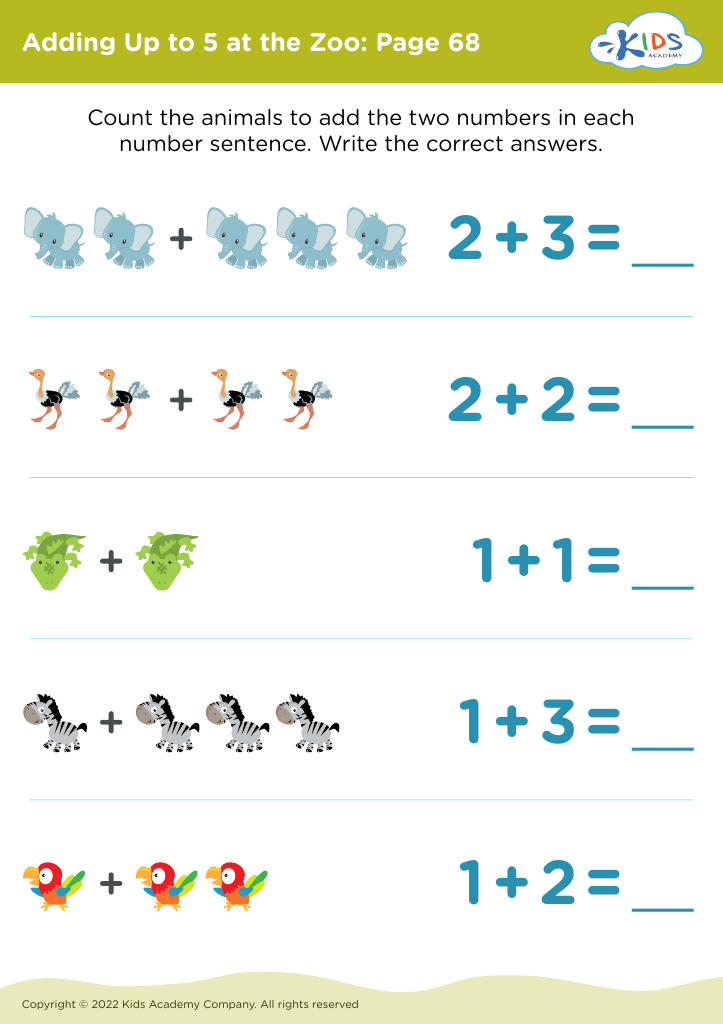
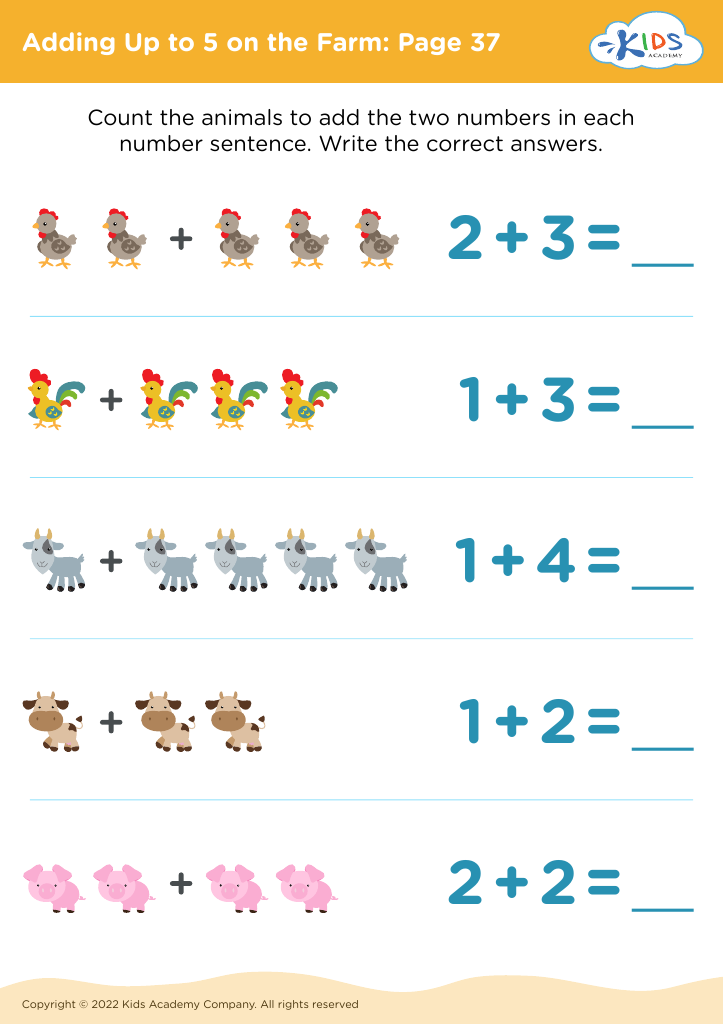
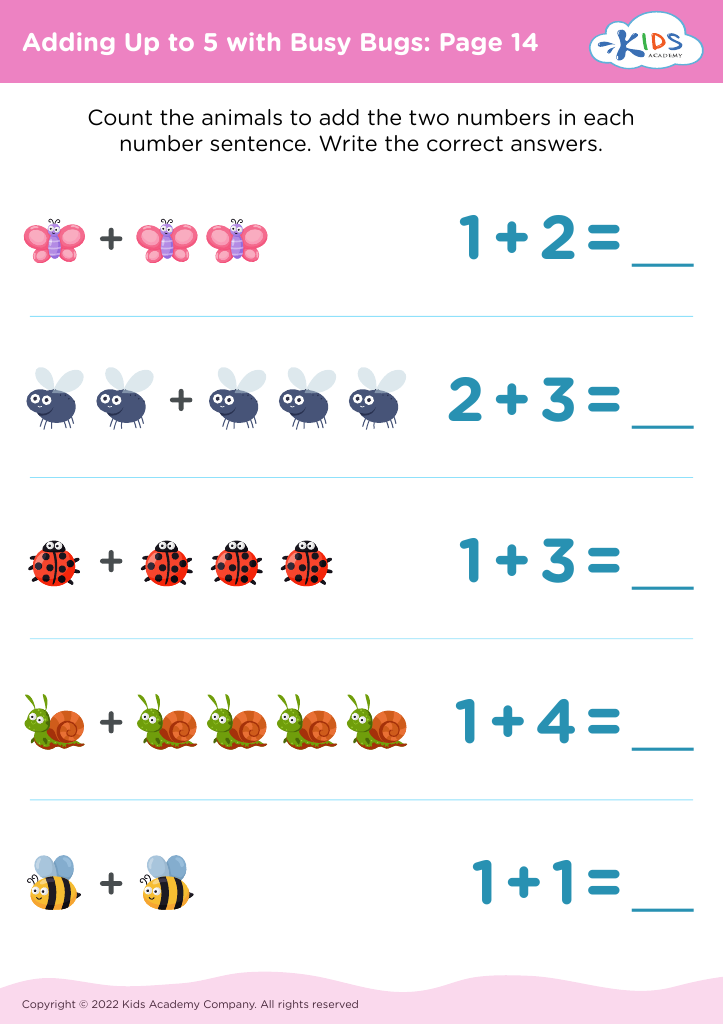
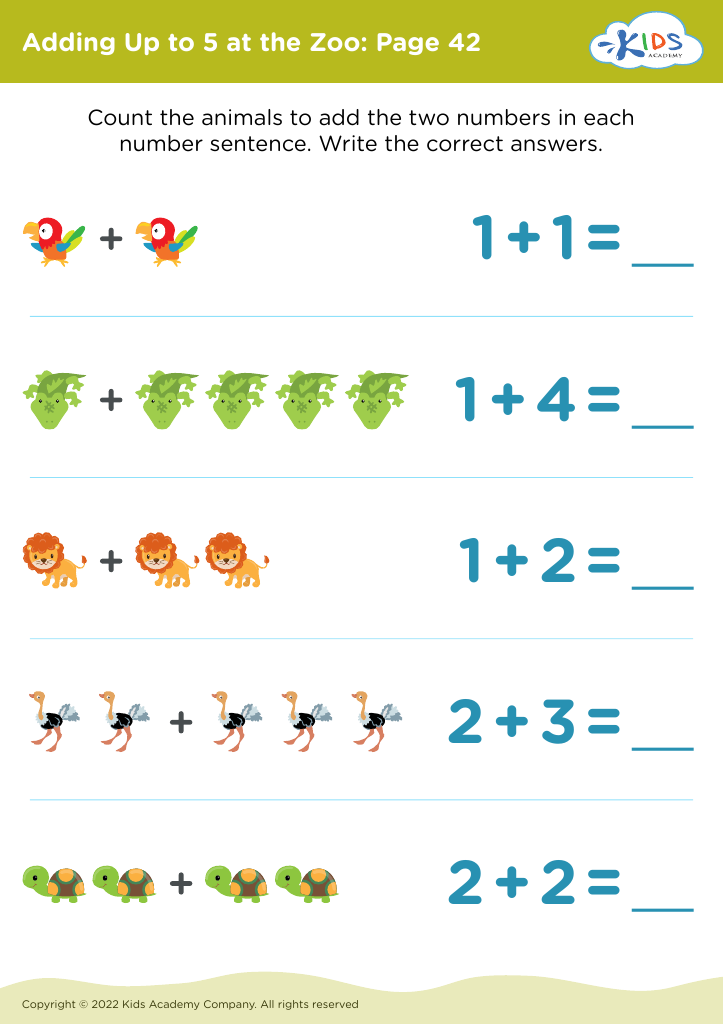
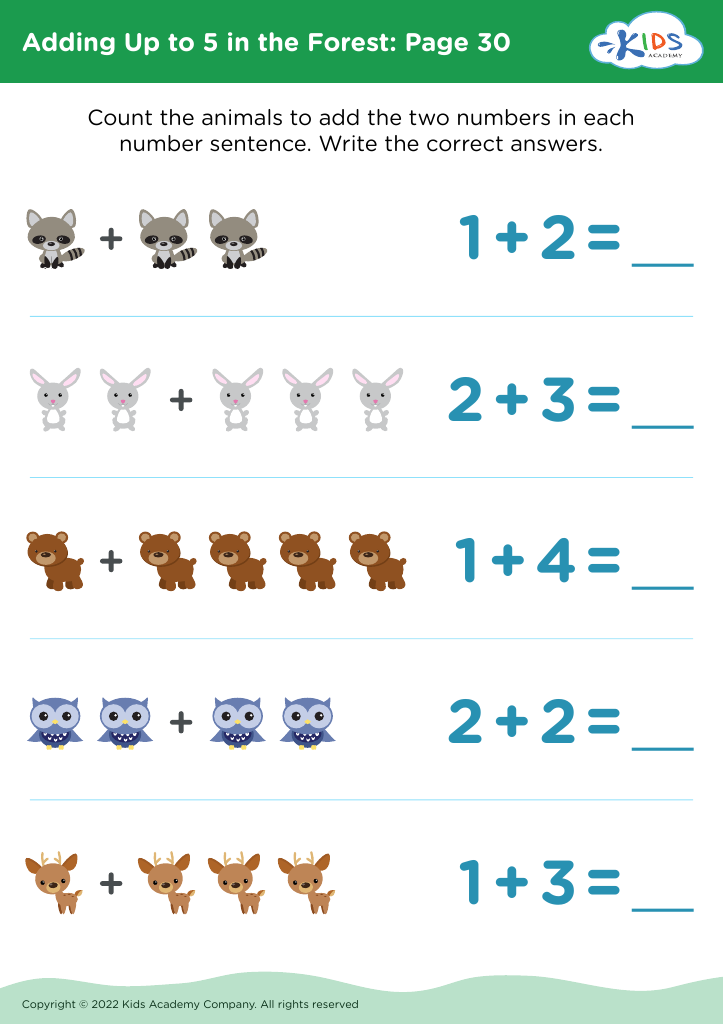
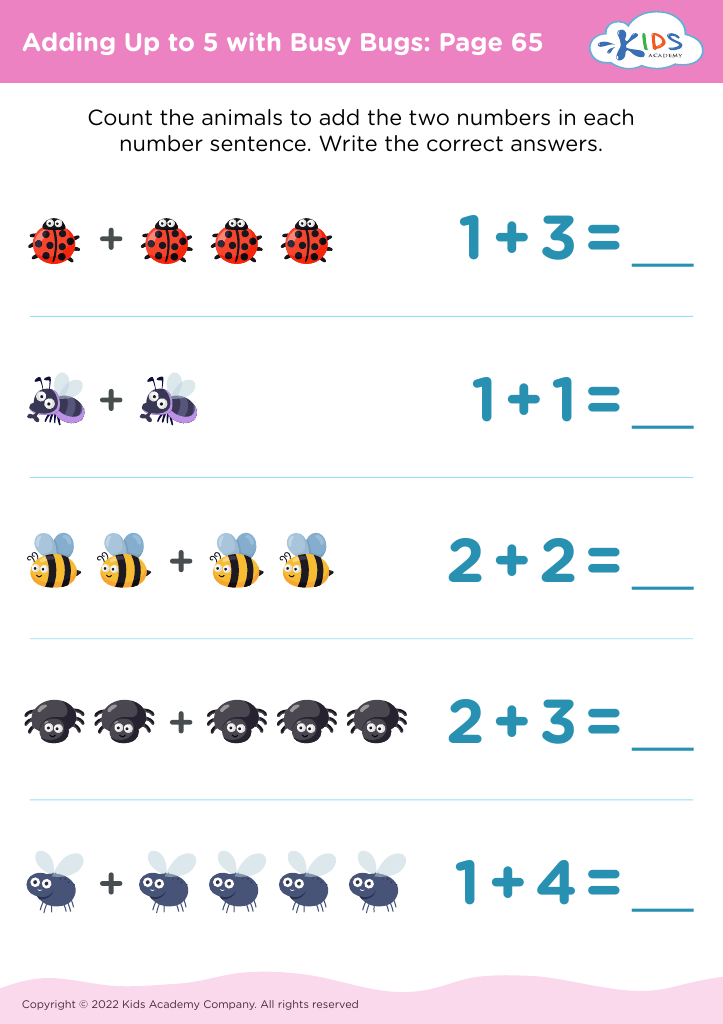








Fine motor skills, especially in writing, are crucial for children aged 5-6 as they are foundational to their academic development and everyday tasks. Strong fine motor skills enable children to hold a pencil correctly, control its movement, and form letters and numbers with accuracy. This proficiency not only aids in writing but also supports tasks such as cutting with scissors, manipulating small objects, and buttoning clothes.
In addition to fine motor skills, early arithmetic abilities like addition and subtraction are critical for building a strong mathematical foundation. At this age, children start to understand number concepts, patterns, and relationships. Engaging in hands-on activities that incorporate fine motor skills while practicing basic math helps children develop critical thinking and problem-solving abilities.
Both writing and math contribute significantly to cognitive development, enhance self-esteem, and prepare children for future academic challenges. When parents and teachers prioritize these skills, they foster a more enjoyable learning environment where children can explore, create, and enjoy engaging with their education. Consequently, the integration of fine motor development with math understanding equips children not only for learning but also for life skills, motivating them to approach challenges with confidence and competence.








