Number Recognition Addition & Subtraction Worksheets for Ages 5-6 - Page 19
442 filtered results
-
From - To
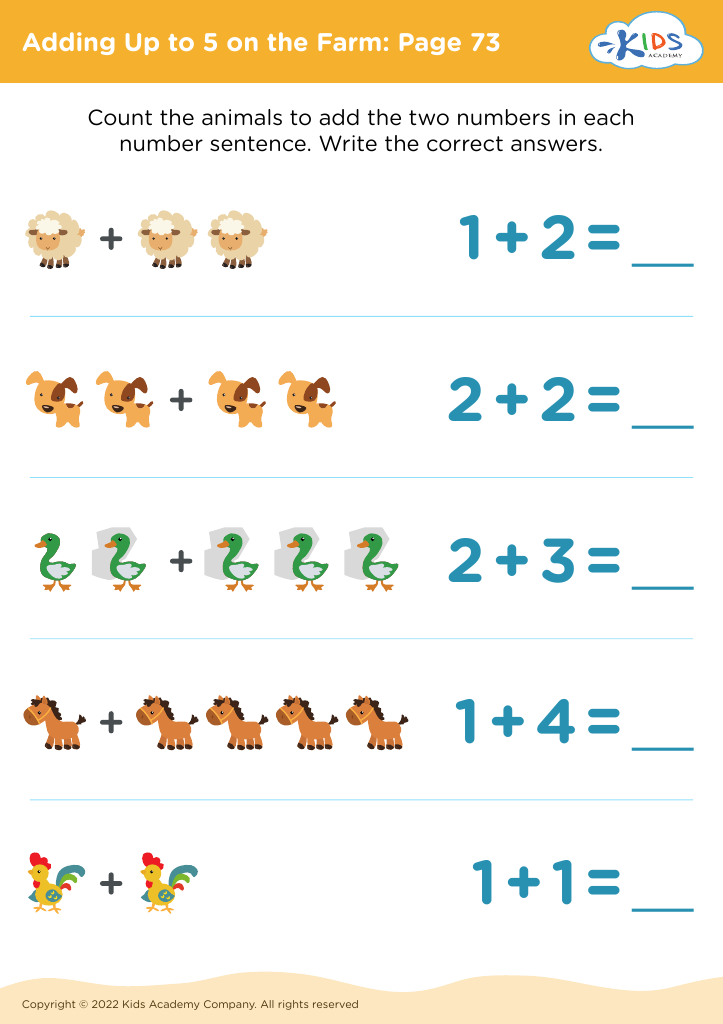
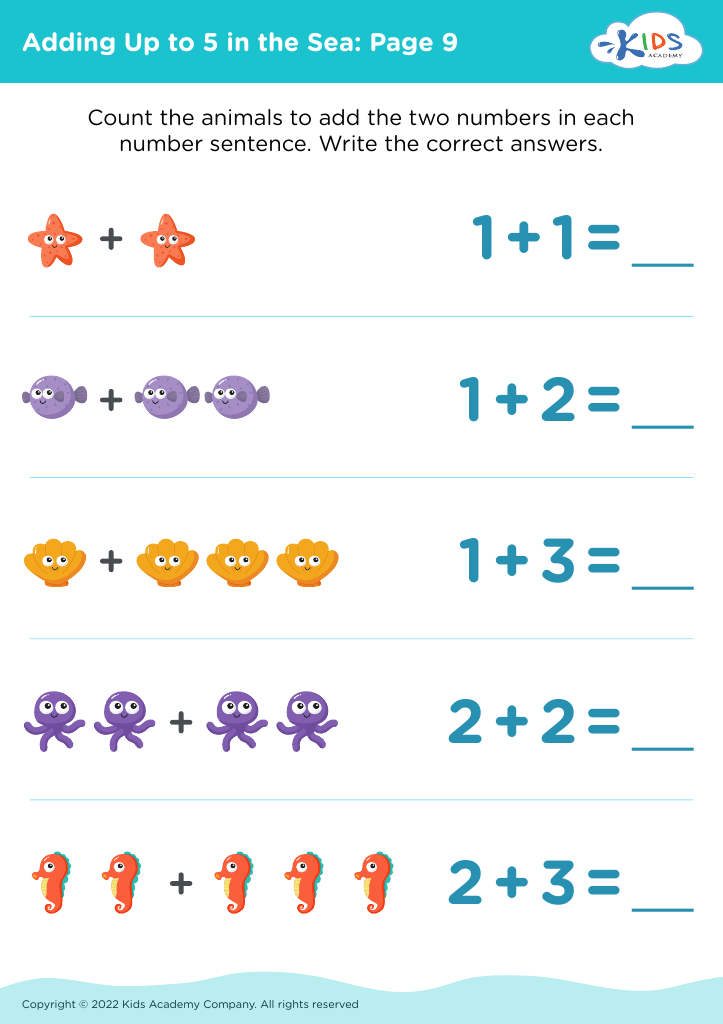
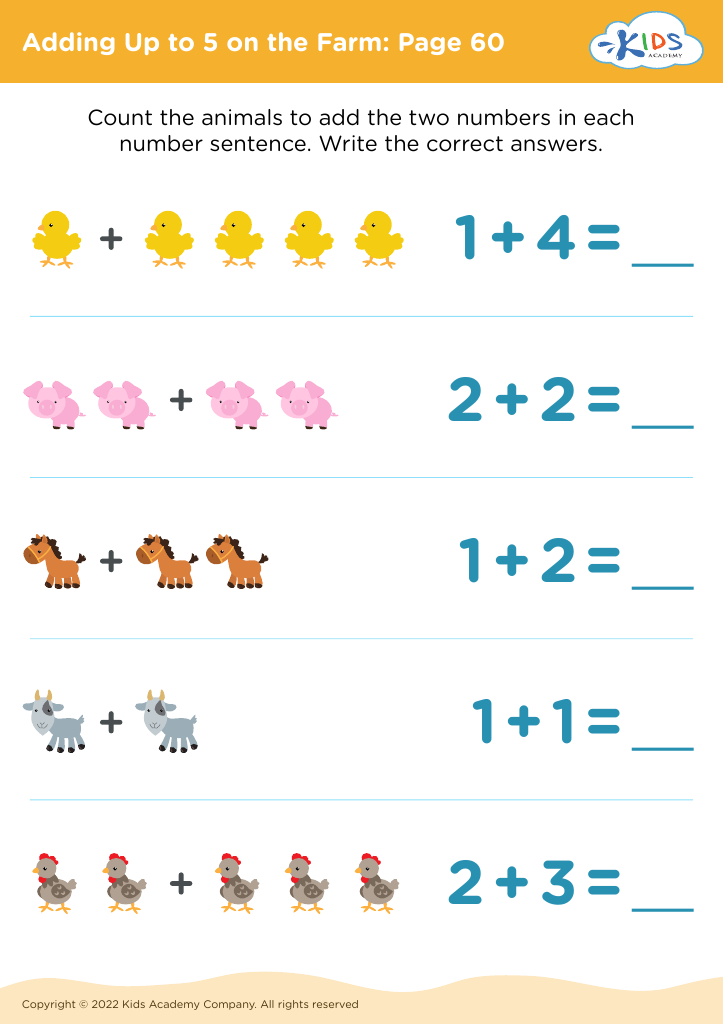
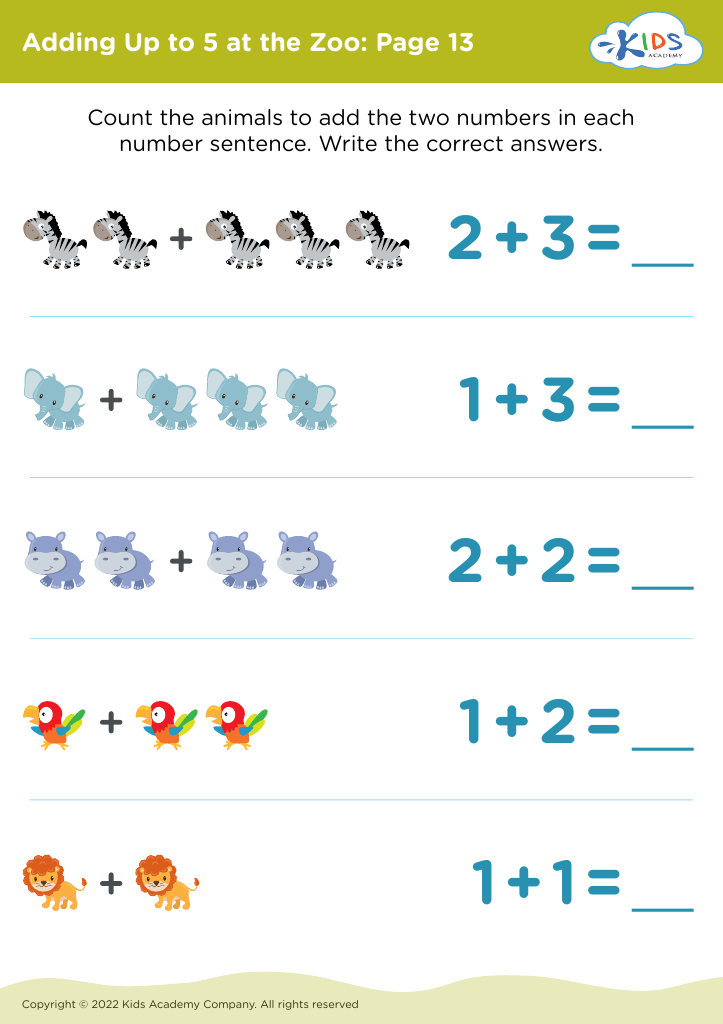
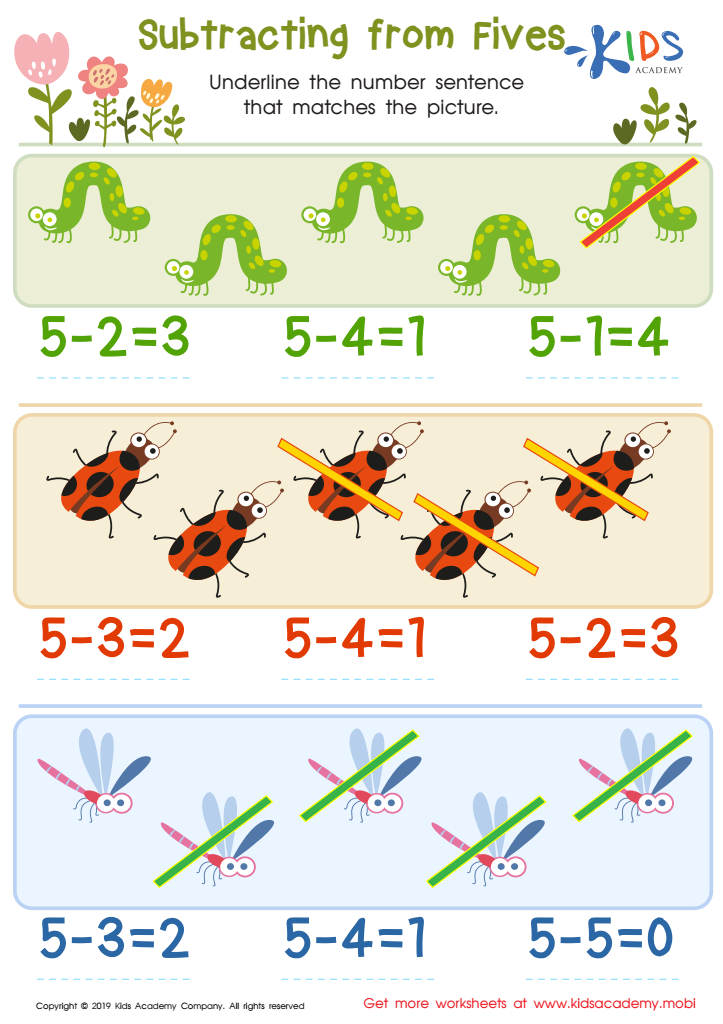
Subtracting From Fives Worksheet
 Assign to My Students
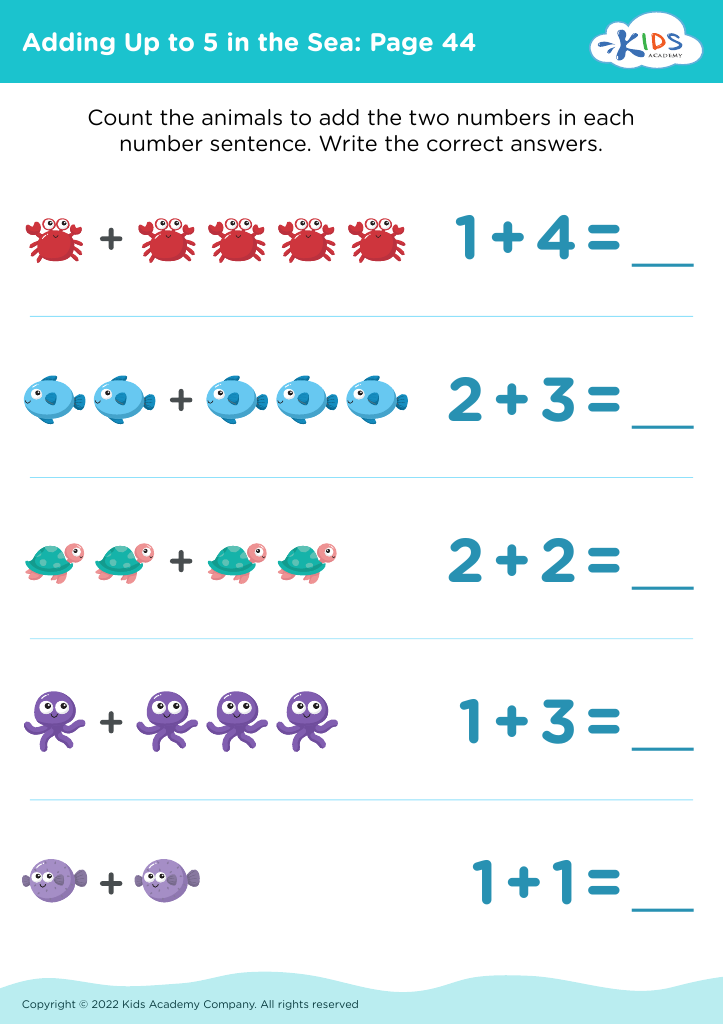
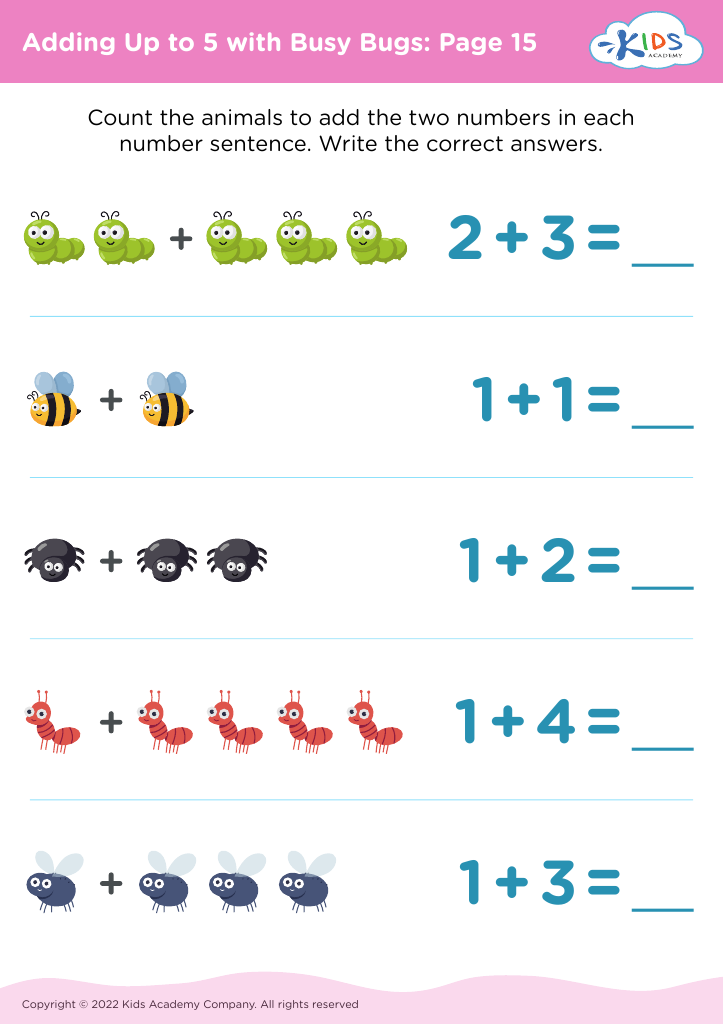








Number recognition, addition, and subtraction for children aged 5-6 provide the essential building blocks for math literacy and future academic success. During this critical developmental stage, understanding numbers and basic operations instills a solid foundation for more complex concepts they will encounter later.
Parents and teachers should emphasize number recognition because it helps children understand quantities, sequences, and the relationship between numbers. This becomes crucial in everyday situations, such as counting objects, which develops logical thinking and problem-solving skills.
Addition and subtraction are essential because they introduce the ideas of combining and separating, concepts that children intuitively experience in daily life. Mastering these operations helps enhance not only computational skills but also fosters an understanding of the world around them, promoting mental math and reasoning abilities.
Engagement in these activities also boosts concentration, fine motor skills, and encourages positive attitudes towards learning. Activities like counting games, story problems, and hands-on manipulatives make these concepts engaging and enjoyable for young learners.
By ensuring children are proficient in number recognition, addition, and subtraction, parents and teachers lay a crucial cornerstone that empowers children academically and fosters a lifelong appreciation for mathematics. It sets the stage for confident, capable learners prepared to tackle future challenges with enthusiasm and resilience.








