Understanding numerical values Addition & Subtraction Worksheets for Ages 5-6
4 filtered results
-
From - To
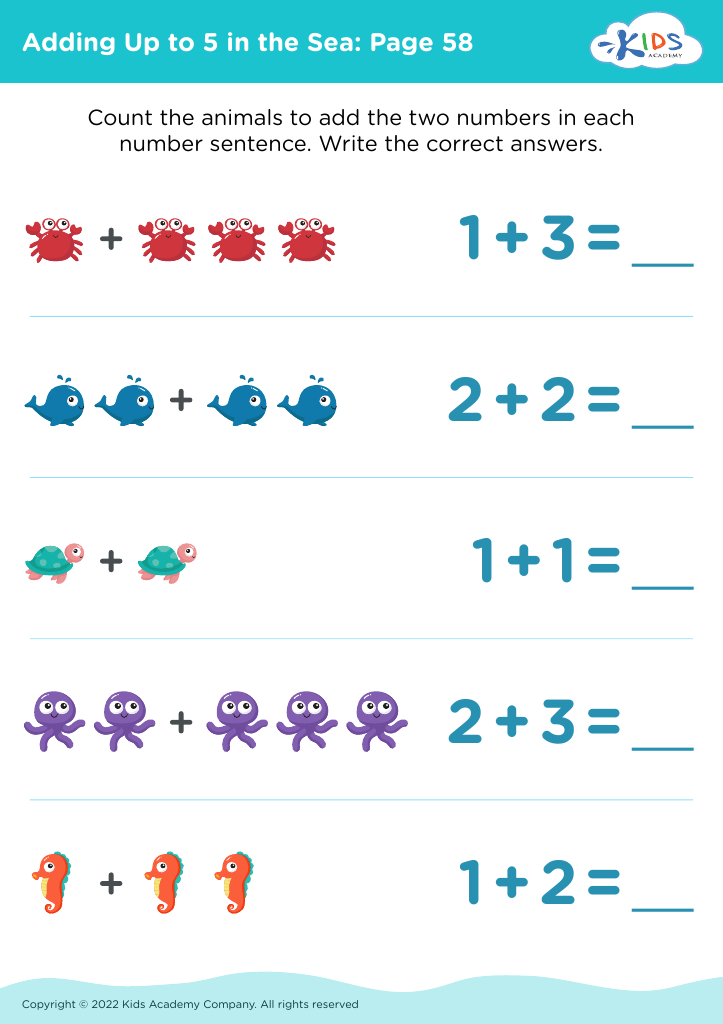
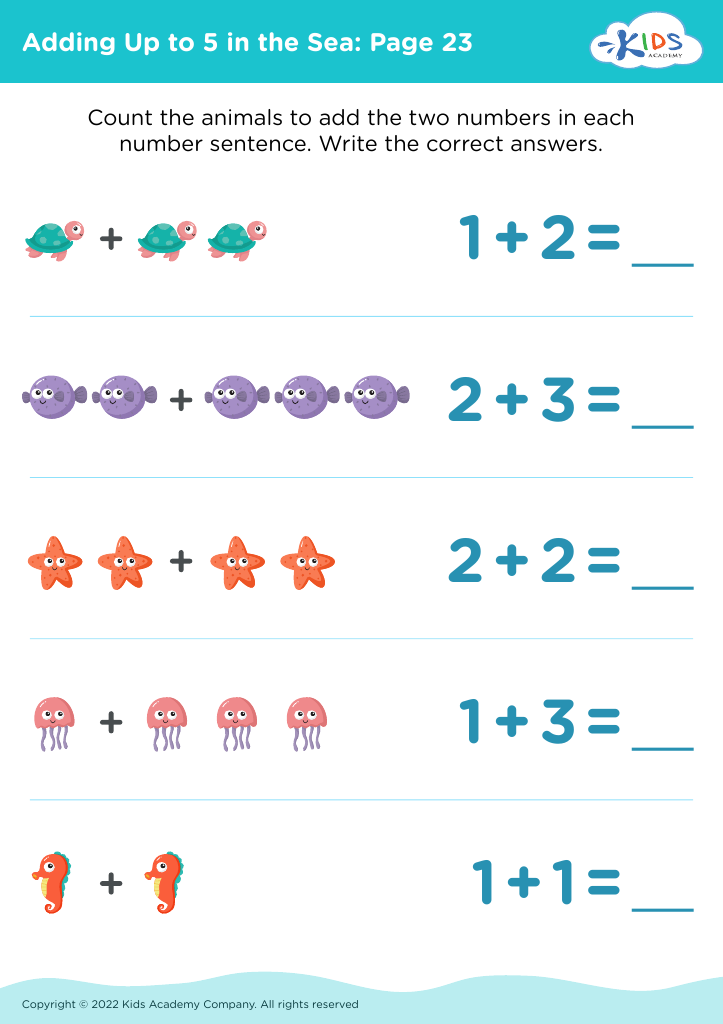
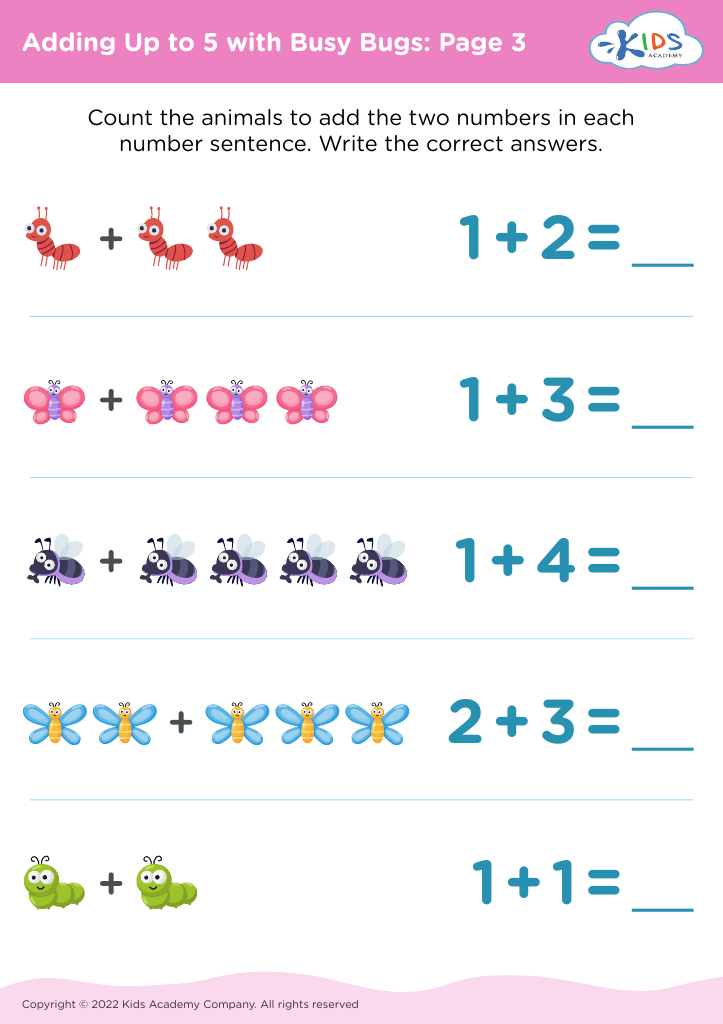
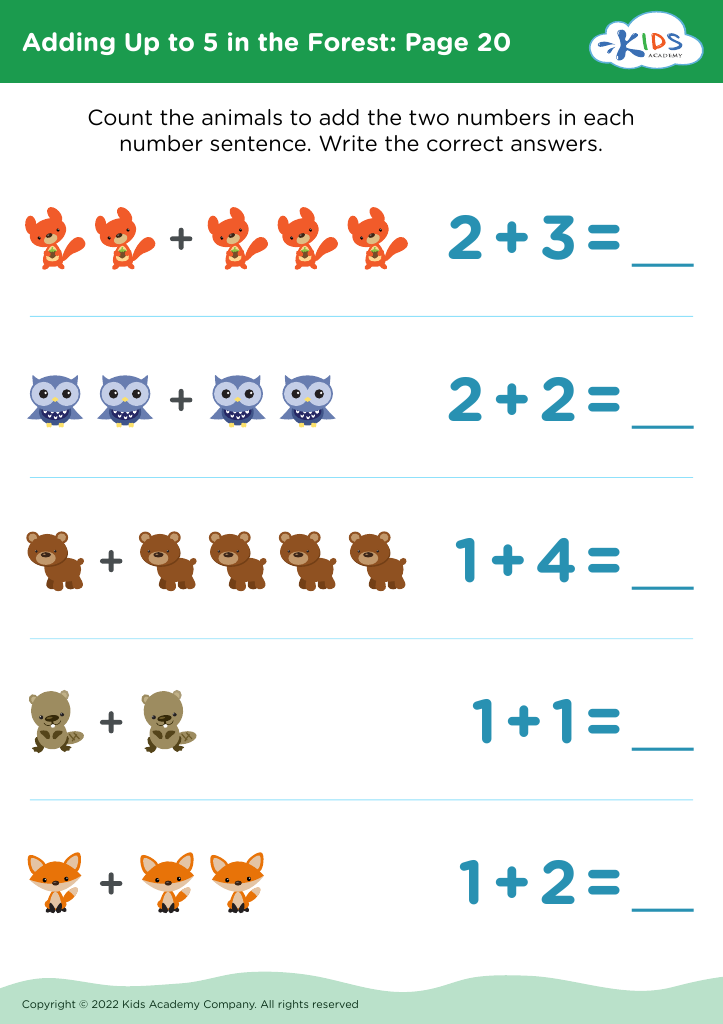
Explore our comprehensive "Understanding Numerical Values: Addition & Subtraction Worksheets" designed specifically for children aged 5-6. These engaging worksheets aim to build a solid foundation in numerical understanding and arithmetic skills. Through vibrant images and playful activities, young learners can easily grasp the concepts of addition and subtraction, helping them learn to count, compare values, and solve basic math problems confidently. Each worksheet is crafted to promote critical thinking, number recognition, and problem-solving in a fun and interactive way. Perfect for both classroom and home learning, our worksheets encourage children to explore math in an enjoyable and effective manner.








Parents and teachers play a crucial role in a child's early mathematical development, especially in understanding numerical values, addition, and subtraction for ages 5-6. Mastering these fundamental skills supports children's cognitive growth and sets the foundation for future math concepts. At this age, children are naturally curious, and engaging them in numerical activities fosters a positive attitude toward learning.
Understanding numerical values equips children with the ability to recognize and manipulate numbers, which is essential for everyday tasks such as counting, measuring, and budgeting. Addition and subtraction build upon this foundation, promoting problem-solving and critical thinking skills as children learn to combine and separate quantities.
Additionally, these mathematical concepts enhance children's social skills, as they often engage in group activities like games and collaborative problem-solving. Early exposure to math not only supports academic achievement but also helps develop resilience and perseverance when faced with challenging problems.
Moreover, working together on these skills strengthens the bond between parents and teachers, fostering a supportive learning environment. By emphasizing the importance of numeracy, both parents and teachers can help children build confidence with math, making it an enjoyable and integral part of their everyday lives.








