Underwater animal identification Addition & Subtraction Worksheets for Ages 5-6
3 filtered results
-
From - To
Dive into fun learning with our "Underwater Animal Identification Addition & Subtraction Worksheets" designed specifically for children ages 5-6! Explore the captivating world of marine life while enhancing math skills through engaging activities. These worksheets combine exciting underwater themes with fundamental addition and subtraction exercises, helping young learners develop their number sense in a playful way. Perfect for classrooms or home practice, they encourage curiosity and creativity while ensuring foundational math concepts are clearly understood. With colorful illustrations and playful contexts, students will love identifying underwater animals as they practice their math skills. Make learning a splashing success!
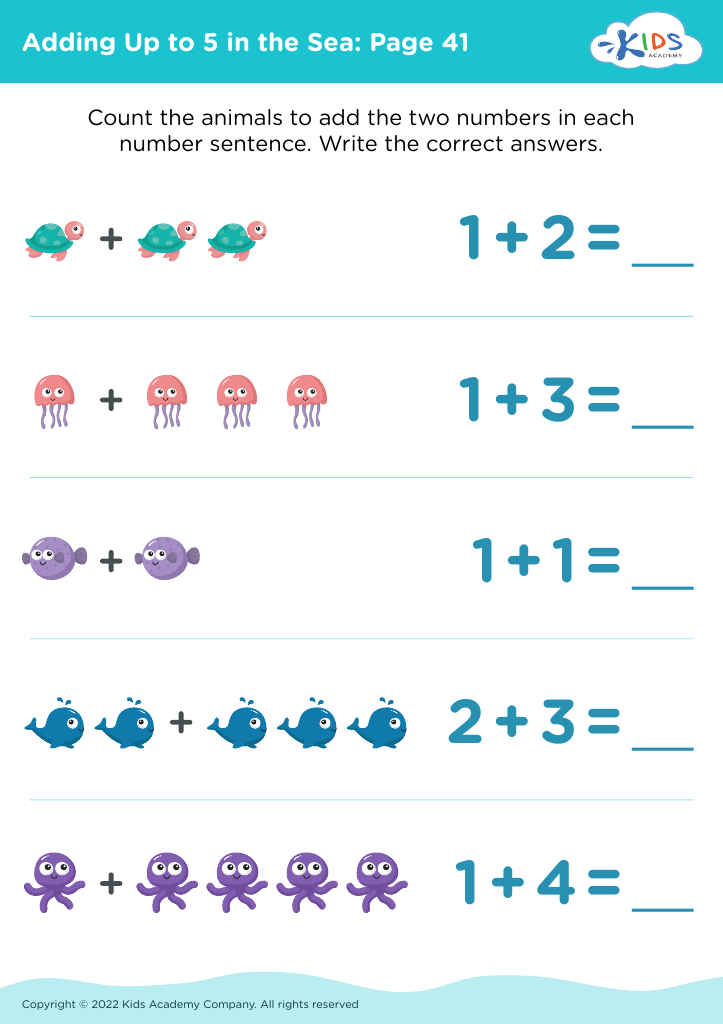
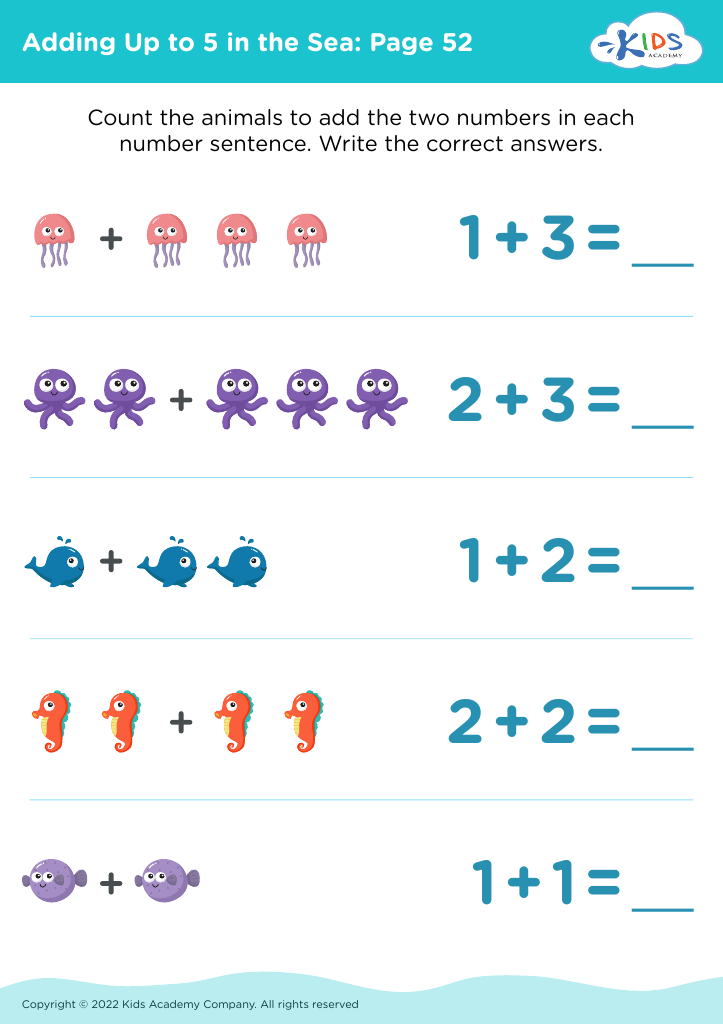
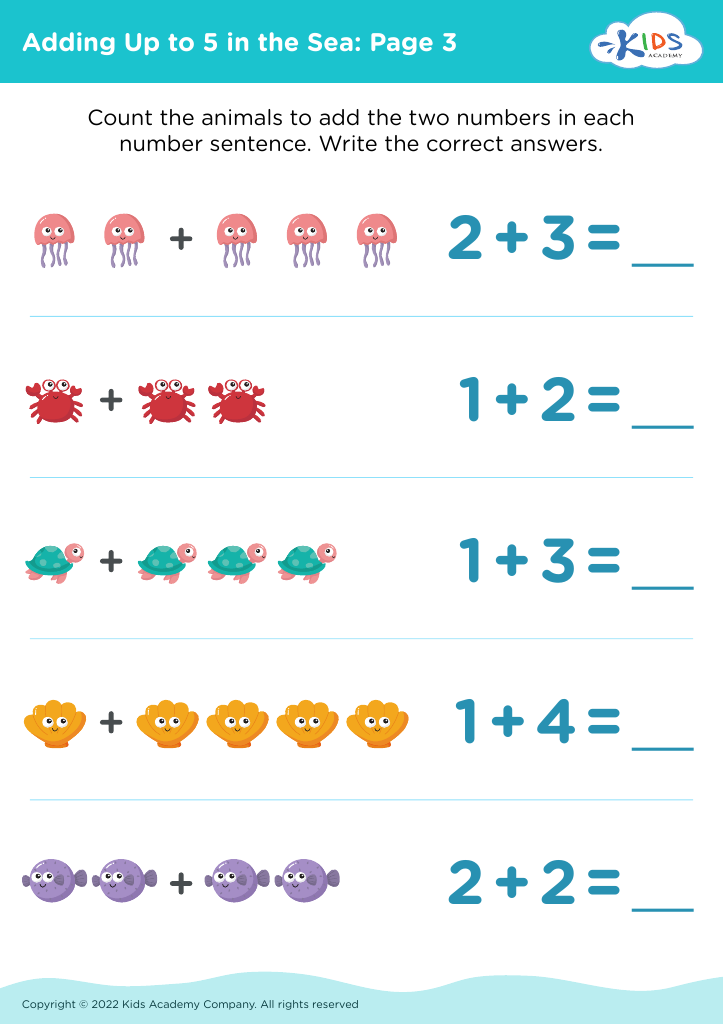








Parents and teachers should care about underwater animal identification, along with addition and subtraction, for children aged 5-6 because this integrated approach fosters early literacy and numeracy skills while engaging students in a fun and meaningful way. Identifying underwater animals not only enhances children’s vocabulary and comprehension of the natural world, but it also promotes curiosity and a sense of wonder about marine life. Learning about these animals can stimulate discussions about ecosystems, conservation, and biological diversity, encouraging a broader environmental awareness.
Incorporating addition and subtraction alongside animal identification creates a multi-disciplinary learning experience. For instance, children can count the number of fish they identify, solve problems related to the sizes of various aquatic animals, or engage in activities that involve sorting and classifying animals based on attributes—integral skills that form the foundation for mathematical understanding. By tying math concepts to relatable and engaging themes, disruptions in traditional classroom routines can be minimized, and students are more likely to develop positive associations with math. Overall, teaching these subjects concurrently not only bolsters academic achievement but also nurtures love for learning, critical thinking, and an appreciation of biodiversity in young learners.








