
Basic Math understanding Addition Worksheets for Ages 5-6
7 filtered results
Difficulty Level
Grade
Age
-
From - To
Subject
Activity
Standards
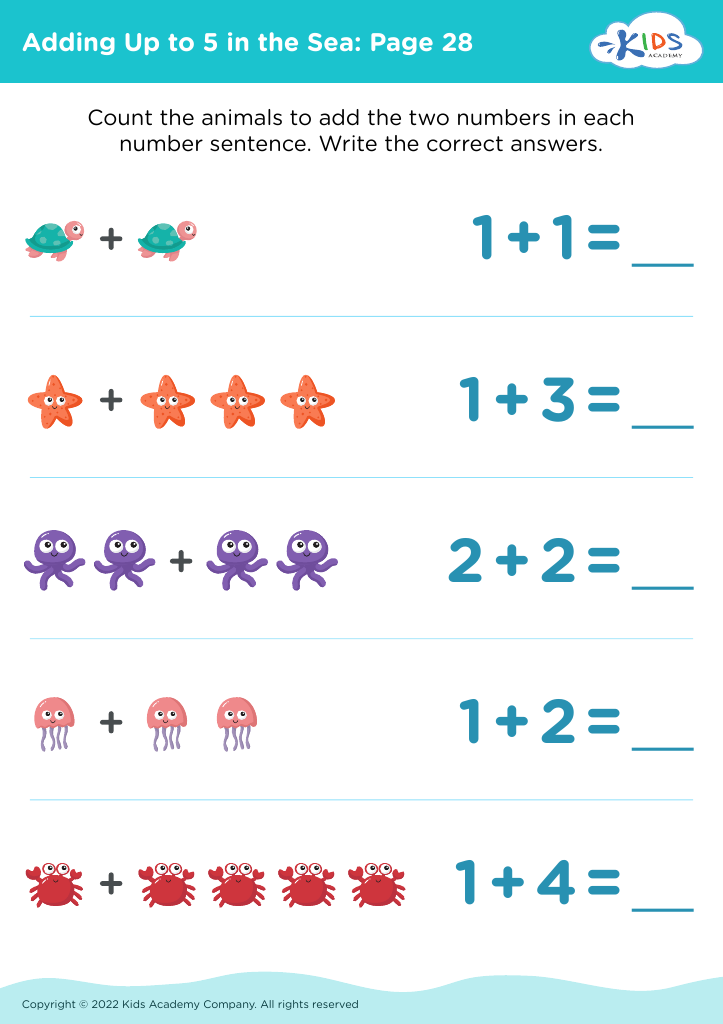
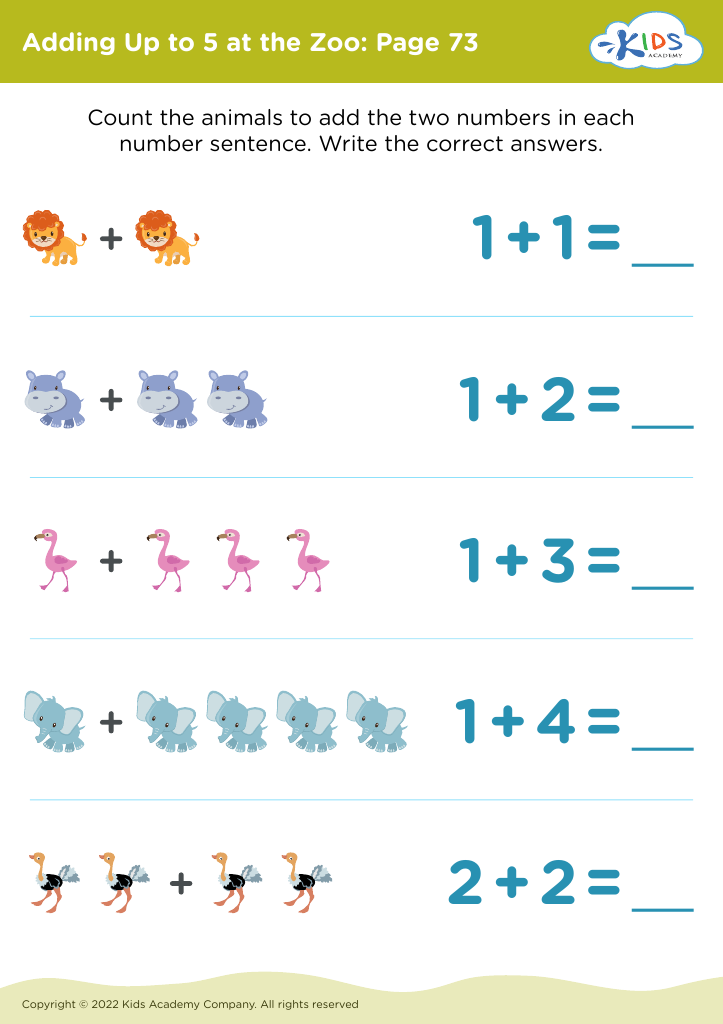
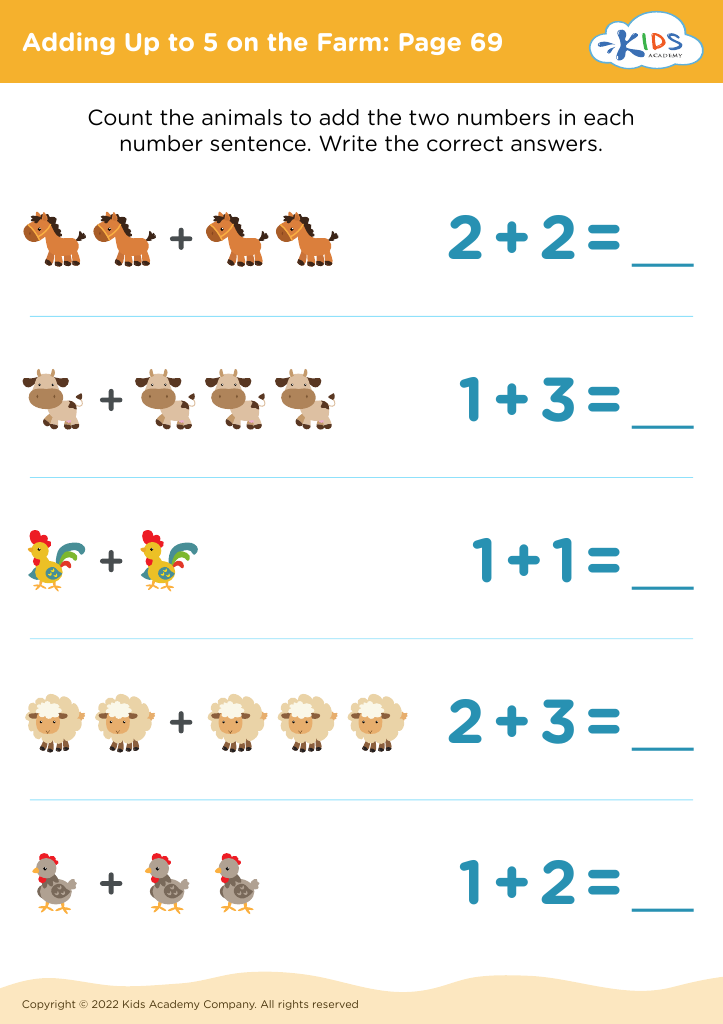
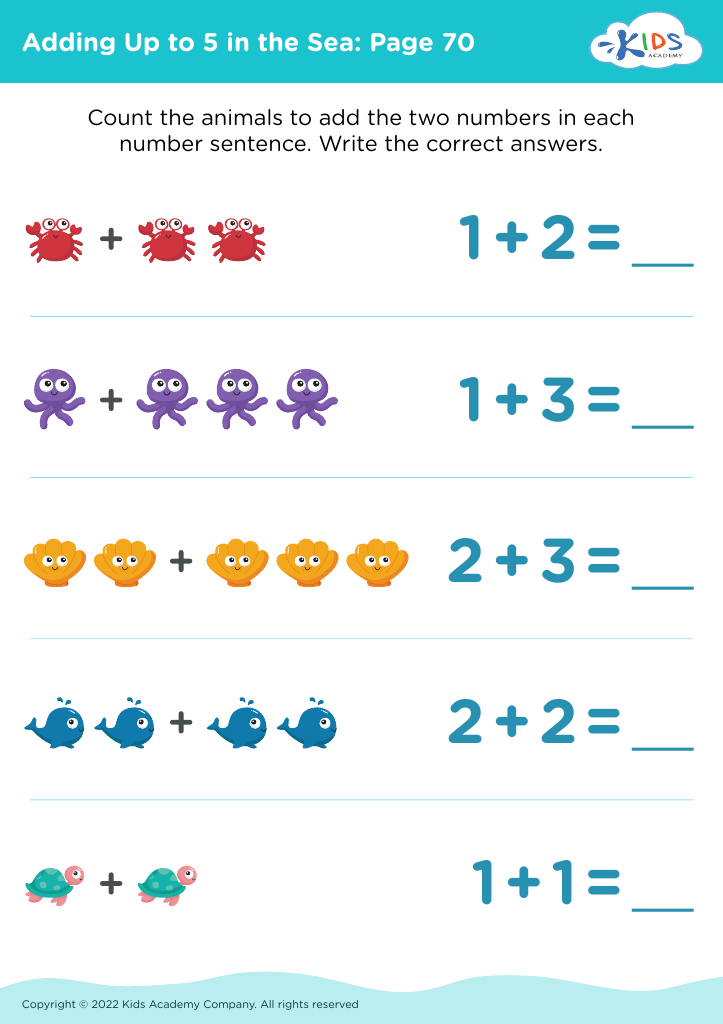
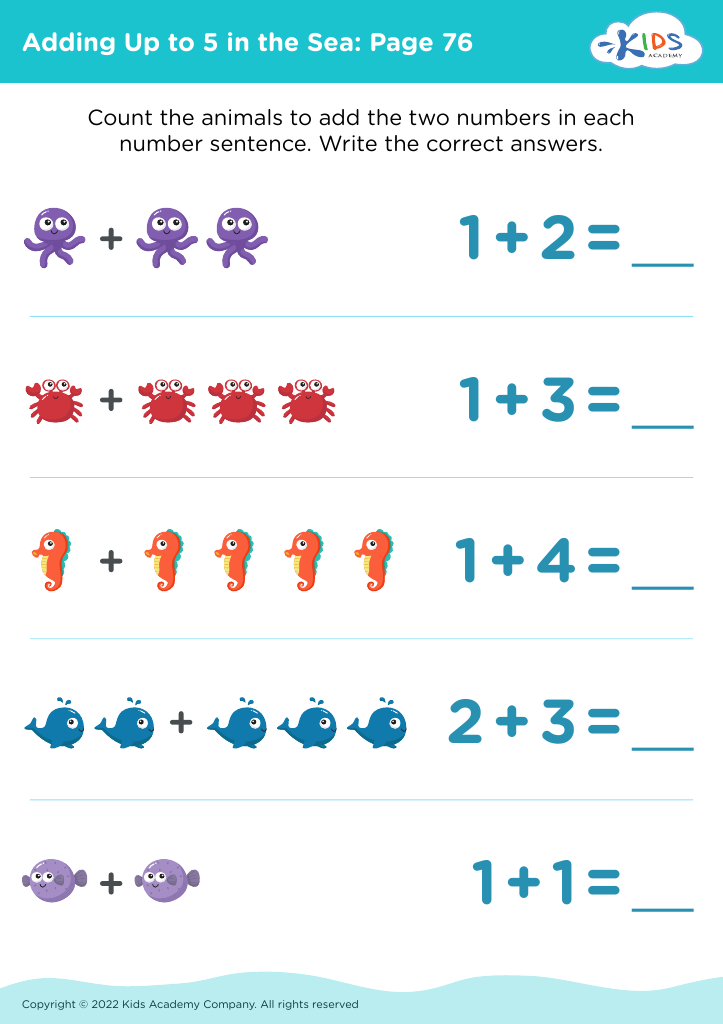
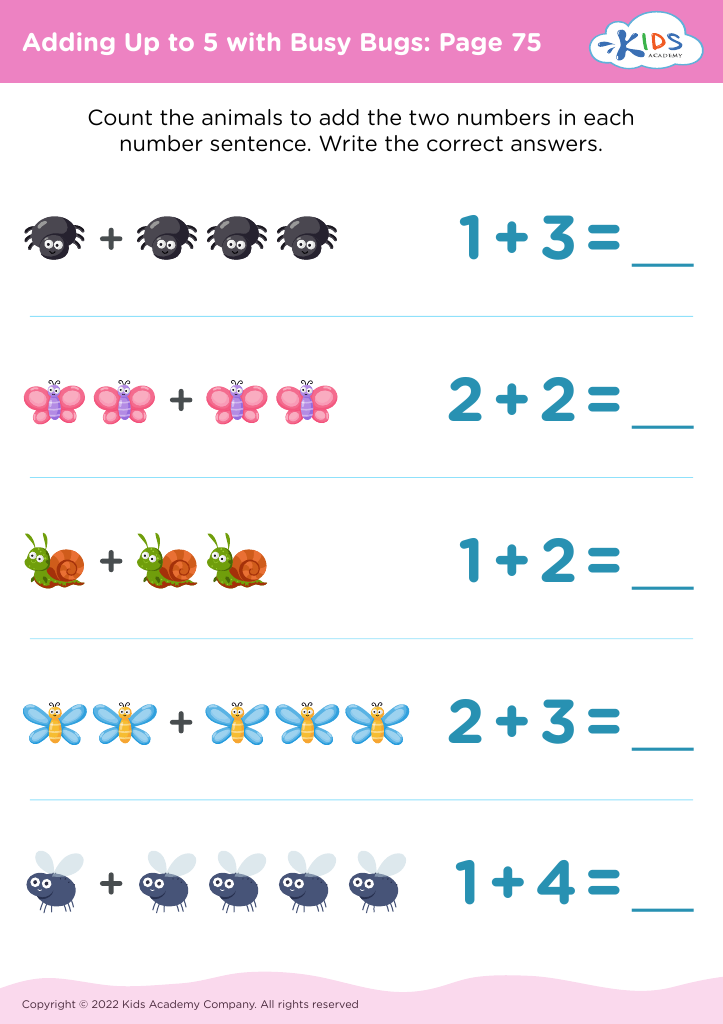
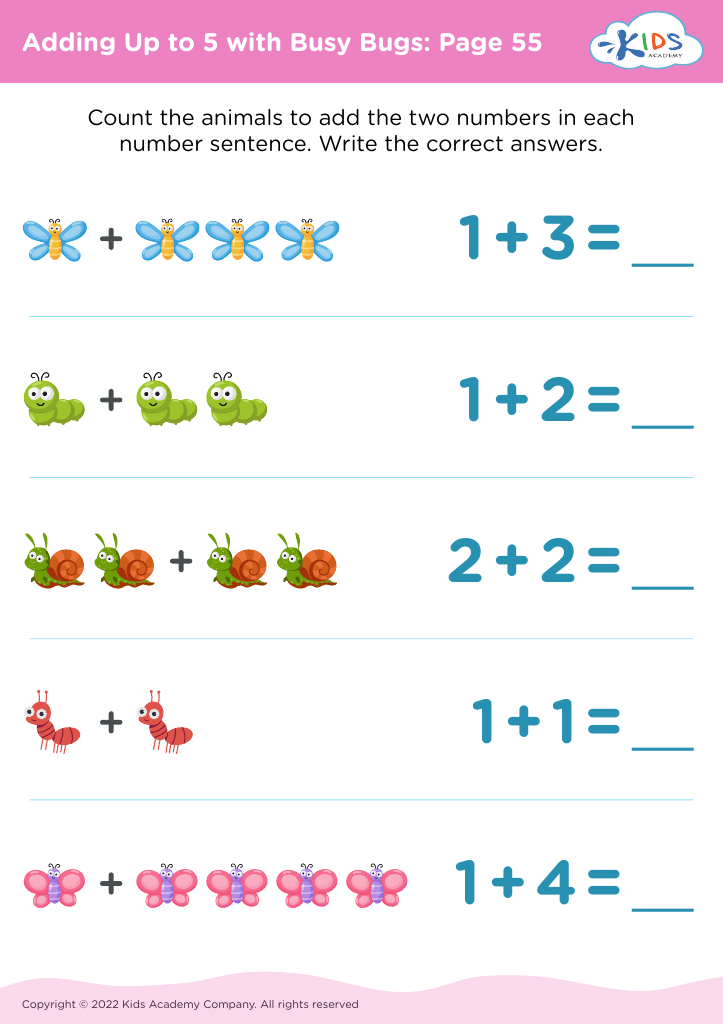
Explore our engaging Basic Math Understanding Addition Worksheets designed specifically for children ages 5-6! These worksheets provide a fun and interactive way for young learners to grasp the essential concepts of addition. Featuring colorful illustrations and age-appropriate exercises, each activity encourages kids to practice their addition skills while fostering a love for math. From counting on fingers to using visuals like objects and number lines, our resources support diverse learning styles. Perfect for home or classroom use, our worksheets help build a strong mathematical foundation that prepares children for future learning. Discover the joy of addition today!
Favorites
With answer key
Interactive
Join Kids Academy for Free
Who is primarily going to use this learning content?








Understanding basic addition is crucial for children aged 5-6, as it lays the foundation for all future mathematical concepts. At this early stage, children are not just learning numbers and operations; they are developing critical thinking and problem-solving skills. Mastering addition boosts confidence and fosters a positive attitude towards math, a subject that can often be intimidating in later years.
Moreover, basic math skills integrate seamlessly with daily activities. Simple actions like counting toys, sharing snacks, and playing games involve basic addition and help children see its relevance in their lives. Engaging children in these activities not only makes math fun but also reinforces their learning through practical application.
Teachers and parents play a key role in creating a supportive learning environment. By emphasizing addition through interactive games and creative exercises, they can enhance a child’s innate curiosity and joy in learning. Fostering these skills early on ensures that children develop a strong mathematical foundation, preparing them for more complex topics in the future while influentially shaping their overall cognitive development. Thus, a focus on basic addition at this crucial age is essential for nurturing both mathematical understanding and a lifelong love for learning.








