Filters

240 filtered results

Clear all filters
Favorites
With answer key
Interactive

240 filtered results

Difficulty Level

Grade


Check out this FREE Trial Lesson on Addition for age 5-6!

Exactly the Same, or Not

Favorites
With answer key
Interactive
  • 5-6
  • Counting practice
  • Addition
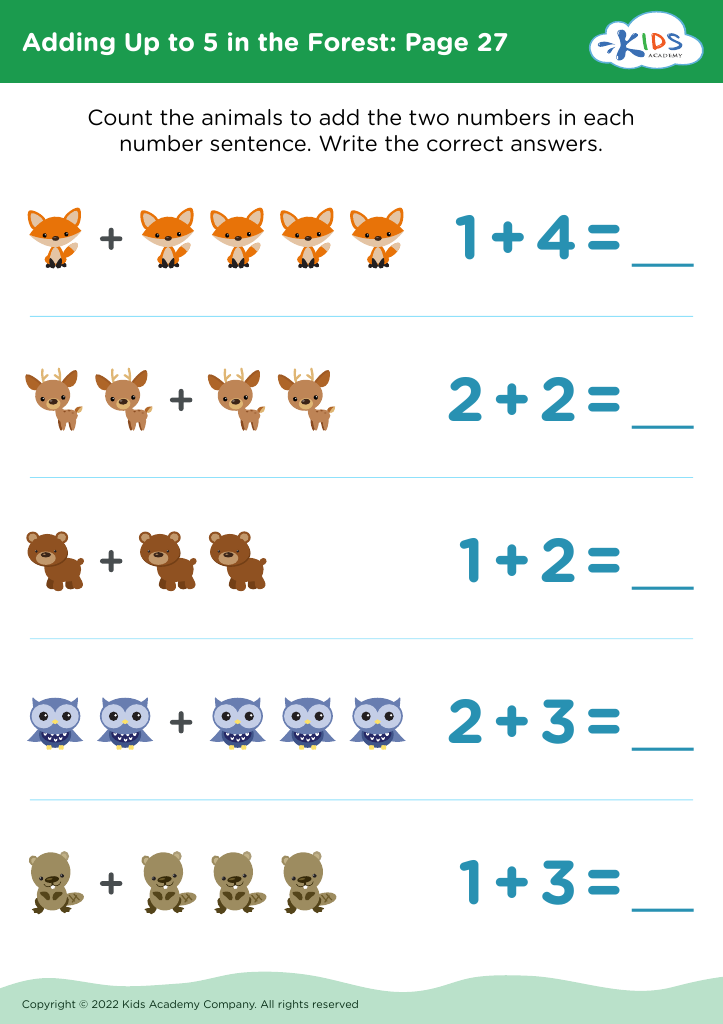
Adding Up to 5 in the Forest: Page 27
Worksheet
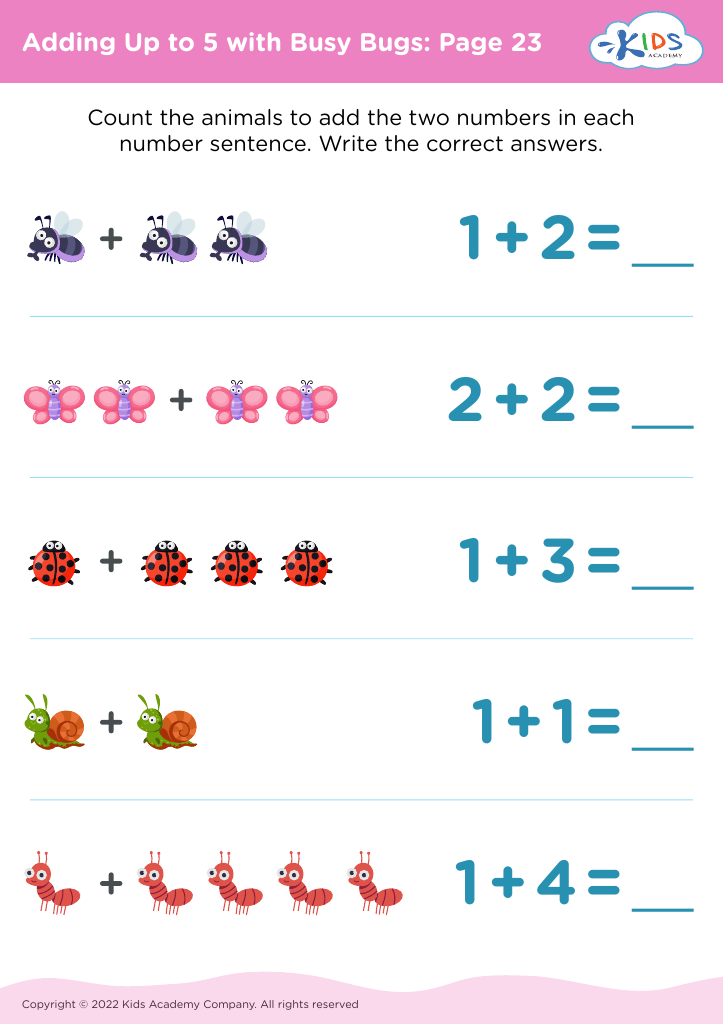
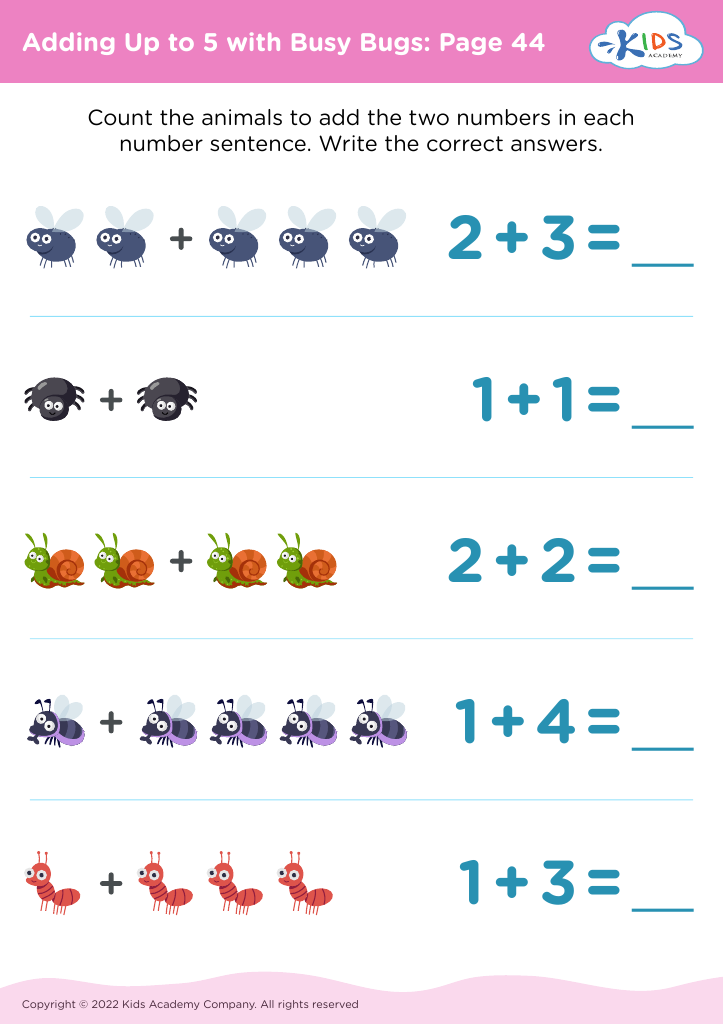
Adding Up to 5 with Busy Bugs: Page 23
Worksheet
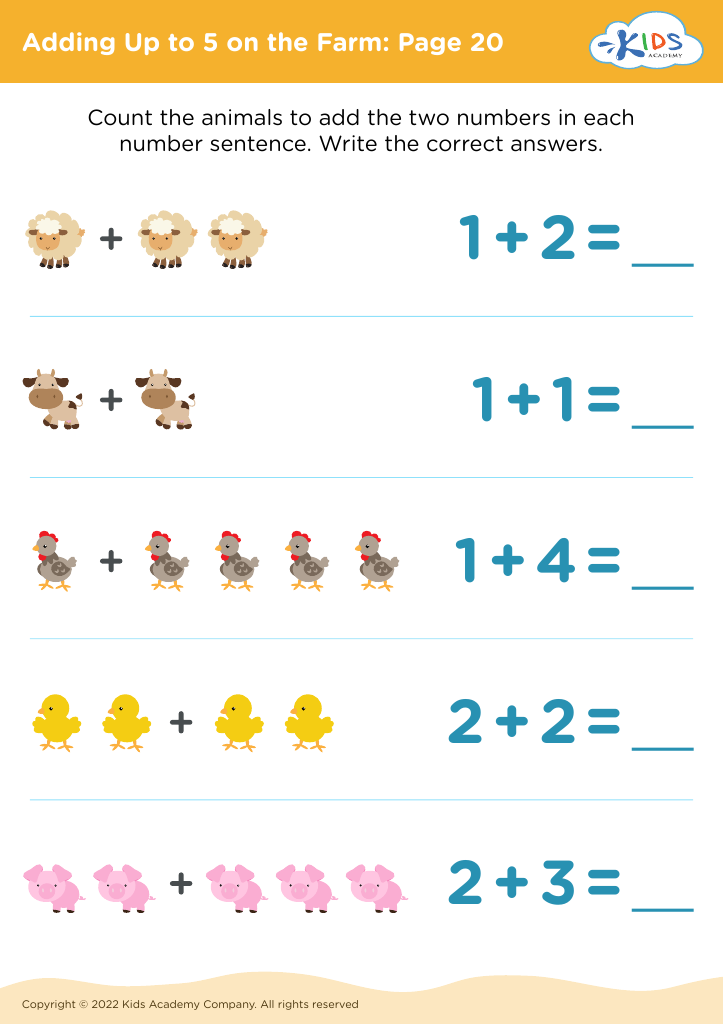
Adding Up to 5 on the Farm: Page 20
Worksheet
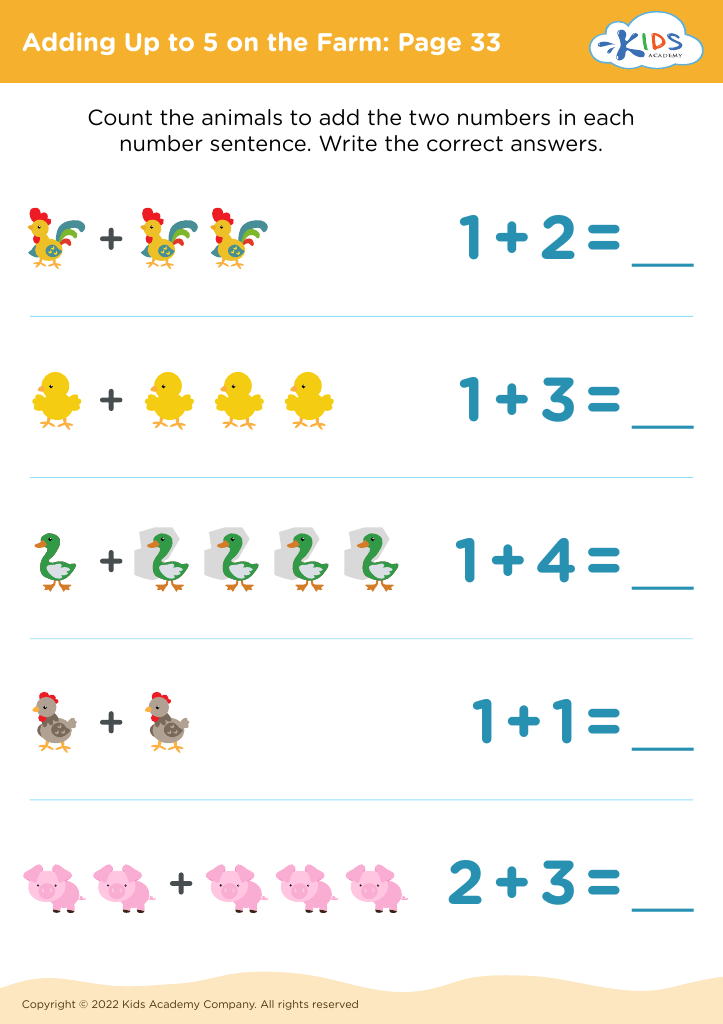
Adding Up to 5 on the Farm: Page 33
Worksheet
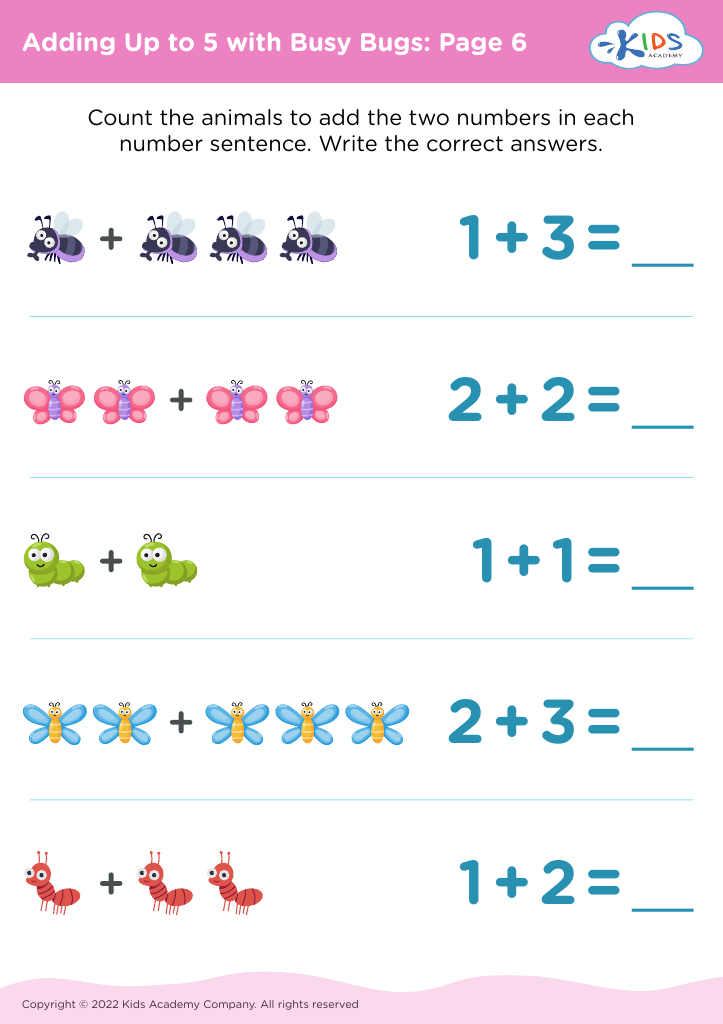
Adding Up to 5 with Busy Bugs: Page 6
Worksheet
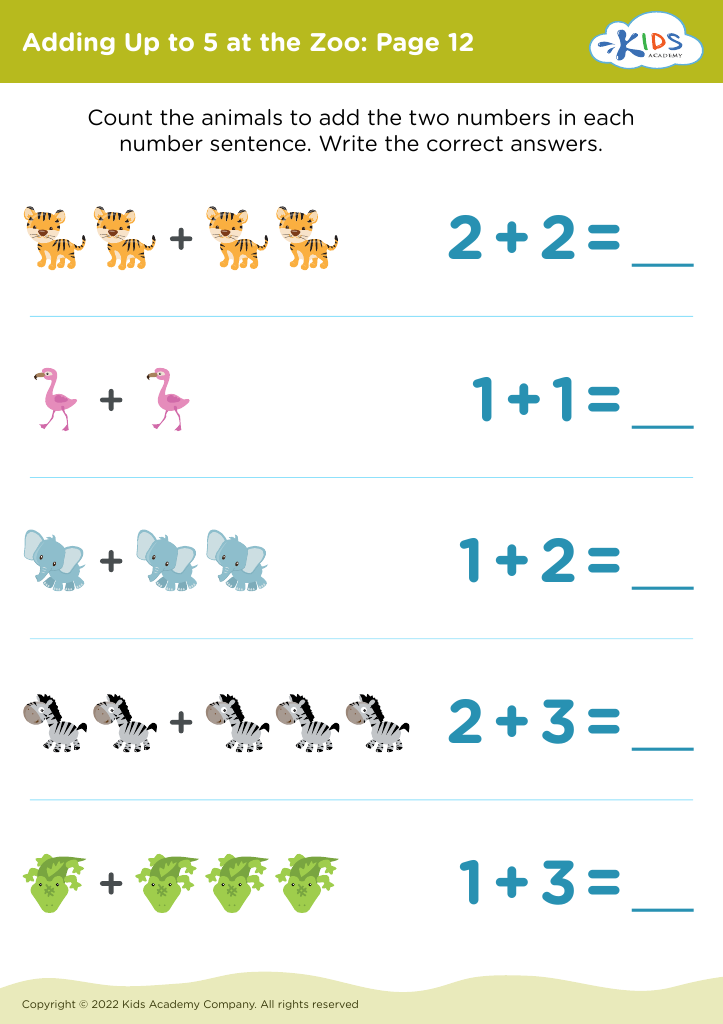
Adding Up to 5 at the Zoo: Page 12
Worksheet
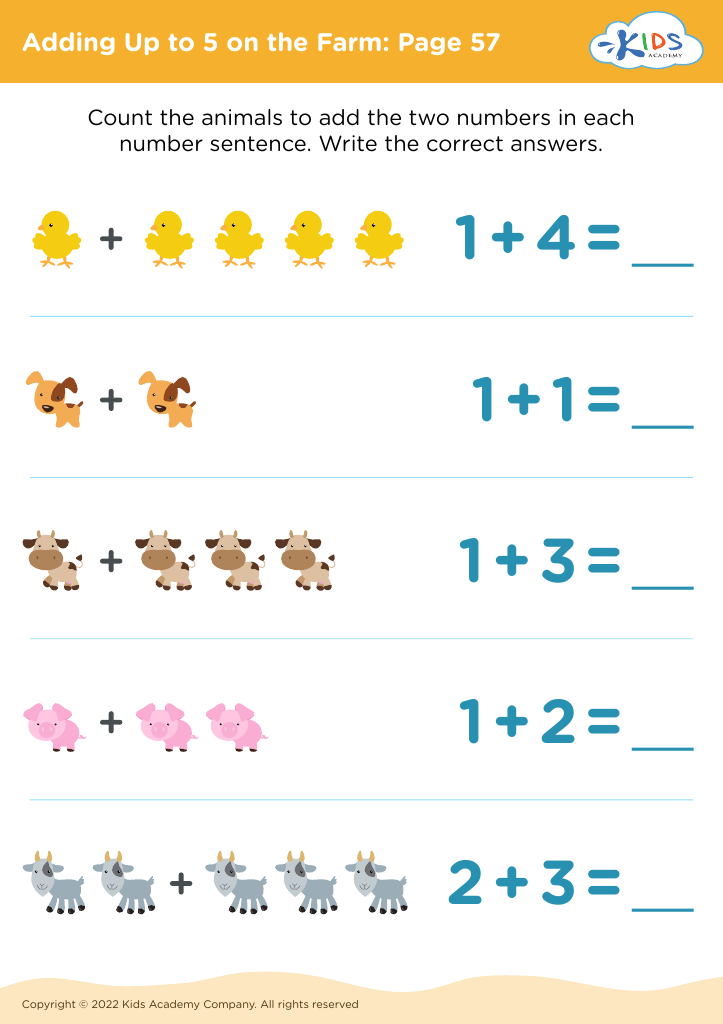
Adding Up to 5 on the Farm: Page 57
Worksheet
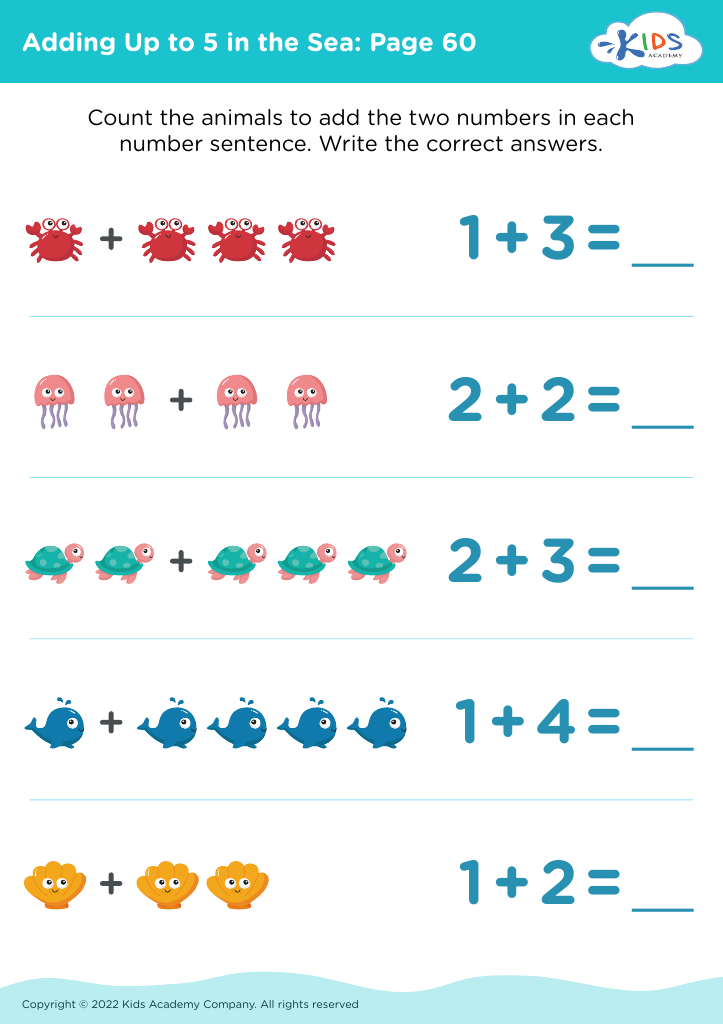
Adding Up to 5 in the Sea: Page 60
Worksheet
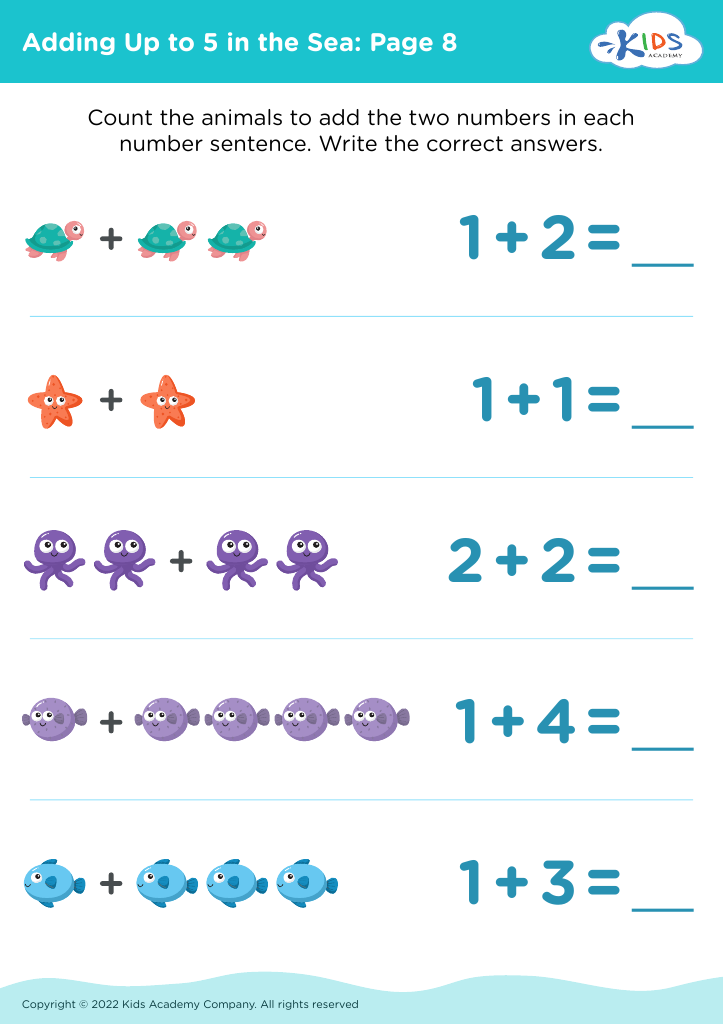
Adding Up to 5 in the Sea: Page 8

Adding Up to 5 in the Sea: Page 8

Adding Up to 5 in the Sea: Page 8
Worksheet
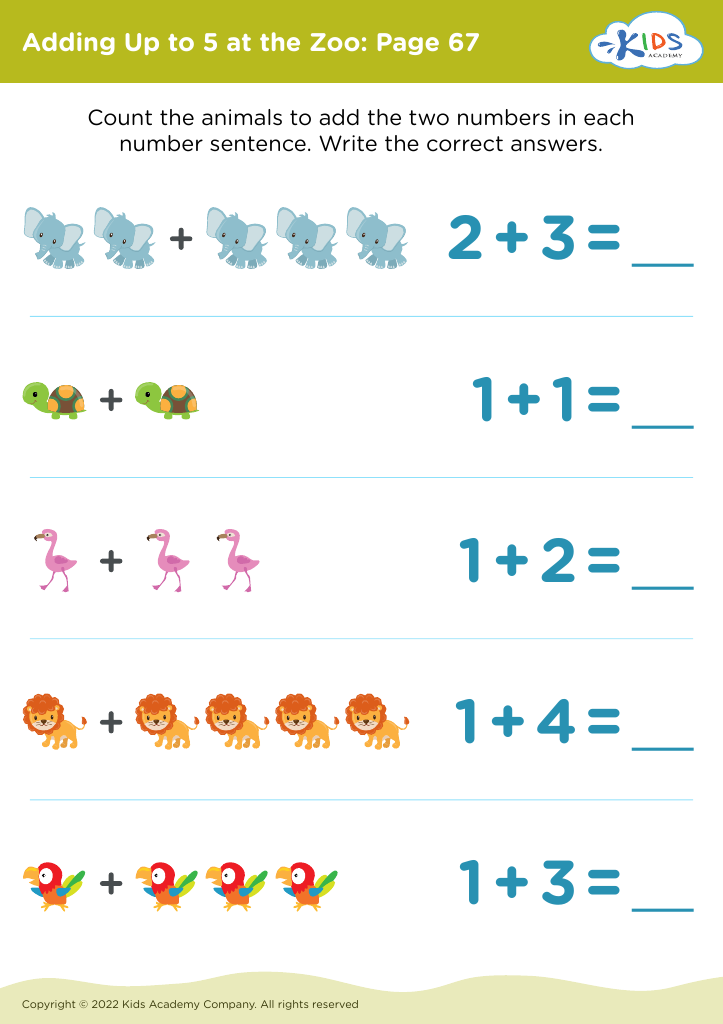
Adding Up to 5 at the Zoo: Page 67
Worksheet
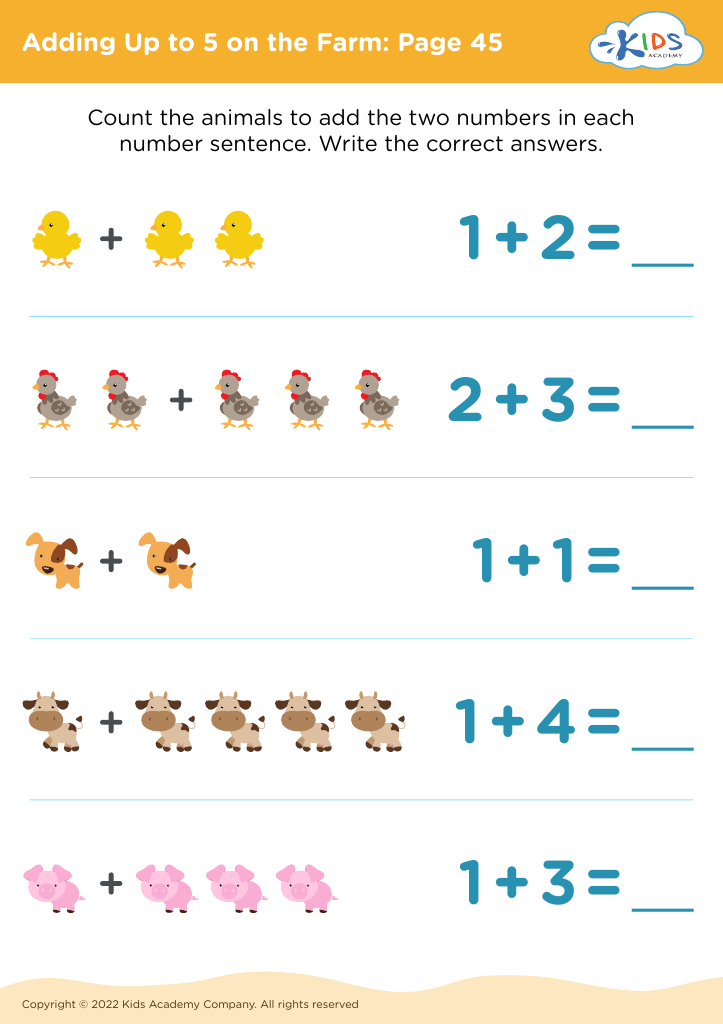
Adding Up to 5 on the Farm: Page 45
Worksheet
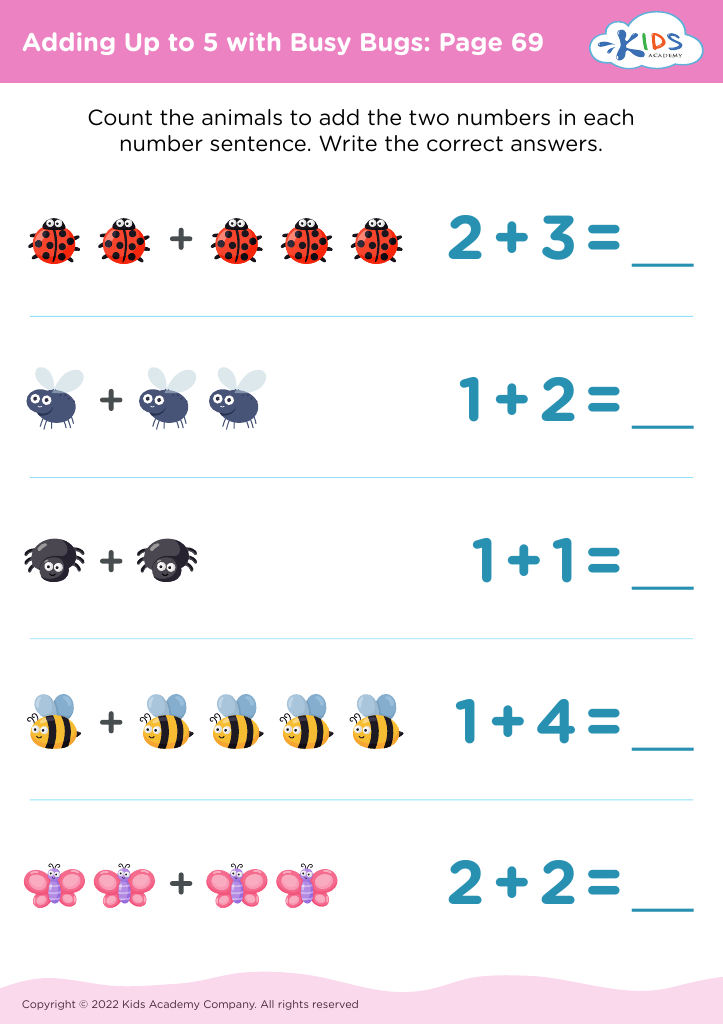
Adding Up to 5 with Busy Bugs: Page 69
Worksheet
Adding Up to 5 with Busy Bugs: Page 44
Worksheet
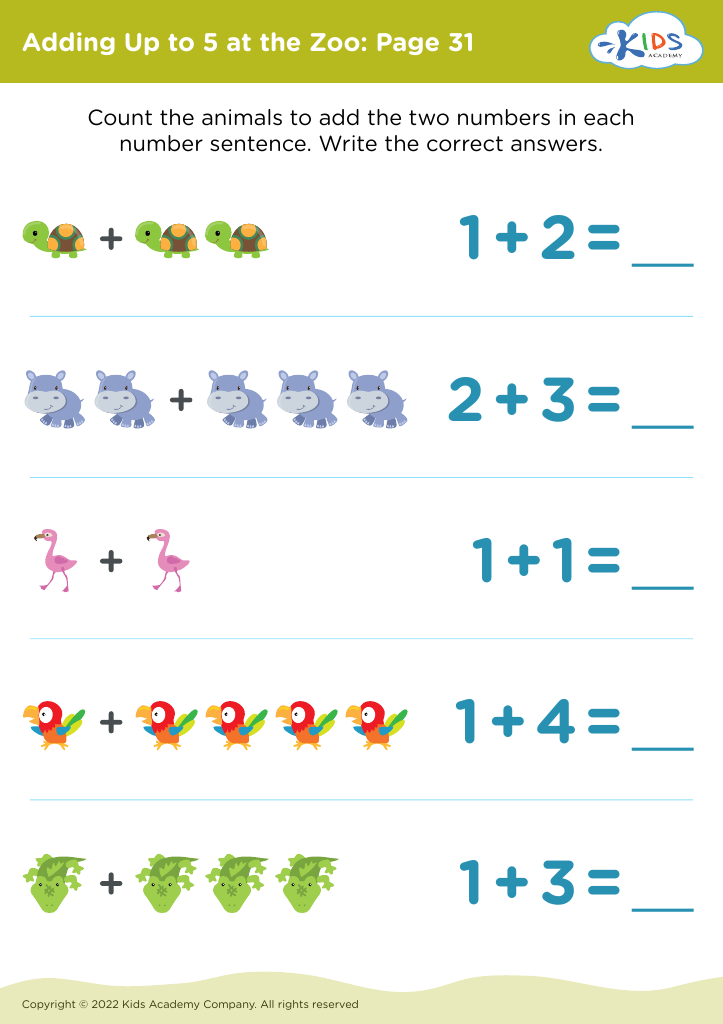
Adding Up to 5 at the Zoo: Page 31
Worksheet
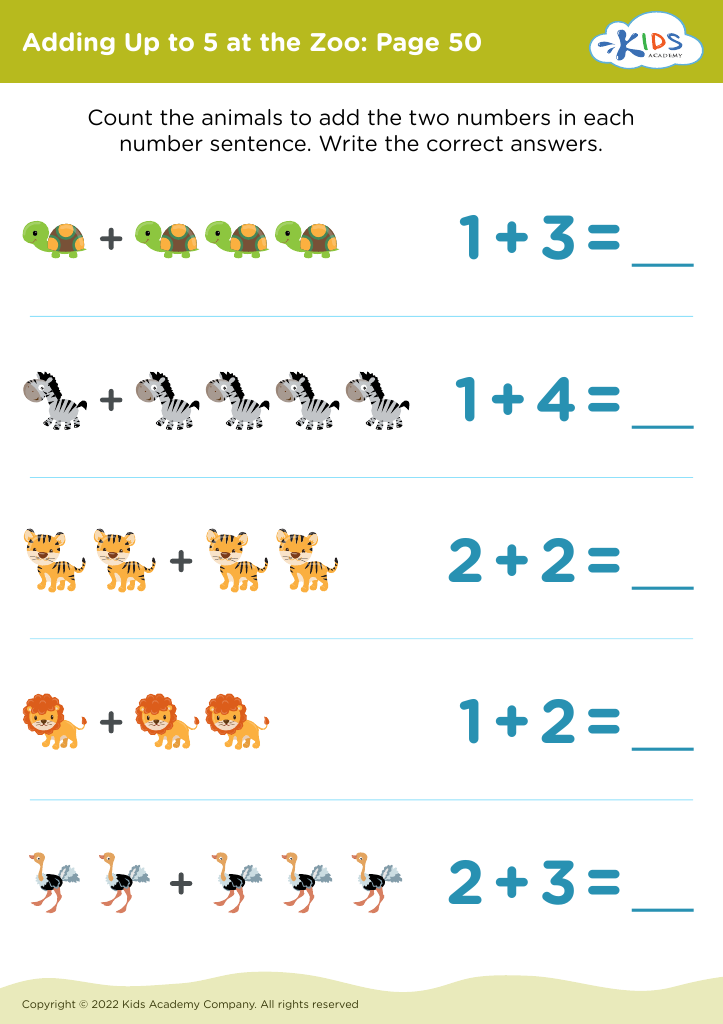
Adding Up to 5 at the Zoo: Page 50
Worksheet
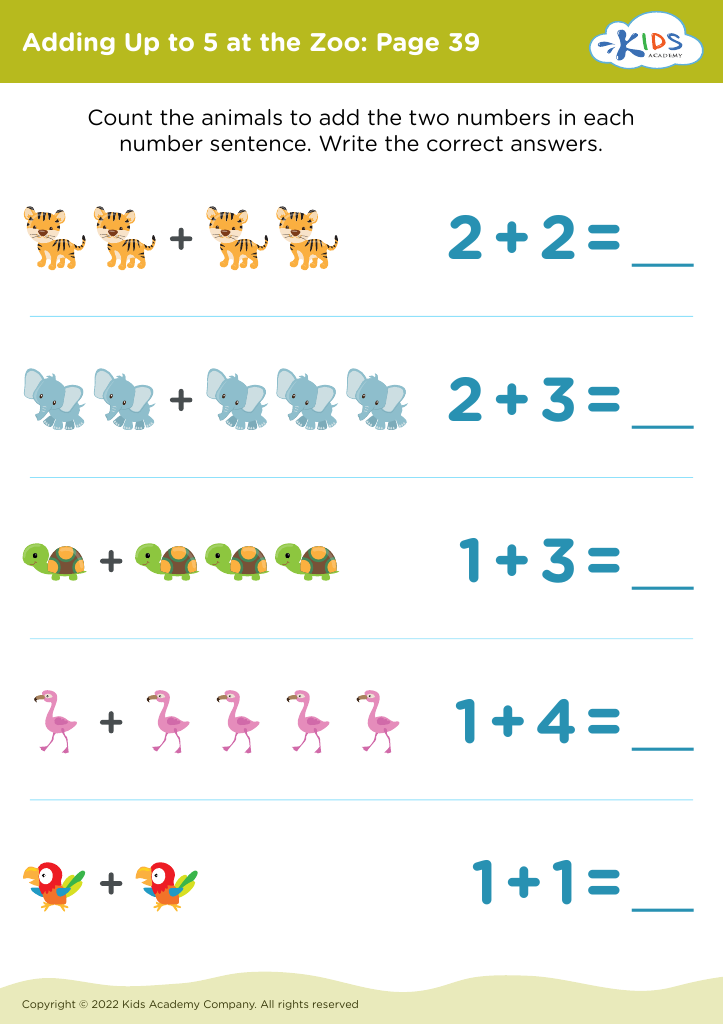
Adding Up to 5 at the Zoo: Page 39
Worksheet
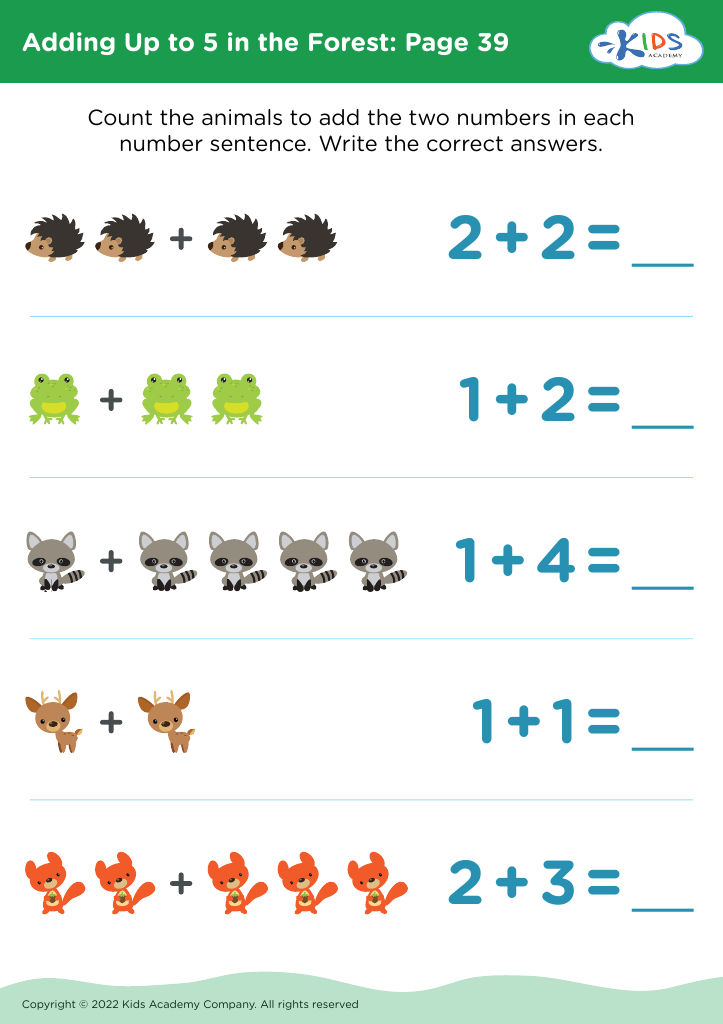
Adding Up to 5 in the Forest: Page 39
Worksheet
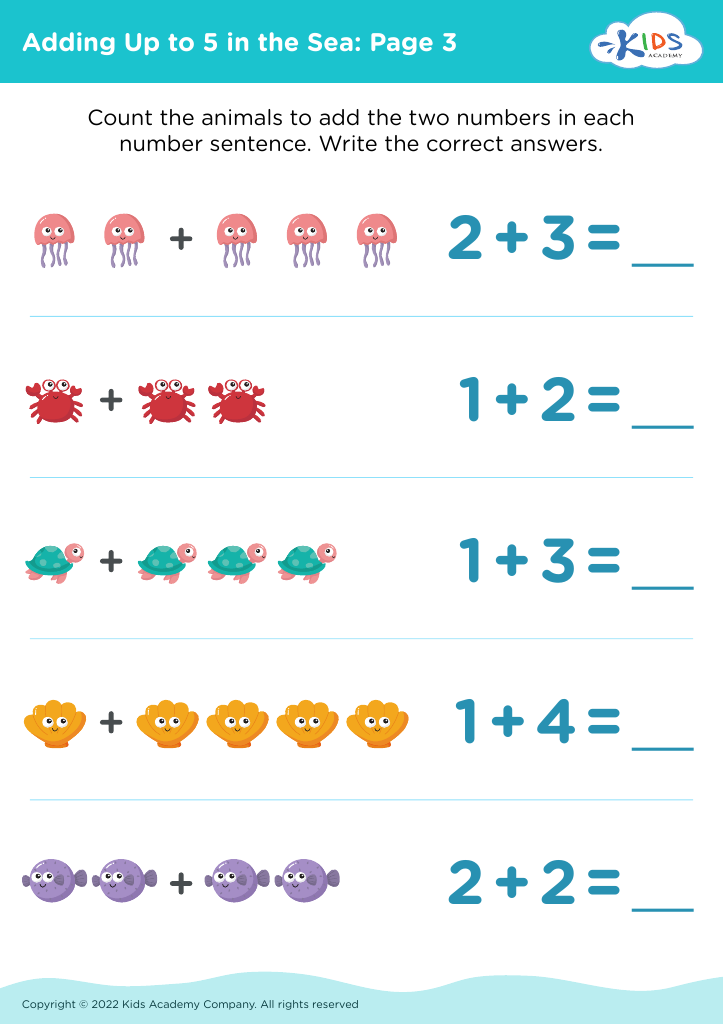
Adding Up to 5 in the Sea: Page 3

Adding Up to 5 in the Sea: Page 3

Adding Up to 5 in the Sea: Page 3
Worksheet
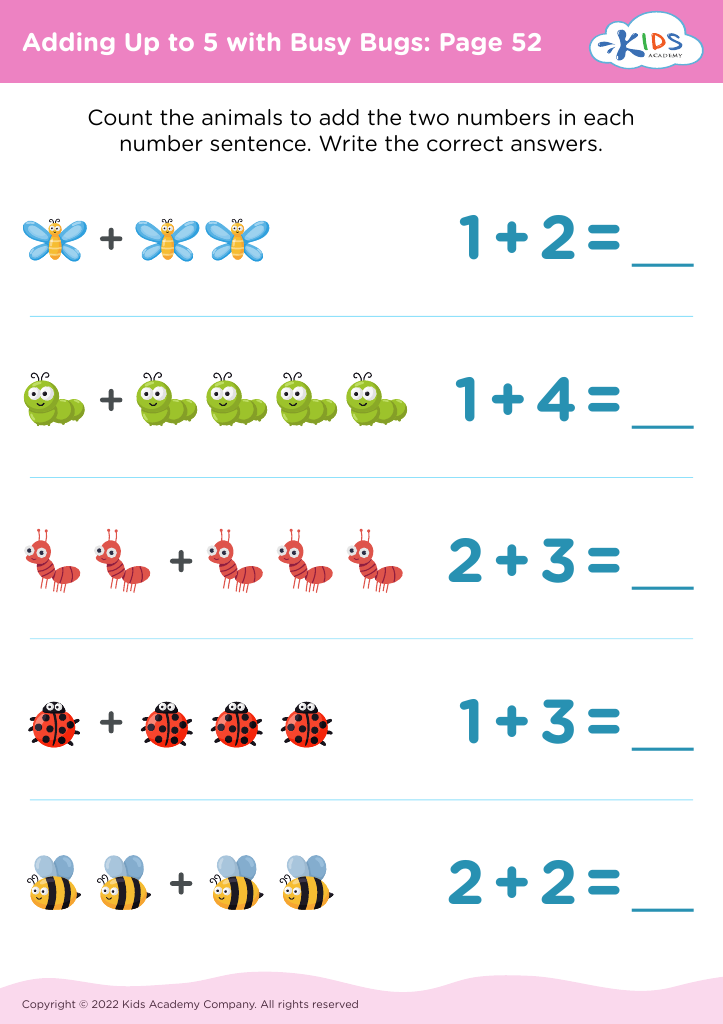
Adding Up to 5 with Busy Bugs: Page 52
Worksheet
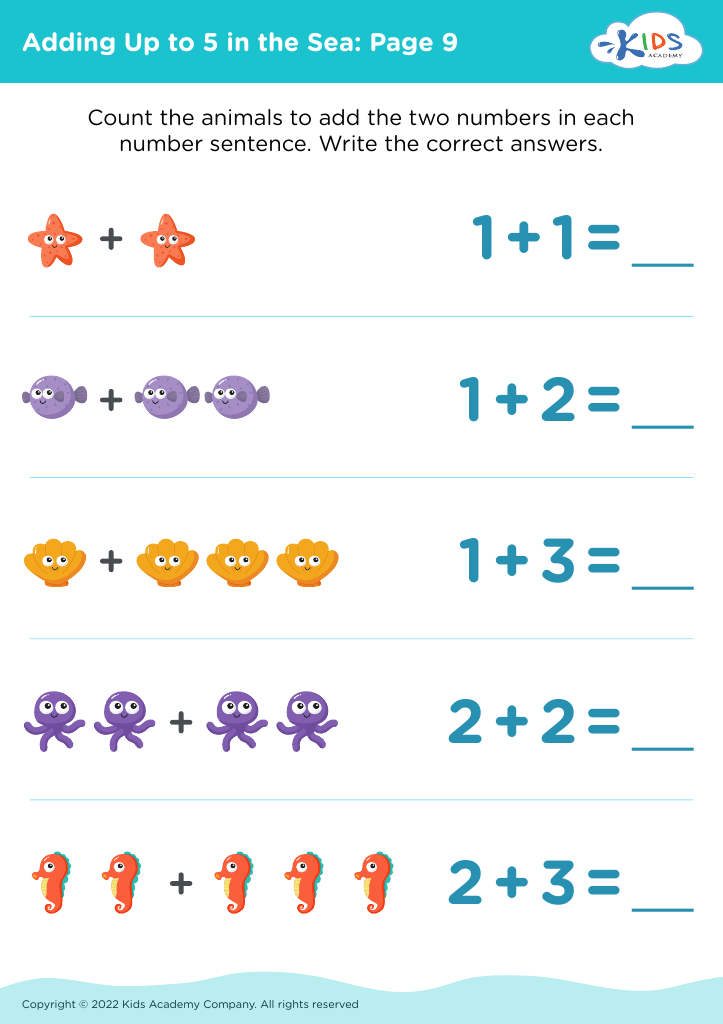
Adding Up to 5 in the Sea: Page 9

Adding Up to 5 in the Sea: Page 9

Adding Up to 5 in the Sea: Page 9
Worksheet
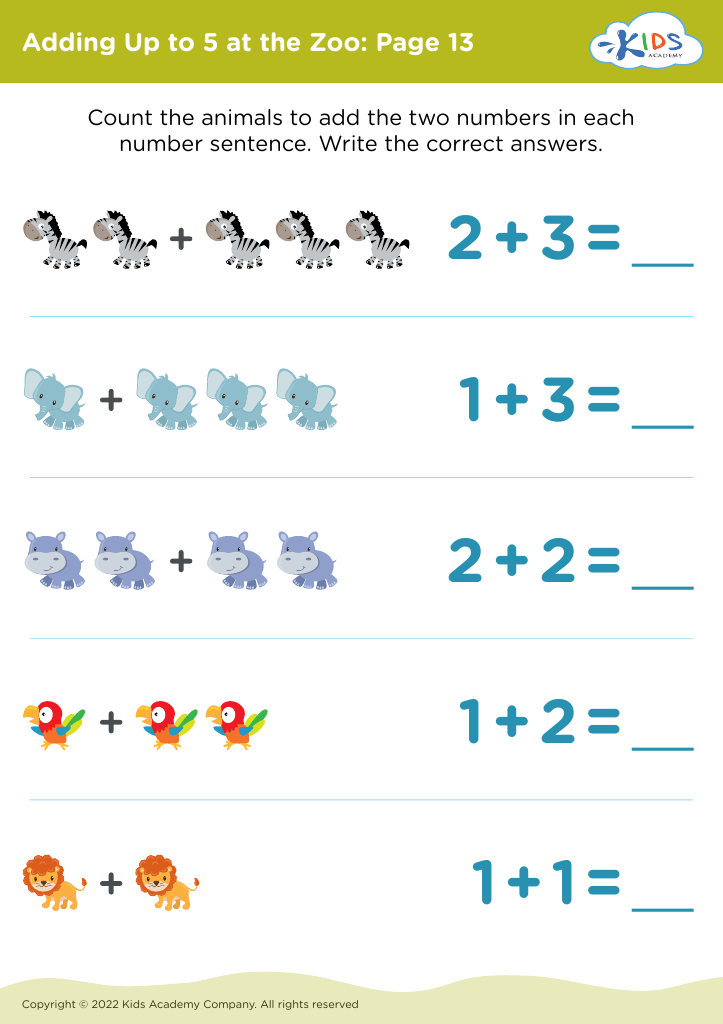
Adding Up to 5 at the Zoo: Page 13
Worksheet
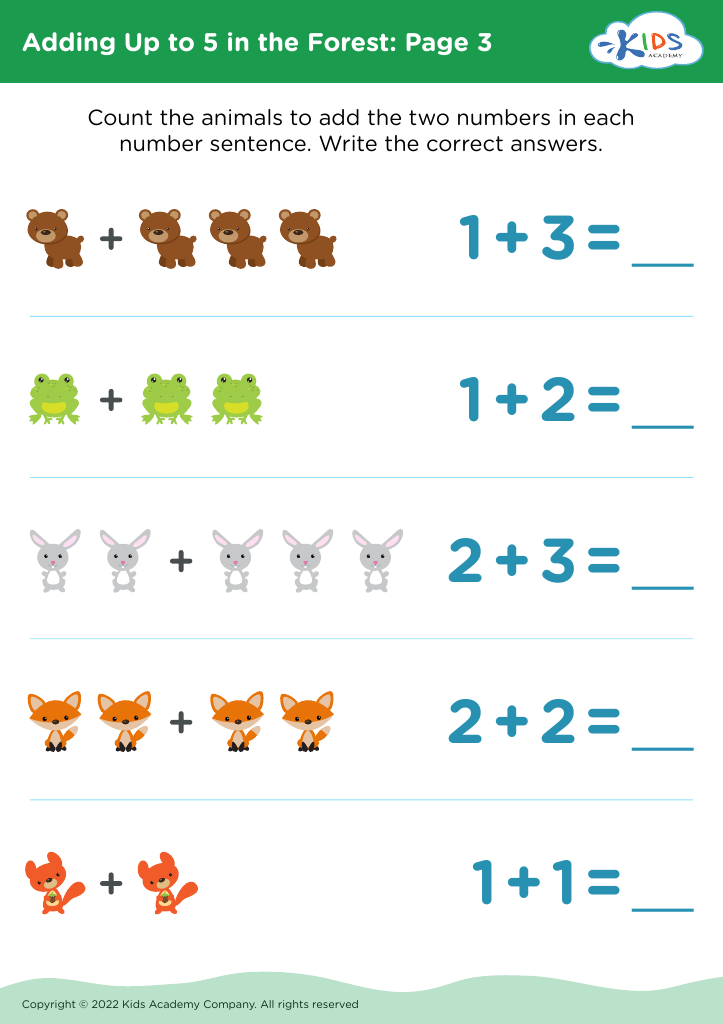
Adding Up to 5 in the Forest: Page 3
Worksheet
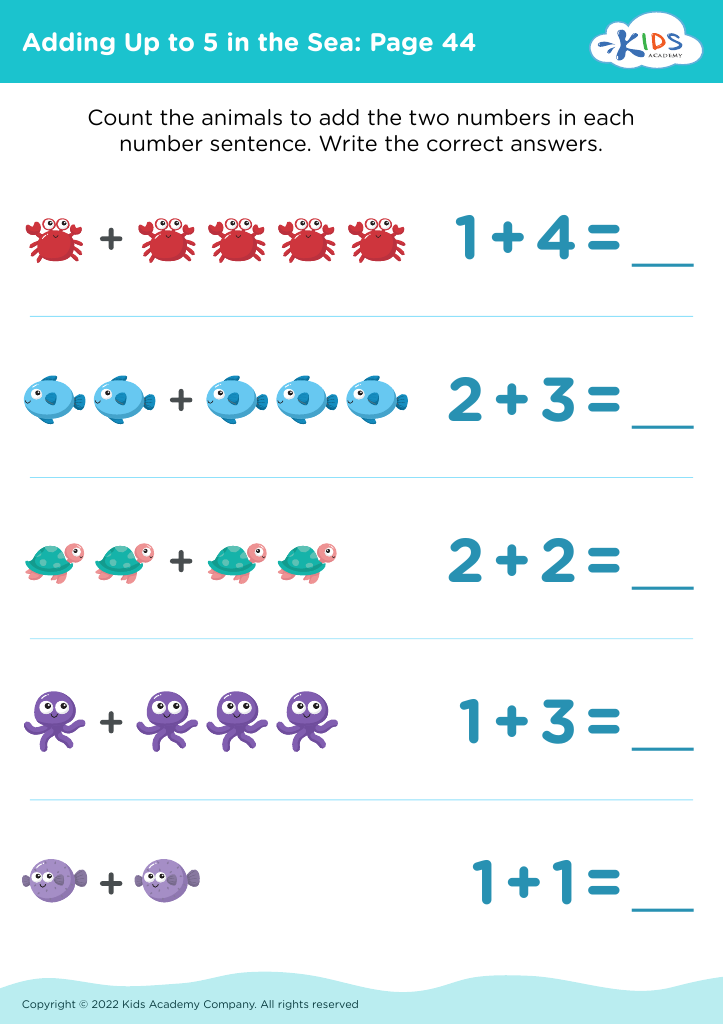
Adding Up to 5 in the Sea: Page 44
Worksheet
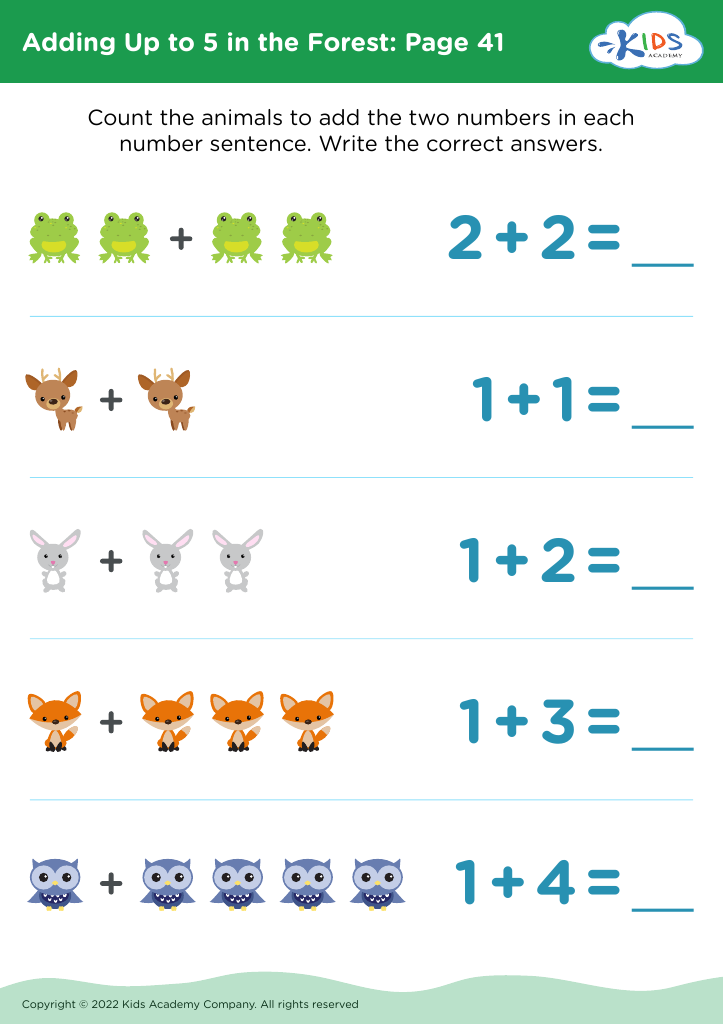
Adding Up to 5 in the Forest: Page 41
Worksheet


... 9 10

Counting practice and addition are foundational skills critical for children ages 5-6. During these formative years, children develop cognitive abilities and a strong numerical sense, serving as the building blocks for all future math learning. Engaging with counting and addition reinforces numeracy skills, promoting not just mathematical competence but also critical thinking.

Parents and teachers should prioritize these practices because mastering basic addition enhances a child’s confidence in their abilities. When children can easily add numbers, they feel empowered to tackle more complex problems as they progress through school. Additionally, this foundational skill improves their problem-solving abilities, fostering a mind that can think logically and analytically.

Moreover, consistent counting and addition practice incorporates essential skills like pattern recognition, sequencing, and early problem-solving techniques. These concepts also support literacy, as children begin to understand how to follow and implement directions, and relate numbers to real-world contexts, such as sharing or measuring.

Involving parents in this process enhances learning through play, making math fun and relevant. Whether through games, counting objects, or everyday math discussions, engaging kids in counting and addition provides them with a strong framework as they continue their educational journey. Ultimately, early math competence encourages a lifelong appreciation for mathematics.