Counting skills Addition Worksheets for Ages 5-6 - Page 6
127 filtered results
-
From - To
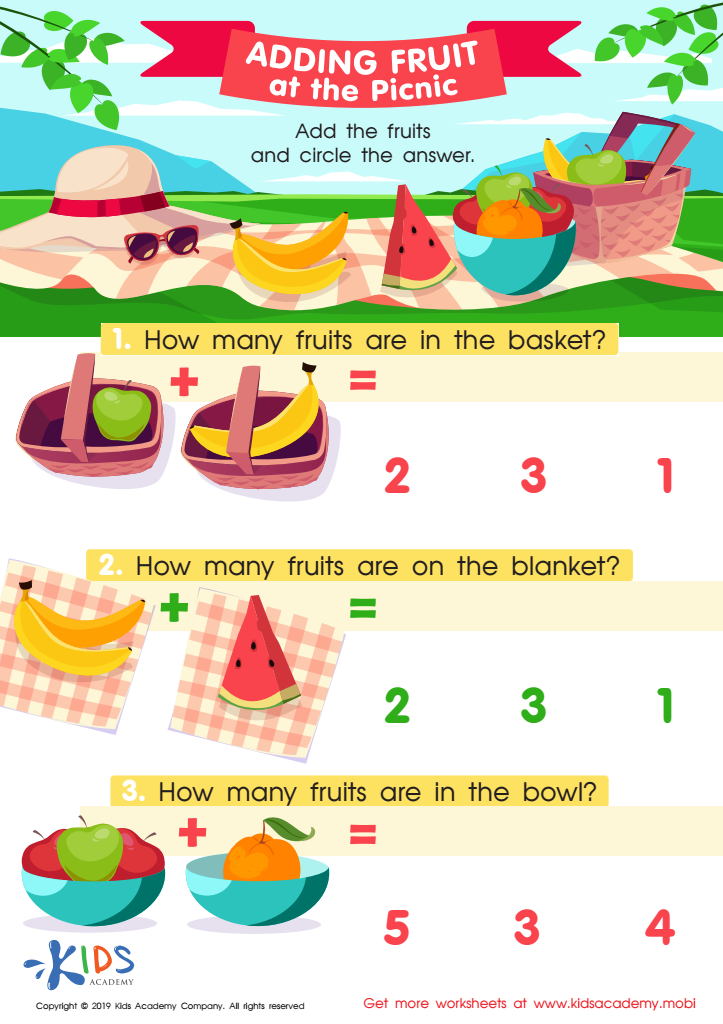
Adding Fruit at the Picnic Worksheet
 Assign to My Students
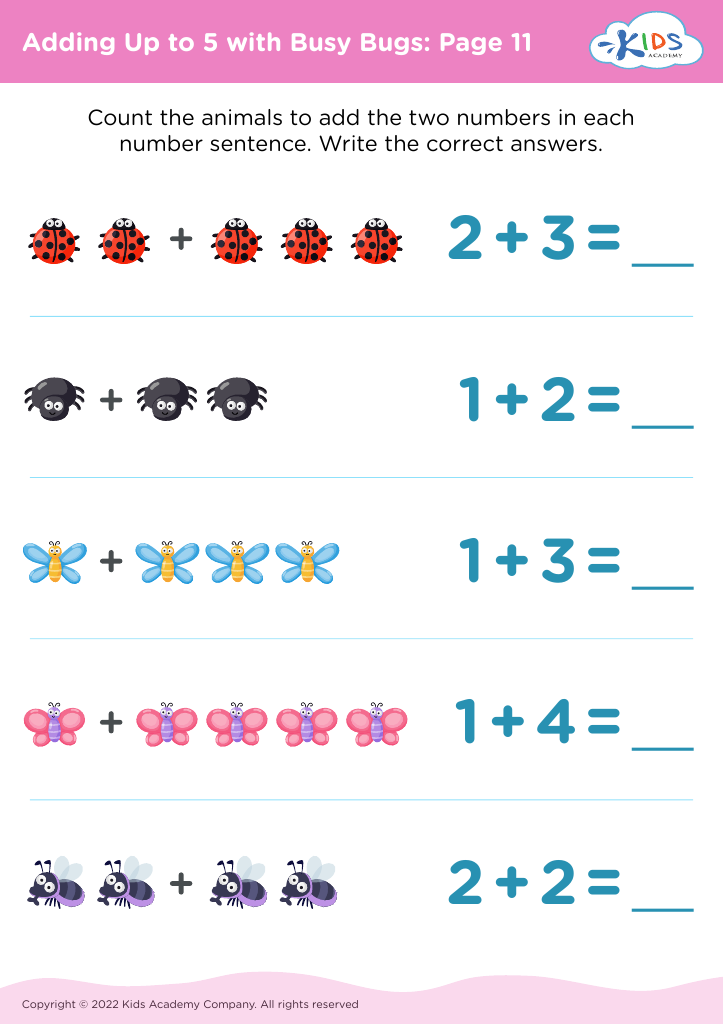
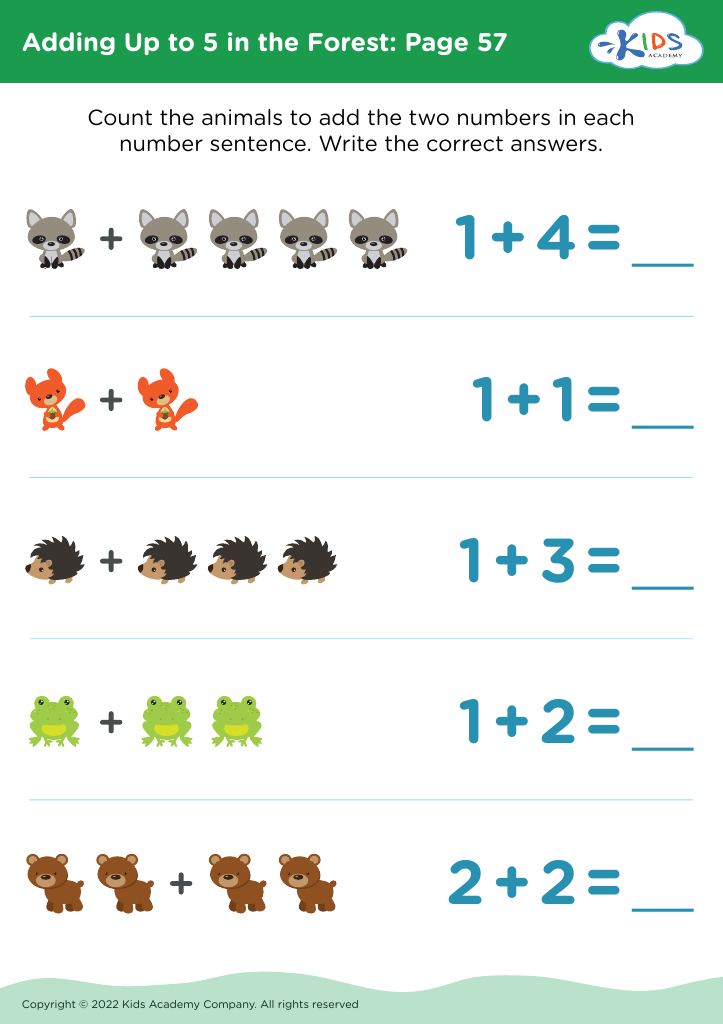
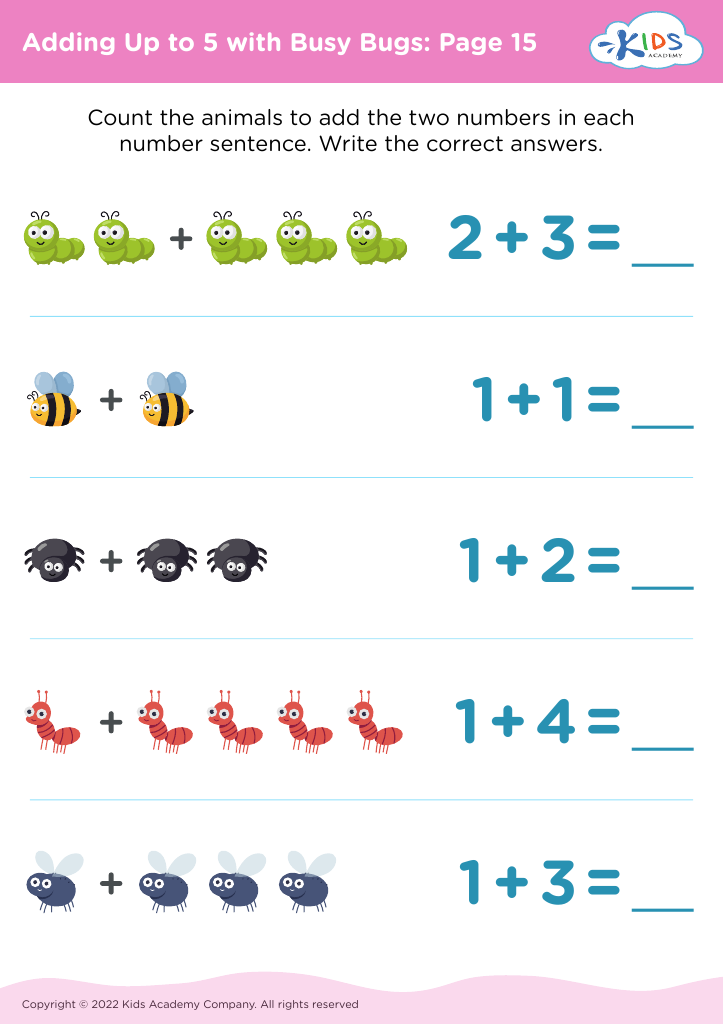








Counting skills and basic addition are crucial for children aged 5-6 as they lay the foundation for future mathematical understanding. At this age, children develop essential cognitive abilities, and their grasp of counting can significantly enhance their overall learning experience. Familiarity with counting aids in the recognition of numbers and improves a child's problem-solving capabilities, enabling them to tackle more complex mathematical concepts in later years.
Beyond academics, these skills foster essential life skills. For instance, mastering counting and addition empowers kids to make sense of everyday situations, like handling money at a store or understanding time intervals. When parents and teachers actively engage in promoting these skills, they help cultivate a sense of confidence and competence in children, encouraging them to explore math with curiosity rather than fear.
Furthermore, counting and addition skills support a child's social development. Playing games that involve numbers fosters collaboration and communication among peers. Parents and teachers should care about these skills because they profoundly impact a child's educational journey, social interactions, and problem-solving abilities, ultimately shaping not only mathematical competence but also a positive attitude toward learning.








