
Fine Motor Skills (coloring) Addition Worksheets for Ages 5-6
3 filtered results
Difficulty Level
Grade
Age
-
From - To
Subject
Activity
Standards
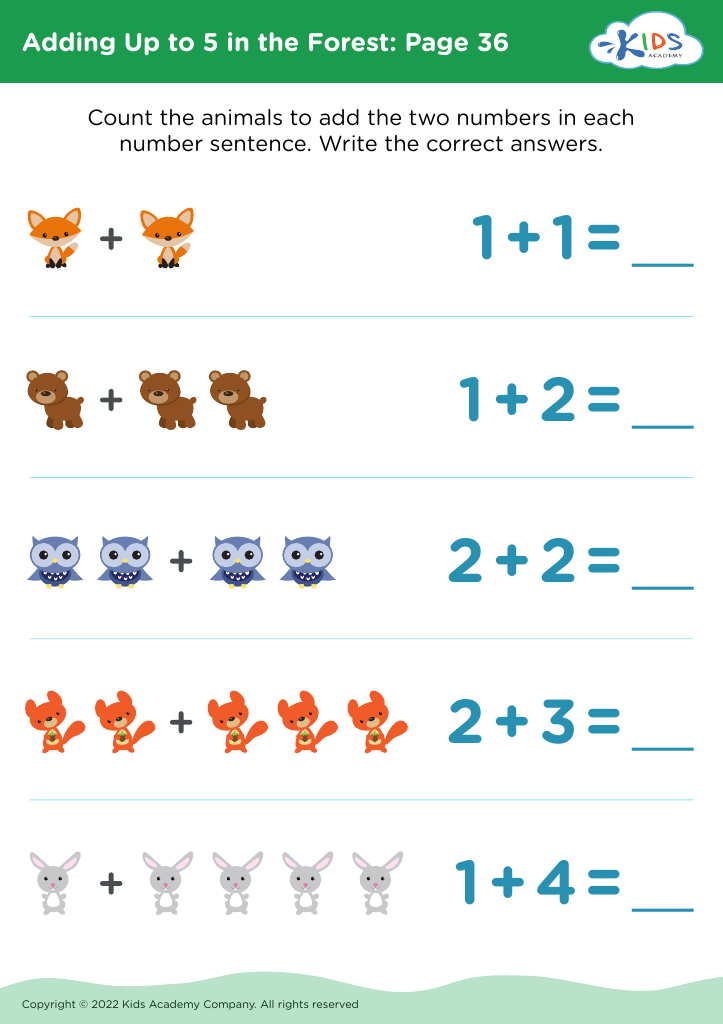
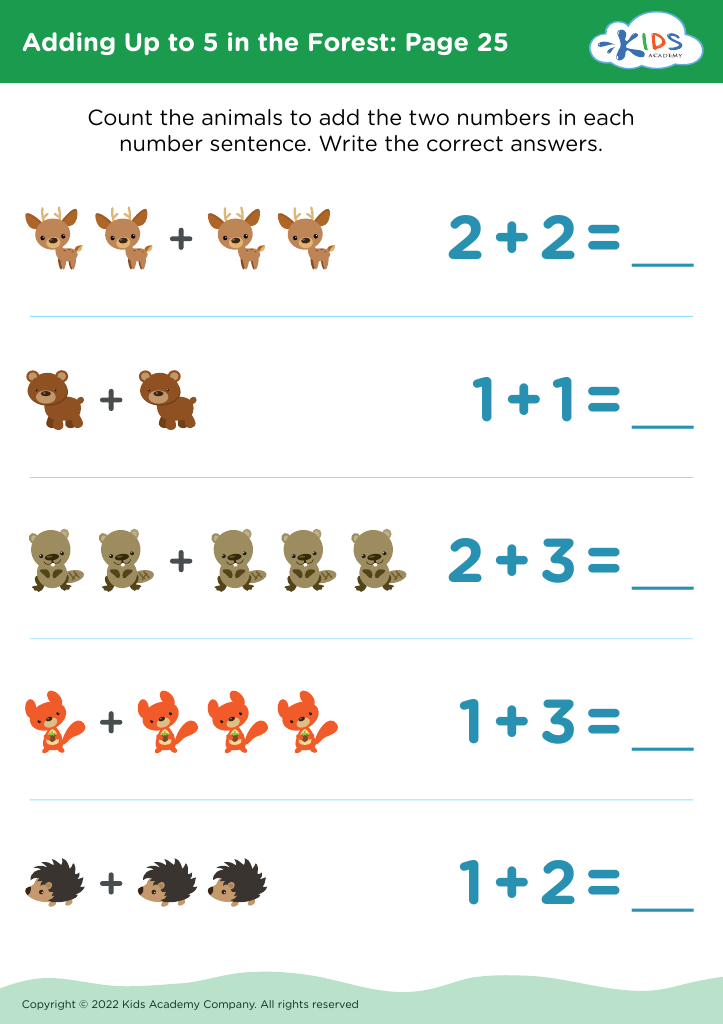
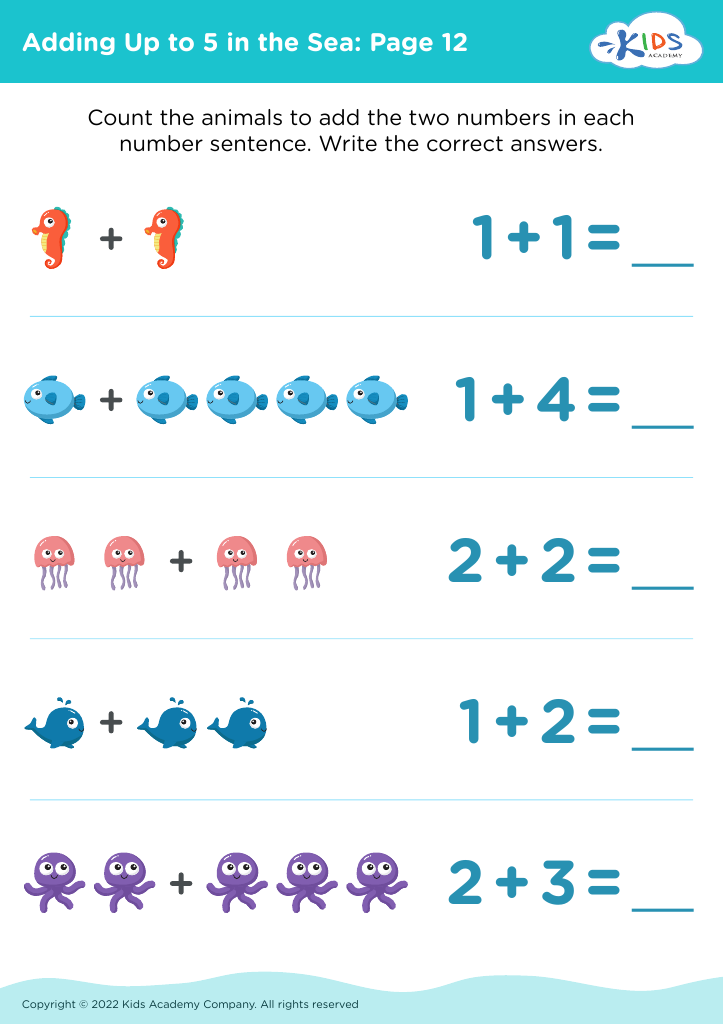
Enhance your child's fine motor skills with our engaging Addition Worksheets designed for ages 5-6! These colorful, interactive worksheets combine fun coloring activities with essential math practice. As children solve addition problems, they also strengthen their hand-eye coordination and dexterity through creative coloring techniques. Our thoughtfully crafted worksheets foster a love for learning while reinforcing number recognition and basic math skills. Perfect for at-home learning or classroom use, these worksheets offer an exciting blend of artistry and math, making learning enjoyable and effective. Get your child started on their journey to mastering addition while developing vital fine motor skills!
Favorites
With answer key
Interactive
Join Kids Academy for Free
Who is primarily going to use this learning content?








Fine motor skills are crucial for young children's overall development and are particularly important for ages 5-6, as they are a foundation for many future skills. Engaging in activities like coloring not only enhances fine motor development, but it also supports cognitive, emotional, and social growth.
As children manipulate crayons and markers, they refine their hand-eye coordination and dexterity, which are vital for various everyday tasks such as writing, tying shoes, and using utensils. Good fine motor skills are also linked to improved academic performance, particularly in literacy and numeracy. For instance, coloring can involve multiple steps that require children to focus, making connections between colors and shapes, and even integrating basic math concepts like grouping or sorting by color.
Moreover, coloring fosters creativity and self-expression, allowing children to explore their emotions and ideas. This, in turn, can lead to increased confidence and enjoyment in activities requiring motor skills. By recognizing the significance of fine motor skills through coloring, parents and teachers can create supportive learning environments that encourage exploration, thereby laying a solid foundation for lifelong skills and habits. Investing time in such activities enriches children’s learning experiences in meaningful ways.








