Mental math skills Addition Worksheets for Ages 5-6
5 filtered results
-
From - To
Boost your child's math proficiency with our engaging Mental Math Skills Addition Worksheets designed specifically for ages 5-6! These worksheets help young learners develop essential addition skills through fun and interactive problems, fostering mental calculations and enhancing their confidence in math. By practicing these exercises, children will improve their ability to visualize and solve addition problems quickly, preparing them for more complex math challenges ahead. Our easy-to-follow format ensures that learning remains enjoyable and effective. Perfect for classrooms or at-home practice, these worksheets cultivate a love for numbers while laying a strong foundation for your child’s mathematical journey. Download today and watch them thrive!
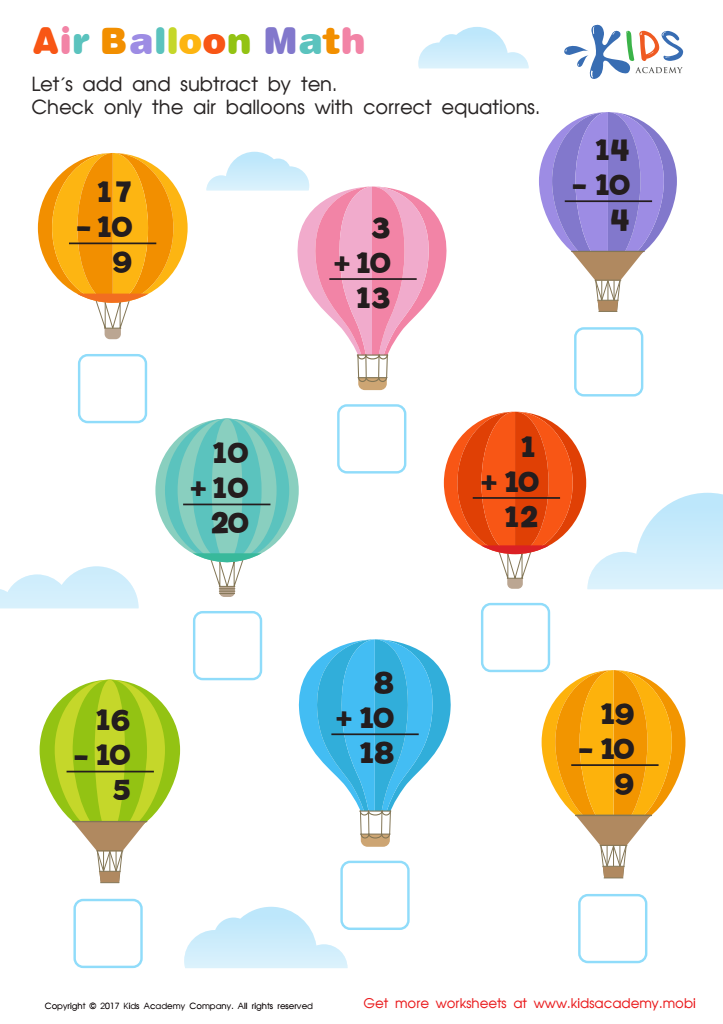
Air Balloon Math Worksheet
 Assign to My Students
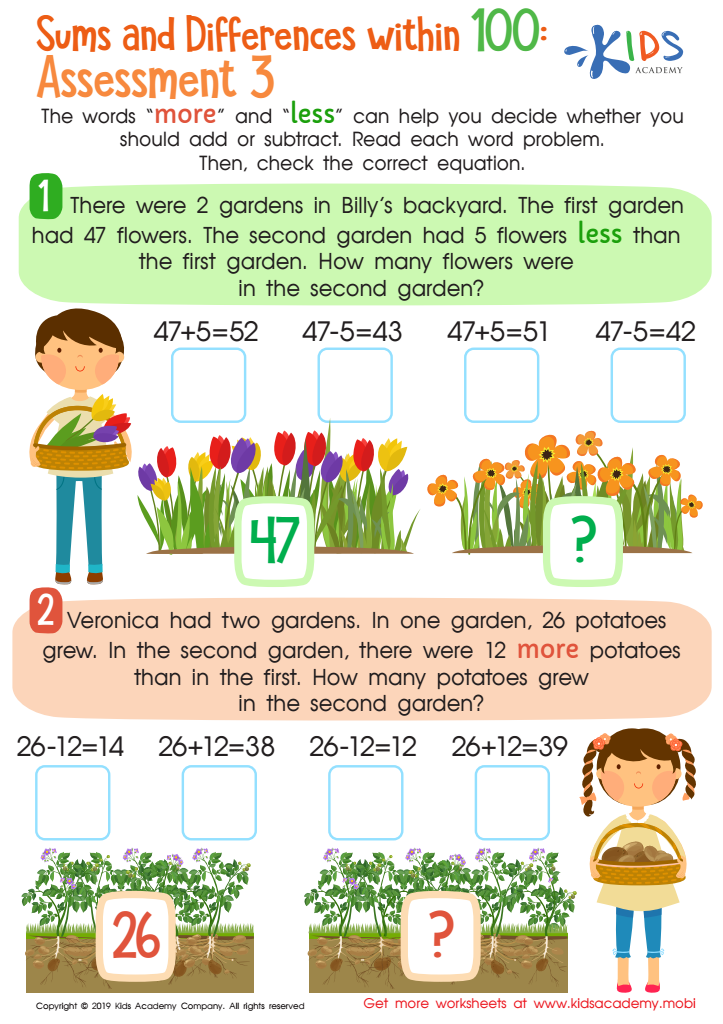
Sums and Differences Within 1 - Assessment 1 Worksheet
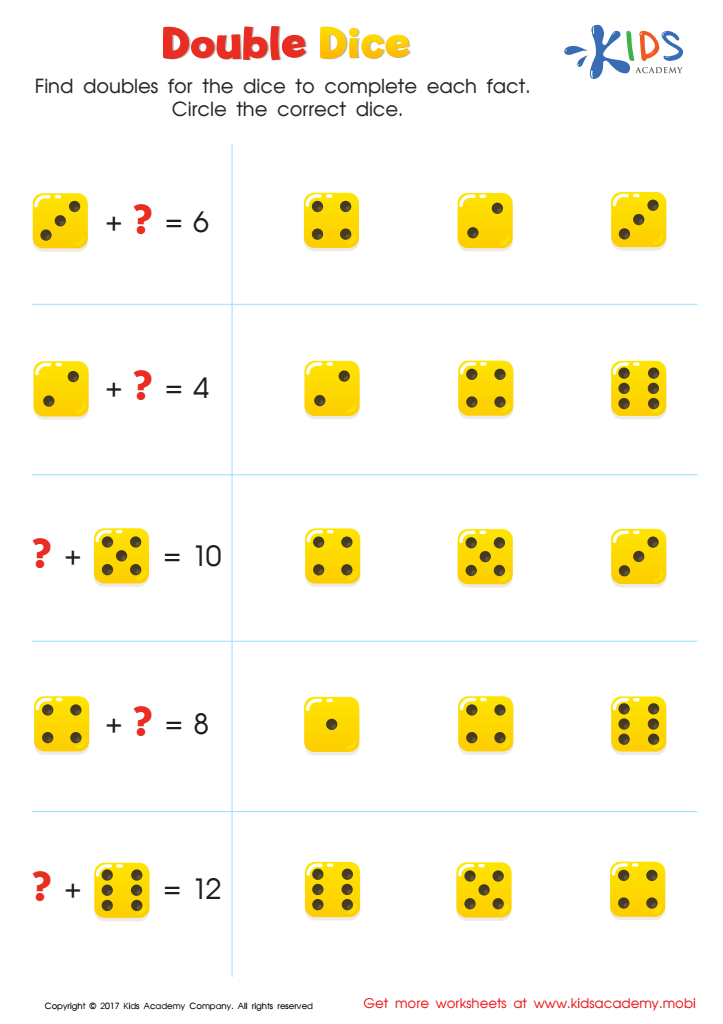
Addition Facts: Double Dice Worksheet
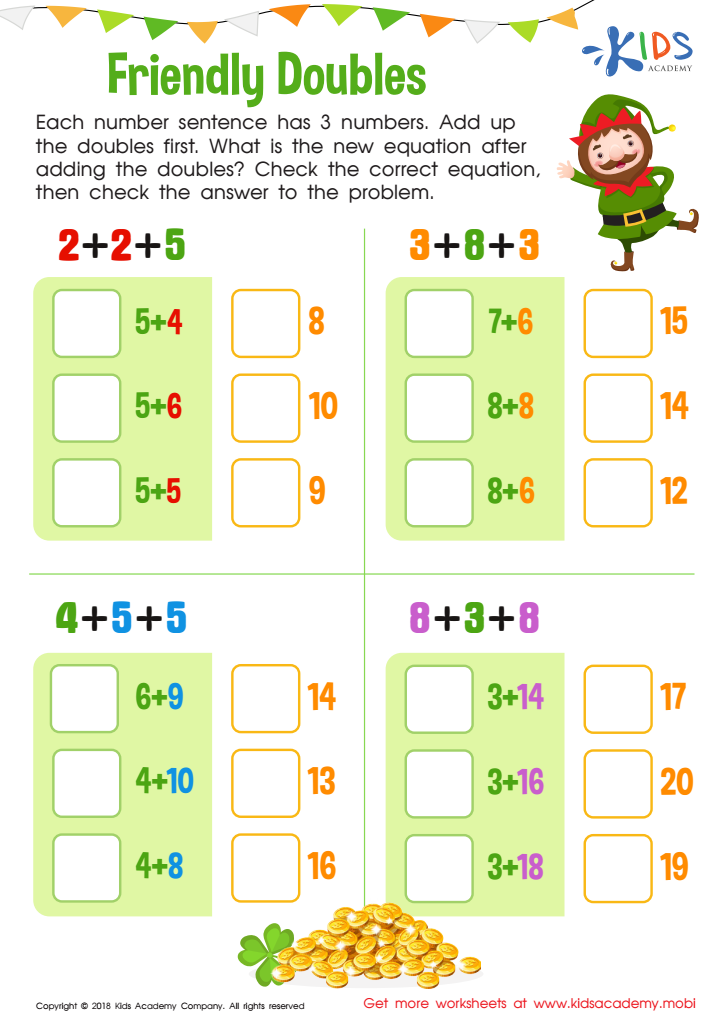
Friendly Doubles Worksheet
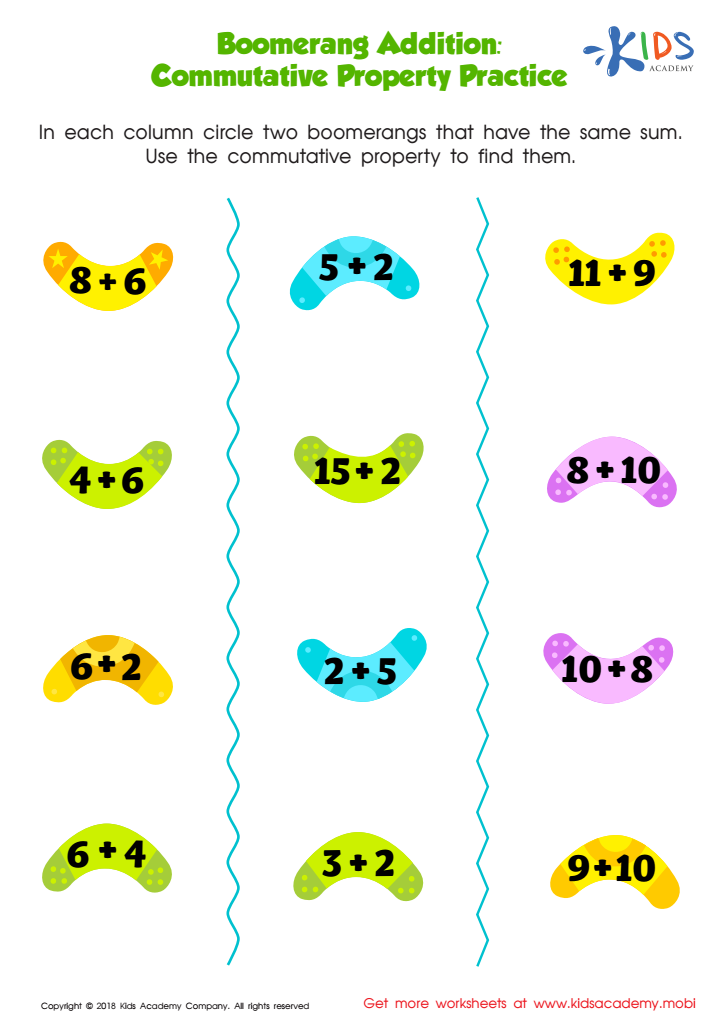
Boomerang Addition Worksheet





.jpg)


Mental math skills, particularly in addition for children aged 5-6, are crucial for several reasons that both parents and teachers should consider. First and foremost, mental math encourages children's cognitive development; it enhances problem-solving skills and boosts overall academic performance. When children practice addition mentally, they strengthen their number sense, which lays the groundwork for more complex mathematical concepts later on.
Additionally, mental addition fosters a sense of confidence. When children can quickly calculate sums in their head, they feel empowered and capable, reducing math anxiety that often arises as they progress through school. This confidence can translate into a positive attitude towards all learning experiences.
Moreover, developing mental math skills promotes critical thinking and creativity. Children learn to approach problems from different angles and find solutions efficiently. This skill is not only applicable in mathematics but also in everyday life situations, from budgeting to cooking.
Incorporating mental math into daily routines can also enhance family bonding. Simple games and activities can make learning fun, turning mathematics into an enjoyable experience. Ultimately, parents and teachers should prioritize mental math addition skills to equip children with the tools they need for future academic and life success.








