Understanding number relationships Addition Worksheets for Ages 5-6
3 filtered results
-
From - To
Discover engaging Addition Worksheets designed to help children ages 5-6 understand number relationships. At Kids Academy, our grade-appropriate printable worksheets make early math accessible and fun. Young learners can practice core skills such as adding numbers within 10, understanding sums, and improving problem-solving abilities. With colorful illustrations and hands-on activities, these worksheets foster a love for math through play-based learning. Parents and educators will find an invaluable resource to support kids’ mathematical journeys, ensuring foundational skills are built for future academic success. Spark your child's interest in numbers today with our expertly crafted worksheets!
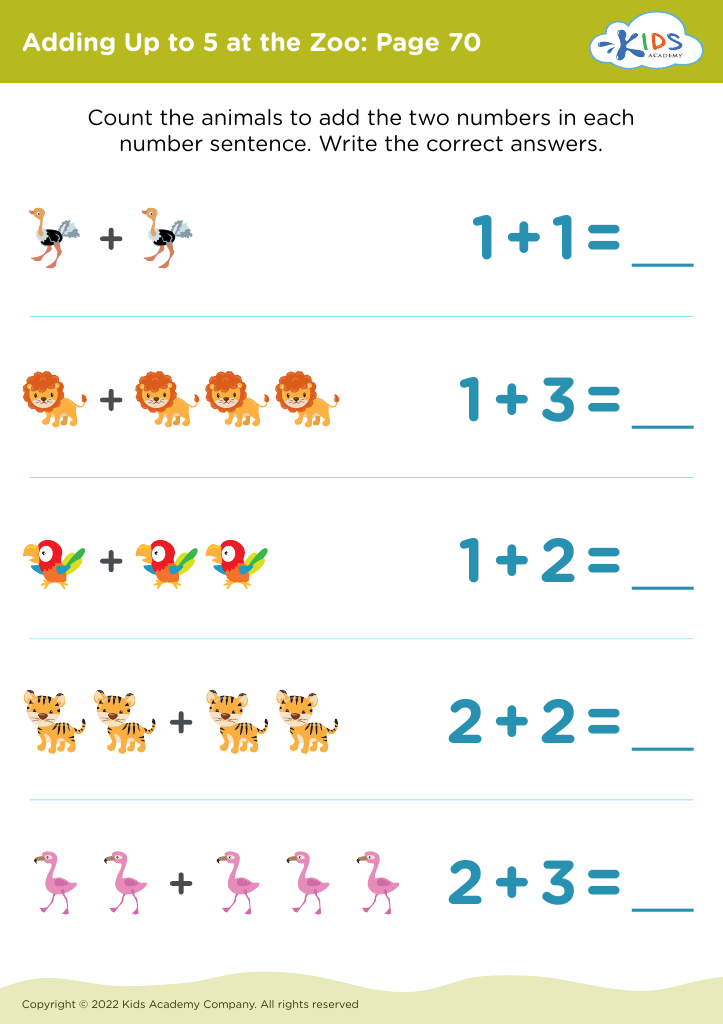
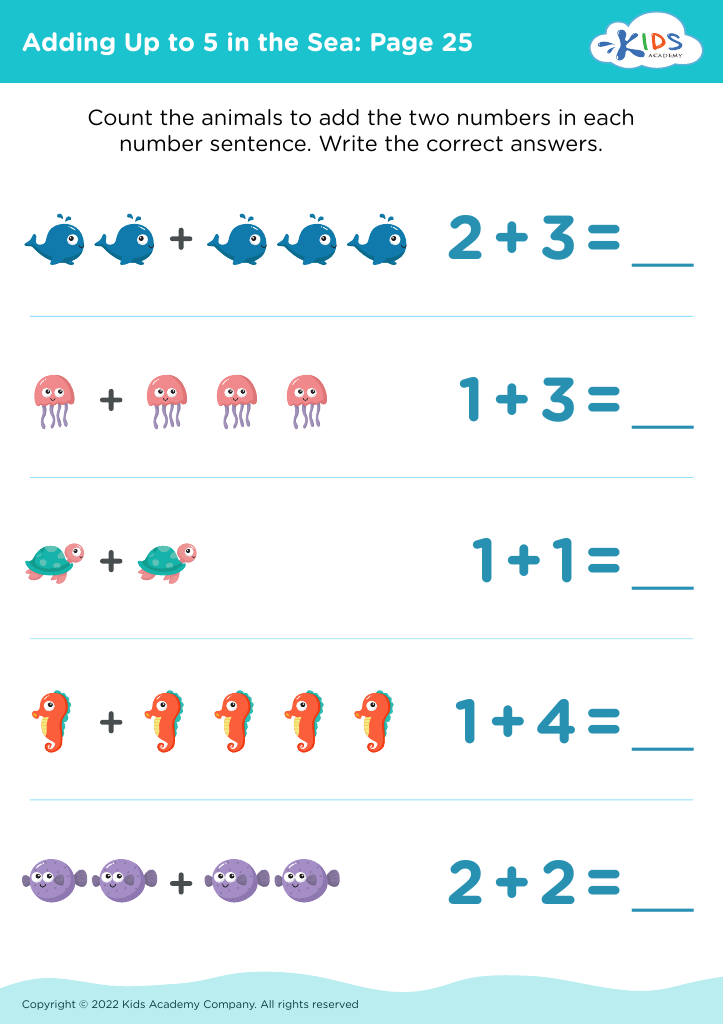
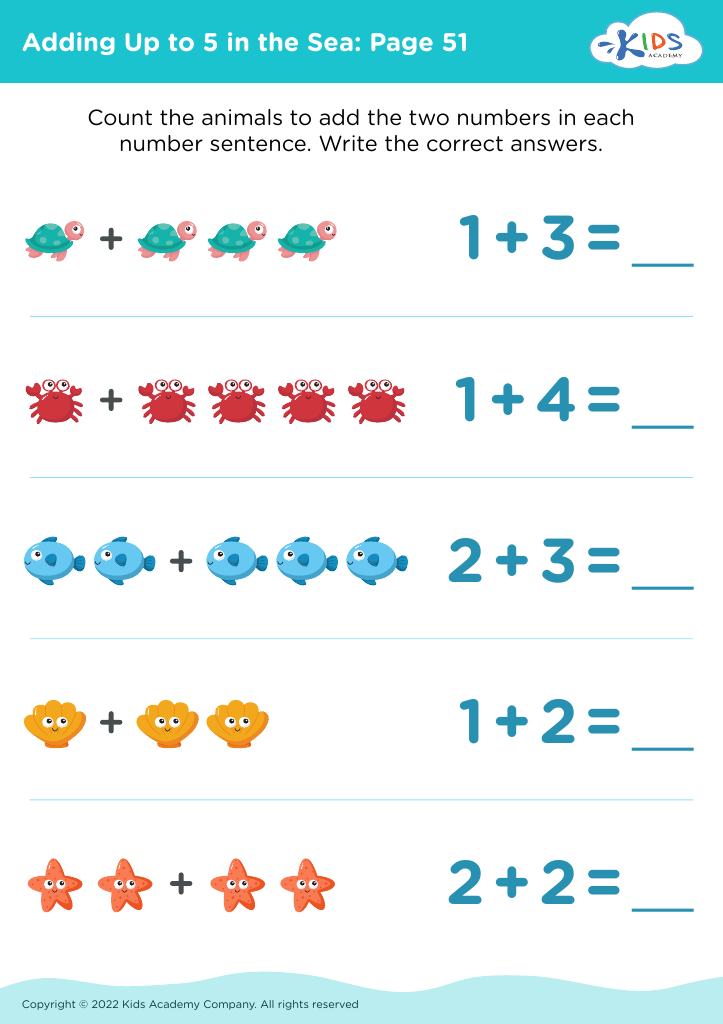






.jpg)
Understanding number relationships and addition for children ages 5-6 is foundational to their future success in math and logical thinking. At this age, kids are developing their cognitive abilities to comprehend and manage numbers, paving the way for more complex math concepts later on.
When parents and teachers emphasize the importance of these foundational skills, they foster a positive attitude towards math. Comprehending basic addition and number relationships enhances a child's problem-solving skills and logical reasoning. It teaches them how to make connections and see patterns, which are crucial for academic success in various subjects, not just math.
Early exposure to these concepts also helps build confidence. Children who grasp basic math skills can approach new challenges with a sense of competence and enthusiasm. This early confidence can lead to a lifelong appreciation and ease with math.
Furthermore, a solid understanding of number relationships supports everyday life skills, such as telling time, managing money, and measuring ingredients. It's essential for parents and educators to nurture these skills through engaging, fun activities that make learning a positive and rewarding experience. Ensuring children grasp these early math concepts equips them with tools necessary for their academic journey and beyond.








