Visual learning reinforcement Addition Worksheets for Ages 5-6
5 filtered results
-
From - To
Discover our engaging Visual Learning Reinforcement Addition Worksheets designed specifically for children aged 5-6. These worksheets utilize vibrant visuals and interactive elements to help young learners grasp the fundamentals of addition in a fun and intuitive way. Each activity is designed to enhance number recognition, counting skills, and problem-solving abilities through captivating illustrations and hands-on practice. Perfect for both classroom and home learning, our worksheets make math enjoyable while reinforcing essential skills. Foster a love for learning and boost confidence in math with our user-friendly, visually appealing resources tailored to support early childhood education. Start your journey toward math mastery today!
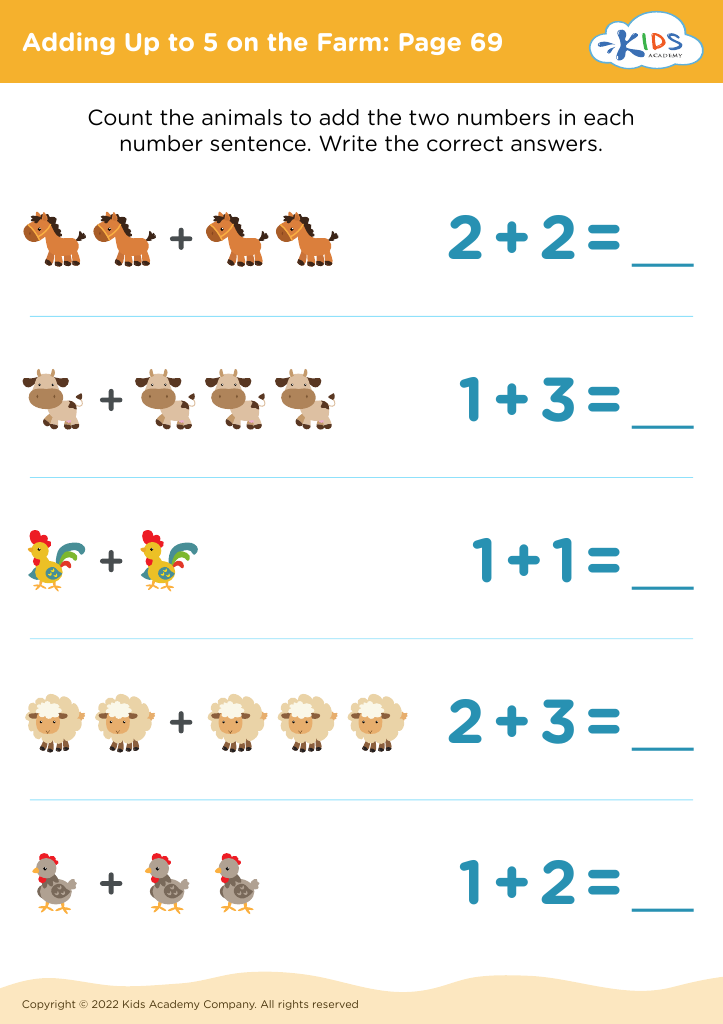
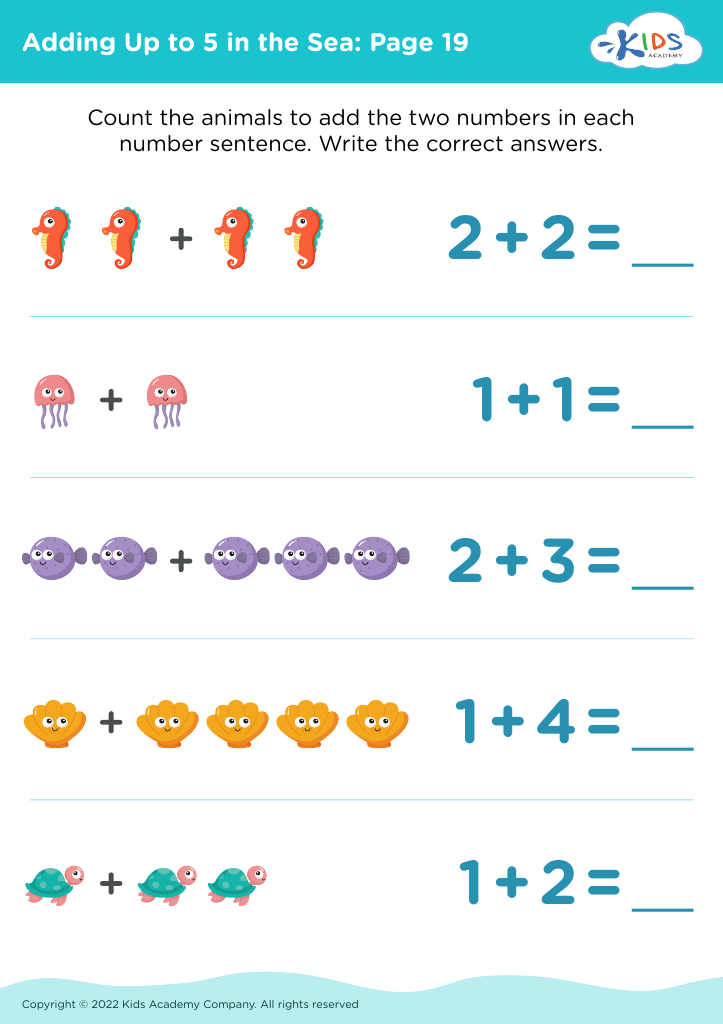
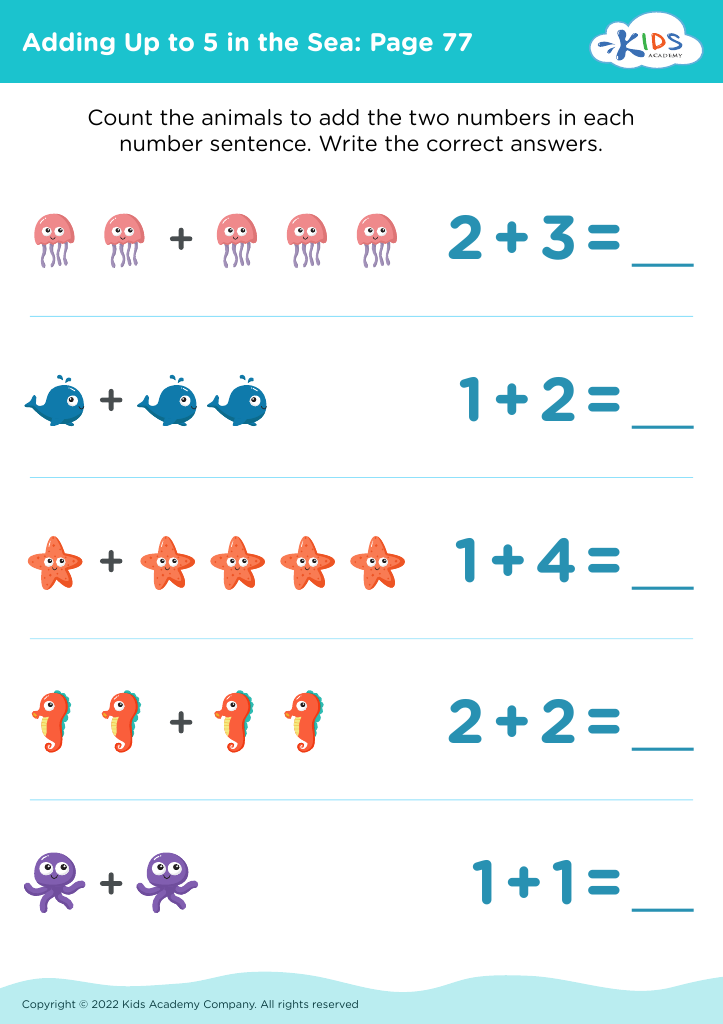
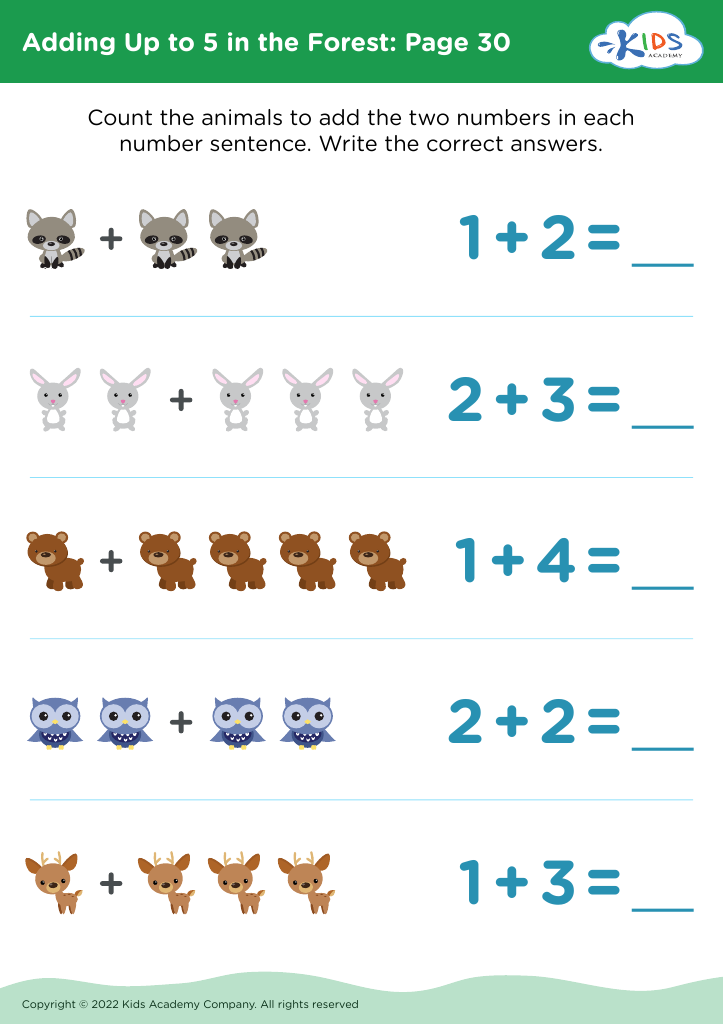
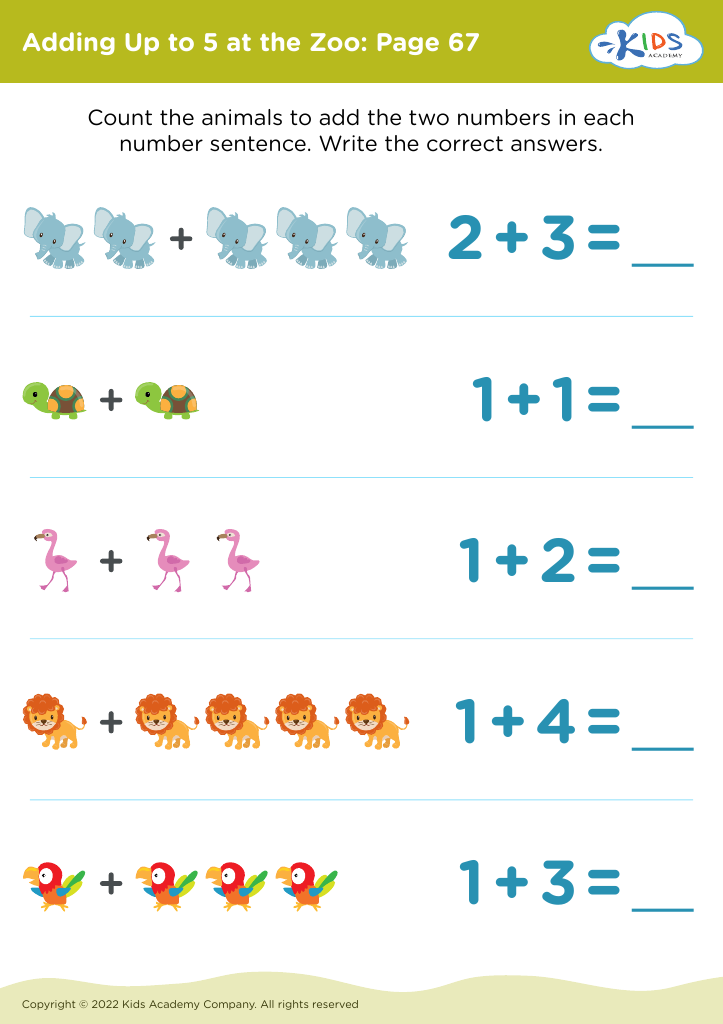








Visual learning reinforcement is a crucial approach for teaching addition to children aged 5-6 because it aligns with their natural developmental stages and learning styles. At this age, young learners often thrive when concepts are presented visually, helping them grasp complex ideas through imagery and spatial understanding. Visual aids, such as number lines, colorful counters, and interactive games, can simplify the addition process and make it more engaging.
By incorporating visual learning, teachers and parents can facilitate a deeper understanding of number relationships and problem-solving strategies. Children are likely to remember information better when they can see and manipulate it, as this multimodal approach enhances cognitive retention. Visual representations help demystify abstract concepts, making math not only more accessible but also more enjoyable.
Furthermore, using visual elements fosters confidence and independence as children build their skills. This reinforcement offers diverse pathways for learning, catering to different paces and personal preferences. Thus, parents and teachers should prioritize visual learning in addition, creating a strong foundation for mathematical literacy that can be built upon in later years. By investing in these techniques, they empower children to approach math with a sense of curiosity and positivity.








