
Visual-motor skills Addition Worksheets for Ages 5-6
3 filtered results
Difficulty Level
Grade
Age
-
From - To
Subject
Activity
Standards
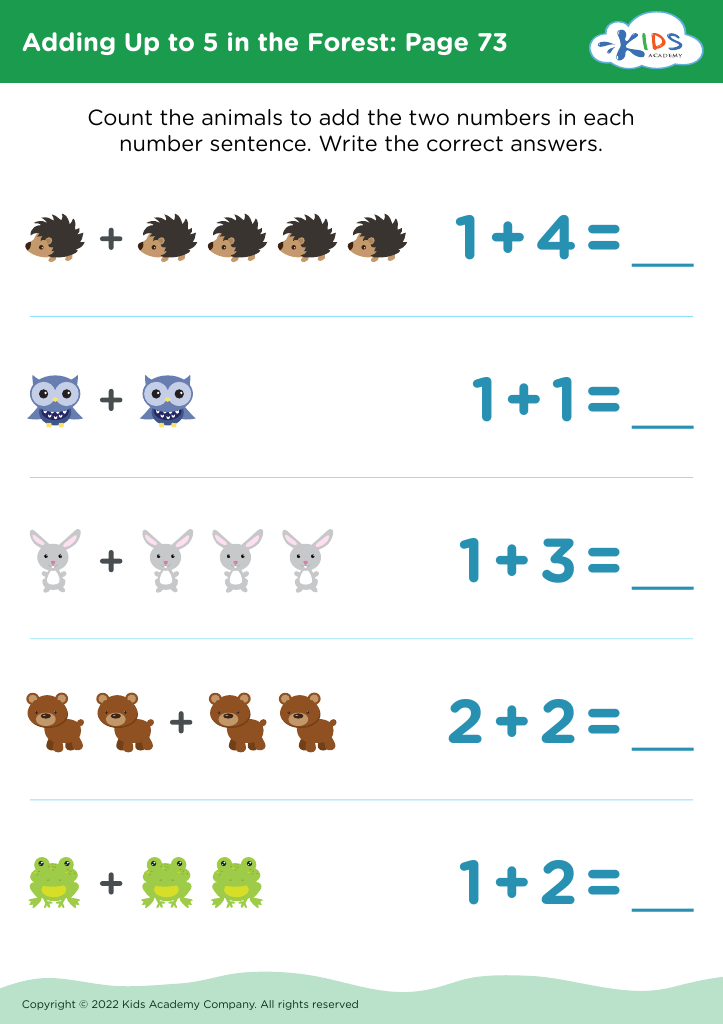
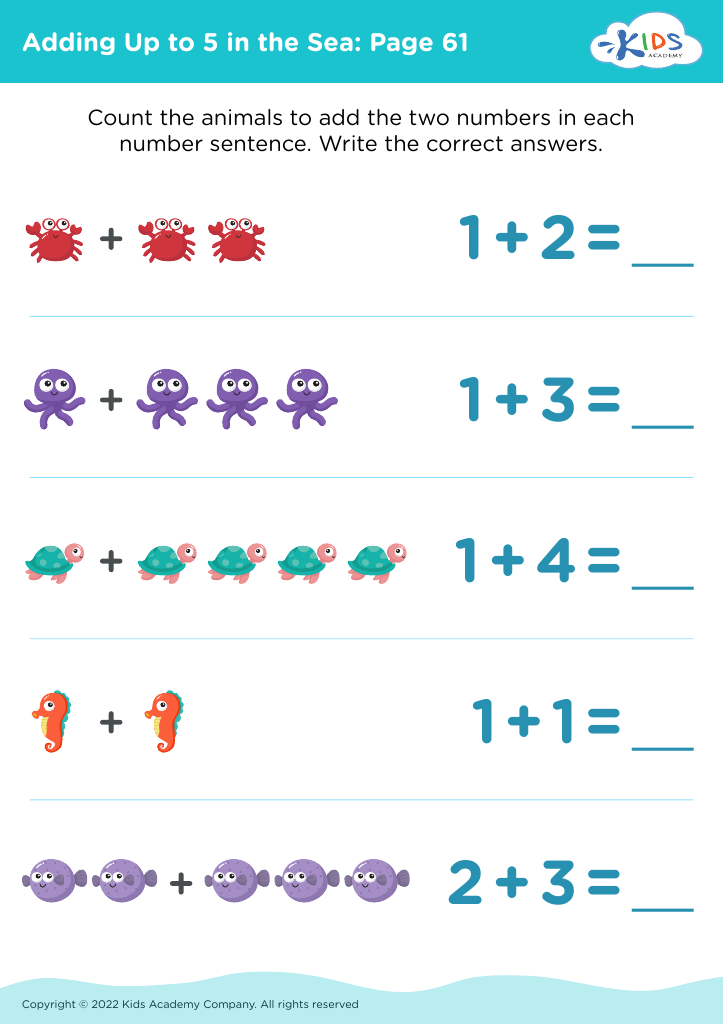
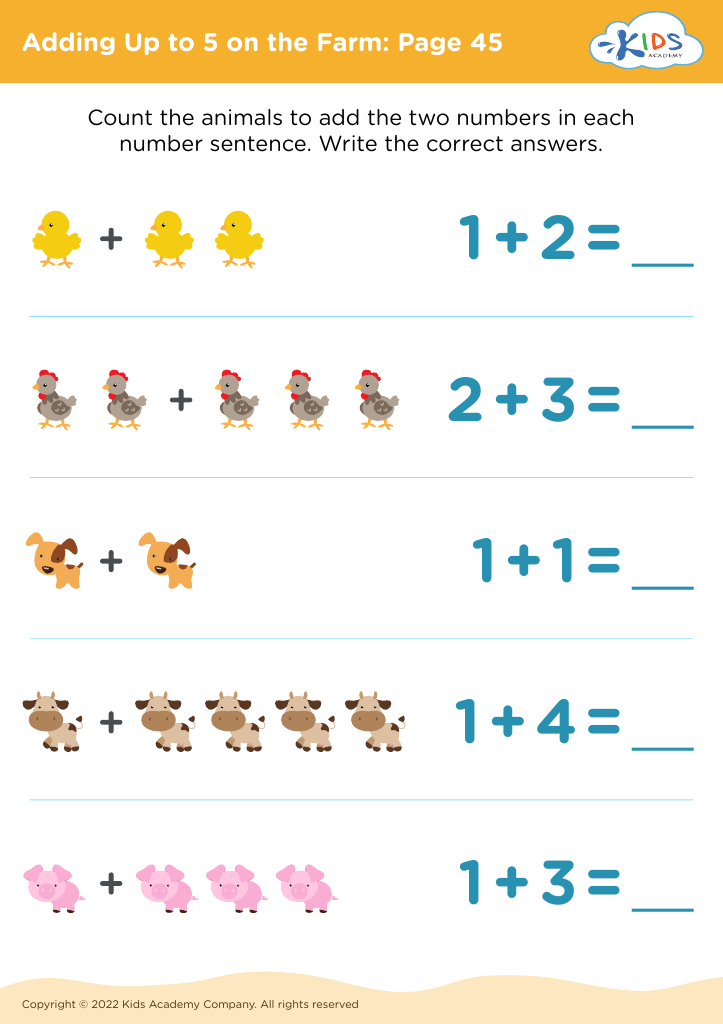
Enhance your child's learning experience with our Visual-Motor Skills Addition Worksheets designed specifically for ages 5-6. These engaging worksheets combine fun visuals and interactive activities to help young learners develop critical visual-motor skills while mastering basic addition. As children trace, draw, and engage with colorful illustrations, they improve coordination and boost their mathematical confidence. Perfect for home or classroom use, our worksheets foster a love for learning by making math exciting and accessible. Download and print our collection today to provide your child with the tools they need for success in both math and fine motor development!
Favorites
With answer key
Interactive
Join Kids Academy for Free
Who is primarily going to use this learning content?








Visual-motor skills are essential for children ages 5-6 as they directly impact a child's ability to interact with their environment and engage in learning activities. These skills involve the coordination between visual input and motor output, which means how well a child can process what they see and translate that into action.
For parents and teachers, fostering these skills is crucial at this stage of development because they form the foundation for many academic tasks, such as writing, drawing, and even basic math activities. Children with strong visual-motor skills can better manage tools like pencils, scissors, and crayons, facilitating smoother participation in classroom tasks and playtime.
Moreover, developing these skills promotes confidence in children. When they can accurately complete tasks that require hand-eye coordination, it reinforces a sense of achievement and encourages them to take on new challenges.
Additionally, visual-motor skills are linked to cognitive development. They enhance abilities related to problem-solving, attention, and focus. Therefore, parents and teachers should prioritize activities—like puzzles, crafts, and guided play—that strengthen visual-motor skills, setting a solid foundation for their physical, social, and academic growth. By supporting these skills, adults can contribute significantly to a child's overall development and success in early education.








