Visual Perception Skills Addition Worksheets for Ages 5-6
5 filtered results
-
From - To
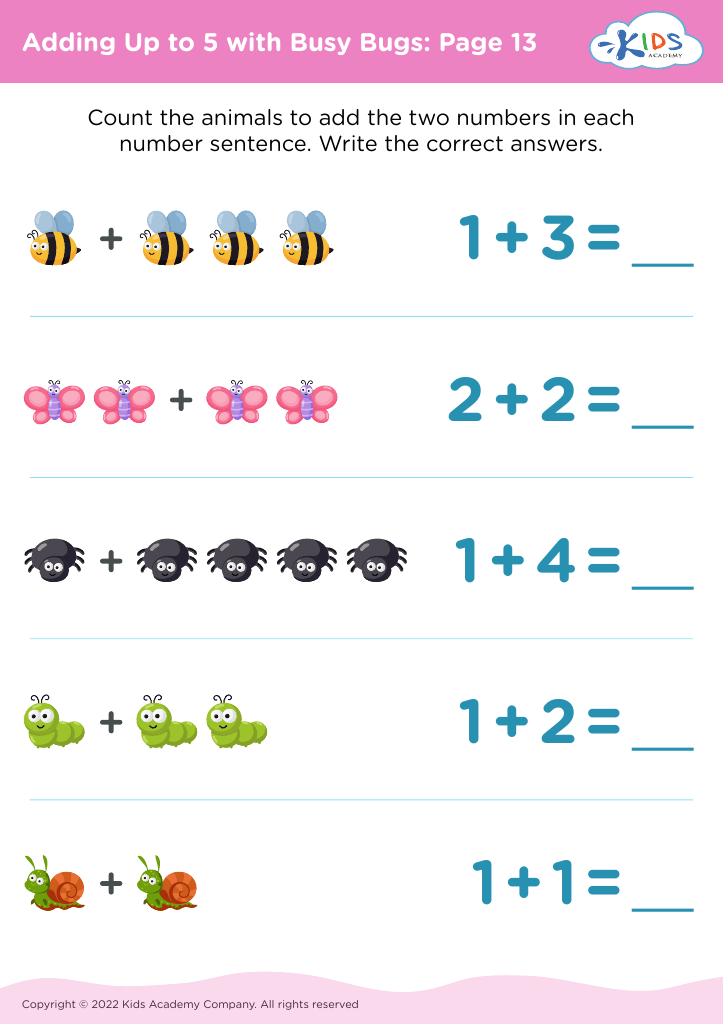
Enhance your child's learning with our Visual Perception Skills Addition Worksheets, designed for ages 5-6. These engaging worksheets combine the foundational principles of addition with visual perception tasks that develop crucial cognitive skills. By practicing these activities, your child will not only improve their mathematical abilities but also sharpen their visual discrimination, pattern recognition, and spatial awareness. Perfect for early learners, these worksheets are geared to make learning fun and effective, paving the way for future academic success. Foster a love for math in a playful and stimulating way with Kids Academy’s expertly crafted resources!
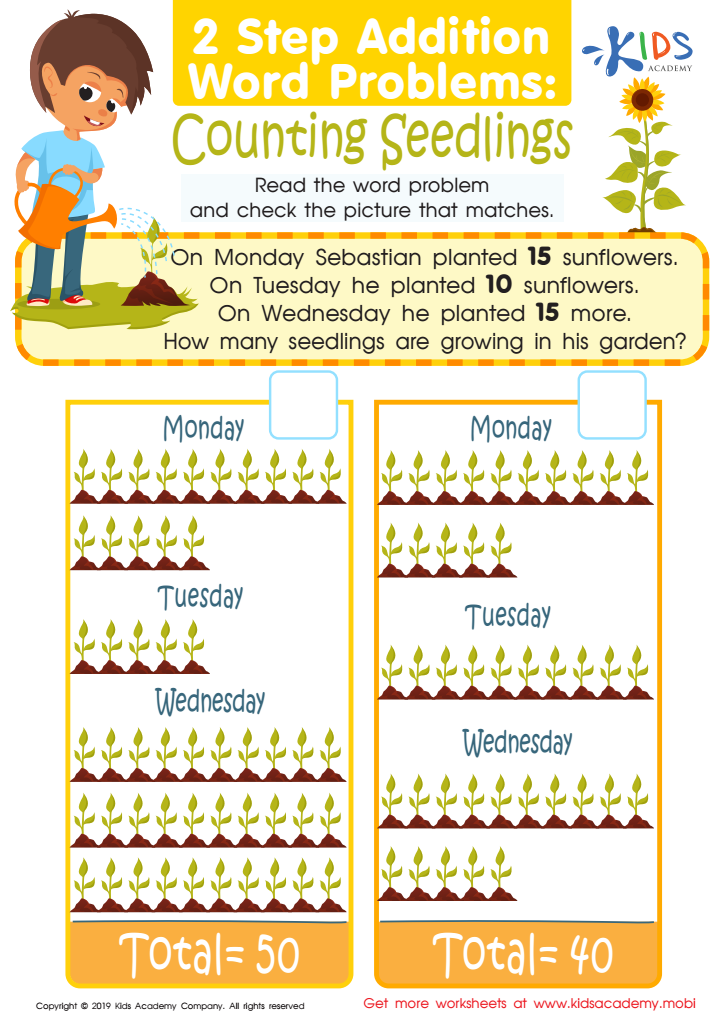
Counting Seedlings Worksheet
 Assign to My Students
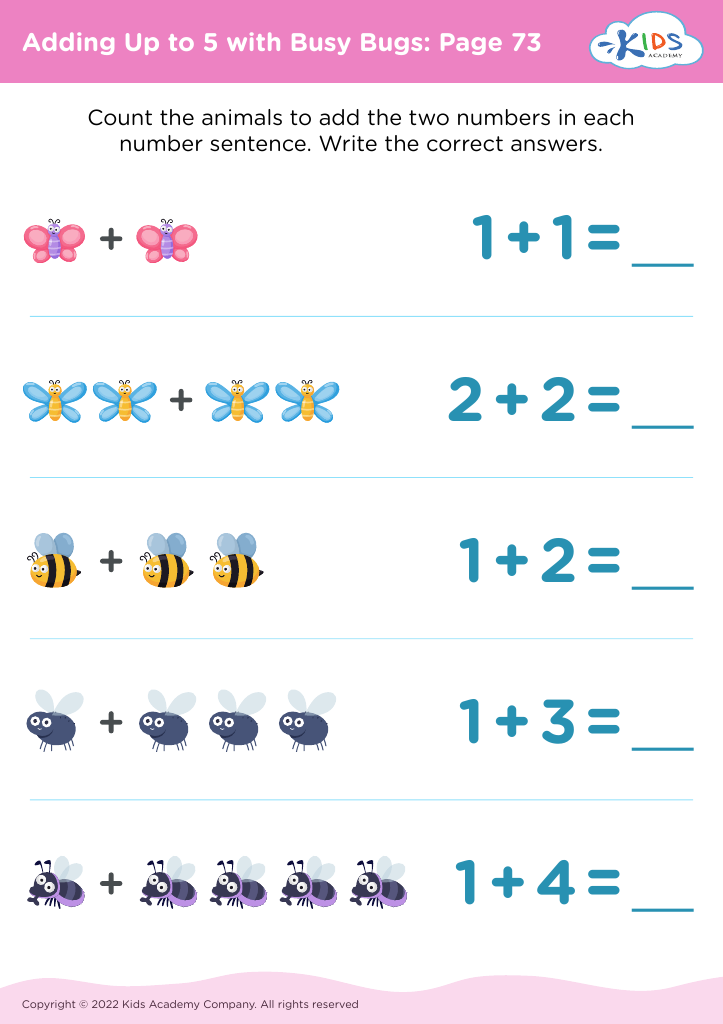
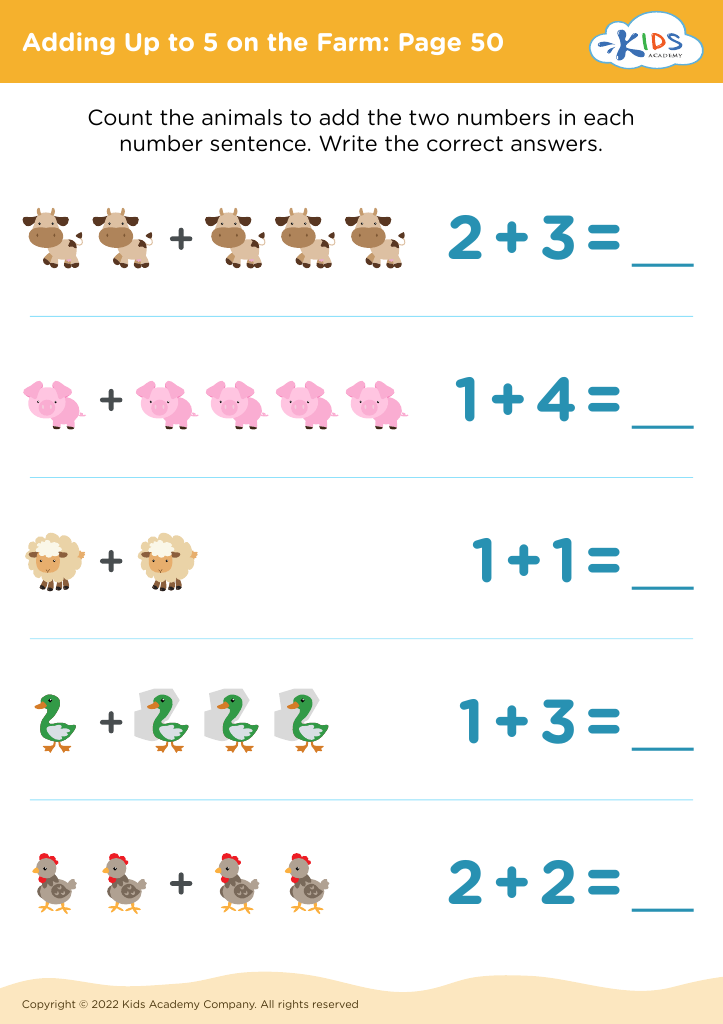
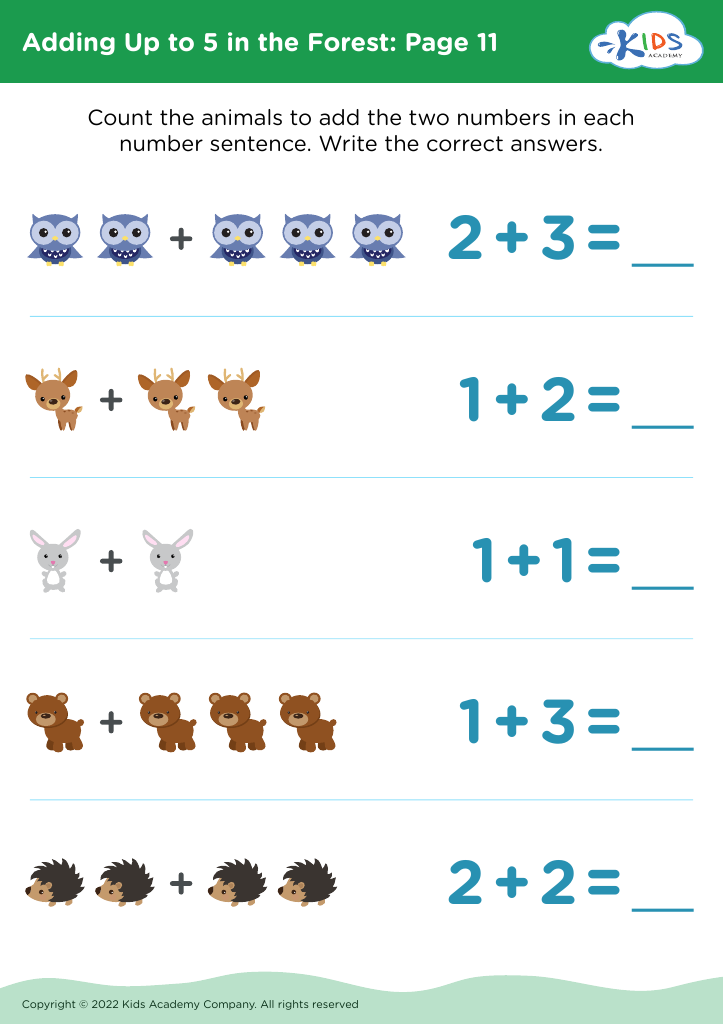



.jpg)




Visual perception skills are crucial for young children, especially in the age group of 5-6, as they form a foundation for learning and everyday tasks. These skills help children interpret and make sense of visual information from the world around them, which is critical for reading, writing, mathematics, and coordination activities.
Firstly, for children aged 5-6, visual perceptual skills enhance reading abilities. They help children recognize letters and words, understand spacing, and follow a line of text without losing their place, which is essential for developing literacy.
Secondly, these skills aid in writing. Children who have good visual perceptual abilities can better understand how to align letters and words on a page, differentiate between similar shapes like 'b' and 'd', and maintain consistent letter sizes.
In addition to academic benefits, visual perception is important for everyday tasks such as tying shoes, getting dressed, or crossing the street safely. It also fosters social development as children use visual cues to navigate social situations, like understanding facial expressions or body language.
Parents and teachers should therefore pay attention to the development of visual perception skills by engaging children in activities that promote these abilities, such as puzzles, drawing, matching games, and other hands-on activities. Nurturing these skills helps ensure children are well-prepared for both academic success and everyday functionality.








