Money recognition Money Worksheets for Ages 5-6
5 filtered results
-
From - To
Help your child master money recognition with our engaging Money Worksheets designed for ages 5-6! These printable activities from Kids Academy provide a fun and interactive way to learn about different coins and their values. With colorful images and easy-to-follow exercises, your young learner will quickly enhance their understanding of money. Perfect for both classroom and at-home learning, our worksheets are designed to build confidence and motivation in early math skills. Download now and watch as your child identifies and counts coins with accuracy and enthusiasm!
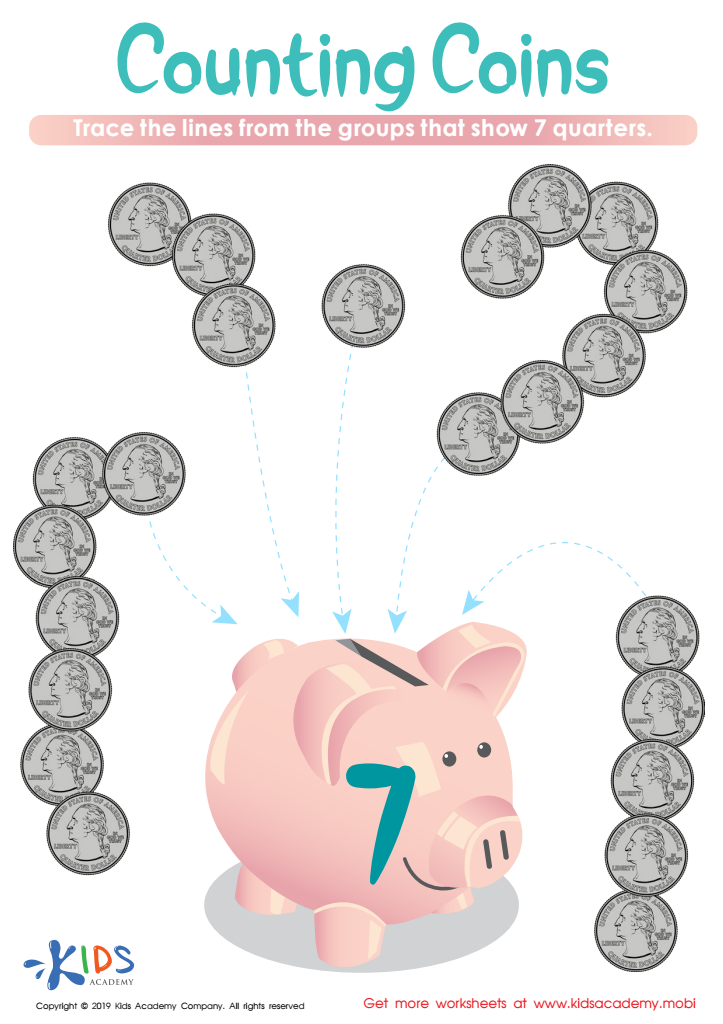
Counting Coins Worksheet
 Assign to My Students
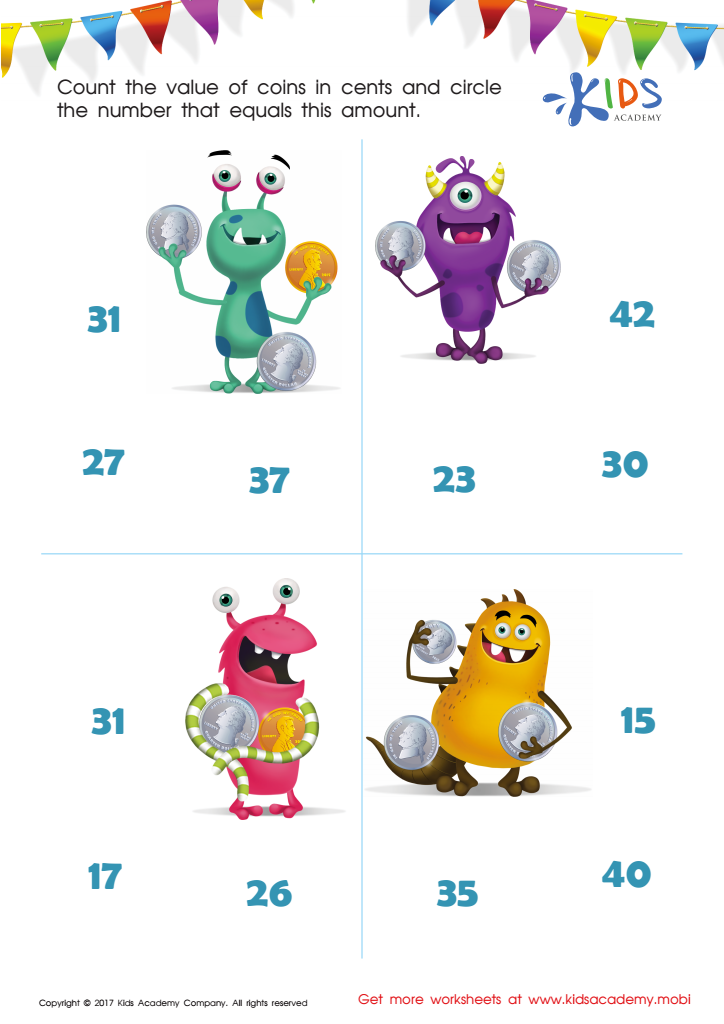
How Many Coins Money Worksheet
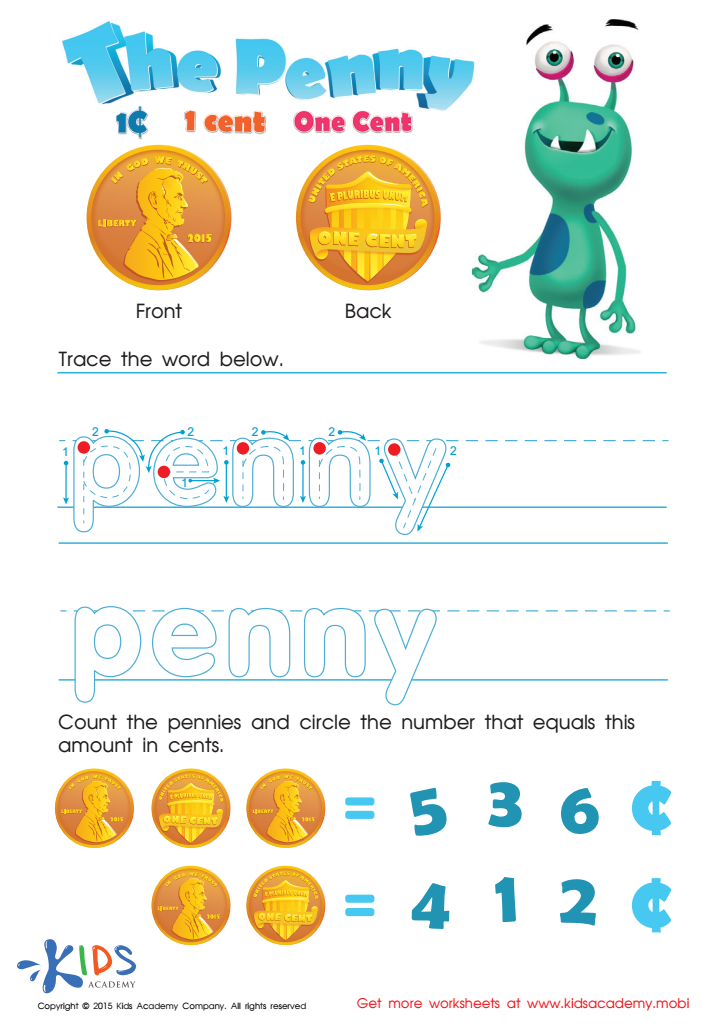
One Cent or the Penny Money Worksheet
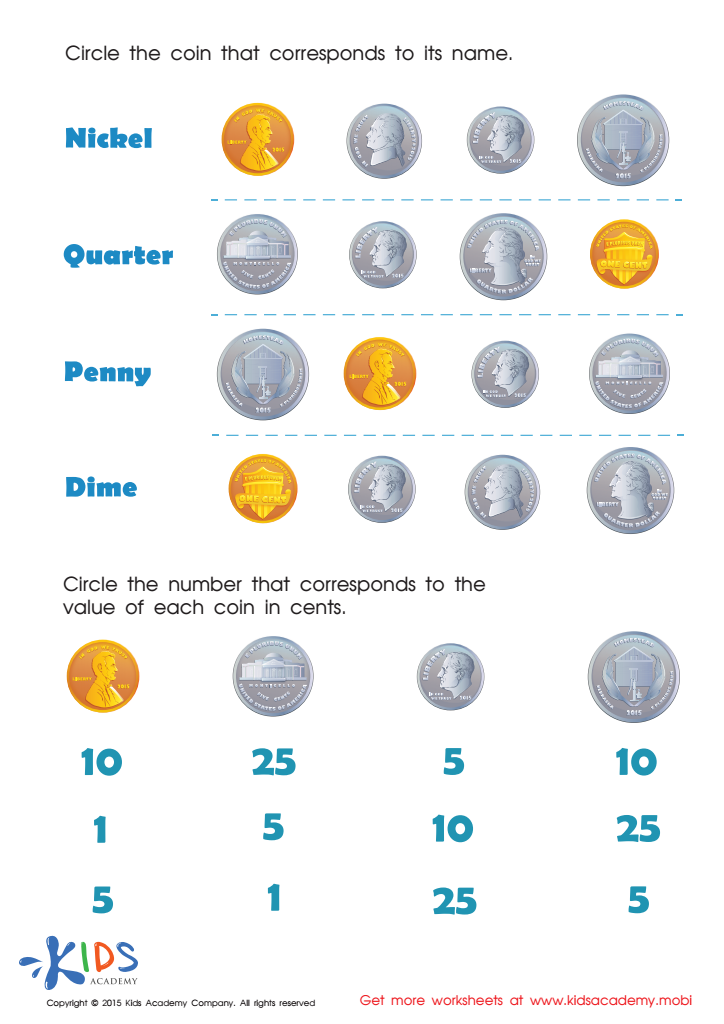
Coin Names and Values Money Worksheet
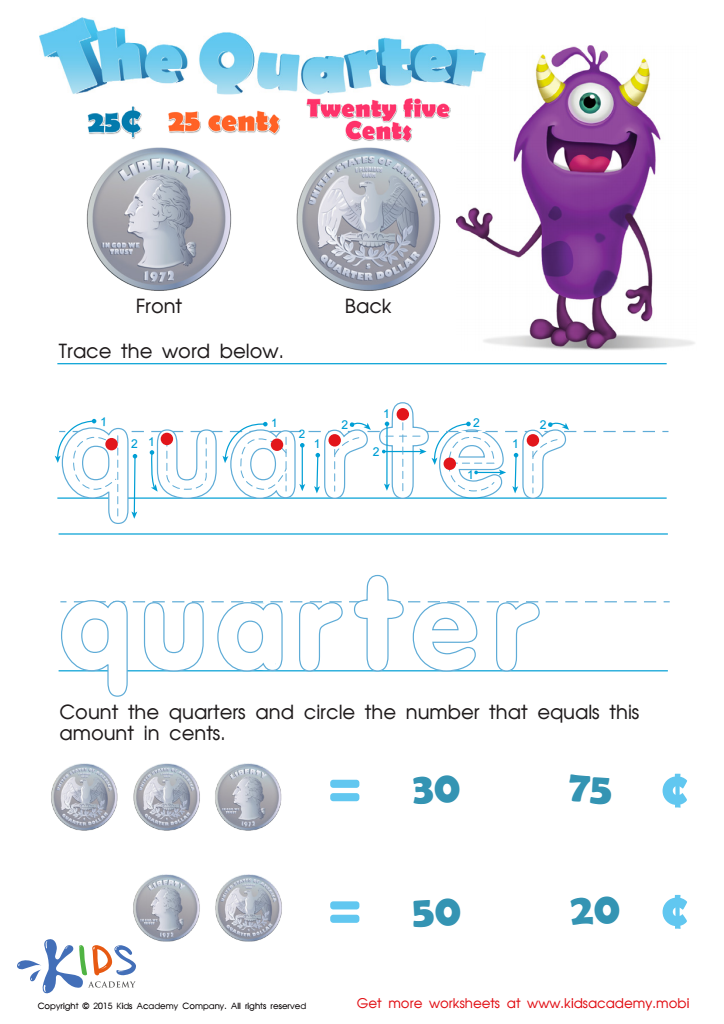
Twenty Five Cents or the Quarter Money Worksheet








It's essential for parents and teachers to instill money recognition in young children, particularly those aged 5-6, because it lays a fundamental cornerstone for their future financial literacy and independence. At this formative age, kids are merely starting to grasp basic math concepts, and learning about money serves as a practical application of these skills. Recognizing different denominations, understanding value, and simple exchanges (like using coins and bills in play scenarios) foster early numeracy in a real-world context.
Moreover, these activities help children develop cognitive skills like classification and comparison while introducing simple arithmetic principles like counting, addition, and subtraction. By associating money with everyday activities, adults make math meaningful and engaging, which ignites a child's curiosity and willingness to learn.
Emphasizing money recognition early also carries significant socio-emotional benefits. When kids experience small transactions or understand saving concepts, they practice decision-making skills and develop a sense of responsibility. This may not turn them into financial whizzes overnight, but it certainly sets a strong foundation. Ultimately, these lessons aim to cultivate a healthier and more pragmatic attitude towards money management that evolves as children mature, preparing them to navigate the financial complexities of adult life with confidence.








