Shape Recognition Fractions of Shapes Worksheets for Ages 5-6
4 filtered results
-
From - To
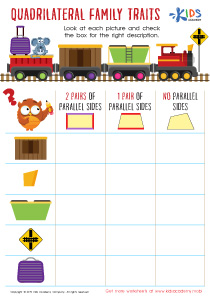
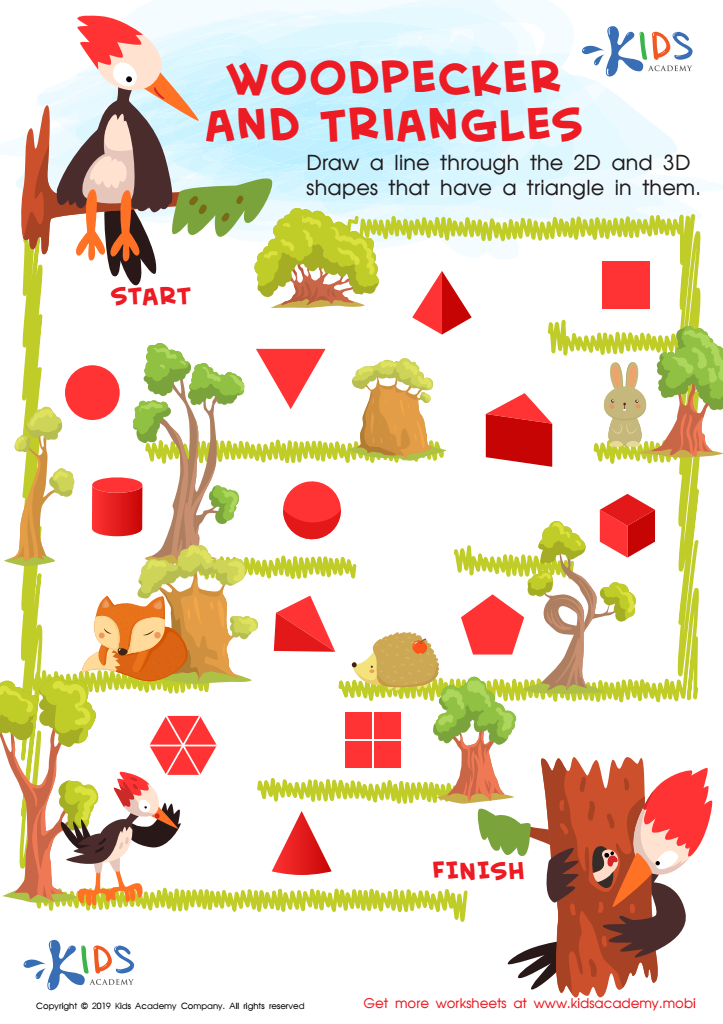
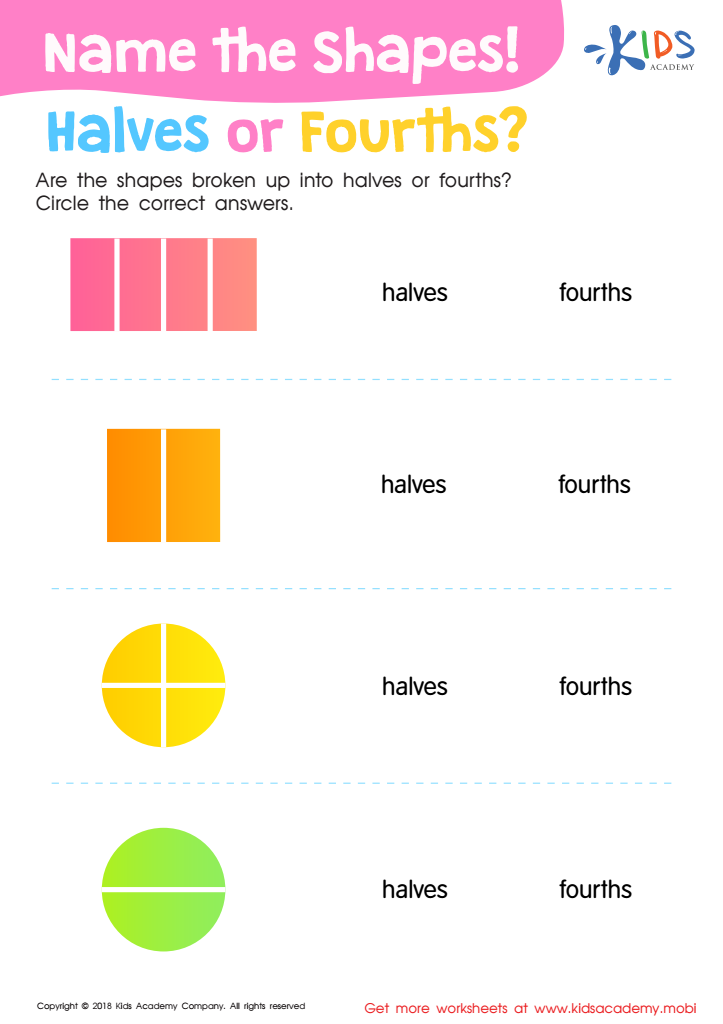
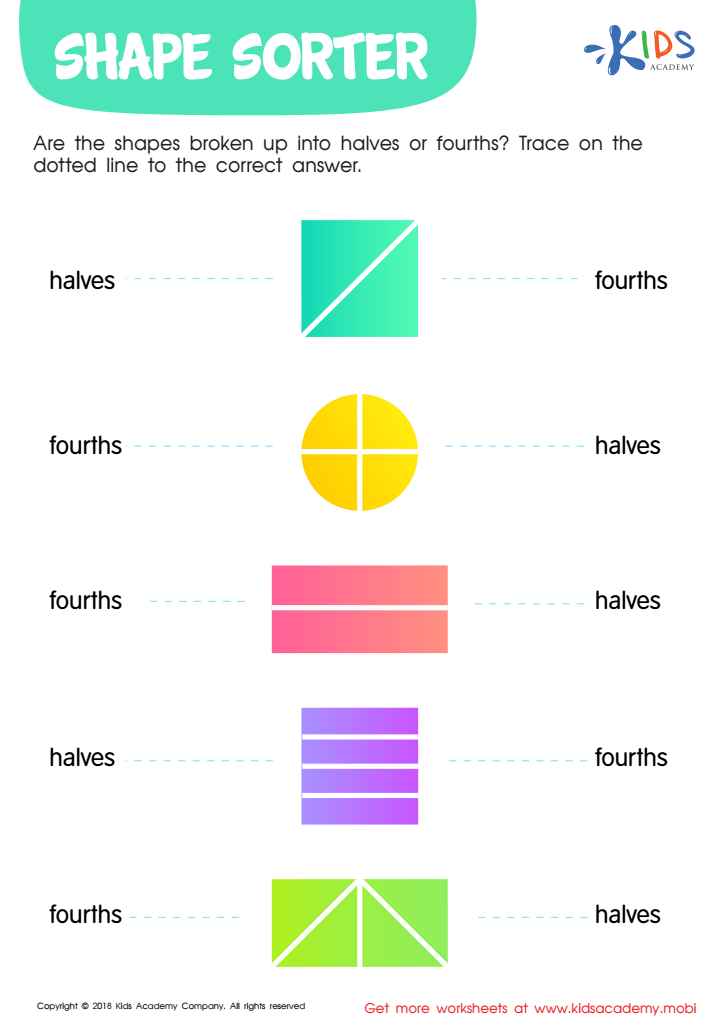
Shape Recognition Fractions of Shapes Worksheets for Ages 5-6 offer a fun and educational way for young learners to master basic math skills. These engaging worksheets help children recognize and identify different shapes while introducing simple fractions, promoting early math proficiency. Designed for ages 5-6, the activities focus on merging shape recognition with fraction concepts, ensuring students understand the relationship between parts and wholes. Perfect for both classroom and home use, these worksheets are an excellent resource to build foundational math skills, enhancing cognitive development and preparing children for more advanced mathematical concepts.
Woodpecker and Triangles Worksheet
 Assign to My Students
Name the Shapes Halves or Fourths? Worksheet
Shape Sorter Worksheet
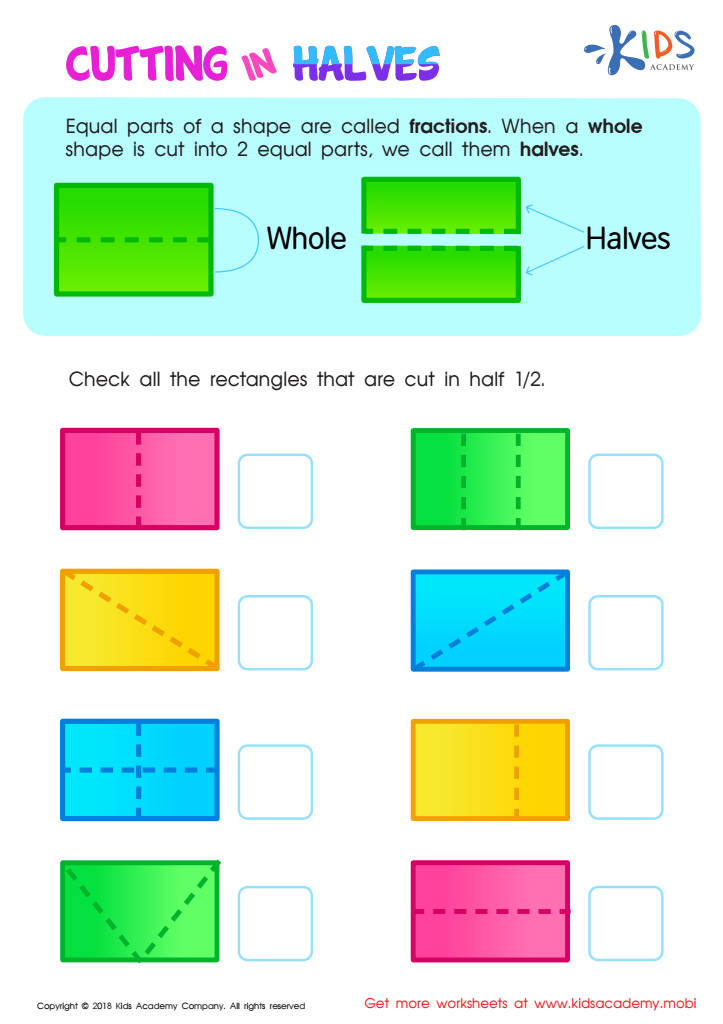
Cutting in Halves Worksheet







Shape recognition and understanding fractions of shapes form an essential part of early childhood education, and here's why teachers and parents should place significant emphasis on these concepts for children aged 5-6.
First, shape recognition helps young learners build a visual-spatial understanding. Identifying shapes like circles, squares, and triangles lays the foundation for geometry and contributes to the development of critical visual perception and cognitive skills. Mastery of basic shapes can enhance children's sorting, comparing, and categorizing abilities, fundamental skills in both mathematics and literacy.
Moreover, fractions of shapes introduce the child to the concept of division and proportions in a tangible and relatable way. By visualizing parts of a whole, children start to grasp the idea that numbers can represent parts of quantities, which is crucial for their future math education. Fractions teach essential problem-solving and analytical skills. Knowing that a half is two equal parts of a whole, or that a quarter is four equal parts, allows children to understand and share items like snacks or toys fairly.
Finally, shaping does not just apply to math—these skills translate to real-world understanding. Recognizing shapes and understanding parts and wholes help children interpret the world around them, from understanding road signs to nature patterns. Thus, shape recognition and fractions lay the groundwork for both academic success and everyday functioning.