Animal identification Math Worksheets for Ages 5-6 - Page 2
32 filtered results
-
From - To
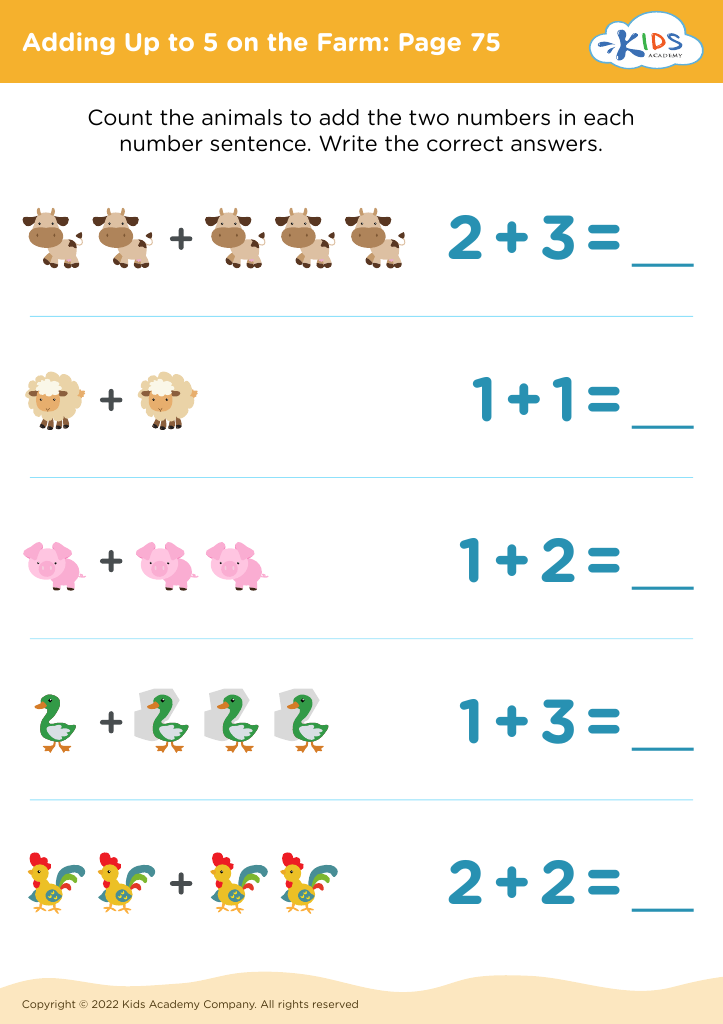
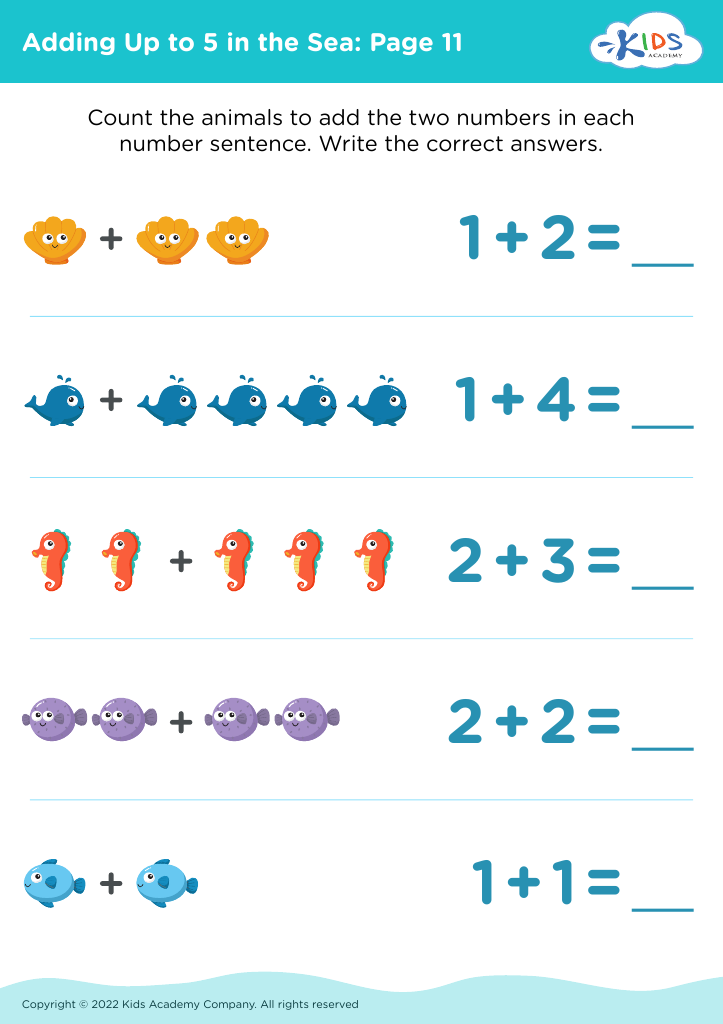
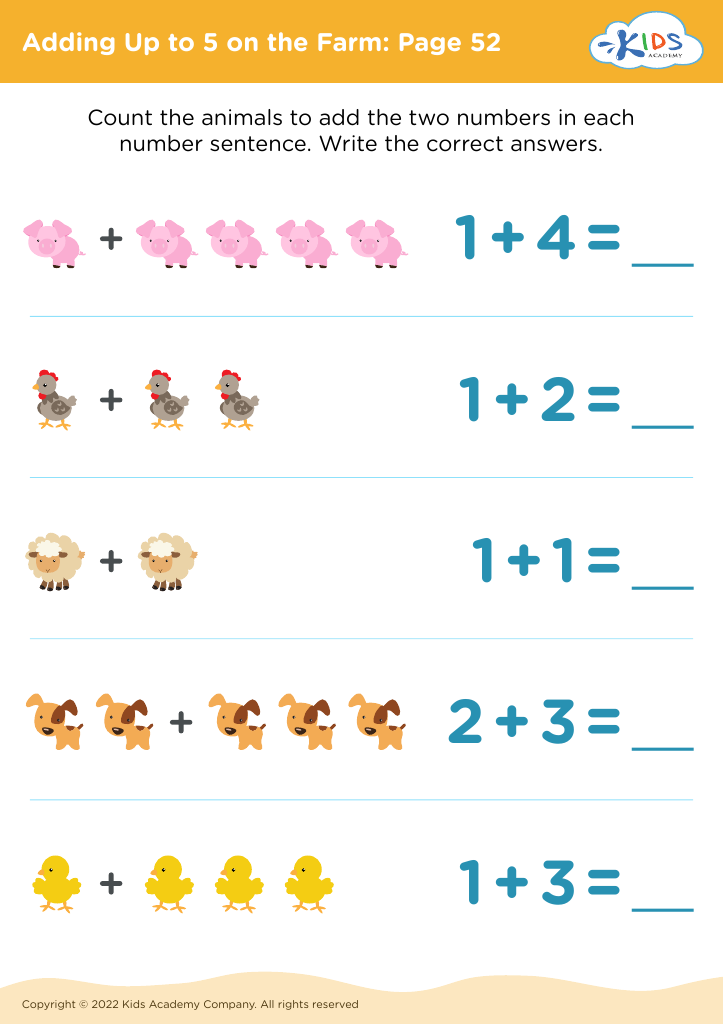
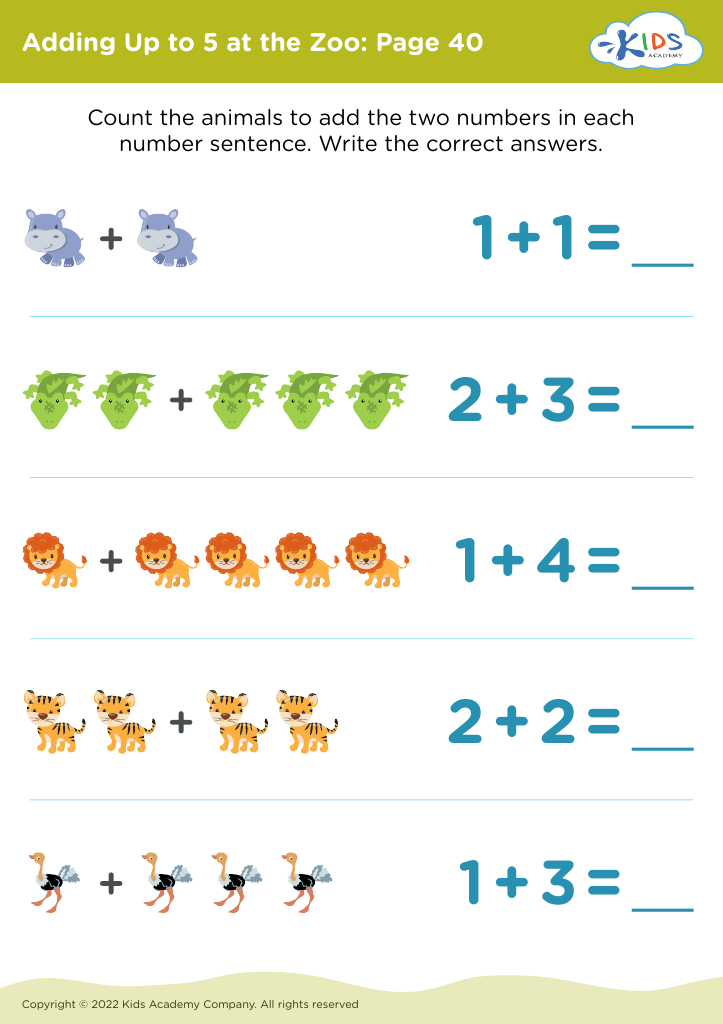
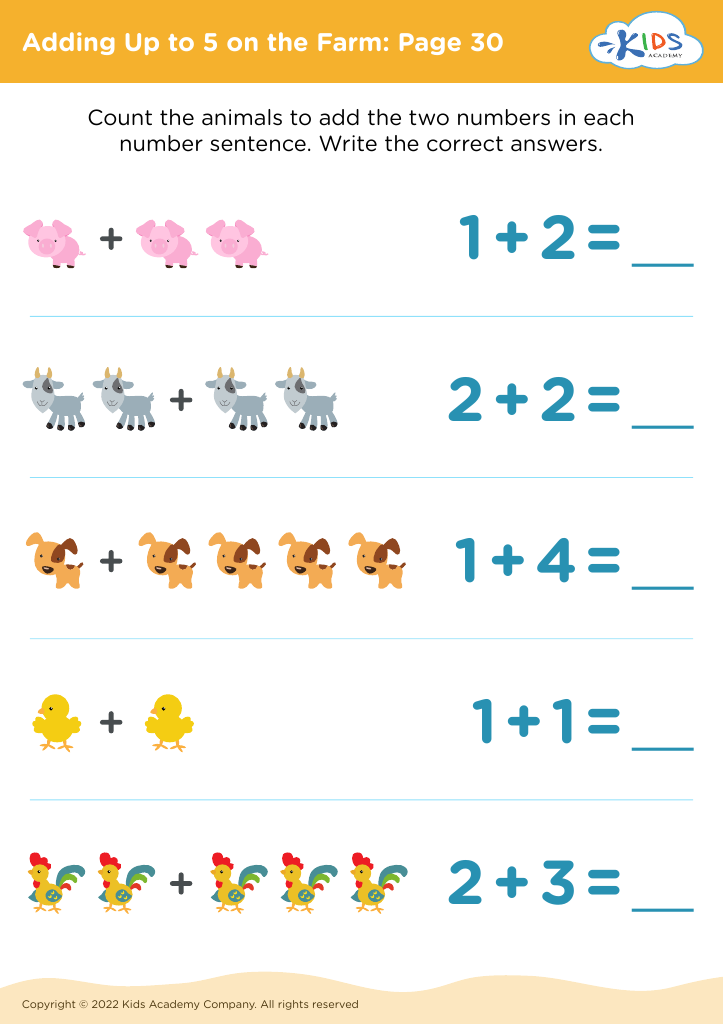
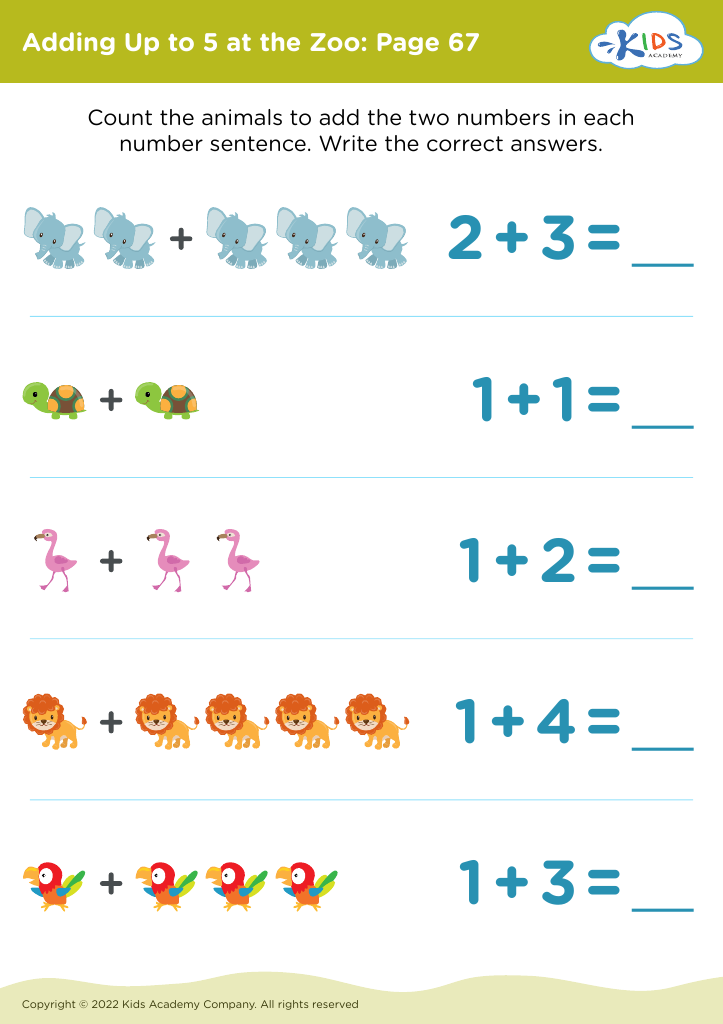
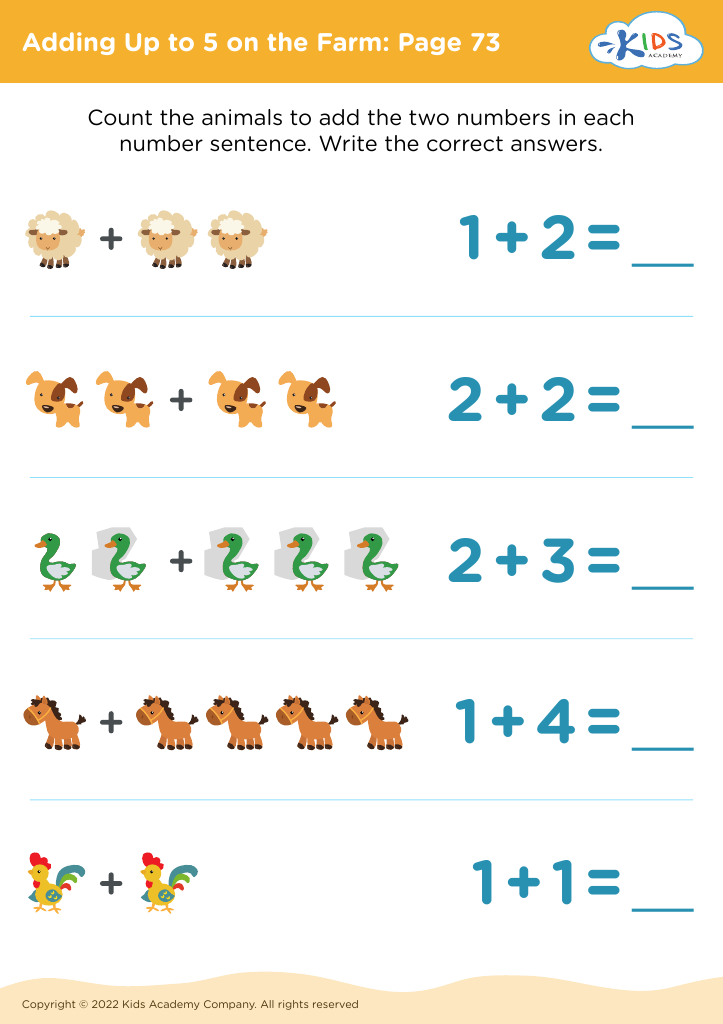
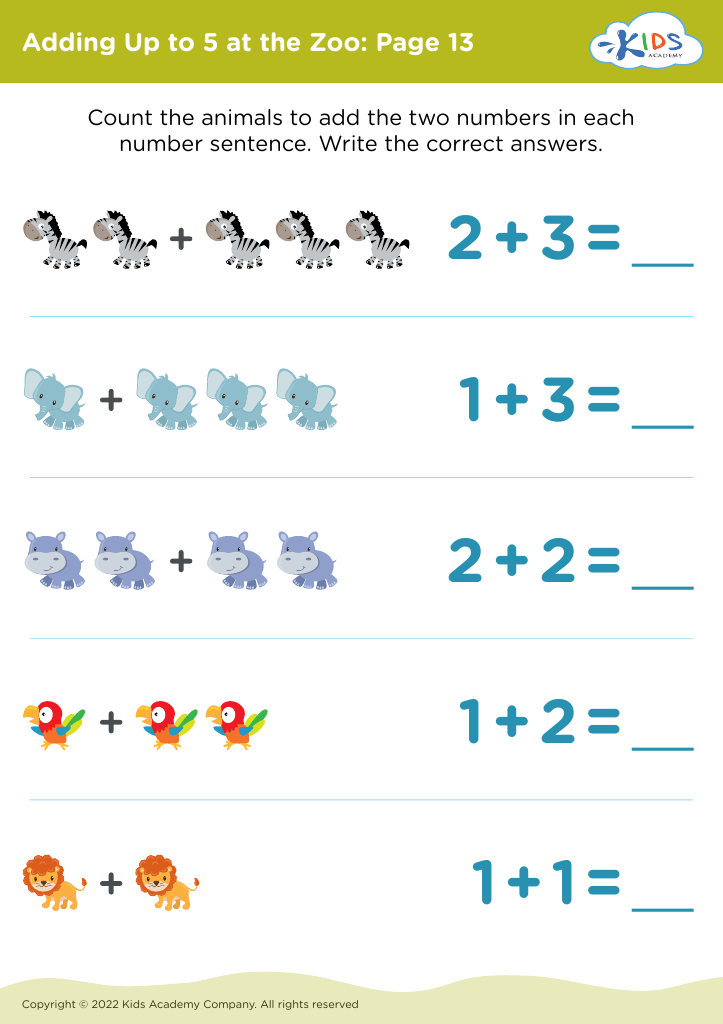







Animal Identification Math for children ages 5-6 is crucial as it combines cognitive development with early math skills and fosters a love for learning. At this age, children are naturally curious and eager to explore their environment, which includes the animal kingdom. Incorporating math concepts like counting, sorting, and categorizing animals not only engages their interest but also enhances their critical thinking abilities.
By using real-life examples from nature, teachers and parents can introduce basic mathematical concepts in a fun and relatable manner. For instance, children can learn how to identify different animals by their characteristics or group them based on size, color, or habitat. This form of learning aids in improving their observation skills and underscores the importance of detail-oriented thinking.
Moreover, this program fosters a sense of empathy and respect for animals, teaching children about biodiversity and the ecosystem. By connecting math to wildlife, parents and teachers cultivate an interdisciplinary approach to learning, bridging math with science, language arts, and environmental stewardship. Ultimately, engaging in Animal Identification Math nurtures well-rounded individuals who are not only mathematically proficient but also socially and environmentally aware. This foundation sets the stage for future academic success and responsible citizenship.








