Basic geometry knowledge Math Worksheets for Ages 5-6
3 filtered results
-
From - To
Unlock your child's potential with our Basic Geometry Knowledge Math Worksheets for Ages 5-6! Designed to engage young learners, these worksheets introduce essential geometric concepts through fun and interactive activities. Children will explore shapes, understand spatial relationships, and enhance their problem-solving skills while recognizing patterns and identifying geometric figures. Each worksheet is aligned with early education standards, ensuring effective learning in a supportive environment. Perfect for independent practice, homework, or classroom activities, our worksheets make learning geometry both enjoyable and enriching. Help your little ones build a strong mathematical foundation while fostering a love for learning today!
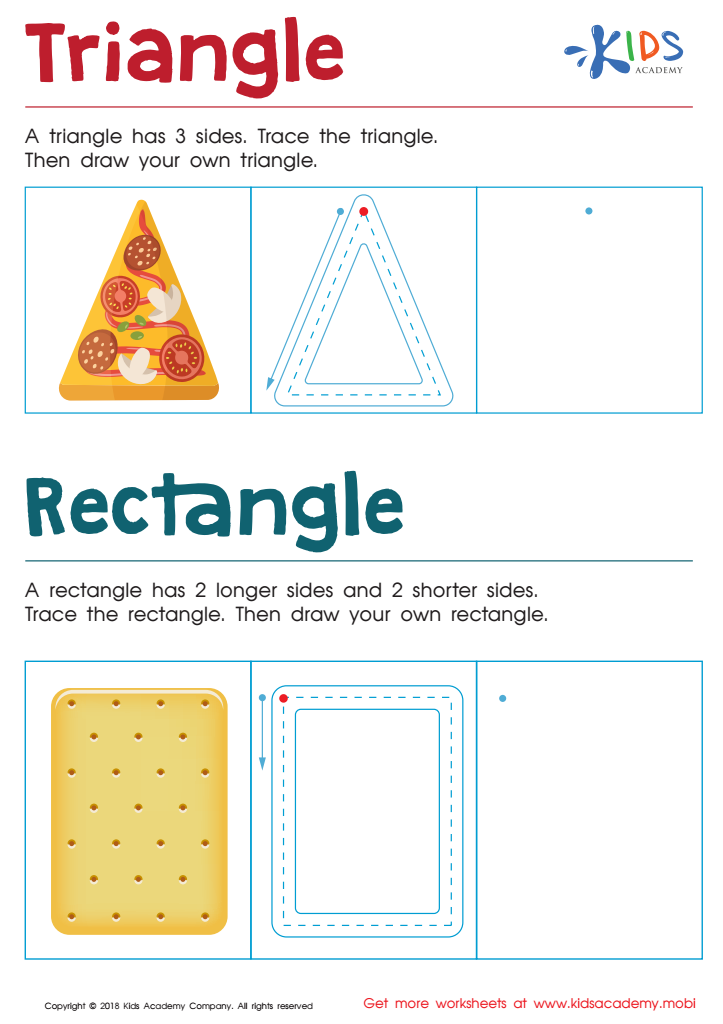
Triangle Rectangle Worksheet
 Assign to My Students
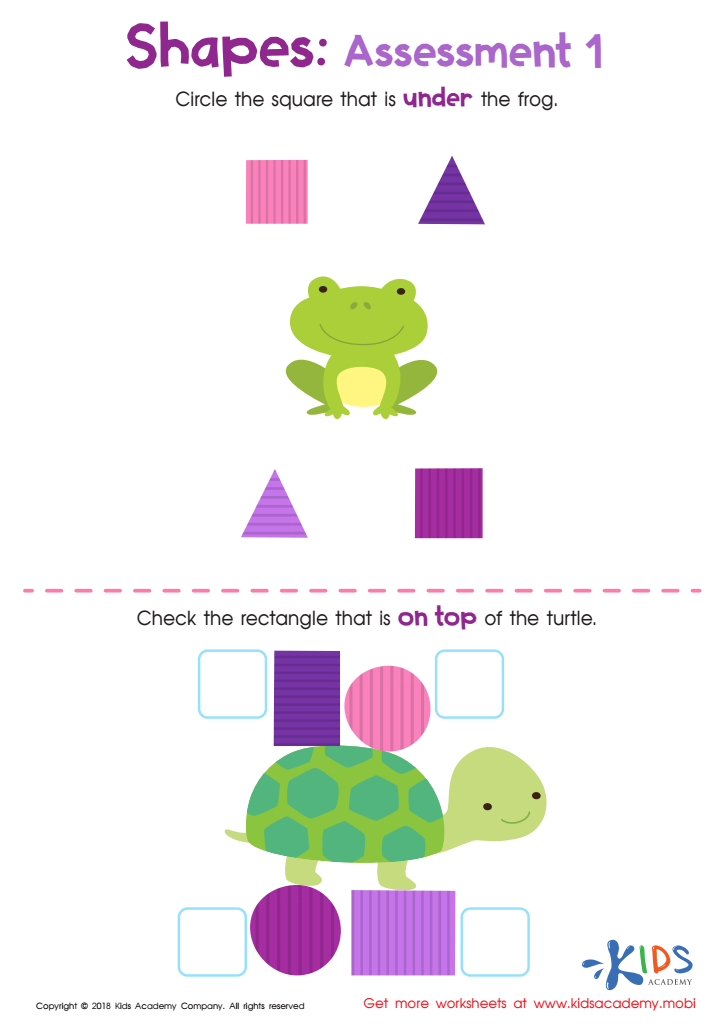
Geometry – Assessment 1 Worksheet
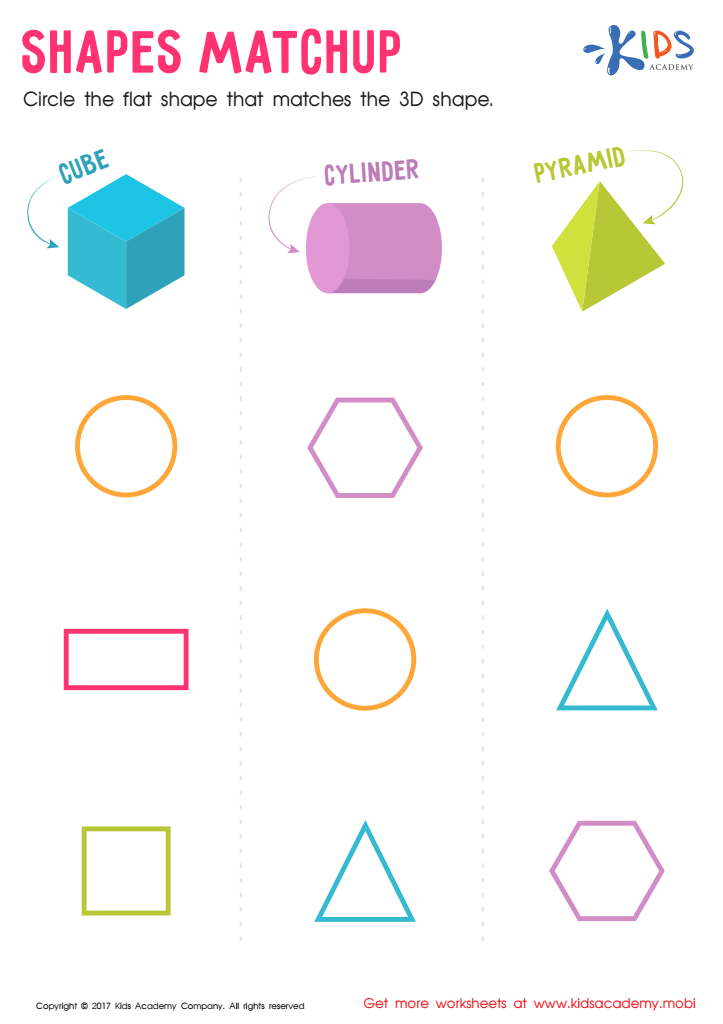
Shapes Matchup Worksheet







Basic geometry knowledge is essential for young children aged 5-6 as it lays the foundation for their critical thinking and problem-solving skills. During this developmental stage, children are naturally curious about the world around them, and exploring geometric concepts encourages them to observe, analyze, and classify shapes and spatial relationships. This foundational knowledge enhances their cognitive development and helps them better understand their environment.
Moreover, geometric understanding fosters creativity. When children engage with shapes, they learn to combine and manipulate them, which is fundamental in art, design, and everyday tasks. Mastering basic geometry also supports their future learning in mathematics, as it introduces them to vital concepts like patterns, symmetry, and measurement.
Parents and teachers should also view geometry as a way to make learning engaging and interactive. Activities such as building with blocks, drawing shapes, or identifying geometry in nature can make math enjoyable, instilling a positive attitude towards learning. Additionally, these skills translate into everyday life skills, like navigation and problem-solving. By prioritizing basic geometry knowledge at this age, adults can ensure children develop a solid mathematical foundation that will benefit their academic journey and personal growth.








