Basic math practice Math Worksheets for Ages 5-6
6 filtered results
-
From - To
Help your child develop a strong foundation in mathematics with our Basic Math Practice worksheets designed for ages 5-6. These engaging activities cover crucial early math skills such as counting, addition, subtraction, and pattern recognition. Each worksheet is crafted to reinforce learning through fun, hands-on tasks that transform math practice into an enjoyable experience. Perfect for use at home or in the classroom, our collection supports young learners in building confidence and proficiency in basic math concepts. Spark a love for math in your child’s early years with these expertly designed educational resources.
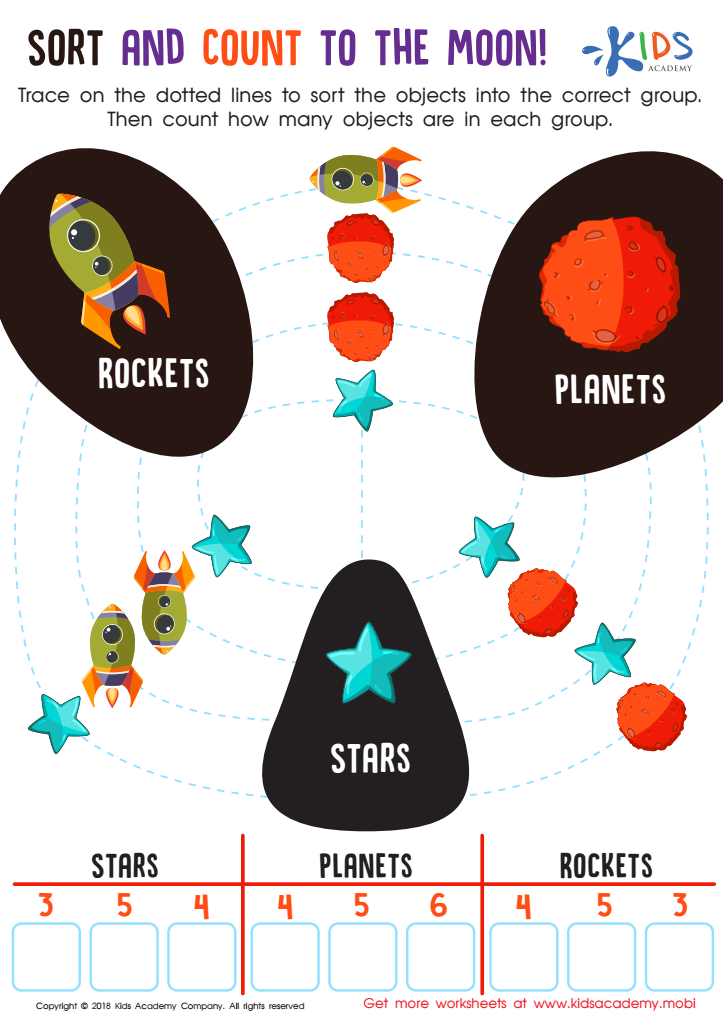
Sort and Count to the Moon Worksheet
 Assign to My Students
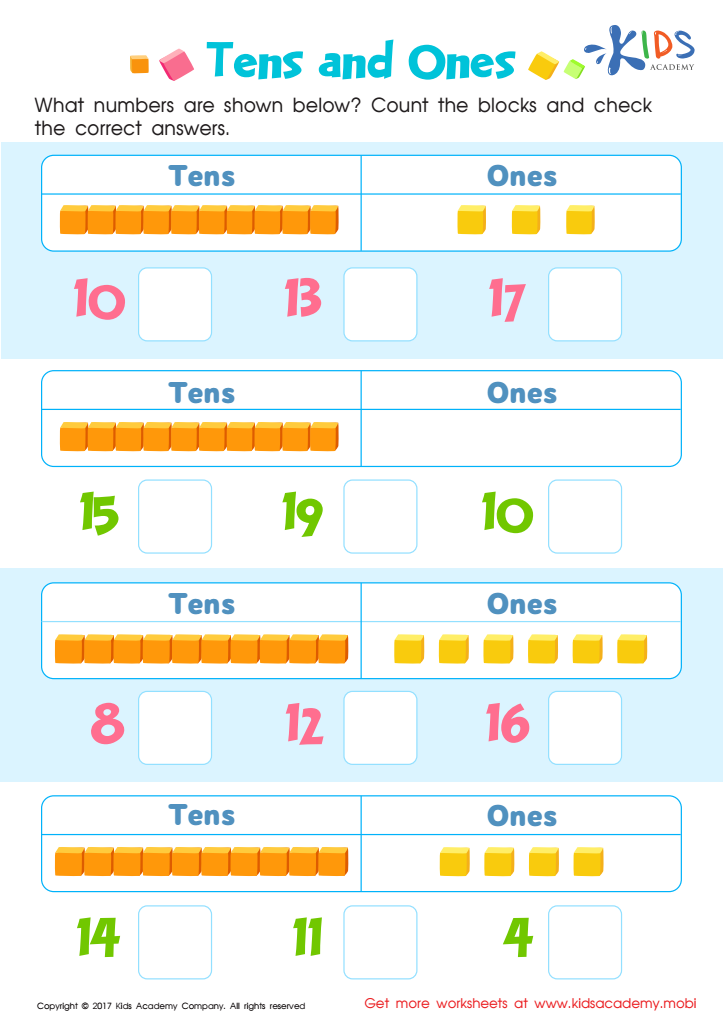
Tens and Ones Worksheet
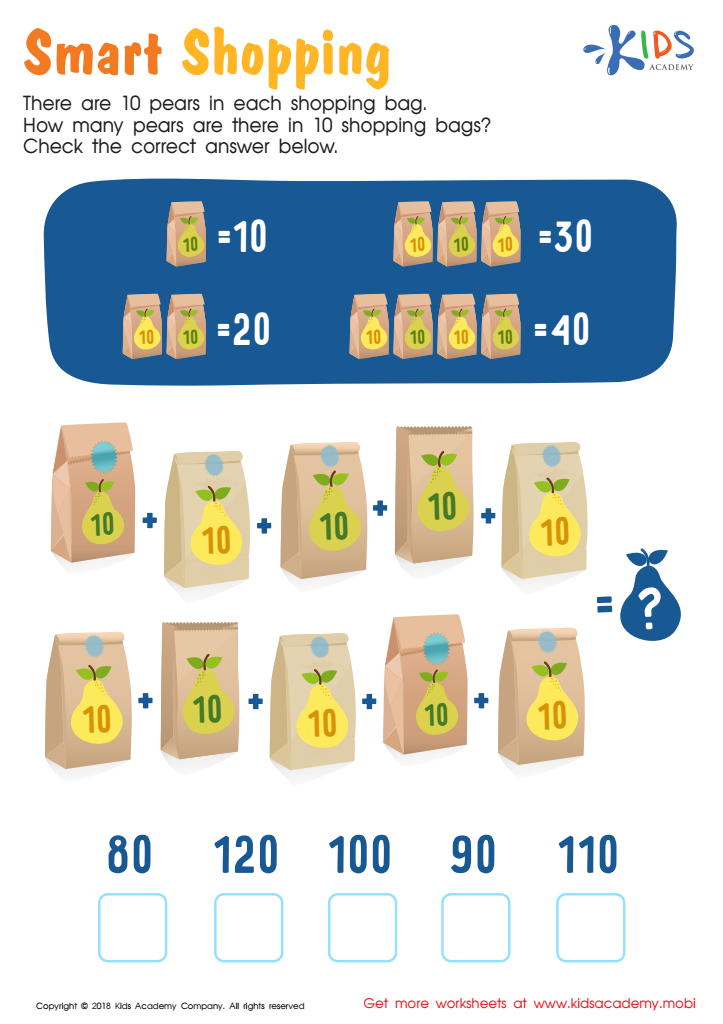
Smart Shopping: Trade Tens for a Hundred Worksheet
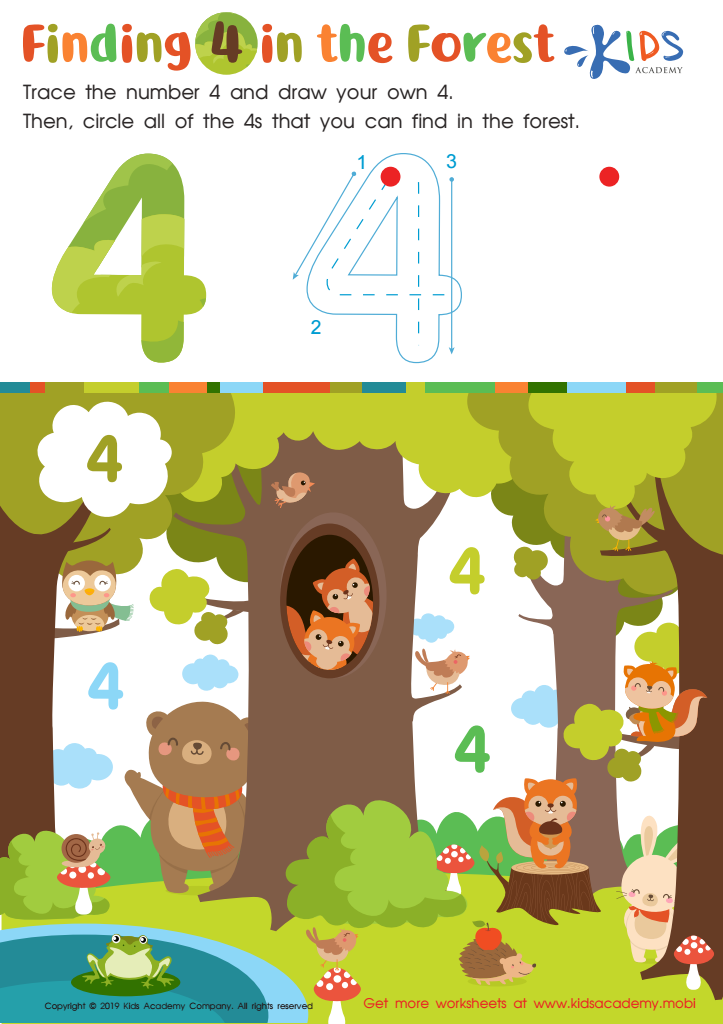
Finding 4 in the Forest Worksheet
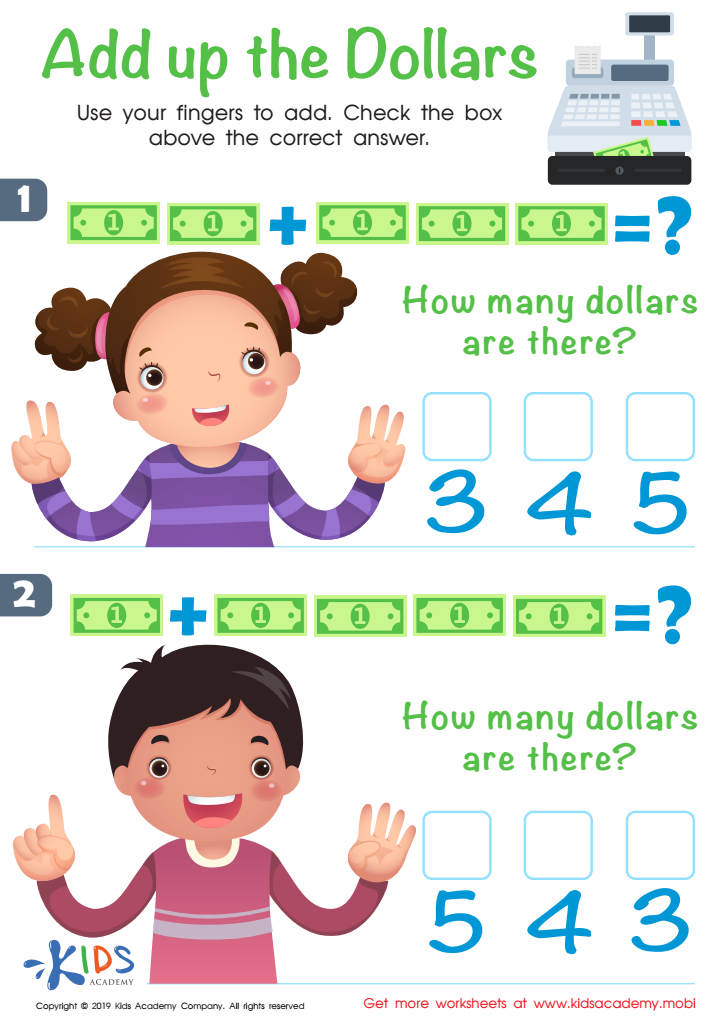
Add up the Dollars Worksheet







Basic math practice for ages 5-6 is crucial as it lays the foundation for all future mathematical learning. At this developmental stage, children are like sponges, absorbing new concepts quickly, and developing important cognitive skills such as problem-solving, logical thinking, and spatial awareness. Early math skills help in understanding and performing better in more complex arithmetic and other subjects later in life.
For parents and teachers, focusing on basic math practice can significantly boost a child's confidence and academic enthusiasm. Fundamental concepts such as counting, recognizing numbers, basic addition, and subtraction introduce children to the joy of learning through engaging, age-appropriate activities. These practices help in developing motor skills and hand-eye coordination when they are tracing numbers or arranging counting blocks.
Incorporating math at an early age also helps children to feel comfortable with numbers, reducing math anxiety often observed in higher grades. Moreover, it equips them with the ability to relate math to real-world situations, like understanding time, handling money, or even planning a route on a map. Providing a supportive and encouraging environment for basic math practice ensures that children develop a positive attitude towards learning, fostering curiosity and a lifelong love for education.








